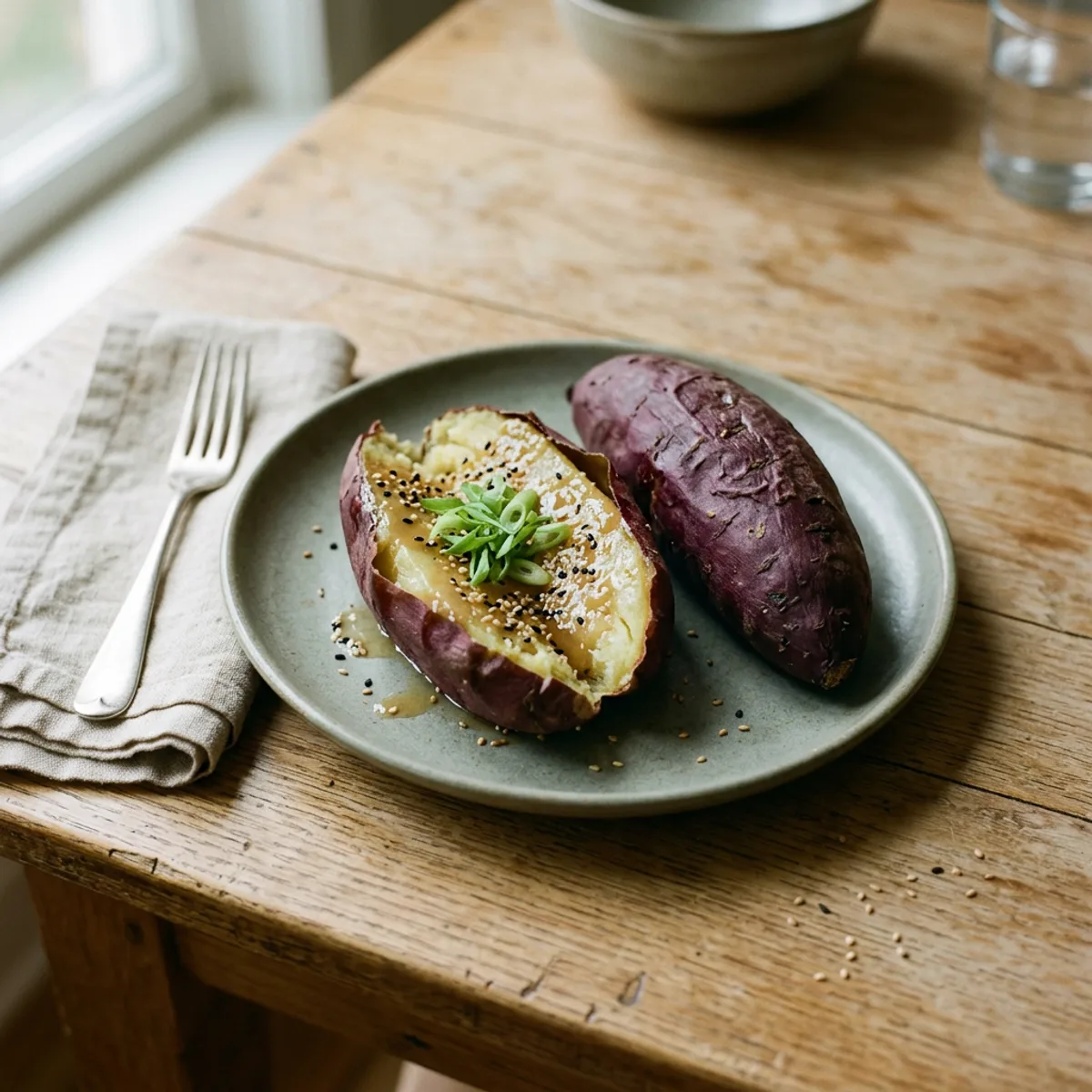
The short version: The trials we found gave purple sweet potato leaves, not the roots, to healthy young adults for one to two weeks. One of them saw lower interleukin-6 after a hard run. None tested sweet potato roots on inflammation, so the answer is "not shown". A serving of this miso-glazed recipe has about 227 calories.
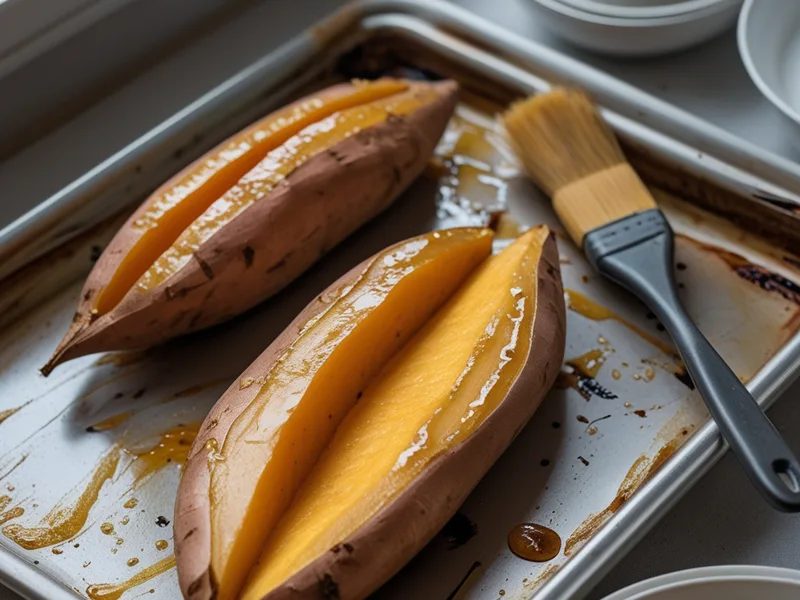
You typed "are sweet potatoes anti inflammatory", and I would rather answer it with a plate than a promise. The dish is simple: whole sweet potatoes roasted until the skin tightens and the inside turns soft, split open, brushed with a thin glaze of white miso, ginger, lemon and maple, then finished in a hot oven. Below, the recipe card has the steps; here is what the studies say and what they do not.
Miso-glazed sweet potatoes at a glance
| What | Where | What a serving has (USDA, estimate) |
|---|---|---|
| Whole roasted sweet potatoes, miso-ginger glaze | The recipe card below | About 227 calories and 4 g of protein |
| Cubes, fries, toast and more | Sweet potato recipes | Their own page, with the numbers |
| Another root, another question | Are potatoes anti-inflammatory? | A roasted potato salad and its studies |
Are sweet potatoes anti-inflammatory? What the trials say
Short answer: it has not been shown for the roots you roast. The human trials we found used the leaves of purple sweet potato, a leafy vegetable eaten in parts of Asia, so they cannot speak for the orange or purple roots on your plate. Here is what we read on PubMed on October 24, 2026.
- A 2010 crossover trial in the Journal of Applied Physiology (PMID 20864555) gave 15 healthy young men a high-polyphenol diet with purple sweet potato leaves, or a low-polyphenol diet, for 7 days each, with a 14-day break. After an hour of treadmill running, the leaf group had lower markers of oxidative damage and a lower plasma interleukin-6, a signal protein linked to inflammation. The group was small, healthy and young, and the authors measured blood markers, not symptoms.
- A 2008 crossover trial in the Asia Pacific Journal of Clinical Nutrition (PMID 18818160) gave 16 healthy adults 200 g a day of the leaves for two weeks. Markers of antioxidant defense went up and a marker of DNA damage in urine went down. It is about oxidative stress, not inflammation itself.
- A 2007 trial in the same journal (PMID 18042519) followed 15 basketball players who ate 200 g of the leaves a day for two weeks. Some immune measures rose, others did not change, and the authors describe it as a modulation of the immune response, not as a drop in inflammation.
So the honest summary is short. Small trials on the leaves, in healthy young people, point to lower oxidative stress and, in one case, a lower interleukin-6 after exercise. Nothing we read tested the roots, and none of it shows that a food treats or prevents an inflammatory condition. Food supports a healthy way of eating; it does not replace medical care.
Why the sweet potato is roasted whole
One detail matters here: the sweet potato should cook in its skin. Whole, it steams in its own moisture, the sugars concentrate, and the flesh turns creamy instead of dry. Cut early and the surface dries before the middle is done. The glaze goes on only for the last minutes, because miso scorches quickly, and a thin coat browns where a thick one burns.
What goes in
- Sweet potatoes, 700 g (about 1 1/2 lb). Japanese satsumaimo have a purple skin and pale yellow, dry-sweet flesh; ordinary orange sweet potatoes also work and come out softer.
- White miso, 2 tablespoons. Mild and slightly sweet. It supplies the salt and the savory depth, so nothing else is salted.
- Maple syrup, lemon juice, grated ginger. Sweet, sour and sharp, in small amounts, to keep the miso balanced.
- Sesame seeds and scallions for crunch and a fresh finish.
Calories, protein and sodium
The numbers come from USDA FoodData Central values, ingredient by ingredient. One serving, a quarter of the recipe, has about 227 calories, 4 g of protein, 42 g of carbohydrate and 5 g of fat, with about 415 mg of sodium, most of it from the miso. It is an estimate: the weight of the miso and sesame spoonfuls are documented assumptions, and sweet potatoes differ in size.
Tips and common mistakes
- Pierce the skins. A few holes let steam escape so the sweet potatoes do not burst.
- Use a lined sheet. Sugars that leak out caramelize and stick to bare metal.
- Glaze at the end. Added at the start, the miso scorches and turns bitter.
- Press the flesh open. A light fork press gives the glaze more surface to hold.
- Taste before adding salt. The miso already carries it.
Cooked by Alin
Not the quickest side dish, Alin admits: it took a bit of work, though never more than Alin could manage. Cooked exactly as the card says, the sweet potatoes were delicious and the texture was just what Alin hoped for. Alin would make them again.
Variations
- A heartier plate. Serve a half on a bowl of rice with steamed greens, or next to the roasted vegetables in our foods for clear skin guide.
- Spicy. Stir a small pinch of chili flakes into the glaze.
- Without sesame. Use finely chopped scallion tops and a squeeze of lemon.
- A drink alongside. Fresh ginger also makes a simple hot or cold infusion: see our ginger water recipe.
- Orange-fleshed sweet potatoes. They are moister, so shorten the second bake by a minute or two and watch the edges.
Storage
Cool the sweet potatoes, then keep them covered in the refrigerator and eat them within a few days. Reheat on a baking sheet in a hot oven to bring back the edges; the microwave softens the glaze.
Safety: allergens and your doctor
The glaze contains soy (miso), and the topping contains sesame. Check labels if you or your family have an allergy. Miso is salty: if you follow a low-sodium plan, read the sodium figure above and ask your doctor or dietitian how it fits your day. Sweet potatoes are also a source of potassium, so people told to limit potassium, for example with kidney disease, should ask their doctor about portions.
What we read
- Nutrition: values come from USDA FoodData Central for each ingredient (for example sweet potato, raw); the miso and sesame spoon weights are documented assumptions, so the total stays an estimate.
- Studies: a targeted PubMed search on October 24, 2026 for sweet potato and inflammation markers. It returned trials on the leaves; none on the roots.
Are Sweet Potatoes Anti-Inflammatory? Roast Them Whole With a Miso-Ginger Glaze
Whole roasted sweet potatoes with a miso, ginger and maple glaze, and what the inflammation trials actually tested.
Ingredients
Instructions
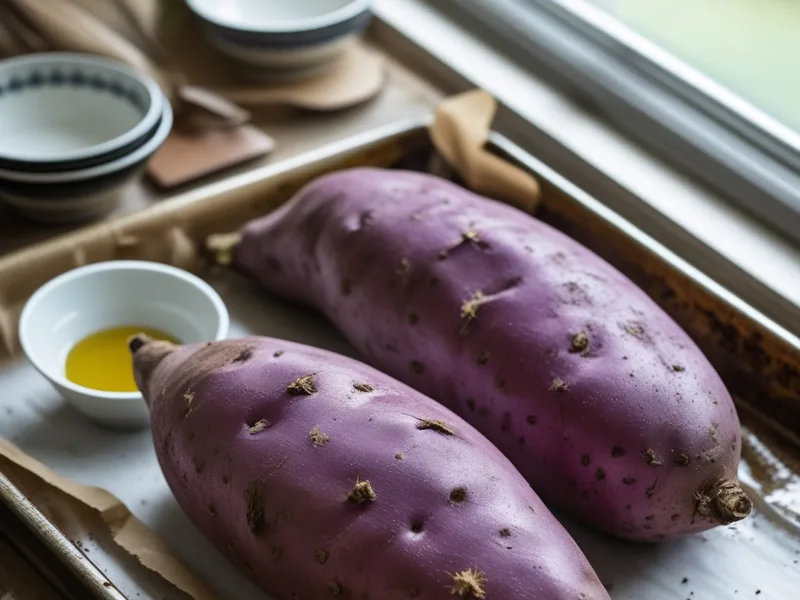
- Roast the sweet potatoes whole. Heat the oven to 400°F (200°C) and line a baking sheet with parchment paper. Scrub the sweet potatoes, pierce each one a few times with a fork, rub them with the olive oil and roast them whole for 40 to 45 minutes, until a knife slides in with no resistance.
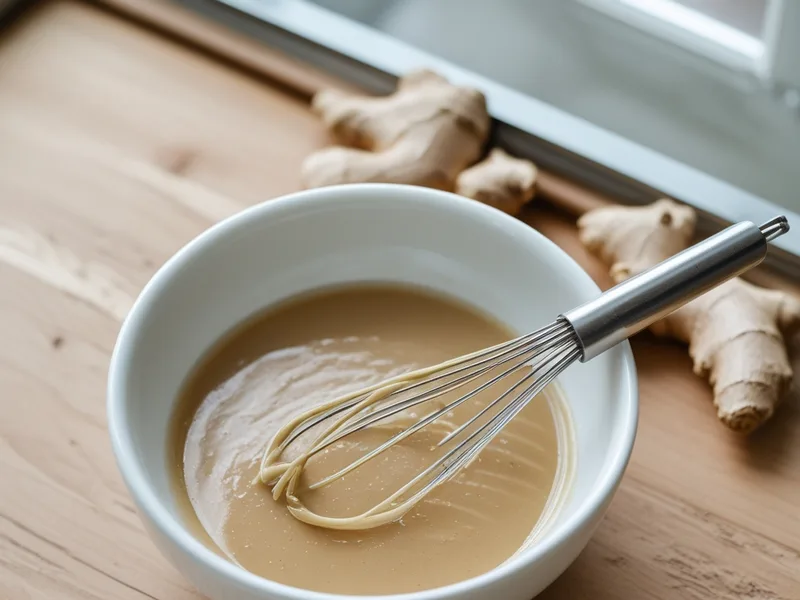
- Whisk the glaze. While they roast, stir the miso, maple syrup, lemon juice and grated ginger in a small bowl until smooth. Do not heat it yet. The glaze goes on at the end, so the miso does not scorch.
- Split, glaze and finish. Raise the oven to 425°F (220°C). Split each sweet potato lengthwise, press the flesh open a little with a fork and brush the glaze over the cut sides. Return them to the oven for 8 to 10 minutes, until the glaze bubbles and browns at the edges. Scatter with the sesame seeds and scallions and serve hot.
Notes
Sweet potatoes vary in size. Judge doneness with a knife rather than the clock: it should slide in without resistance.
Miso is salty, so the glaze needs no extra salt.
Leftovers keep in a covered container in the refrigerator for a few days.
Nutrition Facts
Per serving (estimated)
- Total Fat
- 5 g
- Sodium
- 415 mg
- Total Carbohydrate
- 42 g
- Protein
- 4 g
General information, not medical or dietary advice. Nutrition values are estimates. See our full disclaimer.
Frequently asked questions
Can you provide a handout for the anti-inflammatory diet?
No official handout we could read and link turned up, so this page does not offer one. A doctor or a registered dietitian can give you a plan that fits your health and your medicines.
Is boiled egg good for arthritis?
Nothing we read tests boiled eggs for arthritis, so we cannot say. If you live with arthritis, ask the clinician who follows you before changing what you eat.
What is the strongest anti-inflammatory food?
The research we read does not rank foods this way. Studies look at whole eating patterns or at single compounds, and results differ between groups. A varied plate is a safer bet than any single food.
Are sweet potatoes good for heart health?
None of the trials we read looked at heart disease in people who eat sweet potatoes. Our page on sweet potato recipes lists the USDA fiber and potassium values, which is the nutrition side of the question.


Comments
Tried it? Tell us how it went: your comment helps other readers.