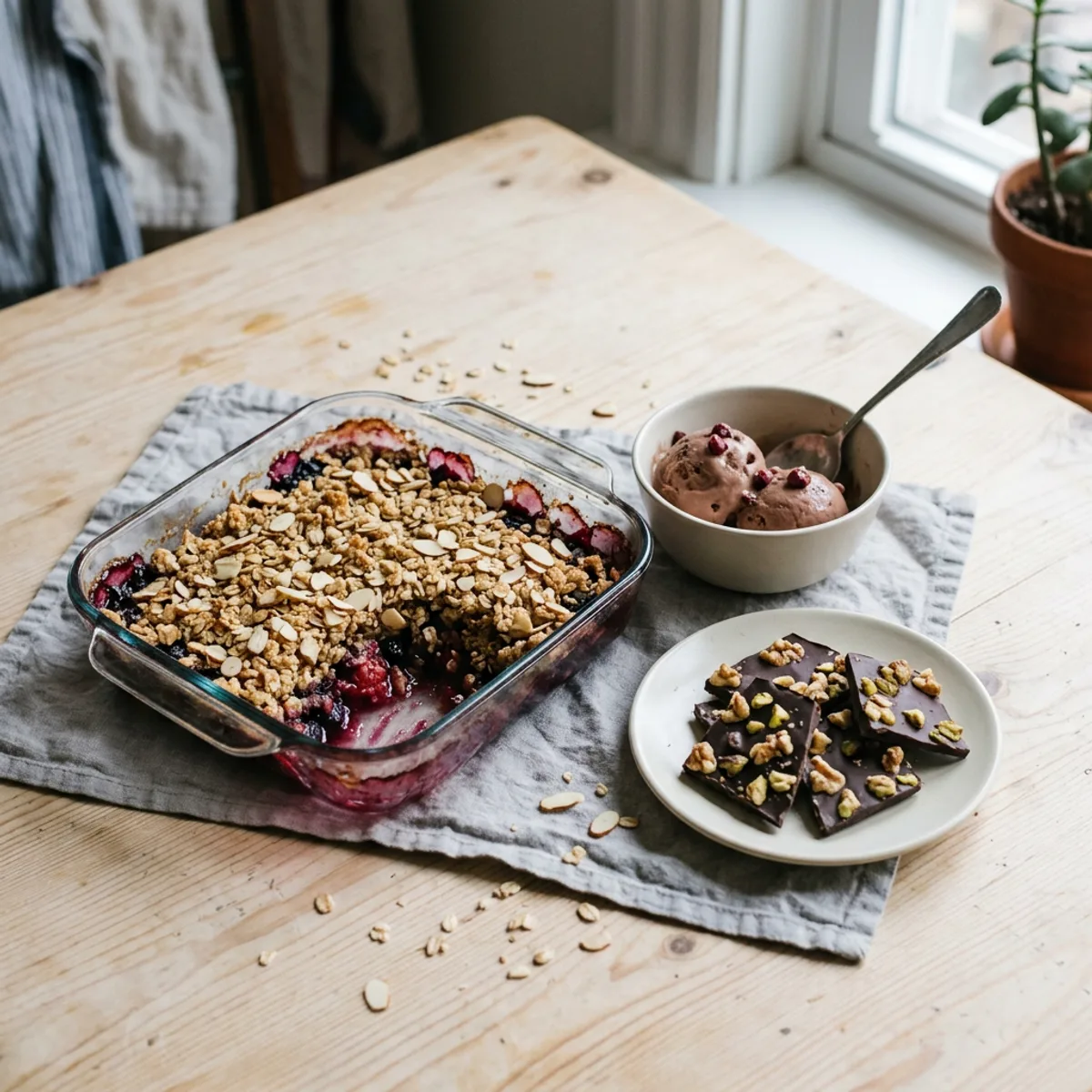
Anti-inflammatory desserts are built from the foods Harvard Health puts on its anti-inflammatory list, berries, cherries, nuts and olive oil, with cocoa as a bonus, and they keep added sugar low. No dessert lowers inflammation on its own; these replace a pastry, not your care. Three to make this week:
| Dessert | What it is built on | Per serving |
|---|---|---|
| Blueberry and strawberry crisp | Berries, rolled oats, almonds, olive oil | 242 calories, 6 g sugar from maple syrup |
| Chocolate cherry nice cream | Frozen banana, sweet cherries, cocoa | 195 calories, no added sugar |
| Dark chocolate bark with walnuts and pistachios | 70 to 85 % dark chocolate, walnuts, pistachios | 121 calories a piece, 3.4 g sugar |
Here is my twist on dessert for an anti-inflammatory kitchen: start from the fruit and the nuts, then ask how little sugar it takes to make them taste like a treat. The answer is less than you think. A hot crisp needs only a spoonful of maple syrup per bowl, frozen bananas whip into something creamy with no sugar at all, and good dark chocolate does the sweet work in the bark by itself.
What the evidence says about desserts and inflammation
Let's be honest first: no dessert lowers inflammation by itself. "Inflammation" in the studies below means blood markers such as C-reactive protein (CRP) and interleukin-6 (IL-6), measured before and after people ate a food for some weeks. Here is what we read on PubMed, and where each study stops.
- The pattern, not the pudding. A 2024 review of anti-inflammatory diets (PMID 39411832) describes them as rich in fruits, vegetables, whole grains, nuts, legumes, spices, herbs and plant protein, with refined carbohydrates, red and processed meat and saturated fat kept low. Harvard Health puts strawberries, blueberries, cherries and oranges, and almonds and walnuts on its list of foods to eat, and refined carbohydrates such as white bread and pastries on the list to limit (Foods that fight inflammation).
- Cocoa and dark chocolate. A 2024 meta-analysis pooled 33 controlled trials with 1,379 adults (PMID 38925412). Cocoa lowered malondialdehyde, a marker of oxidative stress, and raised nitric oxide, but had no significant effect on CRP, IL-6, TNF-alpha or the other markers overall. Larger effects showed up only in subgroups: higher flavonoid doses, above 450 mg a day, short trials and people who were not healthy. The authors note that none of the trials reported checking for heavy metals and that many did not check the purity of the cocoa.
- Nuts. A 2016 meta-analysis of 20 randomized trials (PMID 27858850) found that tree nuts, peanuts and soy nuts did not significantly change CRP, IL-6 or TNF-alpha. They did lower leptin, a hormone made by fat tissue. Harvard Health notes that studies have linked nuts with lower markers of inflammation and a lower risk of cardiovascular disease and diabetes, so the picture depends on the type of study.
- Strawberries. In a small crossover trial (PMID 28846633), 17 adults with obesity and knee osteoarthritis drank 50 g of freeze-dried strawberries a day for 12 weeks. IL-6, IL-1 beta and pain scores dropped compared with a control drink, while CRP did not change. In another trial with 20 adults with obesity (PMID 22068016), three weeks of strawberry powder lowered blood cholesterol; its abstract does not report a change in the inflammatory markers it also measured.
So what is a dessert doing on this page? The trials that worked changed the whole way people ate. A dessert fits that pattern when it replaces a pastry with fruit, nuts, whole oats and cocoa, and keeps the sugar small. That is the idea behind all three recipes, and the rest of that pattern, with a food list and a three-day menu, is in our anti-inflammatory diet guide. If a spoon of yogurt on top is your habit, what the trials found on dairy and these markers is on our is Greek yogurt anti-inflammatory page.
Blueberry and strawberry crisp with an olive oil almond crumble
Of the three anti-inflammatory desserts here, this is the one to share warm. Same idea as a classic fruit crisp, one swap that changes everything: olive oil instead of butter in the crumble. It bakes up golden and crunchy, the almonds toast on top, and frozen berries mean you can make it in November.
Serves 6. Prep 10 minutes. Bake 35 to 40 minutes, plus 15 minutes to rest.
Ingredients
- 300 g (about 2 cups) frozen blueberries
- 300 g (about 2 cups) frozen strawberries, large ones halved
- 1 tablespoon cornstarch
- 1 tablespoon lemon juice
- 80 g (1 cup) rolled oats
- 30 g (1/4 cup) whole wheat flour
- 40 g (about 1/2 cup) sliced almonds
- 1 teaspoon ground cinnamon
- 1/8 teaspoon salt
- 3 tablespoons olive oil
- 3 tablespoons maple syrup
Steps
- Heat the oven to 375°F (190°C).
- Fill the dish. Toss the frozen berries with the cornstarch and lemon juice right in an 8-inch (20 cm) square baking dish. No need to thaw them.
- Make the crumble. In a bowl, mix the oats, flour, almonds, cinnamon and salt. Pour in the olive oil and maple syrup and stir until everything looks damp and clumps when you squeeze it.
- Bake. Scatter the crumble over the berries in loose clumps. Bake for 35 to 40 minutes, until the juice bubbles thickly at the edges and the top is deep golden.
- Rest. Let it sit for 15 minutes: the juice thickens as it cools, and you keep your tongue.
Per serving: about 242 calories, 4 g protein, 33 g carbohydrate, 11 g fat, 52 mg sodium. The 3 tablespoons of maple syrup add about 6 g of sugar to each serving.
Storage: cover and refrigerate for up to 4 days. Warm a serving in the oven or toaster oven if you want the top crisp again; the microwave softens it.
Make it your own: try it with frozen cherries instead of strawberries, or swap the almonds for chopped walnuts. And if you want the same oats and olive oil in a dessert you can hold, bake our soft oatmeal cookies.
Sugar-free anti-inflammatory desserts: chocolate cherry nice cream
"Sugar-free" needs a clear meaning here. This bowl has no added sugar: no syrup, no honey, no sweetener. The sweetness comes from ripe banana and cherries, which carry their own natural sugar, so it is not free of sugar, only free of added sugar. Frozen banana plus cocoa is the flavor combo that makes it taste like chocolate ice cream.
Serves 2. Prep 5 minutes, plus freezing the bananas.
Ingredients
- 2 medium ripe bananas, peeled, sliced and frozen
- 140 g (1 cup) frozen sweet cherries, pitted
- 2 tablespoons unsweetened cocoa powder
- 60 ml (1/4 cup) unsweetened soy milk
- 1 tablespoon chopped walnuts, to finish
Steps
- Freeze the bananas the day before: slice them into coins and freeze them flat on a plate lined with parchment, then move them to a bag.
- Blend. Put the frozen banana, cherries, cocoa and half the soy milk in a food processor or a strong blender. Pulse, scrape down the sides, and blend again until smooth and thick like soft-serve, adding the rest of the soy milk only if the blades stall.
- Serve. Eat it right away, soft, with the walnuts on top. For scoops, spread it in a container and freeze for 1 to 2 hours.
Per serving: about 195 calories, 5 g protein, 42 g carbohydrate, 4 g fat, 13 mg sodium. No added sugar.
Storage: it freezes hard overnight. Let it sit for 10 minutes on the counter, then stir before scooping.
What to change if your bananas are not very ripe: the bowl will taste more of cocoa than of sweet. Let them ripen until the skins are freckled before you freeze them.
Gluten-free anti-inflammatory desserts: dark chocolate, walnut and pistachio bark
The easiest dessert on the page, and naturally free of wheat. Dark chocolate gets the nuts from Harvard's list pressed into it, orange zest for brightness, and a pinch of salt so the cocoa tastes deeper.
Makes 12 pieces. Prep 10 minutes. Chill 30 minutes.
Ingredients
- 170 g (6 oz) dark chocolate, 70 to 85 % cocoa, chopped
- 40 g (1/3 cup) chopped walnuts
- 30 g (1/4 cup) shelled pistachios, roughly chopped
- 1 teaspoon finely grated orange zest
- 1/8 teaspoon flaky salt
Steps
- Line a tray. Line a small baking sheet with parchment paper.
- Melt the chocolate. Melt it gently in a heatproof bowl set over a pan of barely simmering water, or in the microwave in 20-second bursts, stirring between each one. Stop when a few small lumps remain and stir until they melt; overheated chocolate turns thick and grainy.
- Spread and top. Pour the chocolate onto the parchment and spread it to a rectangle about 1/4 inch (6 mm) thick. Scatter the walnuts, pistachios and orange zest over it and press them in lightly. Finish with the salt.
- Chill and break. Refrigerate for 30 minutes, until firm, then break into 12 rough pieces.
Per piece: about 121 calories, 2 g protein, 8 g carbohydrate, 9 g fat, 27 mg sodium. The sugar comes from the chocolate: about 3.4 g a piece with 70 to 85 % chocolate.
Storage: keep it in a closed container in the fridge for up to 2 weeks. This method does not temper the chocolate, so at warm room temperature it softens and can turn dull and streaky; the taste is the same.
Make it your own: use pumpkin seeds instead of pistachios, or add a pinch of ground cinnamon to the melted chocolate.
Quick and easy is the first thing Karim noticed when cooking from this page, sticking to the recipes word for word. The texture turned out exactly as hoped, it tasted delicious, and Karim plans to make it again.
Anti-inflammatory desserts, store-bought: what to put in the basket
You do not need a special product. You need the same few ingredients that make the three recipes above:
- Frozen berries and cherries with only fruit on the ingredient list. They are the base of the crisp and the nice cream, and they keep for months.
- Dark chocolate with 70 % cocoa or more. The bark and its nutrition figures use 70 to 85 % chocolate. A lower percentage means more sugar in each piece.
- Plain nuts: walnuts, almonds, pistachios, unsalted, without a candy coating.
- Read the added sugars line. The CDC's page on added sugars says adolescents and adults should keep to no more than 10 grams of added sugars per meal, and that no amount of added sugars or non-nutritive sweeteners is recommended as part of a healthy diet (Get the Facts: Added Sugars). A packaged dessert that passes that line in one serving is a treat, whatever the box says.
If you would rather prepare the night before, our chia seed pudding uses a single tablespoon of maple syrup for the whole batch and the same blueberries.
Safety: who should be careful with these desserts
- Not a treatment. If you live with an inflammatory condition, these desserts sit next to your care, never in its place. Harvard Health reminds readers that its content does not replace advice from your own doctor.
- Allergens: tree nuts (almonds, walnuts, pistachios), soy (the soy milk) and wheat (the crisp). Swap the soy milk for any unsweetened milk you tolerate, and the nuts for pumpkin seeds.
- Caffeine in the bark: USDA lists 80 mg of caffeine per 100 g of 70 to 85 % dark chocolate, which works out to about 11 mg in each piece. Worth knowing if you eat it late in the evening.
- Children: only the nice cream is free of added sugar (see the FAQ below).
What we read and how we counted
- Nutrition: each recipe was calculated ingredient by ingredient from USDA FoodData Central using raw weights, including frozen blueberries, frozen strawberries, rolled oats, almonds, bananas, unsweetened cocoa powder, dark chocolate, 70 to 85 % cacao, walnuts and pistachios. Sweet cherries are counted with the raw fruit entry, since USDA has no entry for frozen unsweetened sweet cherries, and a medium banana with USDA's standard weight, so each total is an estimate. The sugar figures use USDA's total sugars for maple syrup (60.46 g per 100 g) and for the dark chocolate (23.99 g per 100 g).
- Studies: PubMed searches on November 4, 2026 for meta-analyses, reviews and trials on berries, cocoa and dark chocolate, and nuts with CRP, IL-6 and other inflammatory markers. We read the abstract of every study cited above.
- Official sources: Harvard Health Publishing, Foods that fight inflammation, and CDC, Get the Facts: Added Sugars, both read on November 4, 2026.
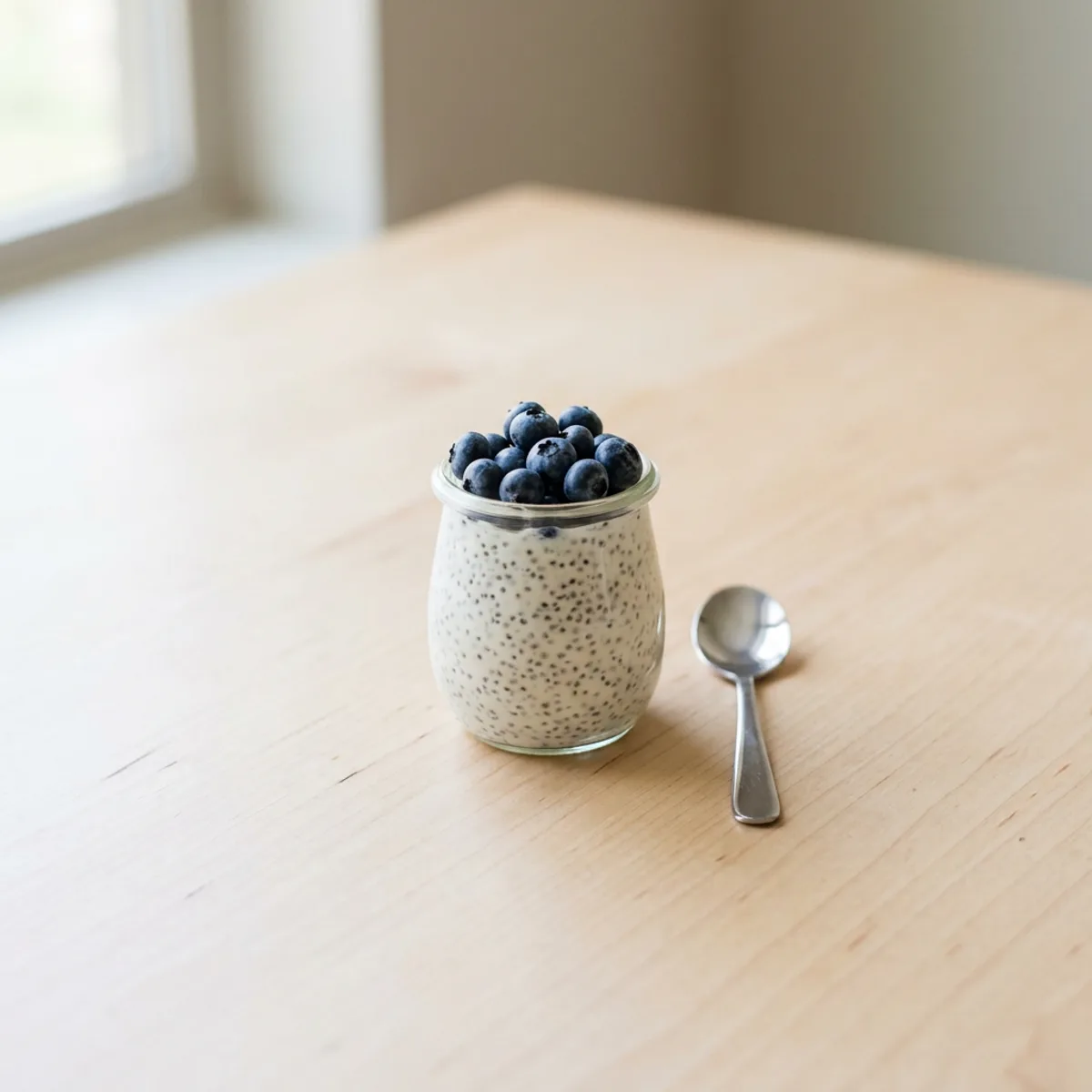
Chia Seed Pudding With Blueberries
Make it the night before and a berry-topped pudding is waiting in the fridge; one tablespoon of maple syrup sweetens the whole batch.
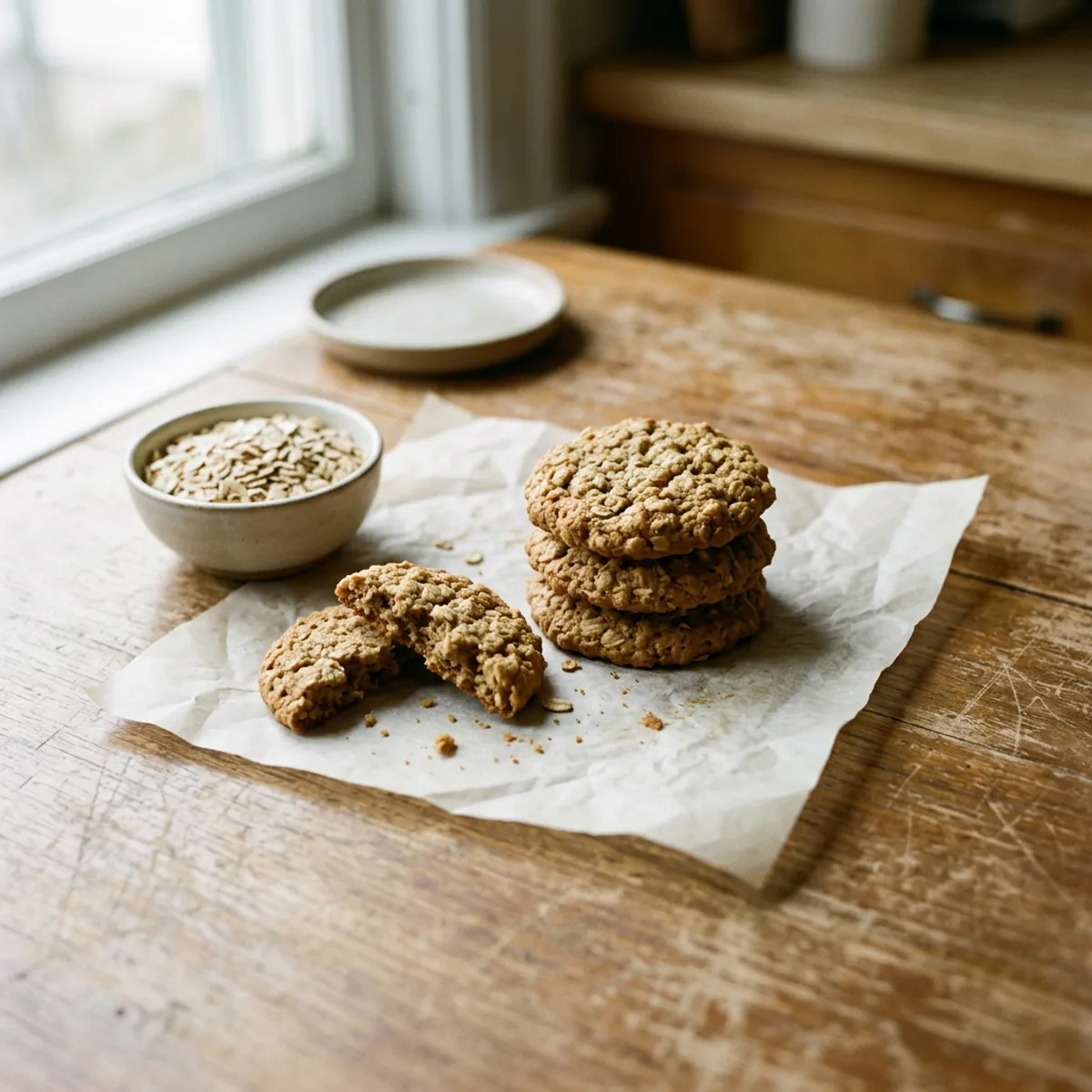
Soft Oatmeal Cookies With Olive Oil
Rolled oats, whole wheat flour and olive oil in a cookie of around 100 calories, for when you want something to hold rather than a bowl.

Raspberry and Lemon Jello
A bright, wobbly cup of lemon and fresh raspberries with no added sugar, set the evening before you want it.
General information, not medical or dietary advice. Nutrition values are estimates. See our full disclaimer.
Frequently asked questions
Are there store-bought anti-inflammatory desserts?
No packaged dessert is a treatment for inflammation. What you can buy are the building blocks from Harvard Health's list: frozen unsweetened berries, plain nuts and dark chocolate. Read the added sugars line on the label and compare it with the CDC's limit of 10 grams of added sugars per meal.
Is dark chocolate anti-inflammatory?
The evidence is mixed. A 2024 meta-analysis of 33 trials found that dark chocolate or cocoa lowered one marker of oxidative stress but had no significant effect on CRP, IL-6 or TNF-alpha overall. Enjoy it as a dessert, not as a remedy.
Which of these desserts are gluten free?
The nice cream and the chocolate bark contain no wheat, oats or barley. The crisp uses whole wheat flour and oats; swap the flour for the same weight of almond flour and buy oats labeled gluten-free to make it gluten free.
Can children eat these desserts?
The CDC page on added sugars says the Dietary Guidelines recommend no added sugar for children younger than 11. Of the three recipes here, only the chocolate cherry nice cream has no added sugar; the crisp has maple syrup and the bark is made with sweetened dark chocolate.
Comments
Tried it? Tell us how it went: your comment helps other readers.