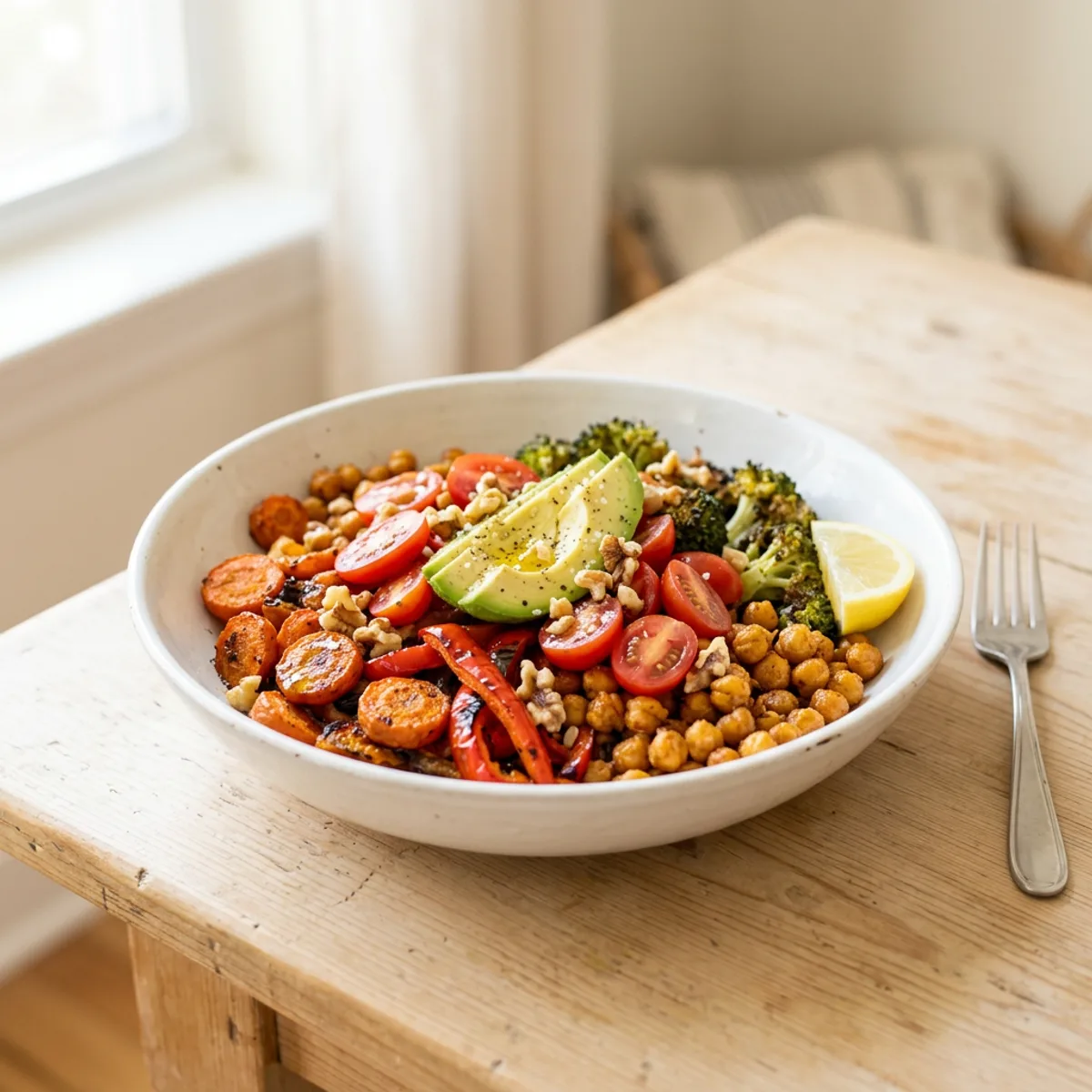
Quick answer: No food is proven to clear skin. Trials of low-glycemic diets in people with acne gave mixed results, and milk is linked to a small higher risk in observational studies. This roasted vegetable and chickpea bowl is a colorful, plant-based meal with about 599 calories and 17 g of protein a serving (USDA estimate).
Start with the produce. Carrots, red peppers, broccoli, tomatoes, a ripe avocado: a plate that looks like a market stall is easy to love, and it is the kind of meal people picture when they search for foods for clear skin. So we begin with the bowl, one sheet pan and about 40 minutes. After it come two more recipes from this site, and a plain look at what studies on food and skin found, including the parts that do not hold up.
Foods for clear skin, glowing skin and healthy skin at a glance
| Food | Where to cook it | What a serving has (USDA, estimate) |
|---|---|---|
| Carrots, red pepper, broccoli, chickpeas, walnuts | The recipe card below | About 599 calories and 17 g of protein |
| Tomatoes, spinach, whole wheat noodles | Lasagna soup | About 341 calories and 27 g of protein |
| Blueberries, chia seeds | Chia seed pudding | About 228 calories and 9 g of fiber |
The numbers are explained with each recipe. The research comes first, because it decides how much to promise.
What the evidence says about food and skin
Foods for clear skin are a popular topic, but skin is shaped by genes, hormones, sleep, stress, sun and medicines, and food is one piece. We read the studies below on PubMed. Most of them are about acne, which is a skin disease, so please read them as research on groups of people and not as advice for a flare-up. Here is what they found, and where they stop.
Glycemic load and acne
- A 2007 randomized trial in the American Journal of Clinical Nutrition (PMID 17616769) followed 43 males aged 15 to 25 with acne for 12 weeks. Those on a low-glycemic-load diet lost more lesions than the control group (a drop of 23.5 against 12.0 lesions), and they also lost more weight. The authors said the effects of weight loss and of the diet had to be separated in future work.
- A 2019 randomized trial in the Indian Journal of Dermatology, Venereology and Leprology (PMID 30264745) gave 84 people with mild to moderate acne a benzoyl peroxide gel, with or without a low-glycemic-load diet, for 12 weeks. Lesion counts fell in both groups and the difference between them was not significant. The authors noted that the gel and a mild cleanser in both groups may have hidden any effect of the diet.
- A 2018 randomized trial in the Journal of the Academy of Nutrition and Dietetics (PMID 29691143) put 66 adults with moderate to severe acne on a low-glycemic diet or their usual diet for only 2 weeks. A blood marker linked to acne, IGF-1, fell in the low-glycemic group, while glucose, insulin and insulin resistance did not differ. The trial did not measure lesions, and its authors called for longer studies.
Dairy and acne
- A 2018 meta-analysis in the Journal of the European Academy of Dermatology and Venereology (PMID 30079512) pooled 13 observational studies with 71,819 participants. People who drank milk had slightly higher odds of acne than those who did not (pooled odds ratio 1.16). Observational studies show an association, not a cause, and the link was not significant for mild acne.
The overall picture
- A 2021 systematic review in the International Journal of Dermatology (PMID 33462816) read 53 papers from 2009 to 2020: 11 interventional studies and 42 observational ones. The authors concluded that high-glycemic foods, dairy, fatty food and chocolate are linked to acne, and that fatty acids, fruit and vegetables are linked to less of it. They also say that the role of specific foods inside those groups is an unsolved question.
Omega-3 fats and acne
- A 2014 randomized trial in Acta Dermato-Venereologica (PMID 24553997) assigned 45 people with mild to moderate acne to omega-3 supplements (2,000 mg of EPA and DHA a day), to a borage oil supplement or to a control group for 10 weeks. Acne lesions decreased in both supplement groups. It was small and tested capsules, and the omega-3 fats in walnuts are a different, plant-based kind, so it does not tell us what walnuts do.
Fruit, vegetables and skin color
- A 2016 crossover trial in the Journal of the Academy of Nutrition and Dietetics (PMID 27160341) gave 30 young women 7 daily servings of fruit and vegetables rich in carotenoids, or low in them, for 4 weeks each. Skin yellowness, measured with an instrument, and blood carotenoids were higher after the high-carotenoid weeks.
- A 2015 randomized trial in PLoS ONE (PMID 26186449) gave 81 university students in Malaysia a carotenoid-rich fruit smoothie or mineral water every day for 6 weeks. Skin yellowness and redness were higher in the smoothie group from week 4. The authors link this to carotenoids settling in the skin.
Read together, these studies say something modest. A lower-glycemic way of eating helped acne counts in one small trial of young men and made no extra difference in another, and the evidence on dairy comes from observation. Carotenoid-rich produce changes the color of the skin, which is not the same as clearer skin. Most trials were small, short, and run in young adults, some with other treatments in the background. So this page makes no promise about your skin. The bowl below is here because it is a good meal that is full of vegetables.
The recipe: roasted vegetable and chickpea bowl with walnuts
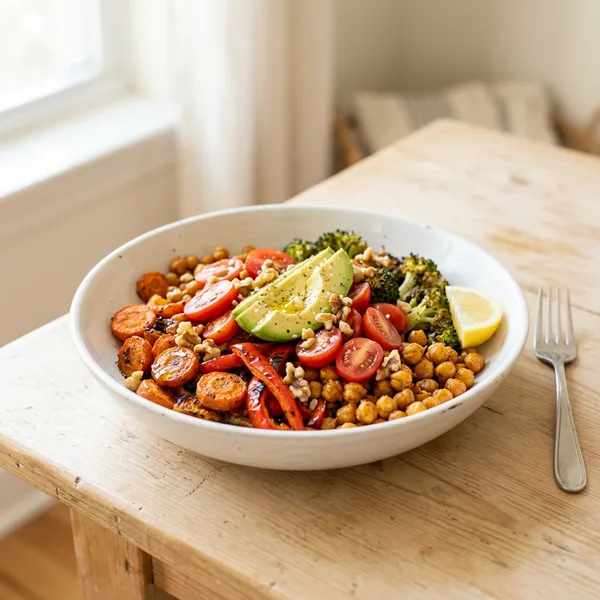
Good tomatoes, sweet carrots, peppers the color of a sunset. This bowl roasts the sturdy vegetables with chickpeas and keeps the tomatoes and avocado raw and cool. It stays plant-based and filling, and it does well for lunch the next day.
- Carrots. About 200 g, sliced thin so they roast fast and sweet.
- Red bell pepper. Two medium ones, 240 g, in strips.
- Broccoli. 200 g of florets. The tips brown and the stems stay tender.
- Canned chickpeas. One 15-oz can, drained, rinsed and patted dry. They take the cumin and the heat of the oven.
- Grape tomatoes and avocado. Raw, for something fresh against the roasted vegetables.
- Walnuts. Four tablespoons, chopped, for crunch.
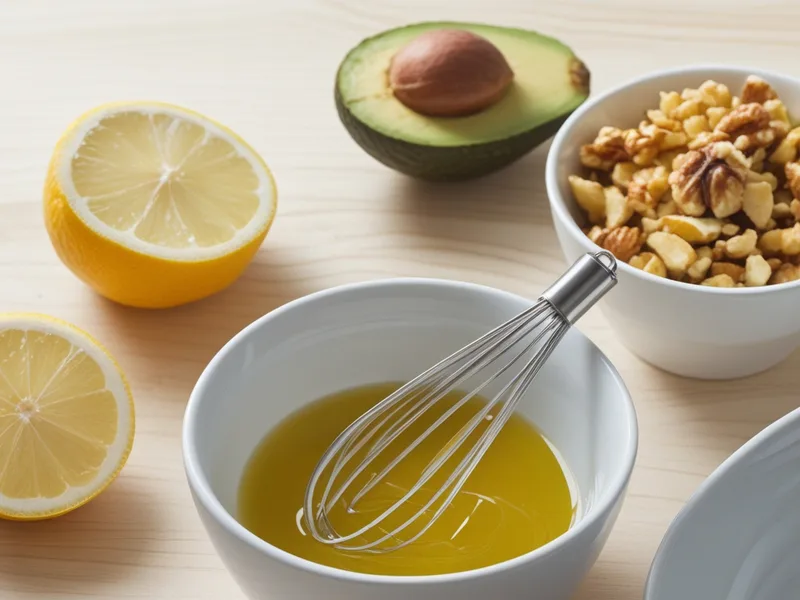
- Lemon, olive oil and garlic. A simple dressing. Finish with a drizzle.
The ingredient list, the method with photos and the nutrition panel are in the recipe card below.
How many calories and how much protein?
One serving, half of the recipe, has about 599 calories, 17 g of protein, 63 g of carbohydrate and 36 g of fat, and about 703 mg of sodium. Most of the fat comes from the olive oil, the avocado and the walnuts, and most of the sodium from the canned chickpeas. Everything is an estimate from USDA FoodData Central, using raw weights for the fresh produce. We do not give this bowl a glycemic number, because it depends on your portions and on what you eat with it.
Swaps that keep the bowl balanced
- No walnuts? Sunflower seeds or chopped almonds do the same job, and the numbers change, so check them.
- Lighter plate. Use half the olive oil and skip the avocado. The calories drop, and the bowl is still a full meal.
- Add a fish. If you eat fish, flaked canned sardines or a baked fillet go well with the lemon.
- Make it ahead. Roast a double tray and keep the vegetables in the fridge for 3 to 4 days. Add the tomatoes, avocado and dressing when you eat.
More of the best foods to eat for clear skin: recipes with vegetables and fruit
Two other recipes on this site use produce in a different way. Per serving, by USDA data and as estimates:
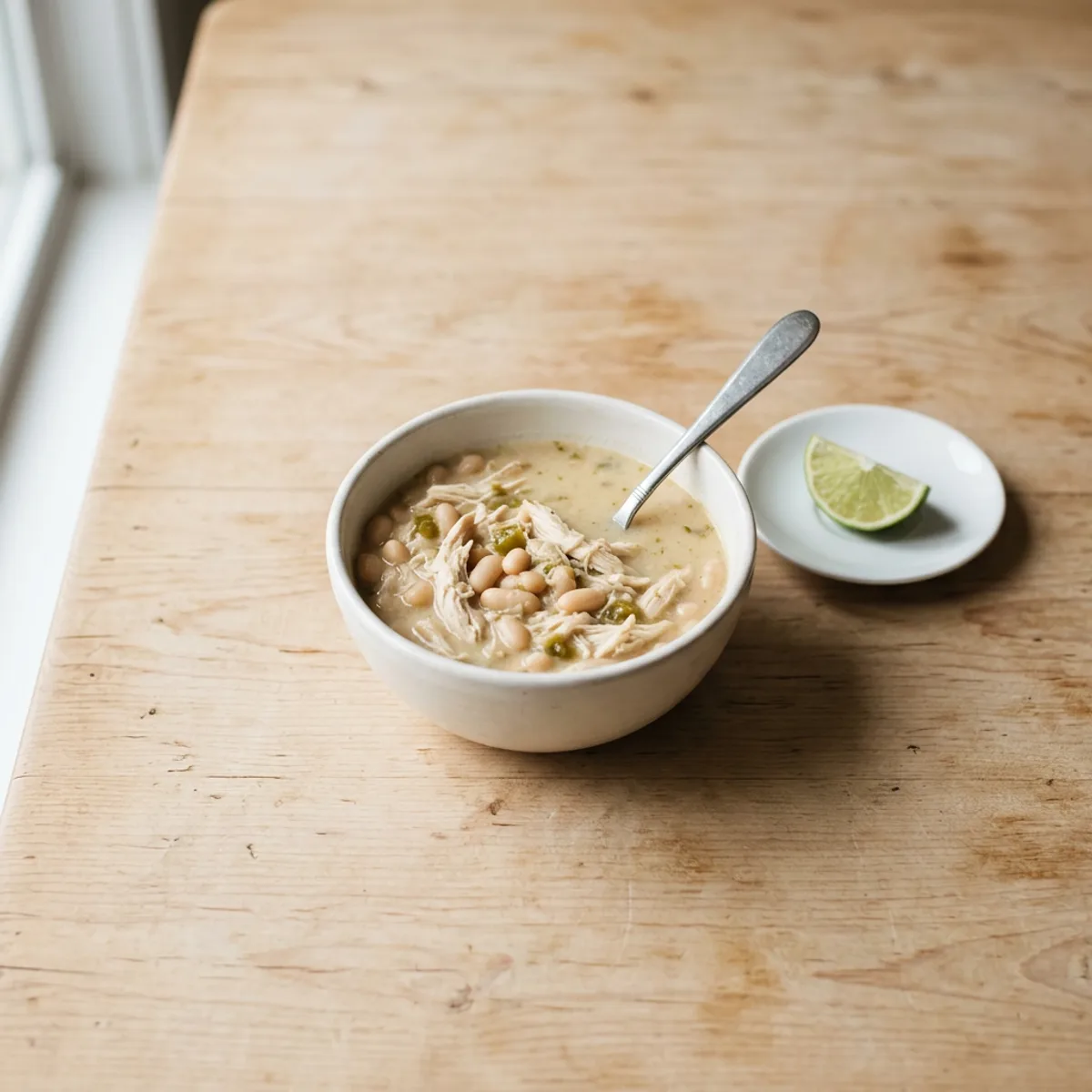
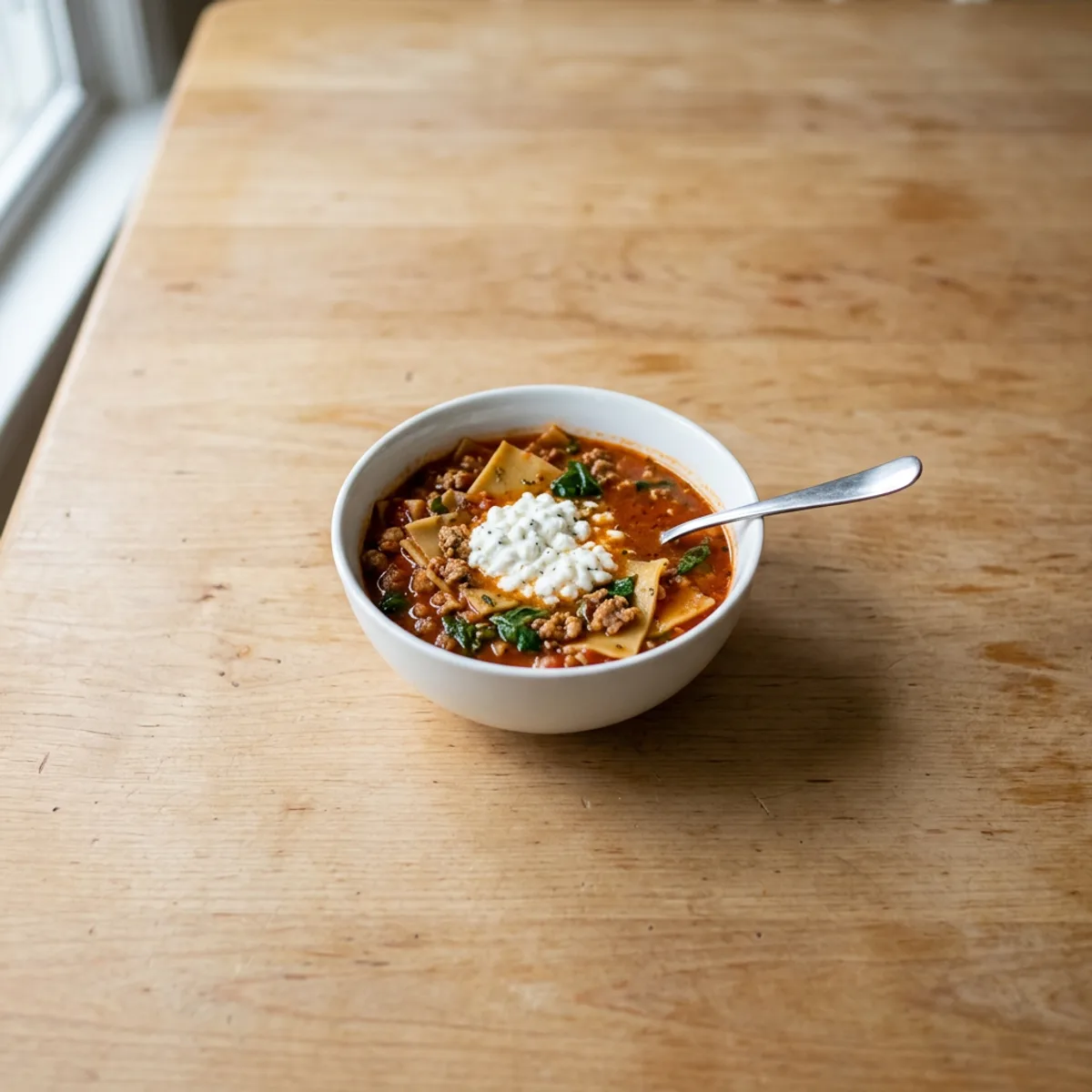
- A soup. Our lasagna soup cooks crushed tomatoes and spinach into a one-pot dinner with about 341 calories and 27 g of protein.
- A make-ahead breakfast. Our chia seed pudding is topped with blueberries and has about 228 calories and 9 g of fiber.
Foods for glowing skin: what carotenoids can and cannot tell us
"Glowing" is a look and not a medical term, so it is hard to study. What the two trials above measured is skin color, and they found that eating a lot of carotenoid-rich produce raised yellowness within a month or so. Carrots and red peppers, two of the vegetables in the bowl, are the type of produce those studies point to, but neither study used our recipe. We cannot say that a change in color means healthier skin. Eat the colors because they are good food. If collagen is the other skin question on your mind, our collagen smoothie goes through what trials of oral collagen found.
Tips for roasting vegetables that brown, not steam
- Give them room. Crowded vegetables steam. Use two sheets if needed.
- Dry the chickpeas. A clean towel makes them crisp at the edges.
- Add the broccoli late. It needs less time than the carrots.
- Dress at the end. Lemon on hot vegetables dulls their color.
- Taste before salting. Canned chickpeas already carry sodium.
Safety: when to ask a doctor
Acne is a common skin condition, and food is not a treatment for it. If you have painful, deep or scarring acne, a sudden change in your skin, or acne that keeps coming back, talk to a dermatologist, who can look at the cause and the treatments that fit. Do not stop a prescribed treatment to change your diet. Do not start high-dose supplements, including omega-3 capsules, on your own: if you are pregnant or breastfeeding, have a health condition or take medicine, ask your healthcare professional first. Cut out a whole food group, such as dairy, only after talking to a health professional, because it can leave gaps in your diet. Walnuts are a tree nut, so skip them if you have a nut allergy.
Foods for Clear Skin: A Colorful Roasted Vegetable and Chickpea Bowl With Walnuts
One sheet-pan bowl of carrots, red pepper, broccoli, chickpeas and walnuts, two more recipes from this site built on vegetables and fruit, and what studies on food and skin really found.
Ingredients
Instructions
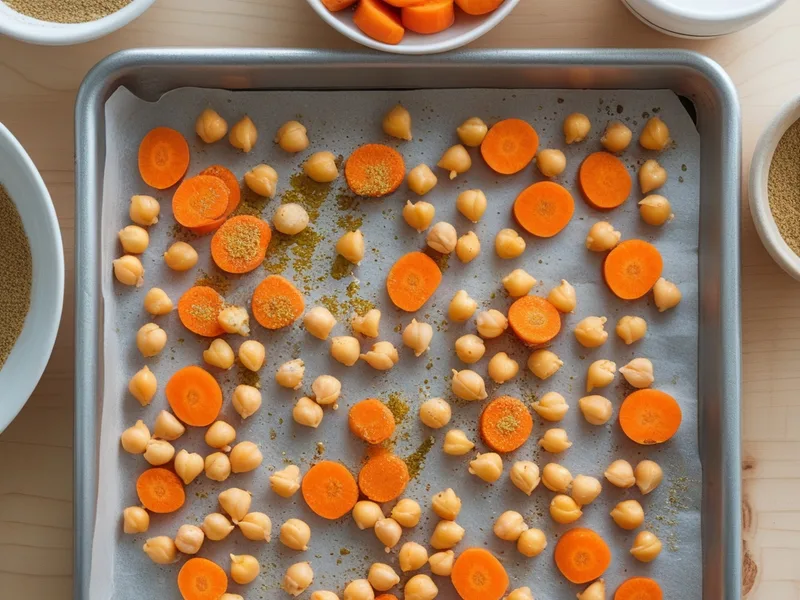
- Roast the carrots and chickpeas. Heat the oven to 425°F (220°C) and line a large baking sheet with parchment paper. Toss the carrot coins and the dry chickpeas with 1 tablespoon of the olive oil, the cumin and the salt, spread them in one layer and roast for 10 minutes.
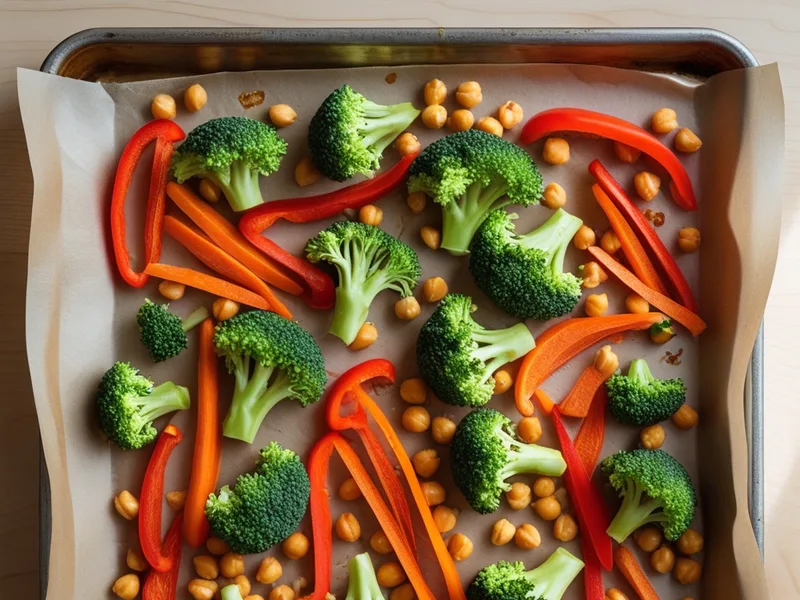
- Add the pepper and broccoli. Add the red pepper strips and the broccoli florets to the sheet, toss, and roast for 12 to 15 minutes more, until the broccoli tips are browned and the carrots are tender when you pierce one with a fork.
- Dress and assemble. Whisk the remaining tablespoon of olive oil with the lemon juice and the garlic. Divide the roasted vegetables and chickpeas between two bowls, add the tomatoes and avocado, scatter the walnuts on top and drizzle with the dressing.
Notes
Dry the chickpeas well after rinsing. Wet ones steam instead of crisping.
Cut the carrots thin so they finish at the same time as the broccoli.
The numbers use raw weights for the vegetables and drained canned chickpeas from USDA FoodData Central. The brand of chickpeas changes the sodium.
Nutrition Facts
Per serving (estimated)
- Total Fat
- 36 g
- Sodium
- 703 mg
- Total Carbohydrate
- 63 g
- Protein
- 17 g
General information, not medical or dietary advice. Nutrition values are estimates. See our full disclaimer.
Frequently asked questions
What are the best foods for acne?
No food is proven to treat acne. Some trials of low-glycemic diets saw fewer lesions and others did not, and observational studies link milk to a small rise in risk. A varied plate of vegetables, legumes, nuts and fish is a reasonable base, and a dermatologist is the person to ask about acne itself.
How can I clear my skin fast?
Food is not a fast fix, and we found no study showing a meal or a drink clears skin in days. In the trials below, diets were followed for 2 to 12 weeks. If your skin is bothering you, a dermatologist can look at the cause and the treatments that fit it.
How to achieve clear skin in 7 days?
We found no study of a 7-day food plan for clear skin, so we do not offer one. The shortest diet trial in this guide ran for 2 weeks and measured a blood marker, not the skin. Steady meals, sleep and a visit to a dermatologist are more useful than a one-week plan.
Are sunflower seeds good for skin?
We found no trial of sunflower seeds and skin, so we make no claim. They are a nut and seed food you can scatter on the bowl above in place of walnuts, and the numbers on the recipe card would change.
What foods are good for glowing skin?
In two small trials, eating plenty of carotenoid-rich fruit and vegetables such as carrots and red peppers raised skin yellowness measured by an instrument within 4 to 6 weeks. That is a change of color, not proof of clearer or healthier skin.
Comments
Tried it? Tell us how it went: your comment helps other readers.