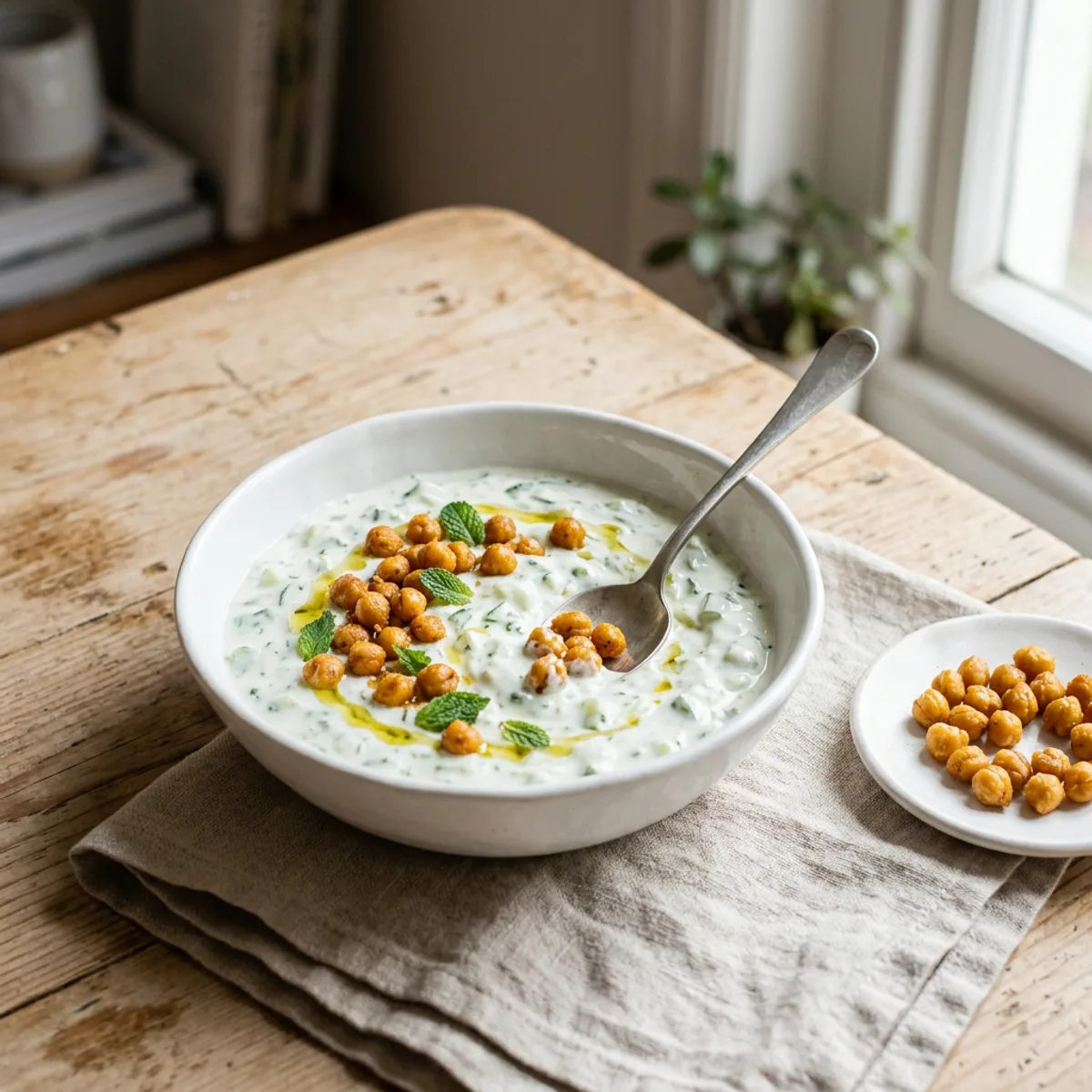
Quick answer: Is Greek yogurt anti-inflammatory? Reviews of randomized trials found dairy foods, including yogurt, had neutral to modestly beneficial effects on blood markers of inflammation, with limits. A review of probiotic yogurt found no clear difference in C-reactive protein. A serving of this cucumber-mint yogurt sauce with chickpeas has about 191 calories.
What if the yogurt did the cooling and the chickpeas did the crunch? That is the idea here. Greek yogurt is thick and tangy, and a spoon of it with grated cucumber, garlic and mint turns into a sauce that makes roasted chickpeas feel like a meal. Below are the recipe card and a plain look at what studies say about yogurt and inflammation, because the honest answer is smaller than the headlines.
Cucumber-mint yogurt chickpea bowl at a glance
| What | Where | What a serving has (USDA, estimate) |
|---|---|---|
| Greek yogurt sauce, roasted chickpeas | The recipe card below | About 191 calories and 11 g of protein |
| Another Greek yogurt idea | Greek yogurt parfait | Its own page, with the numbers |
| Another anti-inflammatory question | Are sweet potatoes anti-inflammatory? | A miso-glazed roast and its studies |
Is Greek yogurt anti-inflammatory? What the studies say
Short answer: not shown in the way a headline would put it. The best evidence we found comes from reviews of randomized trials, and they describe neutral to modestly beneficial effects on blood markers, not on any disease. Here is what we read on PubMed on October 24, 2026.
- A 2013 systematic review in The American Journal of Clinical Nutrition (PMID 23446894) looked at eight randomized trials in overweight and obese adults. Dairy products (milk, yogurt and cheese) did not have adverse effects on inflammation markers. Three of the seven trials where inflammation was a secondary outcome showed improvement in C-reactive protein, interleukin-6 or TNF-alpha, and four showed no effect. The authors could not separate a beneficial effect from a neutral one.
- A 2021 systematic review in the Journal of the American College of Nutrition (PMID 32870744) covered 27 randomized trials in adults without severe inflammatory disease. Of 19 trials on dairy products, 10 reported no effect and 8 reported a reduction in at least one marker. All 8 trials on dairy protein reported no effect. The authors call the effect "neutral to beneficial" and ask for trials designed around inflammation.
- A 2026 systematic review and meta-analysis in The Journal of Nutritional Biochemistry (PMID 41802686) compared probiotic yogurt with conventional yogurt in 33 trials. C-reactive protein did not differ significantly, and interleukin-10 rose, but the authors rate the certainty as very low and call superiority over ordinary yogurt uncertain.
So the summary is modest. Dairy and yogurt look neutral to slightly helpful for blood markers in these reviews, none of which tested Greek yogurt on its own, and none shows that yogurt treats or prevents an inflammatory condition. Food supports a healthy way of eating; it does not replace medical care.
What to look for on the label
Choose plain, unsweetened Greek yogurt and check the label for added sugar: flavored cups can carry a lot more than the plain tub. Thick yogurt that holds a spoon upright makes the better sauce, because a thin one runs off the chickpeas. If you want a dairy-free version, a thick plain plant-based yogurt can stand in for the sauce, though its numbers will differ from the ones above.
Why this sauce works
The twist is the grating. Grated cucumber, squeezed dry, melts into the yogurt without turning it watery, so the sauce stays thick enough to hold the chickpeas. Garlic goes in raw and finely grated, so it blends into the sauce instead of biting back. Roast the chickpeas dry and hot: a wet chickpea steams and goes soft, a dry one crisps.
What goes in
- Plain Greek yogurt, 1 cup. Choose unsweetened. It supplies the protein and the tang.
- Cucumber, garlic, lemon and mint. Cool, sharp and fresh, in small amounts.
- Canned chickpeas, 240 g. Drained, rinsed and patted dry.
- Olive oil, paprika and cumin for the crunch and the color.
Calories and protein
The numbers come from USDA FoodData Central values, ingredient by ingredient. One serving, a quarter of the recipe, has about 191 calories, 11 g of protein, 18 g of carbohydrate and 9 g of fat, with about 462 mg of sodium. It is an estimate: the weight of a cup of Greek yogurt is a documented assumption, and canned chickpeas vary by brand.
Tips and common mistakes
- Pat the chickpeas dry. Wet ones will not crisp.
- Squeeze the cucumber. A handful of liquid is enough to thin the sauce.
- Shake the pan once. It moves the chickpeas so they brown evenly.
- Salt in two places. A little on the chickpeas, a little in the sauce, then taste.
- Serve fast. Crispness is short-lived once the chickpeas meet the sauce.
Make it your own
- Spice it. Swap the paprika for a pinch of chili flakes on the chickpeas.
- Pile it up. Spoon the sauce over a bowl of roasted vegetables and rice.
- Go herby. Use dill instead of mint, or half and half.
Storage
Keep the sauce covered in the refrigerator and eat it within 3 to 4 days. Store the chickpeas separately in an open container at room temperature for a day if you want them crisp; in the fridge they soften. Combine at serving time.
A little soft for Karim
The bowl came out softer and more watery than Karim wanted, although everything was followed exactly and it still tasted delicious. Karim would cook it a little longer next time, found it easy, and plans to make it again.
How yogurt fits into the bigger picture
The studies above looked at foods eaten as part of ordinary diets, for weeks to months, and measured blood markers. None of them followed people long enough to say whether yogurt changes disease. If you are curious about other foods people ask about, our look at whether potatoes are anti-inflammatory walks through the same kind of evidence, and our greek yogurt pancakes show another way to use a cup of yogurt at breakfast.
Safety: dairy, allergies and your doctor
This recipe contains dairy. Check labels if you or your family have a milk allergy or lactose intolerance. If you follow a plan for a health condition, including one for inflammation or arthritis, ask your doctor or dietitian how yogurt fits.
What we read
- Nutrition: values come from USDA FoodData Central for each ingredient (for example plain Greek yogurt); the cup of yogurt uses a documented weight assumption, so the total stays an estimate.
- Studies: a targeted PubMed search on October 24, 2026 for yogurt and dairy with inflammation markers; the three reviews above were read in their abstracts.
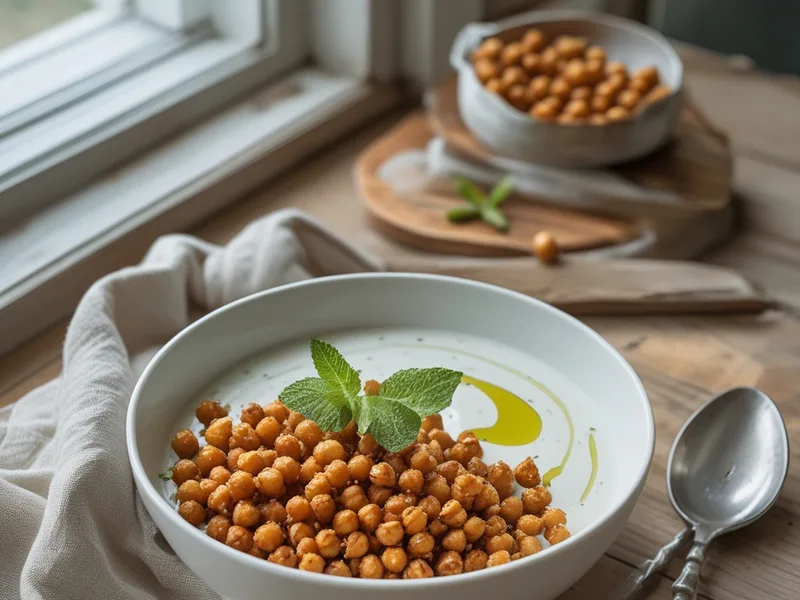
Is Greek Yogurt Anti-Inflammatory? Try It as a Cucumber-Mint Sauce With Crispy Chickpeas
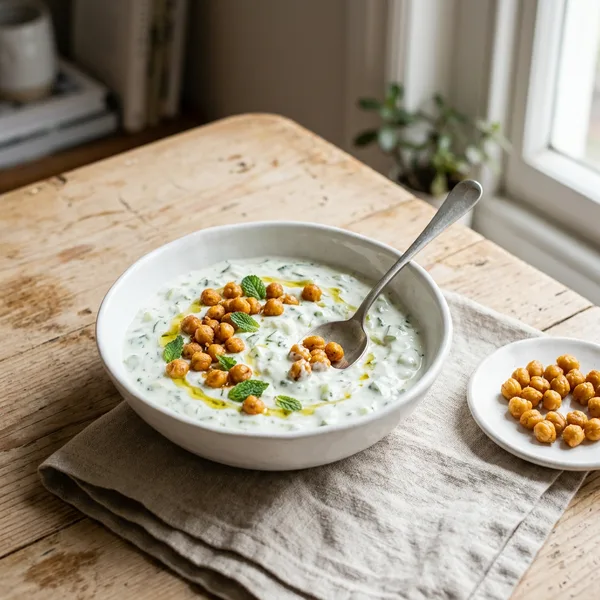
A cool cucumber and mint Greek yogurt sauce over crispy roasted chickpeas, and the reviews of trials on yogurt and inflammation.
Ingredients
Instructions
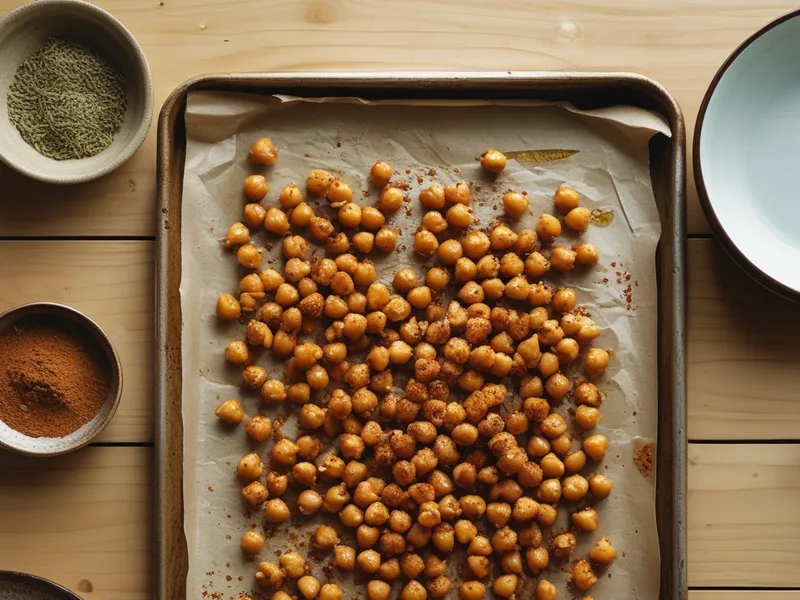
- Roast the chickpeas. Heat the oven to 425°F (220°C) and line a baking sheet with parchment paper. Toss the dry chickpeas with 1 tablespoon of the olive oil, the paprika, cumin and 1/4 teaspoon of salt, spread them in one layer and roast for 22 to 28 minutes, shaking the pan once, until golden and crisp at the edges.
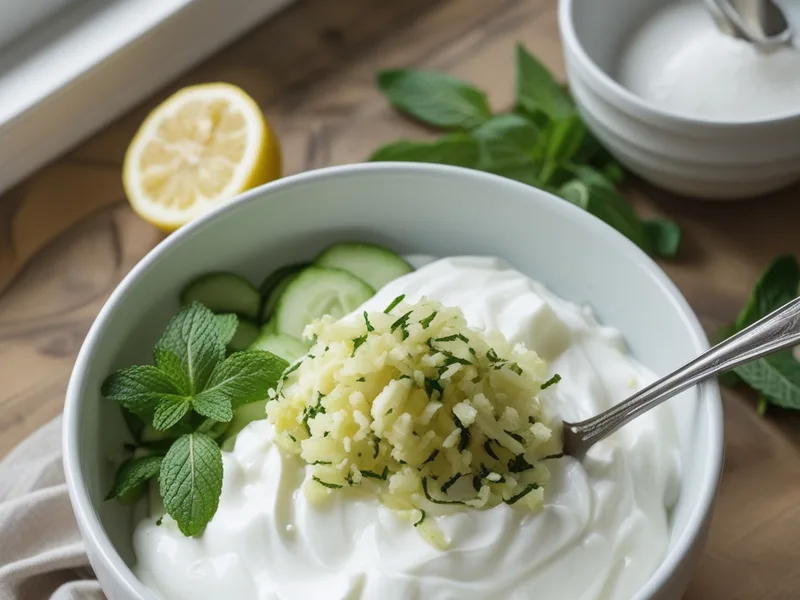
- Stir the sauce. Grate the cucumber and squeeze out the liquid in a clean towel. In a bowl, stir the Greek yogurt with the cucumber, garlic, lemon juice, the other tablespoon of olive oil, the mint and 1/4 teaspoon of salt until creamy. Chill it while the chickpeas roast.
- Build the bowls. Divide the sauce among four small bowls, top each with the warm chickpeas and finish with a little more mint and a thin drizzle of olive oil. Serve right away so the chickpeas stay crisp.
Notes
Squeeze the grated cucumber well. Extra liquid makes the sauce thin and watery.
The chickpeas crisp as they cool a little, so do not judge them straight from the oven.
Keep the sauce and the chickpeas apart in the fridge and combine them at serving time.
Nutrition Facts
Per serving (estimated)
- Total Fat
- 9 g
- Sodium
- 462 mg
- Total Carbohydrate
- 18 g
- Protein
- 11 g
General information, not medical or dietary advice. Nutrition values are estimates. See our full disclaimer.
Frequently asked questions
Is natural Greek yogurt good for inflammation?
In the reviews we read, dairy foods including yogurt had neutral to beneficial effects on blood markers of inflammation, and none of them showed harm in the adults studied. They were not trials of plain Greek yogurt alone, so the answer is not shown.
Can you provide a handout for the anti-inflammatory diet?
We found no official handout we could read and link, so this page does not offer one. A doctor or a registered dietitian can give you a plan that fits your health and medicines.
What are 10 foods that can help with arthritis?
No study or official list we read names ten foods that treat arthritis, so we do not write one. If you live with arthritis, ask the clinician who follows you what to eat, and do not stop a medicine because of food.
How do you flush inflammation out of your body?
Inflammation is a process in the body, not something a food or drink flushes out, and nothing we read says otherwise. Eating a varied diet, staying active and following your doctor's advice are the usual starting points.

Comments
Tried it? Tell us how it went: your comment helps other readers.