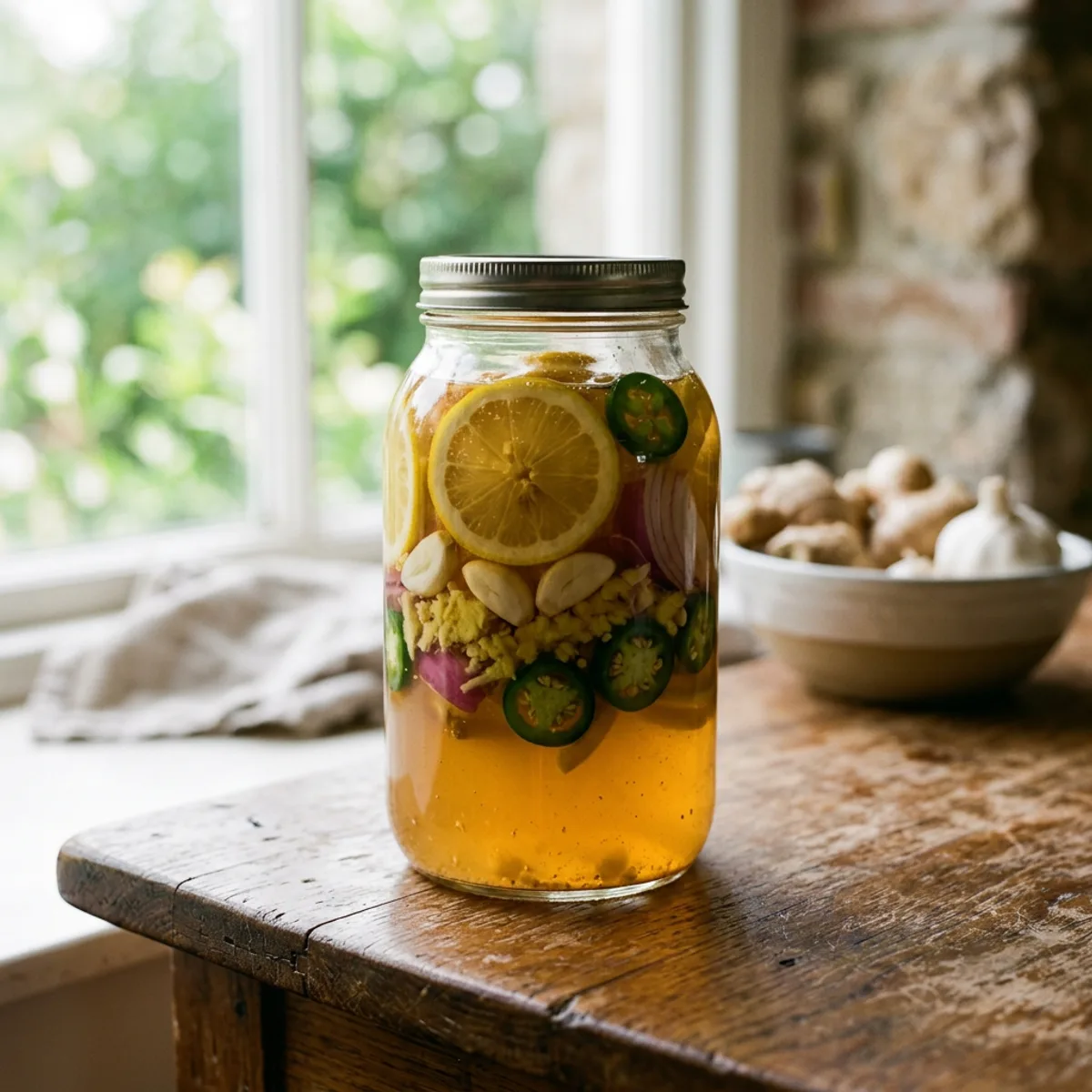
The short version: Fire cider is apple cider vinegar steeped for 4 weeks with onion, garlic, ginger, horseradish, jalapeño and lemon, then sweetened with honey. A tablespoon has about 11 calories. No trial we found tested fire cider itself; studies exist on apple cider vinegar and garlic, and they do not show that this tonic protects against illness.
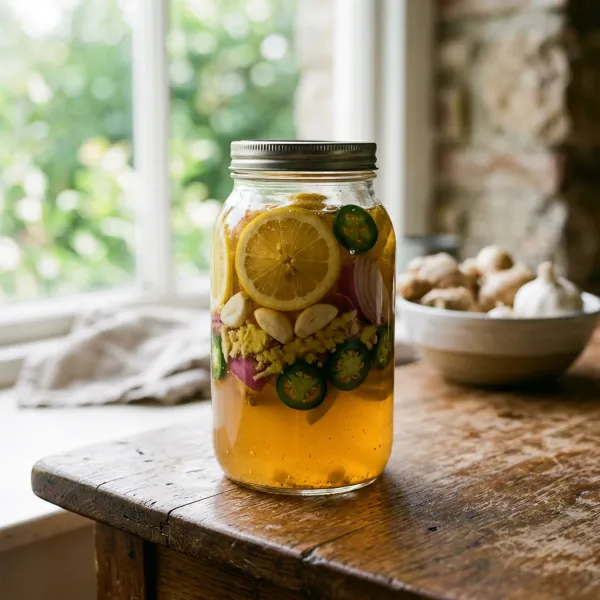
This fire cider recipe starts with a quart jar and a patient month. The jar tells you whether it is working. After a week the vinegar turns gold, after two it smells like a very serious salad dressing, and by four it is a deep amber with a kick that clears your sinuses. I make mine in a quart jar with whatever is in the kitchen and wait. The hard part is not opening it early.
Fire cider recipe at a glance
| Step | Time | What happens |
|---|---|---|
| Chop and pack the jar | 20 minutes | Onion, garlic, horseradish, ginger, jalapeño and lemon go in |
| Cover with vinegar and steep | 4 weeks | Cool, dark cupboard, shaken every day or two |
| Strain and sweeten | 10 minutes | Honey goes in last, then the bottle goes in the fridge |
For another vinegar-based drink on this site, see our ginger water recipe and our hibiscus tea.
What the research says about fire cider ingredients
Short answer: nothing we found tested fire cider, so these are results for single ingredients, with their limits. We searched PubMed on October 24, 2026.
- Apple cider vinegar and weight. A 2025 meta-analysis of 10 randomized trials with 789 adults (PMID 41010525) found that daily vinegar for at least 4 weeks was linked to lower body weight (SMD -0.39), BMI and waist circumference in adults who were overweight, obese or had type 2 diabetes. The effects were seen up to 12 weeks at about 30 ml a day, and the authors call it a possible short-term aid, not a treatment. The vinegar in those trials was not the fire cider on this page.
- Apple cider vinegar and blood markers. A 2025 meta-analysis of 25 clinical trials with 1,320 adults (PMID 37608660) found lower fasting blood glucose, HbA1c and total cholesterol, and no significant change in BMI, insulin resistance, LDL or HDL. The results were very inconsistent between trials (I² above 95% for glucose and HbA1c), and the effects were clearer in people with diabetes.
- Garlic and the immune system. NCCIH says garlic supplements have been promoted as immune boosters during cold and flu season, but very little research has been done on this. A 2022 review it cites found only two studies suggesting a possible benefit, both small and with weaknesses. That research used supplements, not garlic steeped in vinegar.
So the honest summary: vinegar has some evidence for blood sugar and weight in short trials, garlic and ginger are good ingredients, and fire cider is a tradition and a strong-tasting condiment. This page does not say that it prevents colds or boosts immunity, because nothing we read shows that. It does not replace medical care.
How to use fire cider
- In warm water. One tablespoon in a mug of warm water with a little extra honey, if you want it gentler.
- As a dressing. Whisk 1 tablespoon with 2 tablespoons of olive oil for a salad, a roasted vegetable bowl or a slaw.
- In a marinade. Brush it on chicken or tofu before roasting.
- Straight. A spoonful is a lot. Start with a teaspoon, and rinse your mouth with water afterwards to protect your teeth from the acid.
What goes in
- Apple cider vinegar, 2 cups. The base. Use a store-bought bottle, and use it from a clean, new bottle.
- Onion and garlic. They carry the savory side. Crush the garlic and let it sit for 10 minutes before it goes in the jar.
- Fresh horseradish and ginger. They give heat you feel in the nose and the throat. Grate them rather than slicing; more surface gives a stronger infusion.
- Jalapeño and lemon. The pepper adds a slow burn, the lemon brightens the vinegar.
- Honey, added at the end. It softens the bite. Cooking it into the vinegar would not add anything.
Fire cider recipe without horseradish
If you cannot find fresh horseradish, or you find it too sharp, leave it out and double the ginger. The cider is a little rounder and less nasal, and the other flavors come forward. Do not swap in jarred prepared horseradish, because it already contains vinegar and salt and changes the balance.
Calories and carbs
The numbers come from USDA FoodData Central values. One tablespoon of strained fire cider has about 11 calories, 2 g of carbohydrate, and almost no protein, fat or sodium. It is an estimate: we counted the apple cider vinegar and the honey, which make up the liquid you drink, and not the onion, garlic, ginger, horseradish, jalapeño and lemon, because they are strained out. The recipe makes about 32 tablespoons. If you use less honey, the numbers fall.
Tips and common mistakes
- Fill the jar with enough vinegar. Everything must be covered, or the exposed pieces can mold.
- Use parchment under the lid. Vinegar eats through a bare metal lid and the cider turns metallic.
- Do not grate horseradish near your face. The fumes are strong. Open a window.
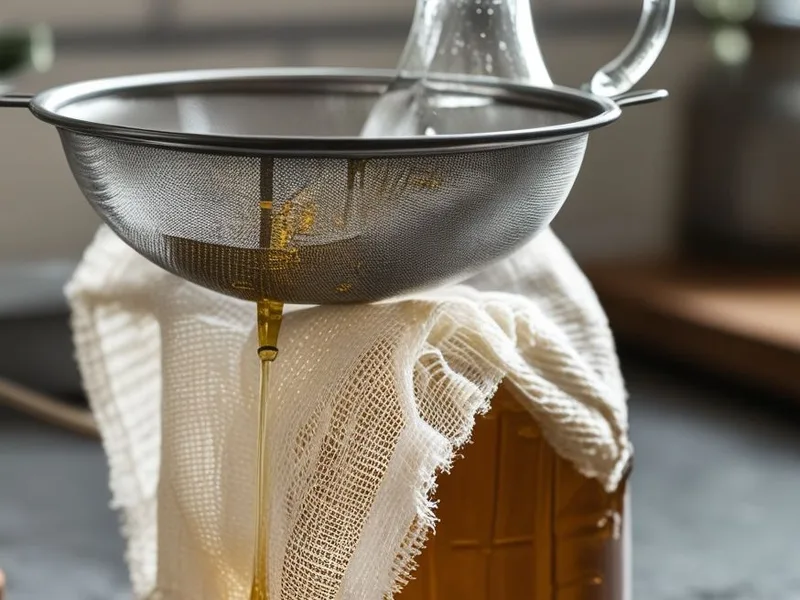
- Strain well. Squeeze the pulp in cheesecloth. The last spoonfuls are the best.
- Keep a label with the date. Four weeks goes fast, and so does forgetting what is in the cupboard.
Variations
- Turmeric. Add 1 tablespoon of grated fresh turmeric. It stains, so use a glass jar and wipe up drips.
- Orange. Swap the lemon for an orange, sliced.
- Milder. Skip the jalapeño and use half the garlic.
- Herbs. Add a few sprigs of rosemary or thyme.
Alin's jar, one thought on the liquid
Alin steeped it exactly as written and thought it delicious, then found the finished cider a bit thin and watery. Next time Alin would go for less liquid, and Alin will be making it again. That is one cook's preference, not a tested change, so the vinegar here still has to cover everything in the jar.
Storage
Keep the steeping jar in a cool, dark place. After straining, pour the fire cider into a clean bottle and refrigerate it. We did not find an official shelf life for homemade fire cider, so treat it as any homemade preserve: label the date, keep it cold, and throw it out if it smells off, shows mold or changes in a way you do not recognize.
Safety: who should ask first
NCCIH says garlic taken as a supplement may increase the risk of bleeding, so talk with your health care provider before using it if you take medicines that affect bleeding, such as anticoagulants or aspirin, or if you will have surgery. NCCIH also says garlic may not be safe in pregnancy or while breastfeeding in amounts greater than those found in foods, and that raw garlic on the skin can cause severe irritation and chemical burns, so use this on food and in drinks only, never on the skin. The honey matters too: the CDC says honey is not safe for infants and that you should not feed it to a child younger than 1 year old. Vinegar is acidic, so drink it diluted and rinse your mouth afterwards. Fire cider is a food, not a treatment, and if you have reflux, stomach problems, diabetes or take medicines, ask your doctor first.
What we read
- Nutrition: values come from USDA FoodData Central for apple cider vinegar and honey (vinegar, cider); the strained solids are not counted, so the total stays an estimate.
- Studies: a targeted PubMed search on October 24, 2026 for apple cider vinegar; the two meta-analyses above were read in their abstracts.
- Safety: NCCIH's page on garlic (updated February 2025) and the CDC's botulism pages, read on October 24, 2026.
Fire Cider Recipe With Apple Cider Vinegar, Garlic, Ginger and Horseradish
A sharp, spicy fire cider made by steeping onion, garlic, ginger, horseradish and jalapeño in apple cider vinegar for four weeks, and the evidence on vinegar and garlic.
Ingredients
Instructions
- Pack the jar. Layer the onion, garlic, horseradish, ginger, jalapeño and lemon in a clean 1-quart (1-liter) glass jar. Press them down lightly so they sit low in the jar.
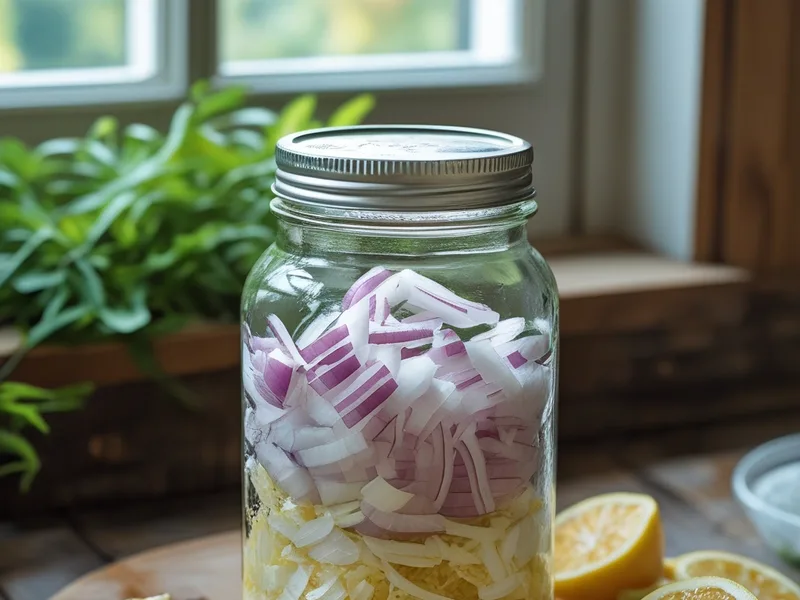
- Cover with vinegar and steep. Pour in the apple cider vinegar until everything is covered by at least an inch. Put a piece of parchment paper under the lid, because vinegar corrodes metal. Close the jar, shake it, and keep it in a cool, dark cupboard for 4 weeks, shaking it every day or two.
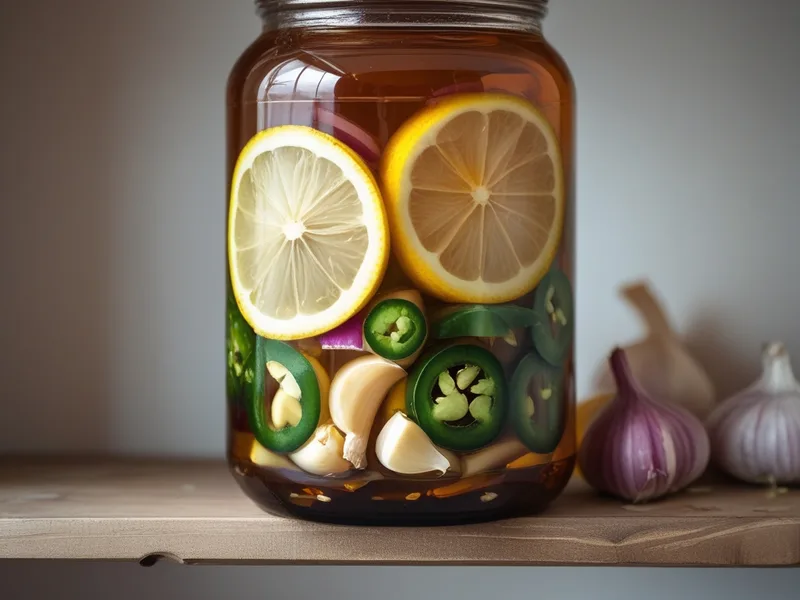
- Strain and sweeten. After 4 weeks, strain the liquid through a fine sieve lined with cheesecloth, pressing the solids to get every drop out. Stir in the honey, 1 tablespoon at a time, until it tastes the way you like it. Pour into a clean bottle and keep it in the refrigerator.
Notes
Keep everything under the vinegar. Pieces that float up above the liquid can grow mold.
Taste a spoonful before you add the honey; start with less and add more.
Wear gloves to grate the horseradish and slice the jalapeño, and do not touch your eyes.
Nutrition Facts
Per serving (estimated)
- Total Fat
- 0 g
- Sodium
- 1 mg
- Total Carbohydrate
- 2 g
- Protein
- 0 g
General information, not medical or dietary advice. Nutrition values are estimates. See our full disclaimer.
Frequently asked questions
Is fire cider alcohol?
No alcohol is added in this recipe. It is made from store-bought apple cider vinegar, onion, garlic, ginger, horseradish, jalapeño, lemon and honey. We did not find an official source giving the trace alcohol in vinegar, so if you must avoid alcohol completely, ask your doctor.
Is it safe to make your own apple cider vinegar?
We did not find an official source on making vinegar at home, so this recipe starts from store-bought apple cider vinegar instead. Choose a bottle with a clean label and use a glass jar.
What does fire cider taste like?
Sharp, sour and hot, with a sweet finish from the honey. The vinegar and horseradish lead, the garlic and ginger come through behind, and the jalapeño adds a slow burn. A spoonful in warm water or over a salad softens it.
Can I make fire cider without horseradish?
Yes. Leave it out and add another 1/4 cup of grated ginger or one more jalapeño. The cider will be less sharp in the nose but still spicy. The recipe card shows the full version.

Comments
Tried it? Tell us how it went: your comment helps other readers.