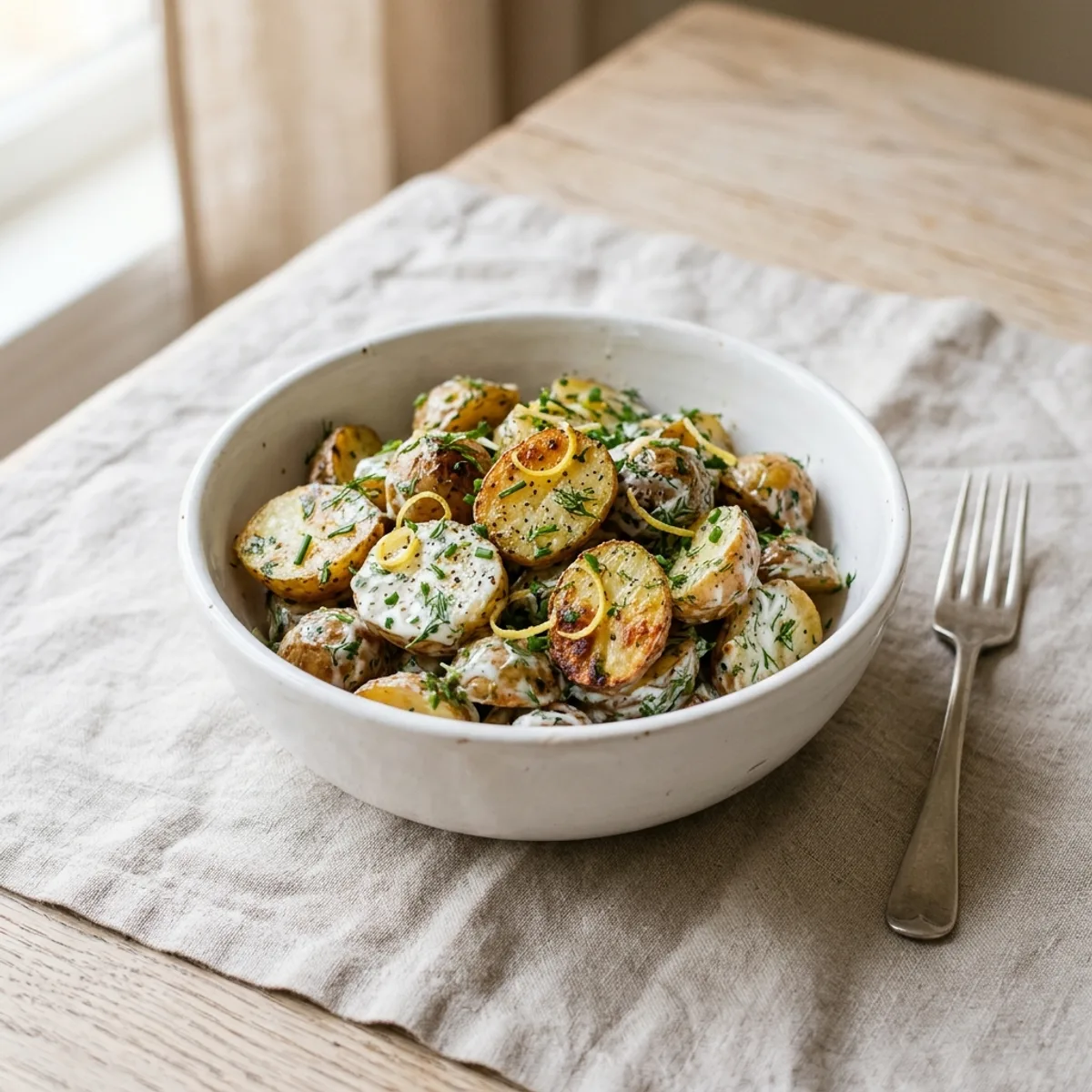
Quick answer: Studies on potatoes and inflammation are small and mixed: in one six-week trial, eating pigmented potatoes tended to lower two blood markers, while a review of nightshades says the link with gut inflammation is still a question. This chilled roasted potato salad has about 243 calories a serving.
You typed "are potatoes anti inflammatory", and I get it: potatoes get a bad name, and a bowl of them can look like the opposite of an "anti-inflammatory" meal. So I started with the dish. Roasted baby potatoes, cooled, tossed with a lemon and dill Greek yogurt dressing. Then I read what the studies say, so you get a plain answer in the same page.
Roasted potato salad at a glance
| What | Where | What a serving has (USDA, estimate) |
|---|---|---|
| Roasted baby potatoes, Greek yogurt, lemon, dill | The recipe card below | About 243 calories and 10 g of protein |
| Orange-fleshed roots, roasted | Roasted sweet potatoes | Their own page, with the numbers |
| Creamy Greek yogurt as a base | Greek yogurt parfait | Their own page, with the numbers |
Are potatoes anti-inflammatory? What the evidence says
Short answer: nobody can say yes or no from the research we found. Potatoes are not proven to calm inflammation, and they are not shown to cause it in most people. Here is what we read on PubMed on October 21, 2026, with the limits.
- A 2011 randomized study in The Journal of Nutrition (PMID 21106930) gave healthy men, 12 in each group, 150 g of cooked white, yellow or purple-flesh potatoes a day for six weeks. Compared with the white-potato group, the yellow and purple groups tended to have lower interleukin-6 (P under 0.08), and the purple group tended to have a lower C-reactive protein (P = 0.07). Both are blood markers linked to inflammation, and "tended" means the result did not reach the usual cut-off. The DNA-damage marker was lower in the yellow and purple groups. The authors concluded that pigmented potatoes reduced inflammation and DNA damage. The groups were small and the study was short.
- A 2020 pilot trial in International Urology and Nephrology (PMID 32008198) gave 16 people on hemodialysis 16 g a day of resistant starch, or a placebo, for four weeks. The authors reported a lower level of several inflammatory proteins and called the result preliminary. It was a supplement in people with kidney disease, not potatoes eaten at dinner.
- A 2025 review in the International Journal of Molecular Sciences (PMID 40076626) says inulin and resistant starch clearly show anti-inflammatory effects in the short term, while the evidence for some other fibers is less convincing. The authors also point to large differences between studies in design and participants.
- A 2023 review in Digestive Diseases and Sciences (PMID 37202602) looked at nightshade vegetables, a family that includes white potatoes, tomatoes, peppers and eggplants. It describes compounds called glycoalkaloids that may affect the gut lining and possibly trigger gut symptoms, and the authors call the existing literature limited. It raises a question for people with inflammatory bowel disease or irritable bowel syndrome. It does not show that potatoes cause problems for everyone.
So the honest summary is this. There is a small trial in which colorful potatoes eaten daily were linked to lower markers, a supplement trial that is not about potatoes as food, a review about resistant starch, and a cautious review about nightshades. None of this proves that potatoes treat or cause inflammation. A food supports your health, it does not replace medical care.
Why the recipe is roasted, then cooled
Roasting gives the potatoes crisp edges and a deeper taste than boiling, and cooling them turns them into a salad you can make ahead. Cooled cooked potatoes are often said to contain more resistant starch. No study in our search measured this in a way we could cite, so we give no amount. What we can say is that the potatoes in this recipe keep their skins, which adds texture, and that the yogurt dressing replaces a mayonnaise-based one with Greek yogurt.
What goes in the bowl
- Baby potatoes, 750 g (about 1 2/3 lb). Any color works. If you want to follow the one small trial, use yellow or purple ones.
- Olive oil, 2 tablespoons, to roast them.
- Greek yogurt, 1 cup, plain. It makes the dressing creamy and adds protein.
- Lemon juice and zest, dill and chives. Fresh and bright, so you can use less salt.
How many calories and how much protein?
The numbers come from USDA FoodData Central values, ingredient by ingredient. One serving, a quarter of the recipe, has about 243 calories, 10 g of protein, 36 g of carbohydrate and 7 g of fat, with about 324 mg of sodium. It is an estimate: the weight of a cup of Greek yogurt is a documented assumption, and the values change with the size and kind of potato.
Tips and common mistakes
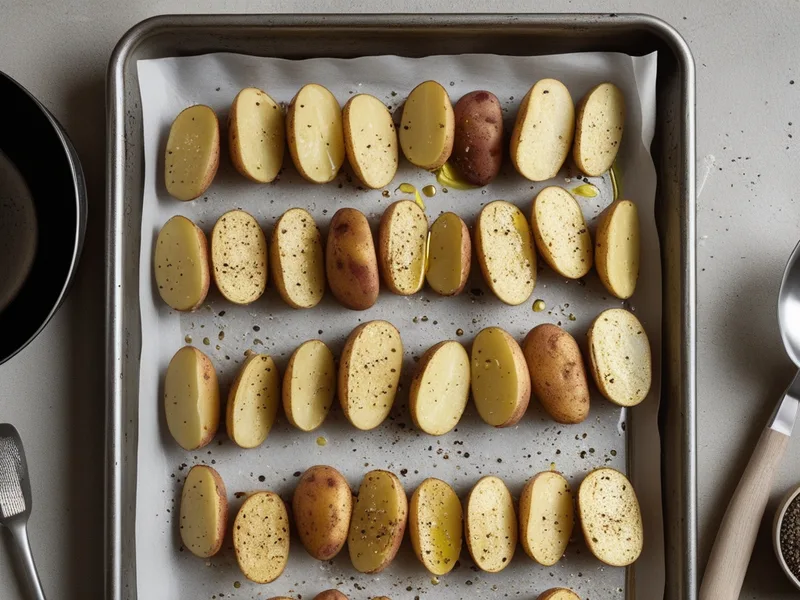
- Cut side up. The cut face browns and crisps against the pan.
- Do not crowd the pan. Potatoes that touch steam instead of roasting. Use two pans if you need to.
- Cool first. Warm potatoes will thin the dressing and make it split.
- Check with a fork. Times are a range.
- Taste at the end. Cold food needs a little more salt and lemon than hot food.
Would Emma make the roasted potato salad again? Yes. It was delicious, with a great texture, and it was made exactly as written with little effort.
Variations
- Make it a meal. Add a handful of chickpeas or a few sliced boiled eggs to the bowl, or pack it as a lunch alongside our meal prep ideas for weight loss.
- Change the herbs. Parsley or mint can stand in for the dill.
- More on food and skin. Our foods for clear skin guide goes through the evidence on vegetables and skin, with a roasted vegetable bowl.
- Another root vegetable. Roast sweet potato cubes the way our roasted sweet potatoes are done and toss them in the same dressing. The numbers above do not apply.
Storage
Keep the salad covered in the fridge. We found no official shelf life for homemade potato salad, so use your judgment and eat it within a few days. The dressing is best made fresh, but the roasted potatoes keep well on their own in the fridge before you toss them.
Safety: allergens and nightshades
This salad contains dairy (Greek yogurt). Check labels if you or your family have an allergy or intolerance. Potatoes are a nightshade, and a review of the literature says some people with inflammatory bowel disease or irritable bowel syndrome wonder whether nightshades affect their symptoms, with limited evidence (see the 2023 review above). If you have one of these conditions, or kidney disease, or you take medicine and you wonder how food fits in, ask your doctor or a registered dietitian. This is a recipe, not dietary advice.
How we researched this
- Nutrition: values come from USDA FoodData Central for each ingredient (for example potatoes with skin); the cup of Greek yogurt uses a documented weight assumption, so the total stays an estimate.
- Studies: a targeted PubMed search on October 21, 2026 for potatoes and resistant starch with inflammation markers, and a second one for how cooling changes potato starch, which found nothing we could cite.
Are Potatoes Anti-Inflammatory? A Roasted Potato Salad With Greek Yogurt
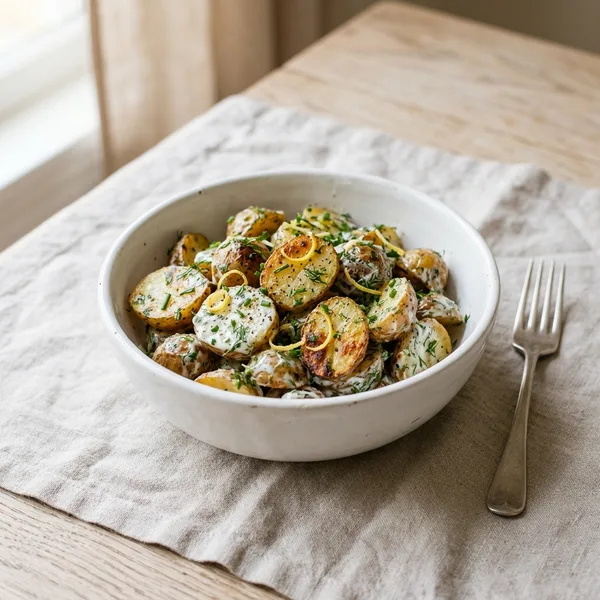
A crisp roasted baby potato salad, chilled and tossed with a lemon-dill Greek yogurt dressing, with USDA numbers and a plain look at what studies say about potatoes and inflammation.
Ingredients
Instructions
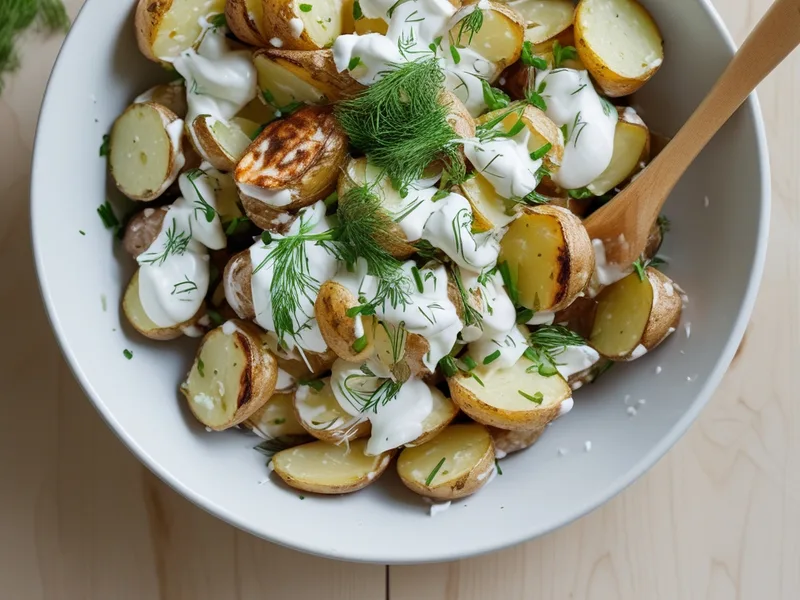
- Roast the potatoes. Heat the oven to 425°F (220°C) and line a baking sheet with parchment. Toss the halved potatoes with the olive oil, salt and pepper, then spread them cut side up in one layer. Roast for 30 to 35 minutes, until golden and crisp at the edges and easy to pierce with a fork.
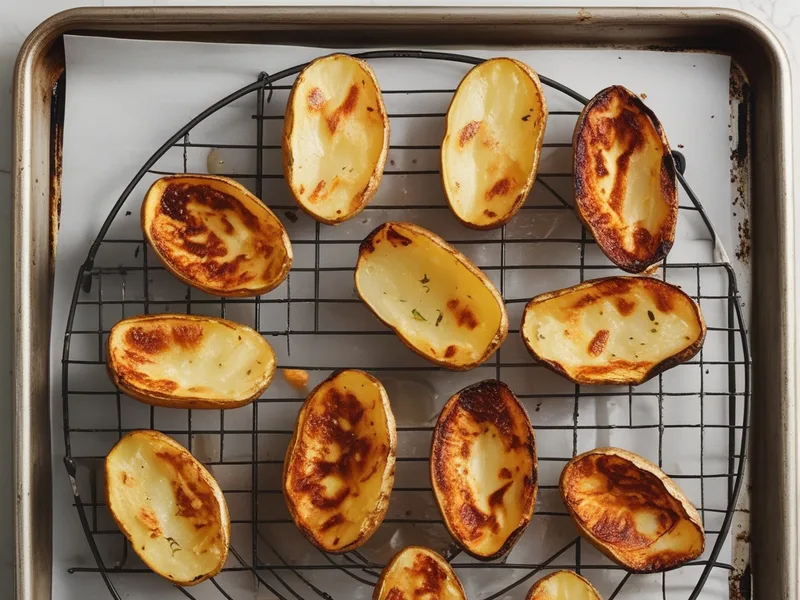
- Cool the potatoes. Slide the potatoes onto a wire rack, or leave them on the pan, and let them cool for 20 minutes, then move them to the fridge for another 30 to 40 minutes. They only need to be cool, not ice cold.
- Whisk the dressing. In a large bowl, whisk the Greek yogurt with the lemon juice, lemon zest, dill and chives until smooth. Taste it and add a pinch more salt if you like.
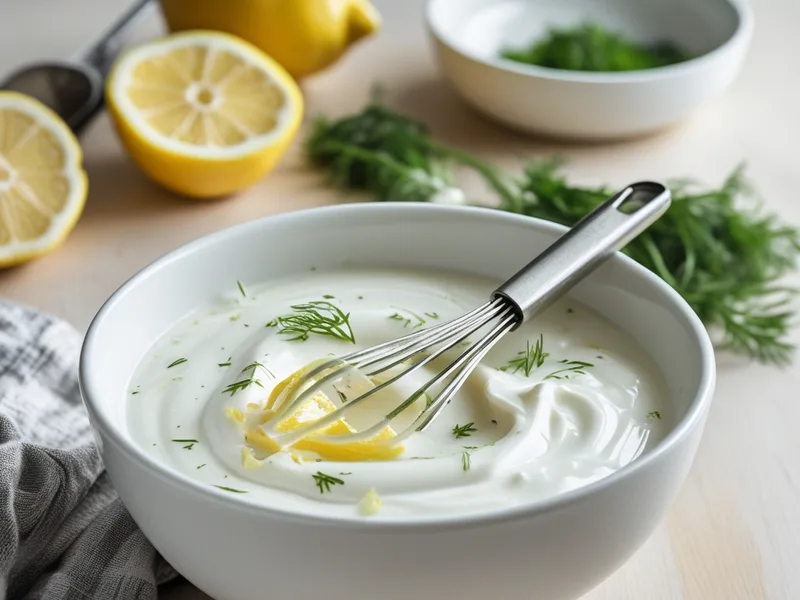
- Toss and chill. Fold the cooled potatoes into the dressing until every piece is coated. Serve right away, or cover and chill for 30 minutes to let the flavors meet.
Notes
Leave the skins on: they add texture and keep the potatoes from falling apart when you toss them.
Roasting times are a range. Potatoes of different sizes cook at different speeds, so check with a fork.
Keep leftovers covered in the fridge and eat them within a few days.
Nutrition Facts
Per serving (estimated)
- Total Fat
- 7 g
- Sodium
- 324 mg
- Total Carbohydrate
- 36 g
- Protein
- 10 g
General information, not medical or dietary advice. Nutrition values are estimates. See our full disclaimer.
Frequently asked questions
What are the top 3 inflammatory foods to avoid?
No official or study-based list of three foods that everyone should avoid for inflammation turned up in what we read, so we do not name three. Dietary patterns are what researchers study, and a doctor or dietitian can help if you have a condition where food matters.
What is the strongest anti-inflammatory food?
No study we read names one strongest anti-inflammatory food. Trials look at diets and at single nutrients, such as resistant starch, and the results are small and vary between groups. Variety on the plate is a safer bet than any single food.
What single food can you survive on the longest?
Nothing reliable we read names a single food a person can live on, and a diet of one food is not recommended. Eating a variety of foods is how people get the nutrients they need.
Are white potatoes anti-inflammatory?
We found no study showing that white potatoes lower inflammation. In the 2011 trial we read, white-flesh potatoes were the comparison group, and the yellow and purple groups tended to have lower interleukin-6, so white potatoes were not the ones linked to a drop in that marker. The study was small and the differences were not clear-cut.
Can potatoes draw out inflammation?
Nothing in the research we read shows that potatoes, eaten or applied to the skin, draw out inflammation. The studies we read looked at eating potatoes or at resistant starch, and measured blood markers, not swelling.

I’m Emma Bloom, founder and editorial voice behind Eat & Bloom. I share approachable recipes, practical nutrition tips and simple food ideas for everyday life, and I believe eating well should not be complicated or restrictive. Eat well. Find what works for you. Bloom.
Comments
Tried it? Tell us how it went: your comment helps other readers.