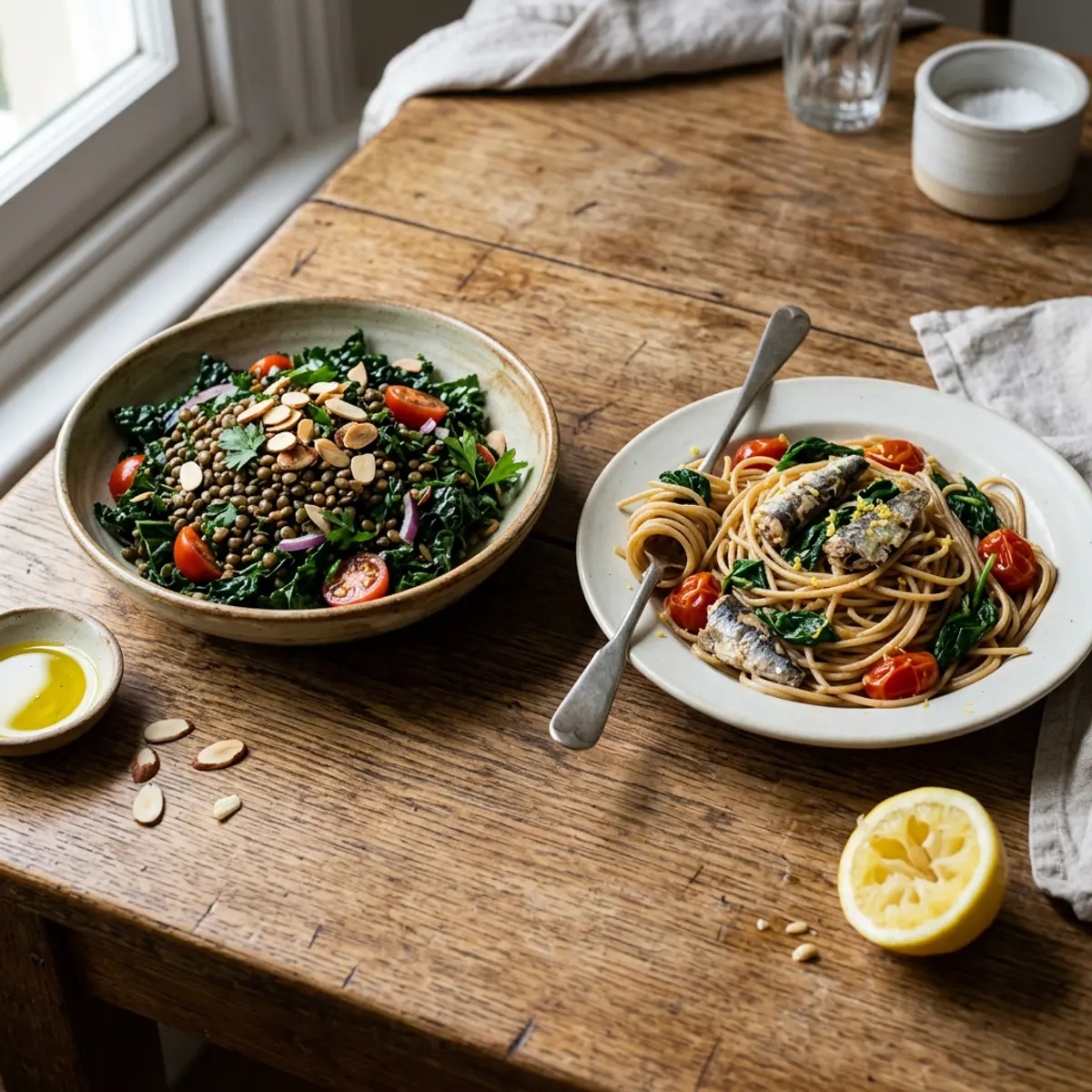
An anti-inflammatory diet fills the plate with vegetables, leafy greens, fruit, beans and lentils, whole grains, nuts, fatty fish and olive oil, and keeps fried foods, refined white bread, sweet drinks and red and processed meat for now and then. In trials, eating this way lowered blood markers of inflammation. Three recipes to start with:
| Recipe | Meal | Per serving |
|---|---|---|
| Blueberry-walnut oatmeal with orange zest | Breakfast | 349 calories, 12 g protein |
| Lentil, kale and tomato salad | Lunch | 349 calories, 16 g protein |
| Whole wheat spaghetti with sardines, tomatoes and spinach | Dinner | 484 calories, 24 g protein |
Start with good tomatoes, a bag of lentils and a tin of sardines, and the rest is easy. An anti-inflammatory diet is not a set of rules handed down from a clinic. It is a way of filling the plate that the Mediterranean kitchen has always known: vegetables first, beans most days, whole grains, a handful of nuts, fish, and olive oil to finish. Below you will find the foods, a three-day menu you can follow or ignore, and three recipes to get you cooking this week.
Foods to eat for an anti-inflammatory diet, and foods to limit
Harvard Health gives a short, practical list (Foods that fight inflammation). A 2024 review of anti-inflammatory diets (PMID 39411832) describes the same shape: fruits, vegetables, whole grains, nuts, legumes, herbs and spices and plant protein, with red and processed meat, refined carbohydrates and saturated fat kept low.
| Fill the plate with | How it shows up in this week | Keep for now and then |
|---|---|---|
| Tomatoes | Cherry tomatoes in the salad and the pasta | French fries and other fried foods |
| Leafy greens: spinach, kale, collards | Kale in the salad, spinach wilted into the pasta | Refined white bread and pastries |
| Fruit: blueberries, strawberries, cherries, oranges | Blueberries and orange zest in the oatmeal | Soda and other sugar-sweetened drinks |
| Nuts: almonds, walnuts | Walnuts on the oats, almonds on the salad | Red meat such as burgers and steaks |
| Fatty fish: salmon, mackerel, tuna, sardines | Sardines in the pasta | Processed meats such as hot dogs |
| Olive oil | The dressing and the finish of each dish | Margarine and shortening |
| Beans, lentils, whole grains | Green lentils, rolled oats, whole wheat spaghetti |
The first two columns are the anti-inflammatory foods list; the last is the short list of things Harvard Health suggests you limit. Harvard adds that these same foods to limit are linked to type 2 diabetes and heart disease, and that the link with inflammation held in several studies even after weight was taken into account. Its list to limit names French fries, not potatoes themselves; whether the potato has a place is the question on our are potatoes anti-inflammatory page, answered with a roasted potato salad.
A 3-day anti-inflammatory diet plan menu
Use it as a frame, not a prescription. The bold dishes are written in full further down or linked at the top; the rest needs no recipe.
| Day | Breakfast | Lunch | Dinner |
|---|---|---|---|
| 1 | Blueberry-walnut oatmeal | Lentil, kale and tomato salad with whole-grain bread | Whole wheat spaghetti with sardines, green salad with olive oil and lemon |
| 2 | Blueberry and spinach smoothie (linked above) | Leftover lentil salad over a handful of spinach | Miso-glazed sweet potatoes (linked above) with a plate of beans and greens |
| 3 | Blueberry-walnut oatmeal with orange segments | Crispy chickpea bowl (linked above) | Leftover sardine pasta, warmed with a splash of water, and a tomato salad |
Snacks, if you want them: a handful of almonds or walnuts, an orange, a bowl of cherries in summer. To drink: water, and coffee or tea without much sugar.
What the evidence says about an anti-inflammatory diet
"Inflammation" in these studies means blood markers, mainly C-reactive protein (CRP) and interleukin-6 (IL-6), measured before and after a change of diet. Here is what the reviews and trials we read on PubMed found, and where each one stops.
- The Mediterranean pattern, in trials. A 2014 meta-analysis pooled 17 randomized trials with 2,300 adults, each lasting at least 12 weeks (PMID 24787907). Compared with control diets, a Mediterranean diet lowered high-sensitivity CRP by 0.98 mg/L and IL-6 by 0.42 pg/mL more, and improved a measure of blood vessel function. The results varied a lot from trial to trial.
- Mediterranean with olive oil against low-fat. A 2025 meta-analysis of 16 trials (PMID 39530776) found lower CRP and IL-6 with a Mediterranean diet rich in olive oil than with a low-fat diet. For some markers, such as TNF-alpha, the effect was small.
- Olive oil. A 2015 meta-analysis of 30 randomized trials with 3,106 participants (PMID 26378571) found CRP 0.64 mg/L lower with olive oil than with controls. The authors call for a conservative reading, because some trials gave olive oil as a supplement and others as part of a diet.
- Whole grains instead of refined ones. A 2019 meta-analysis of 13 trials with 466 participants (PMID 30183552) found lower hs-CRP and IL-6 with whole grains, but no change in TNF-alpha, and the trials disagreed widely. In a six-week trial of 81 healthy adults (PMID 28179226), swapping refined grains for whole grains increased stool weight and frequency and changed gut bacteria slightly, with no effect on blood or gut markers of inflammation.
- Fiber: observation versus trials. A 2014 systematic review (PMID 24552752) counted 13 of 16 observational studies linking more fiber with lower CRP or IL-6, but only 1 of 11 intervention studies showing a clear effect. The authors suggest the observational links may partly reflect other habits of people who eat more fiber.
- The inflammatory score of a diet. Researchers score diets with the Dietary Inflammatory Index: the higher the score, the more pro-inflammatory the diet. Pooling 12 cohorts, a 2019 analysis (PMID 30651193) linked the highest scores with a 23 % higher risk of death from any cause than the lowest. A 2020 meta-analysis of 15 cohorts (PMID 32443378) linked the highest scores with more cardiovascular disease. These are associations in people followed over years, not proof that the diet caused the difference, and the authors ask for more trials.
The plain reading: the whole pattern has the best trials behind it, and its effect is on blood markers. A single food, eaten on top of the same old plate, has much less to show. Cook the pattern.
Making it your own anti-inflammatory diet food plan
A menu is only useful if it fits your week. Here is how to stretch these three days into a food plan you keep:
- Cook one pot of lentils, eat it three ways. The salad below makes four servings. Keep plain cooked lentils too, for soup or to spoon under a fried egg.
- Keep two tins in the cupboard. Sardines and chickpeas turn a box of whole wheat pasta and a bag of spinach into a dinner in 20 minutes.
- Change the vegetable, keep the method. Kale today, chard or collards next week; cherry tomatoes in summer, roasted peppers in winter.
- Swap, do not add. Whole wheat spaghetti instead of white, fruit instead of a pastry at breakfast, olive oil instead of margarine. The trials above swapped one diet for another; they did not stack foods on top.
- Dairy is your call. Yogurt and milk are on neither of Harvard's lists; what the trials found is on our is Greek yogurt anti-inflammatory page.
- Keep it unfussy. A drizzle of good oil, a squeeze of lemon and a handful of herbs finish almost any of these plates.
For a full week built the same way, with a shopping list, see our Mediterranean diet meal plan.
Kerth G kept to the page to the letter in the kitchen, and it paid off: quick and easy to make, with the texture Kerth was after and a delicious result that will be cooked again.
Blueberry-walnut oatmeal with orange zest
A warm bowl that ticks four boxes from the list before eight in the morning: whole grains, berries, nuts and citrus. Soy milk makes it creamy and adds protein.
Serves 2. Prep 2 minutes. Cook 8 minutes.
Ingredients
- 1 cup (80 g) rolled oats
- 1 cup (240 ml) unsweetened soy milk
- 1 cup (240 ml) water
- 1/2 teaspoon ground cinnamon
- 1 cup (150 g) blueberries, fresh or frozen
- 4 tablespoons chopped walnuts
- 2 teaspoons maple syrup
- 1 teaspoon finely grated orange zest
Steps
- Simmer the oats. Bring the soy milk, water and cinnamon to a gentle simmer in a small saucepan. Stir in the oats and cook over low heat for 5 minutes, stirring now and then, until thick and creamy.
- Warm the berries. Stir in half the blueberries and cook for 1 more minute, until a few burst and streak the oats purple.
- Finish and serve. Divide between two bowls. Top with the rest of the blueberries, the walnuts and a teaspoon of maple syrup each, then grate the orange zest over the top.
Per bowl: about 349 calories, 12 g protein, 47 g carbohydrate, 14 g fat, 49 mg sodium.
Storage: cooked oatmeal keeps in a covered container in the fridge for up to 4 days; loosen it with a splash of soy milk or water when you reheat it, and add the walnuts after.
Anti-inflammatory lunch ideas: lentil, kale and tomato salad
This is the salad I make on Sunday and eat until Wednesday. Lentils hold their shape, kale softens in the lemon dressing instead of wilting, and it tastes better on day two.
Serves 4. Prep 15 minutes. Cook 25 minutes.
Ingredients
- 1 cup (200 g) dry green or brown lentils, rinsed
- 4 packed cups (120 g) lacinato kale, stems removed, thinly sliced
- 2 cups (300 g) cherry tomatoes, halved
- 1/2 small red onion (60 g), finely chopped
- 1/4 cup (30 g) sliced almonds
- 3 tablespoons olive oil
- 3 tablespoons lemon juice
- 1 garlic clove, grated
- 1/2 teaspoon salt
- 1/4 teaspoon black pepper
- 2 tablespoons chopped fresh parsley
Steps
- Cook the lentils. Cover the lentils with about 3 inches (7 cm) of water, bring to a boil, then simmer for 20 to 25 minutes, until tender but still holding their shape. Times vary with the age of the lentils, so taste a few before you drain them.
- Massage the kale. While the lentils cook, whisk the olive oil, lemon juice, garlic, salt and pepper in a large bowl. Add the kale and squeeze it with your hands for about a minute, until it turns darker and softer.
- Toast the almonds. Toast them in a dry pan over medium heat for 3 to 4 minutes, shaking the pan, until golden.
- Toss and finish. Drain the lentils well and add them to the bowl while still warm, so they drink up the dressing. Add the tomatoes, onion and parsley and toss. Finish with the almonds just before serving.
Per serving: about 349 calories, 16 g protein, 41 g carbohydrate, 15 g fat, 315 mg sodium.
Storage: keep in a covered container in the fridge for up to 4 days, with the almonds in a separate jar so they stay crisp.
More anti-inflammatory lunch ideas: the crispy chickpea bowl linked at the top of this page, or a bowl of white beans with tomatoes and olive oil on toast.
Anti-inflammatory dinner ideas: whole wheat spaghetti with sardines, tomatoes and spinach
A pantry dinner from the Mediterranean coast. Canned sardines bring the fatty fish from Harvard's list, and they break into the sauce as it cooks, so even people who are unsure about sardines tend to like this one.
Serves 4. Prep 10 minutes. Cook 15 minutes.
Ingredients
- 12 oz (340 g) whole wheat spaghetti
- 2 tablespoons olive oil
- 3 garlic cloves, thinly sliced
- 1/4 teaspoon red pepper flakes
- 2 cups (300 g) cherry tomatoes, halved
- 180 g canned sardines in olive oil, drained (about two small cans; drained weights vary by brand)
- 3 packed cups (100 g) baby spinach
- 2 tablespoons lemon juice
- 1 teaspoon lemon zest
- 1/4 teaspoon salt
- 2 tablespoons chopped fresh parsley
Steps
- Cook the pasta. Cook the spaghetti in a large pot of boiling water according to the package, until just tender. Save 1 cup (240 ml) of the cooking water before you drain it.
- Start the sauce. While the pasta cooks, warm the olive oil in a large skillet over medium heat. Add the garlic and red pepper flakes and cook for about 1 minute, until the garlic is pale gold. Add the tomatoes and salt and cook for 5 to 6 minutes, until they soften and release their juice.
- Add the sardines. Break the sardines into large pieces into the pan and warm them through for 2 minutes, stirring gently.
- Toss with the spinach. Add the drained pasta, the spinach and a splash of the cooking water. Toss over low heat for 1 to 2 minutes, until the spinach wilts and the sauce coats the pasta, adding more water if it looks dry.
- Finish with lemon. Off the heat, add the lemon juice, zest and parsley. Serve straight away.
Per serving: about 484 calories, 24 g protein, 69 g carbohydrate, 15 g fat, 313 mg sodium.
Storage: leftovers keep in the fridge for up to 3 days; reheat until steaming hot.
More anti-inflammatory dinner ideas: the miso-glazed sweet potatoes linked above with a pan of greens, or a tray of salmon roasted with lemon and tomatoes from our Mediterranean week.
Safety: what a diet can and cannot do
- It is not a treatment. Harvard Health links chronic inflammation to rheumatoid arthritis, heart disease, diabetes, asthma and other conditions, and describes drug choices from aspirin to biologics. If you live with one of these conditions, keep your treatment and talk with your doctor or a registered dietitian before you change how you eat. Harvard Health also notes that its content should never replace direct medical advice.
- Allergens in these recipes: tree nuts (walnuts, almonds), soy (soy milk), fish (sardines) and wheat (spaghetti). Swap the nuts for pumpkin seeds, the soy milk for any unsweetened milk you tolerate, and the spaghetti for a gluten-free whole-grain pasta if you need to.
- Lentils and more fiber: if you are not used to beans and lentils, our high fiber foods page explains how to raise fiber gradually and who should ask a doctor first.
- Sodium: canned sardines carry salt. The sodium figures above count the ingredients as listed, so taste the pasta before you add more.
How we put this together
- Nutrition: each recipe was calculated ingredient by ingredient from USDA FoodData Central, using raw weights: rolled oats, green lentils, kale, almonds, sardines canned in oil and whole wheat pasta, among others. Herbs, zest and pepper flakes are too small to count, and the oatmeal uses a standard weight for a tablespoon of walnuts, so every total is an estimate.
- Studies: PubMed searches on November 4, 2026 for meta-analyses, reviews and trials on the Mediterranean diet, olive oil, whole grains, fiber and the Dietary Inflammatory Index with CRP, IL-6 and long-term health. We read the abstract of every study cited above.
- Official source: Harvard Health Publishing, Foods that fight inflammation, read on November 4, 2026.
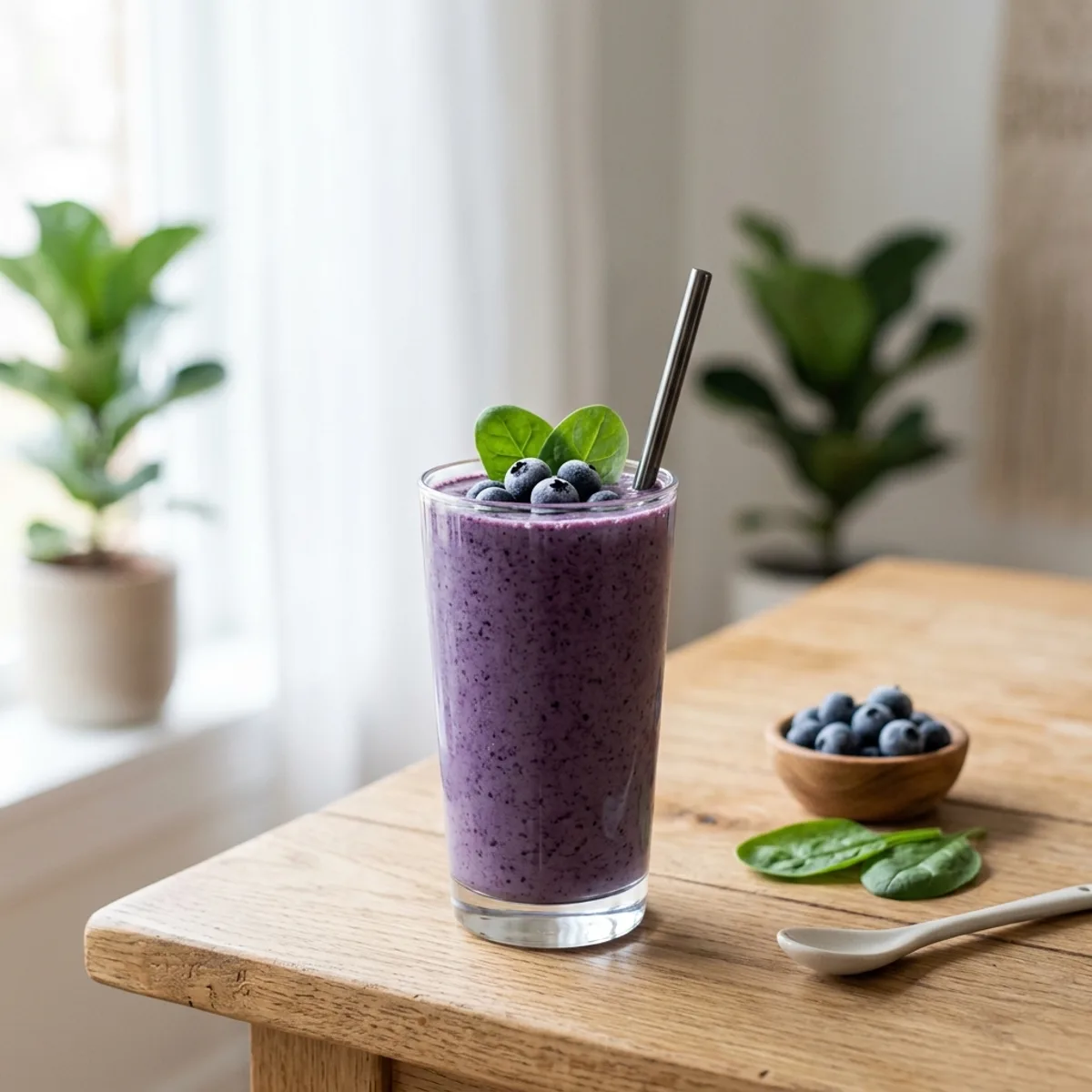
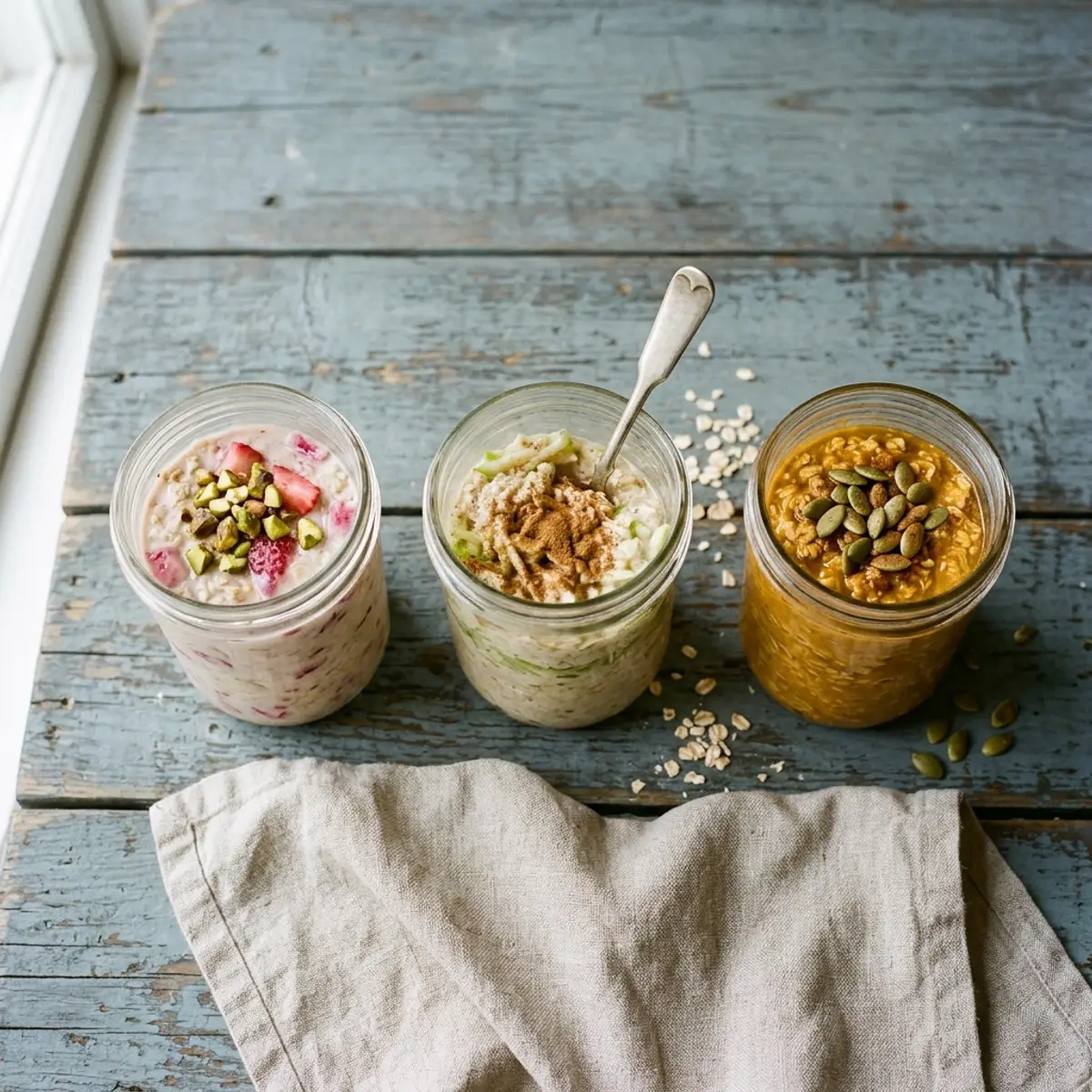
Blueberry and Spinach Smoothie
A purple glass of blueberries and spinach for the mornings when you would rather drink breakfast than spoon it.
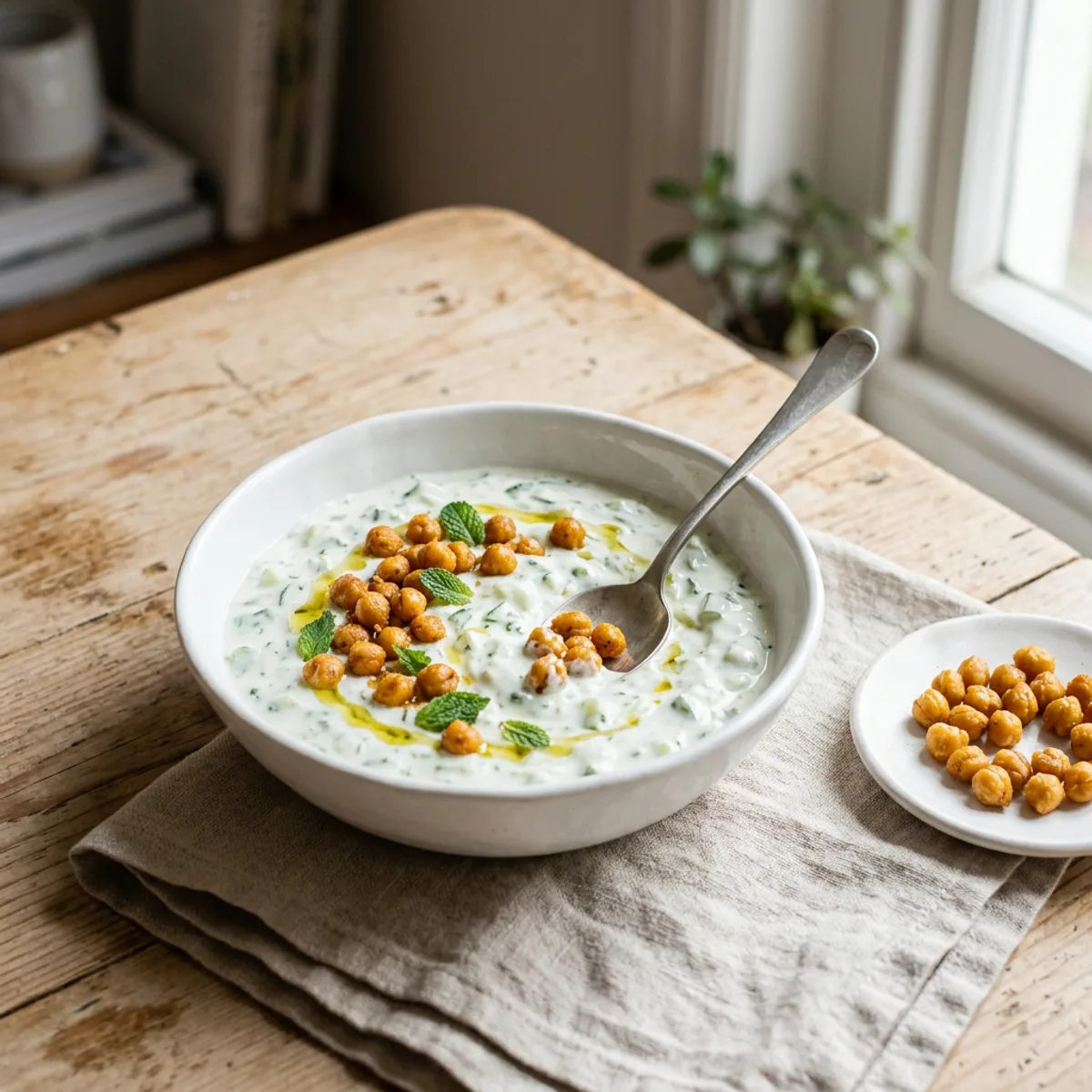
Crispy Chickpea Bowl With Cucumber-Mint Sauce
Roasted chickpeas under a cool cucumber and mint sauce, a second lunch for the week once the lentil salad is gone.
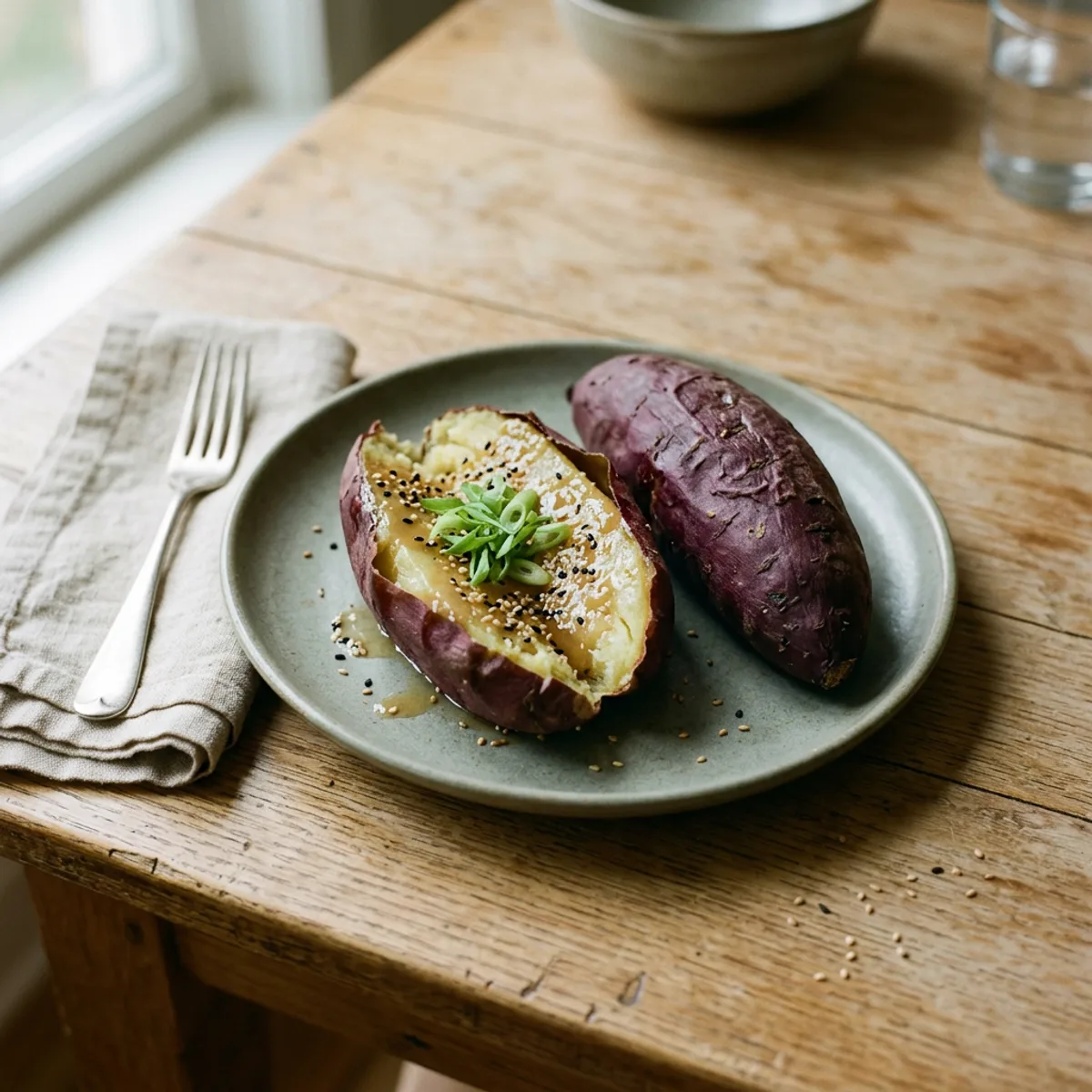
Miso-Glazed Roasted Sweet Potatoes
Whole roasted sweet potatoes with miso, ginger and maple, an easy side for the nights the sardine pasta is not on the table.
General information, not medical or dietary advice. Nutrition values are estimates. See our full disclaimer.
Frequently asked questions
What to eat to reduce body inflammation?
Harvard Health lists tomatoes, olive oil, leafy greens such as spinach and kale, almonds and walnuts, fatty fish such as salmon and sardines, and fruits such as blueberries and oranges. In trials, it is the whole pattern, like a Mediterranean diet, that lowered blood markers of inflammation, not one food on its own.
What drinks fight inflammation?
No drink is a treatment. Harvard Health says coffee, which contains polyphenols, may protect against inflammation, and it puts soda and other sugar-sweetened drinks on the list to limit. Water, plain tea or coffee without much sugar are the simple choices with these meals.
What are the treatment options for inflammation?
Treatment depends on the cause and is chosen with a doctor. Harvard Health describes drugs that range from aspirin to disease-modifying drugs and biologics. Food is part of a healthy life alongside that care; it does not replace it.
What is the recommended diet for people with rheumatoid arthritis?
Harvard Health names rheumatoid arthritis among the diseases linked to chronic inflammation and suggests the Mediterranean diet as the eating plan closest to anti-inflammatory eating. None of the studies on this page tested a diet as a treatment for rheumatoid arthritis, so ask your rheumatologist before you change anything.
How long does it take for an anti-inflammatory diet to work?
There is no set timeline. The Mediterranean diet trials pooled in the 2014 meta-analysis on this page all lasted at least 12 weeks, and a six-week trial of whole grains alone showed no change in blood markers of inflammation.
Comments
Tried it? Tell us how it went: your comment helps other readers.