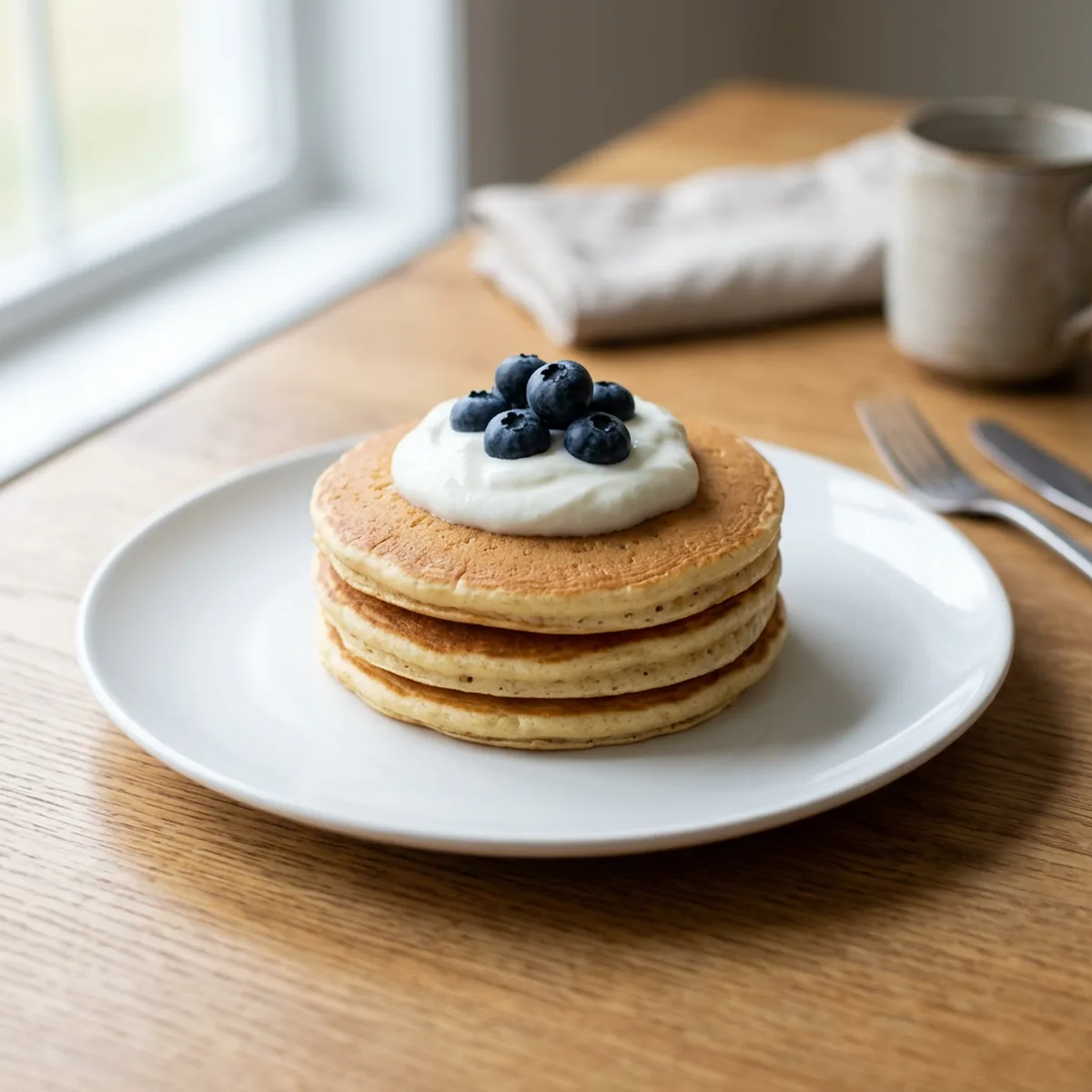
Quick answer: Whisk 1 cup of Greek yogurt with 2 eggs, milk, maple syrup and olive oil, stir in half all-purpose, half whole wheat flour with baking powder and baking soda, rest 5 minutes and cook 1/4-cup scoops over medium heat. A serving of 2 pancakes has about 232 calories and 14 g of protein by USDA data.
Thick batter, tangy yogurt, a golden edge. These healthy Greek yogurt pancakes use half whole wheat flour, olive oil and just a tablespoon of maple syrup, and they leave you with a plate that actually keeps you going until lunch. They also explain why this batter needs both baking powder and baking soda.
Updated October 21, 2026: a cook's notes on the result added.
Greek yogurt pancakes at a glance
| Makes | 8 pancakes, 4 servings of 2 |
| Time | 10 minutes prep, 5 minutes rest, 15 minutes cooking |
| Flour | Half all-purpose, half whole wheat |
| Sweetener | 1 tablespoon of maple syrup in the batter |
| Per serving | 232 calories, 14 g of protein (USDA estimate) |
Why Greek yogurt in pancakes
Greek yogurt brings thickness, tang and protein. It is also an acid, which matters for the next section. It cannot replace milk in a 1 to 1 ratio, because it is much thicker, so the recipe keeps 1/4 cup of milk to loosen the batter.
Why these pancakes use both baking powder and baking soda
The recipe uses both, and the reason is the yogurt.
- Baking soda is pure sodium bicarbonate. It needs an acid to make bubbles. Greek yogurt is that acid here, so a small amount (1/4 teaspoon) is enough, and the reaction starts as soon as the wet and the dry meet. This is why you rest the batter only 5 minutes and cook it soon.
- Baking powder is baking soda plus a dry acid and a starch. It needs only liquid and releases gas in two stages, when it gets wet and again in the heat of the pan. It does the main lifting here (1 1/4 teaspoons).
- Why both: the soda neutralizes the yogurt's acid and gives the first lift. The powder adds more rise so the pancakes do not depend on the acid alone.
Baking soda is about 3 to 4 times stronger than baking powder, which is why a recipe needs a quarter teaspoon of one and a full teaspoon or more of the other. More baking soda than the acid can neutralize leaves a bitter, soapy taste.
Can I swap one for the other?
| If you only have | Do this |
|---|---|
| No baking soda | Baking powder replaces baking soda at about 3 times the amount (3/4 teaspoon in place of the 1/4 teaspoon), with no extra acid. The taste is milder |
| No baking powder | For each 1 teaspoon of baking powder, use 1/4 teaspoon of baking soda plus 1/2 teaspoon of cream of tartar, added to the dry mix |
These swaps come from Arm & Hammer's conversion chart and are approximate. In pancakes, follow the recipe as written when you can.
Does baking soda go bad? How to test it
Yes, it loses power over time, and so does baking powder. Some bakers replace both about 3 months after opening. Test them in a minute:
- Baking powder: stir 1/2 teaspoon into 3 tablespoons of warm water. It should fizz moderately.
- Baking soda: stir 1/2 teaspoon into 3 tablespoons of white vinegar. It should bubble quickly.
If nothing happens, buy a new box. Old leavener is the most common reason pancakes come out flat.
How to make Greek yogurt pancakes
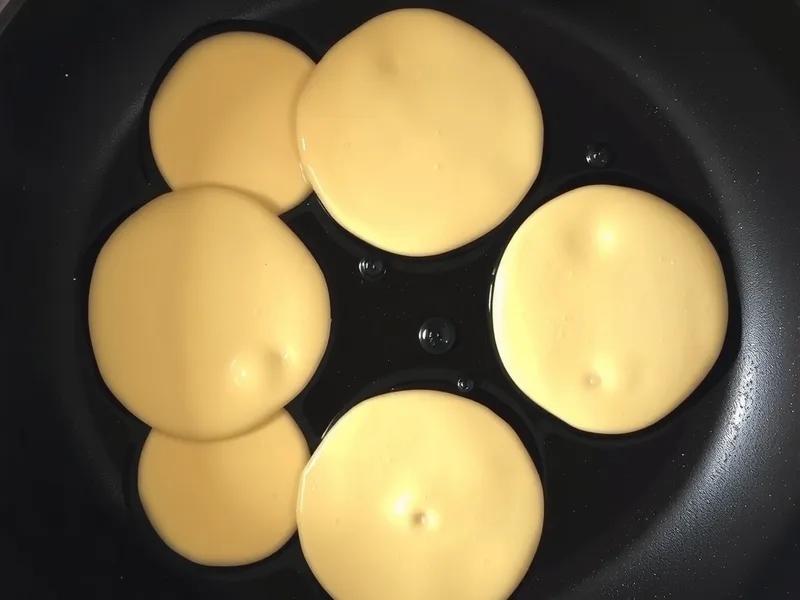
The recipe card has the steps with photos. Three details make the difference: whisk the dry ingredients so the leaveners spread evenly, stir the batter only until the dry flour disappears, and cook over medium heat, flipping once when bubbles form. Do not press them down with the spatula, or they turn dense.
Protein pancakes recipe with Greek yogurt: what is in a serving
We calculated the recipe with USDA FoodData Central values. One serving, two pancakes, has about 232 calories, 14 g of protein, 30 g of carbohydrate and 7 g of fat, with about 442 mg of sodium. Most of the protein comes from the eggs and the yogurt. The values are estimates: the cup weights are documented assumptions, and your brand of yogurt will move the numbers a little. This is not a promise of any health effect.
Tips and common mistakes
- Rest the batter 5 minutes. The flour hydrates and the pancakes turn out more tender.
- Karim's tip: measure the flour carefully. Spoon it into the cup and level it off. Going a little over is what dried out Karim's batch.
- Do not over-mix. A few lumps are fine.
- Use fresh leaveners. Test them if the box is old.
- Medium heat, not high. High heat browns the outside before the center is cooked.
- Do not press the pancakes with the spatula.
- Troubleshooting flat pancakes: old baking powder or baking soda, or an over-mixed batter.
- Troubleshooting bitter or soapy taste: too much baking soda or a measuring spoon heaped, not level.
- Troubleshooting pale pancakes: the pan was too cool; raise the heat a little.
The flavor was right, but Karim went a little over the flour amount and the pancakes came out a bit dry. Next time Karim would stay closer to the flour quantity, cook them a little less over slightly lower heat, and serve them with fruit or a sauce.
Variations and substitutions
- Flour: swap the all-purpose flour for more whole wheat for a denser, nuttier pancake. Add a tablespoon of milk if the batter gets too thick.
- Gluten-free: a 1 to 1 gluten-free baking flour is the usual swap. Check the label.
- Mix-ins: a few blueberries or a pinch of cinnamon stirred into the batter.
- Toppings: more Greek yogurt, fresh fruit, a thin drizzle of maple syrup or a spoonful of nut butter. Each topping adds calories to the serving values above.
- Egg-free: we keep the eggs in this recipe.
Serving suggestions
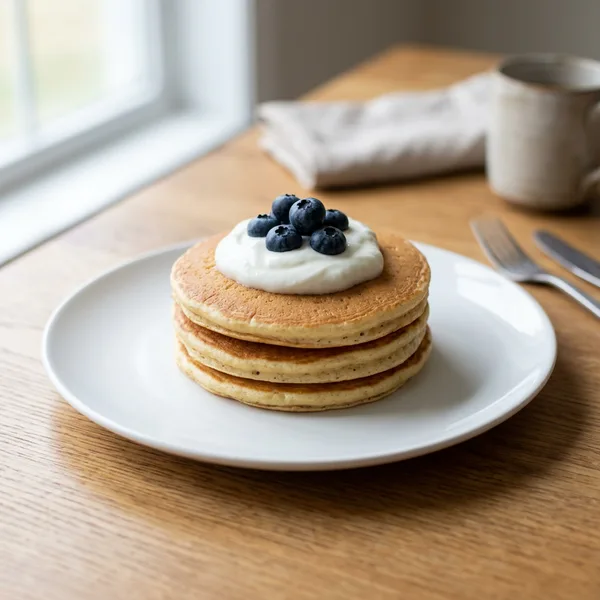
A stack with blueberries and a spoonful of Greek yogurt on top is a full breakfast. For a protein-rich plate, serve them next to scrambled eggs with cottage cheese, or turn the extra yogurt into a Greek yogurt parfait for the next morning.
Storage and freezing
Cool the pancakes completely and refrigerate them in a covered container. To freeze, lay them in a single layer on a baking sheet until hard, then move them to an airtight bag. Sources for similar pancakes say 2 to 3 months in the freezer, but we found no official shelf life, so use your judgment. Reheat in the toaster, in a 350°F (175°C) oven for about 6 minutes, or in the microwave for 30 to 60 seconds.
Safety and good to know
This recipe contains eggs, wheat (gluten) and dairy (milk and yogurt). Check the labels if you or your family have an allergy or an intolerance. If you follow a special eating plan or have a health condition such as diabetes or high blood pressure, check with your doctor or a registered dietitian: this is a cooking recipe, not dietary advice. Cook the pancakes until the centers are set.
Nutrition values are estimates.
How we researched this
- Baking powder, baking soda and freshness: ratios and freshness tests come from Arm & Hammer, Bob's Red Mill, Sally's Baking Addiction and NC State University News.
- Nutrition: values come from USDA FoodData Central for each ingredient; the cup weights are documented assumptions, so the total stays an estimate.
Healthy Greek Yogurt Pancakes: Fluffy, With 14 g of Protein a Serving
Fluffy pancakes made with Greek yogurt, eggs and half whole wheat flour, with USDA numbers per serving, plus a plain explanation of why the recipe uses both baking powder and baking soda and how to check that yours still works.
Ingredients
Instructions
- Mix the dry ingredients. In a large bowl, whisk both flours, the baking powder, the baking soda and the salt. Whisking spreads the leaveners evenly, so no pancake gets a bitter pocket of baking soda.
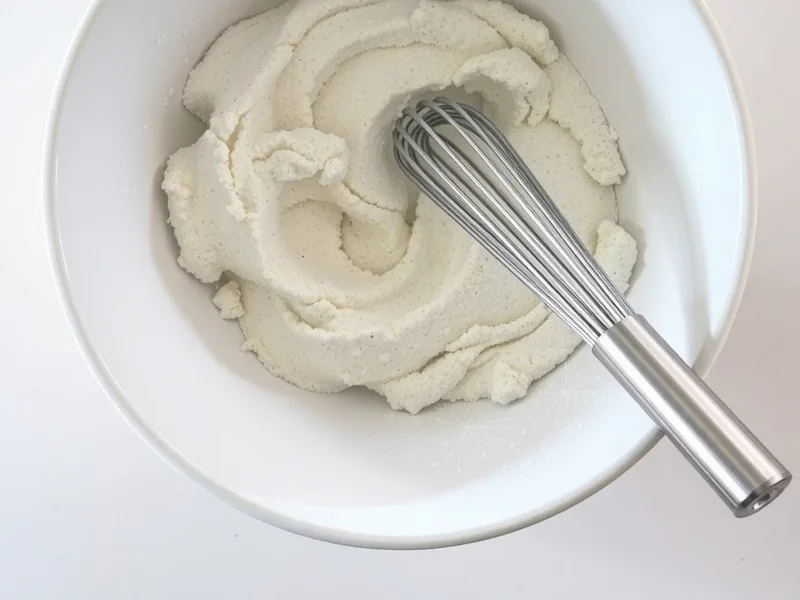
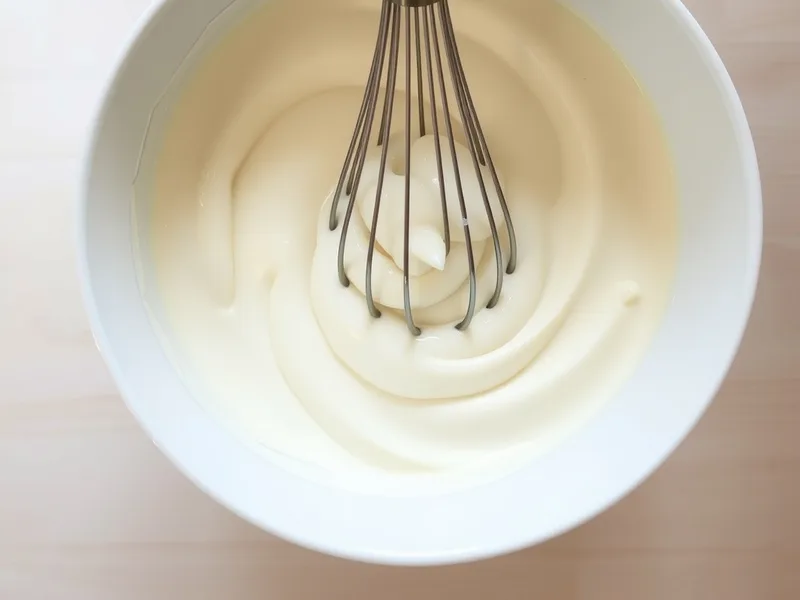
- Whisk the wet ingredients and combine. In a second bowl, whisk the Greek yogurt, milk, eggs, maple syrup, vanilla and olive oil until smooth. Pour it into the dry ingredients and stir just until no dry flour is left. A few small lumps are fine. Let the batter rest for 5 minutes.
- Cook on a medium pan. Heat a non-stick pan or griddle over medium heat and rub it very lightly with oil. Pour 1/4 cup of batter per pancake and cook 2 to 3 minutes, until bubbles form and the edges look set. Flip once and cook 2 minutes more, until golden. Do not press them down. Repeat with the rest of the batter, keeping the cooked pancakes warm in a 200°F (95°C) oven.
Notes
The batter is thick because of the yogurt. If it will not spread at all, add a tablespoon of milk.
Cooking time is a range: pans and burners differ, so judge by the bubbles and the golden color, not by the clock.
Nutrition Facts
Per serving (estimated)
- Total Fat
- 7 g
- Sodium
- 442 mg
- Total Carbohydrate
- 30 g
- Protein
- 14 g
General information, not medical or dietary advice. Nutrition values are estimates. See our full disclaimer.
Frequently asked questions
Can you use Greek yogurt in pancakes?
Yes. Greek yogurt makes a thick, tangy batter and a tender pancake. It cannot replace milk one for one because it is much thicker, so this recipe keeps a little milk and adds eggs for fluffiness.
Can heart patients eat pancakes?
It depends on the recipe and on your doctor's advice. This one is made with half whole wheat flour, olive oil and no sugar beyond one tablespoon of maple syrup. Pancakes also carry salt and toppings. If you follow a heart or sodium plan, ask your doctor or a registered dietitian.
What is the one mistake everyone makes with pancakes?
Over-mixing the batter. Stirring until it is smooth develops the flour and makes the pancakes tough and flat. Stir until the dry flour disappears, leave a few lumps, and rest the batter for 5 minutes.
Is there a downside to eating Greek yogurt every day?
We found no official source naming a downside for plain Greek yogurt. Flavored yogurts can add a lot of sugar, so check the label, and if you have a dairy allergy or intolerance, or follow a special eating plan, ask your doctor or a registered dietitian.
Can you make Greek yogurt pancakes without eggs?
We keep the eggs in this recipe, because they add fluffiness and structure. We do not give an egg-free version of this one.
Comments
Tried it? Tell us how it went: your comment helps other readers.