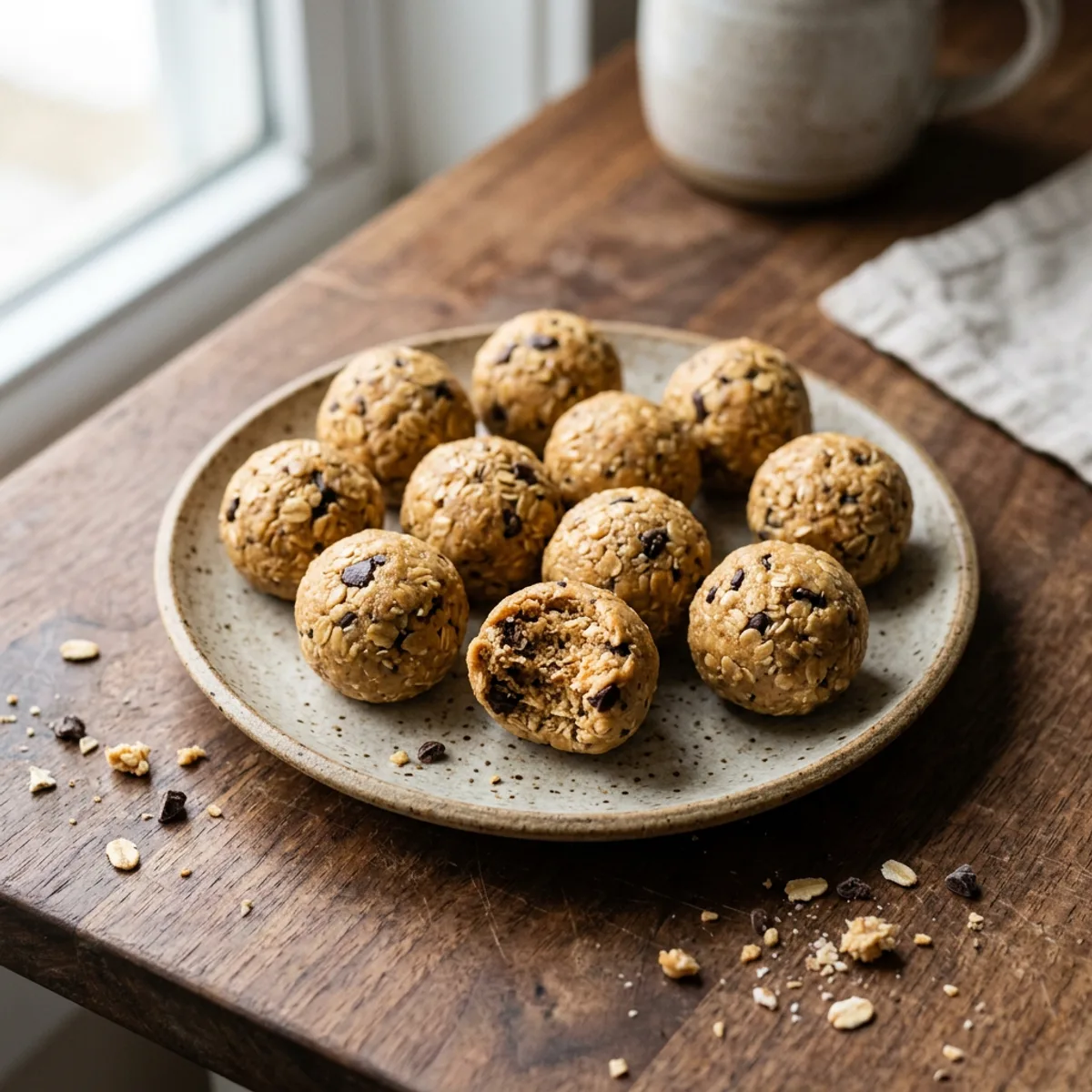
Protein balls are no-bake snack bites: oats and peanut butter held together with honey and boosted with protein powder, then rolled by hand. This batch makes 16, and each ball has about 103 calories and 4 g of protein. Jump to the recipe.
Here is my twist on the usual formula: ground flaxseed in the dough and a handful of finely chopped dark chocolate instead of sugary chips, so every bite has a little crunch and a little bitterness to balance the honey. Below you get the method, what the studies on whey, oats and appetite actually found, a powdered peanut butter swap, and how long the balls keep.
Protein and peanut butter balls: what each ingredient does
| Ingredient | What it adds (USDA) | What it does in the dough |
|---|---|---|
| Rolled oats, 80 g | 303.2 kcal and 10.52 g protein in the whole batch | The bulk and the chew |
| Peanut butter, 8 tbsp | 752.64 kcal and 28.07 g protein | The binder, and most of the fat |
| Honey, 3 tbsp | 191.52 kcal and 0.19 g protein, almost all carbohydrate | Sweetness and stickiness |
| Whey protein isolate, 40 g | 143.6 kcal and 23.26 g protein | The protein boost; it also dries the dough |
| Ground flaxseed, 2 tbsp | 76.31 kcal and 2.53 g protein | Nutty flavor, a little extra bulk |
| Dark chocolate, 30 g | 179.4 kcal and 2.34 g protein | Crunch and bitterness |
The whole batch comes to roughly 1,650 calories and 66 g of protein, which is where the per-ball figures come from. Peanut butter is the biggest source of both calories and protein, with whey second.
How to make no cook protein balls
- Stir. Peanut butter and honey first, until smooth, then everything else.
- Chill. Thirty minutes in the refrigerator makes the dough firm and easy to handle.
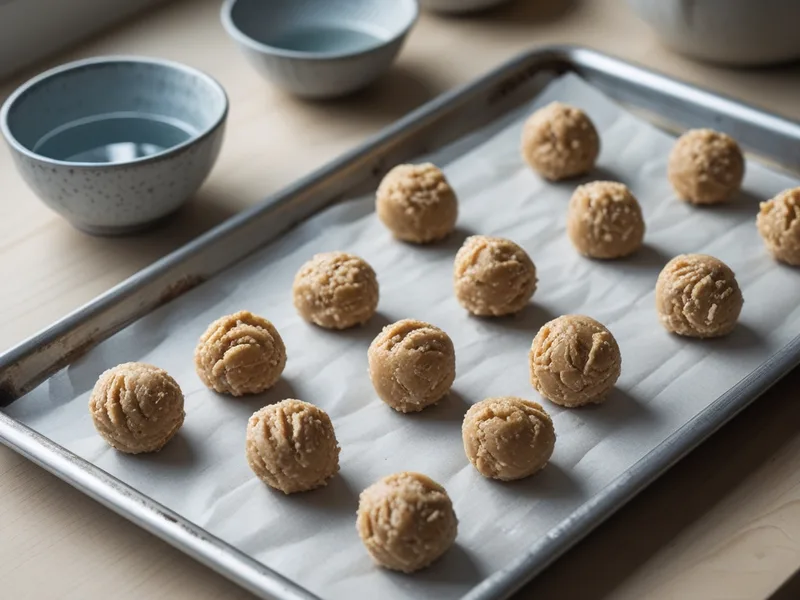
- Roll. About a heaping tablespoon each, 16 balls, then back in the fridge to set.
Make it your own: roll the balls in extra ground flaxseed for a toasted look, or press a flat disc and call it a cookie. Nothing in the recipe is cooked, so the only mistake that matters is a dough that is too dry or too wet. A teaspoon of water fixes the first, an extra spoon of oats the second.
What the evidence says about whey, oats and appetite
Nobody has tested these exact balls. The research is on their ingredients, mostly in other forms.
- Whey and appetite. A 2017 meta-analysis of 8 randomized trials (PMID 29072167) found whey protein reduced long-term appetite on a combined appetite score by 4.13 mm, but found no significant reduction in short-term appetite. The authors conclude that whey "may reduce" appetite, and say it did not beat carbohydrate in the short term.
- Snack bars with whey. In a 12-week trial of 125 adults with overweight or obesity (PMID 28730743), whey-protein snack bars lowered hunger and desire to eat compared with a control bar, and body fat fell in the whey group. Two of the authors are affiliated with a food company's research institute, so I read it with that in mind.
- Oats. A 2023 review (PMID 36790719) says many studies support oats for appetite hormones and weight, but that some showed little or no effect on appetite. It is a review, not a test of a snack.
The honest summary: whey protein in a snack may take the edge off hunger, but a ball here has about 4 g of protein, and none of this shows that protein balls make anyone lose weight. MedlinePlus says protein should be 10 to 35 % of daily calories, and a gram supplies 4 calories. By that arithmetic, 4 g is about 16 of the ball's 103 calories, roughly 16 %.
Powdered peanut butter protein balls
Powdered peanut butter is sold as a dry powder. The nearest USDA entry is "Peanut flour, defatted", which I use for the numbers here. To try the swap, use 40 g of powder in place of the whey. By the USDA values, the per-ball calories and protein barely move: 40 g has about 131 kcal and 21 g protein, against 144 kcal and 23 g for the whey. Peanut flour is very dry, so expect to stir in water or milk a teaspoon at a time until the dough holds. It is a swap I would try if you have no whey, but check the label of your powder, because brands differ.
It still contains peanuts. See the safety note below.
Without whey: what changes
Leave the whey out and each ball loses about 9 calories and about 1.5 g of protein (USDA): roughly 94 calories and 2.5 g. Add one extra tablespoon of oats and a little more honey if the dough feels loose. It is still a perfectly good snack, just not a protein-boosted one.
Tips, technique and the mistakes to avoid
- Dough too crumbly. Add water a teaspoon at a time. Protein powders soak up moisture, so the amount varies.
- Dough too sticky. Chill it longer, or wet your hands before rolling.
- Chalky taste. A strongly flavored powder shows through. An unflavored whey keeps the peanut butter flavor in front.
- Balls too big. A heaping tablespoon each keeps the snack near 100 calories. Peanut butter is calorie-dense, and MedlinePlus advises being mindful of portions of nuts for that reason.
- Natural peanut butter. If the oil has separated, stir it well before measuring.
What to change if...
- You want it sweeter. Add one more teaspoon of honey, not a whole tablespoon: the dough goes loose quickly.
- You want more crunch. Chop the chocolate a little coarser, or press a few extra oats onto the outside of each ball.
- You want a smaller snack. Roll 20 balls instead of 16. Each one then holds about a fifth fewer calories, and you get a little more to share.
- You want a flatter, lunchbox shape. Press the dough into a lined small pan, chill it, and cut squares instead of rolling.
Which peanut butter works best
Smooth peanut butter blends into the honey without lumps, and it is the one the numbers here are based on. A natural peanut butter with a layer of oil on top works too: stir the jar well before you measure, because the oil at the top and the dry paste at the bottom would otherwise land in different batches. A chunky one makes crunchier balls, though the nutrition changes slightly.
Storage and safety
USDA's Food Safety and Inspection Service says leftovers keep 3 to 4 days in the refrigerator or 3 to 4 months in the freezer, and I use the same window here. Freeze the balls in a single layer on a tray, then transfer them to a container so they do not stick together.
The recipe contains peanuts and milk (whey comes from milk). MedlinePlus lists both among the most common food allergens, so these balls are not for anyone with a peanut or milk allergy.
More snacks like this
If you want something else to snack on, my high protein snacks for weight loss and healthy oatmeal cookies are close neighbors, and high-protein overnight oats use the same oats for breakfast. To drink your protein instead of rolling it, my protein smoothies for weight loss are the next stop.
Where the numbers come from
- Nutrition: USDA FoodData Central, oats, peanut butter, smooth, honey, whey protein powder isolate, flaxseed, ground, dark chocolate and peanut flour, defatted. The flaxseed spoon weight is an assumption, so the total is an estimate.
- Studies: PubMed searches on November 11, 2026 for whey protein, oats and peanut butter with appetite, satiety and protein intake. I read the abstracts of the three studies above.
- Institutions, read on November 11, 2026: MedlinePlus, Protein in diet and Food allergy; USDA FSIS, Leftovers and food safety.
Protein Balls Recipe: Peanut Butter, Oats and Whey, No Baking
Rolled oats, peanut butter, honey, whey and a little dark chocolate, stirred in one bowl and rolled by hand. Sixteen snack-sized balls, the numbers behind them, a powdered peanut butter twist, and what the research on whey, oats and appetite does and does not show.
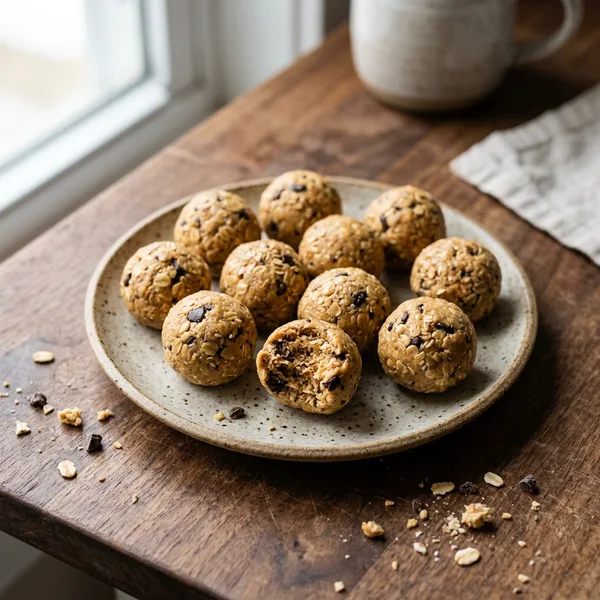
Ingredients
Instructions
- Mix the dough. In a large bowl, stir the peanut butter and honey together until smooth. Add the oats, whey protein, ground flaxseed and chopped chocolate, and stir with a sturdy spoon until no dry pockets are left. The dough should be thick and sticky, and hold together when you squeeze a little in your palm. If it crumbles, stir in water a teaspoon at a time.
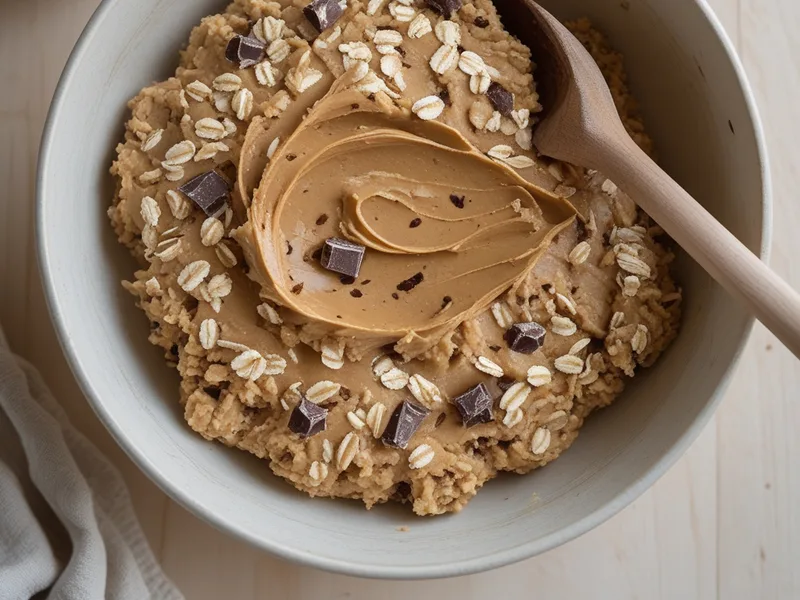
- Chill the dough. Cover the bowl and refrigerate for 30 minutes. Cold dough is firmer and less sticky, so it rolls cleanly. The time is a range: if the dough still clings to your hands, give it 10 more minutes.
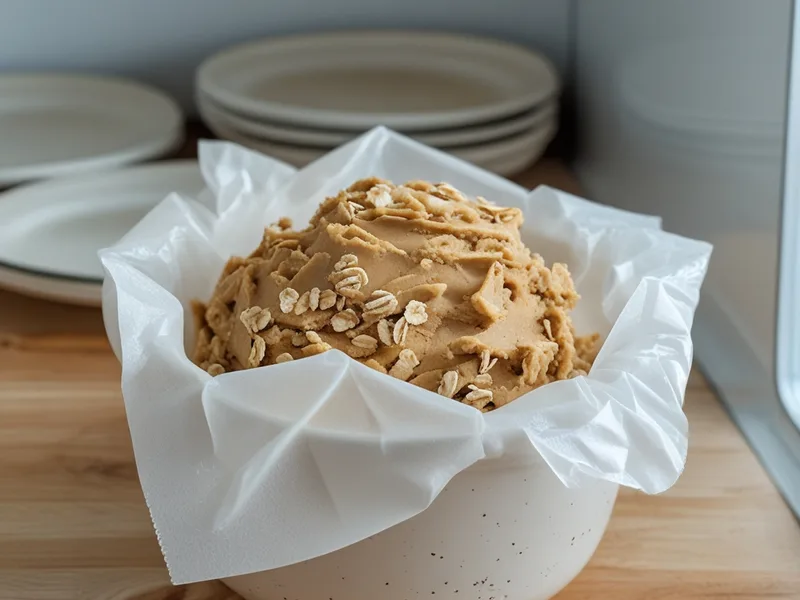
- Roll into balls. Scoop a heaping tablespoon of dough (about 22 g) and roll it between your palms into a ball. Wet your hands lightly if it sticks. Set the balls on a parchment-lined tray, 16 in all, and refrigerate until firm, at least 15 minutes more.
Notes
Protein powders differ from brand to brand. The numbers use the USDA entry for whey protein powder isolate, so check your label and your total may shift.
Chilling time is a range. The balls are ready when they hold their shape when you pick one up.
Keep the balls in a covered container in the refrigerator and eat them within 3 to 4 days, or freeze them for up to 3 to 4 months.
Nutrition Facts
Per serving (estimated)
- Total Fat
- 5 g
- Sodium
- 49 mg
- Total Carbohydrate
- 10 g
- Protein
- 4 g
General information, not medical or dietary advice. Nutrition values are estimates. See our full disclaimer.
Frequently asked questions
What are the ingredients for peanut butter chocolate protein balls?
This recipe uses rolled oats, smooth peanut butter, honey, unflavored whey protein, ground flaxseed and finely chopped dark chocolate. Six ingredients, one bowl, no oven.
How long do protein balls last?
USDA's Food Safety and Inspection Service says leftovers keep 3 to 4 days in the refrigerator or 3 to 4 months in the freezer, and I use that same window for these balls. Keep them in a covered container.
What are some recipes for energy snacks?
Protein balls are one. For others, try my high protein snacks for weight loss, or healthy oatmeal cookies when you want something baked.
How to get 30g of protein in a snack?
One ball here has about 4 g of protein, so 30 g from these alone would take 7 to 8 balls and well over 700 calories, which is a meal, not a snack. Pair two or three balls with a glass of milk or a bowl of yogurt, or use a shake or a bigger protein-rich dish instead.
Are these no cook protein balls?
Yes. Nothing is heated: you stir, chill and roll. The only equipment is a bowl, a spoon and a fridge.
Comments
Tried it? Tell us how it went: your comment helps other readers.