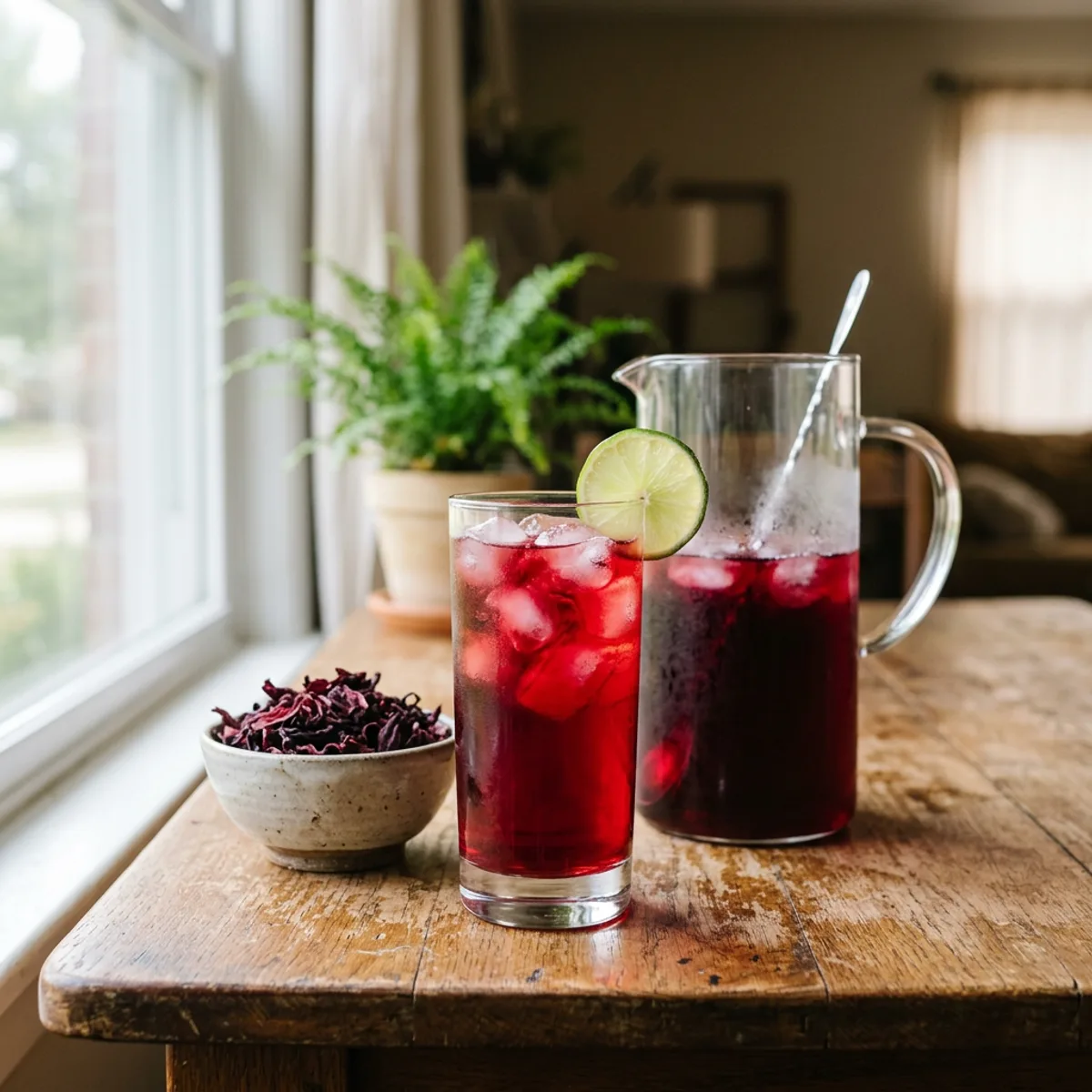
Short answer: Hibiscus tea is a tart, ruby-red drink made from the dried flowers of Hibiscus sabdariffa. In one 6-week trial, 65 adults who drank three cups a day had a larger drop in systolic blood pressure than those on a placebo drink, but a Cochrane review called the evidence insufficient. A glass of this recipe has about 18 calories.
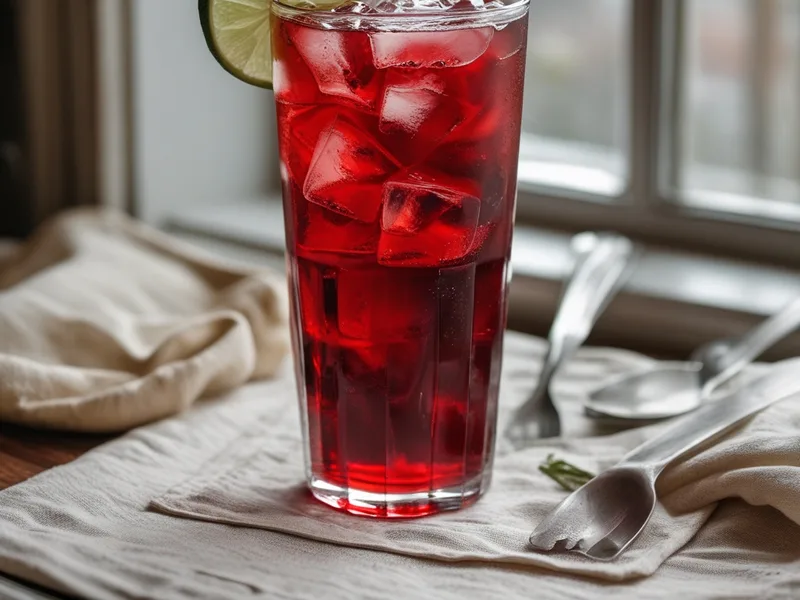
Let's start with the color. Hibiscus turns a plain pitcher of water into a deep ruby red in ten minutes, and the lime makes it taste like a fresh, tart punch rather than a medicine. It makes four glasses, with almost no work, and you can make it as sweet or as sharp as you like.
Hibiscus versions at a glance
| Version | What you get | What studies show | Main caution |
|---|---|---|---|
| This iced hibiscus tea (flowers, lime, honey) | About 18 calories a glass (USDA) | One trial of the brewed tea (PMID 20018807) | Talk to your health care provider if you take blood pressure medicine |
| Hot, served warm | Same flowers, served warm | No study compared hot and cold | Same as above |
| Tea bags | Faster, milder tea | No study of a specific brand | Check that the label lists only hibiscus |
| Hibiscus extract capsules | A concentrated dose, not a tea | Trials in people with diabetes, very low certainty | Not the same as a cup of tea |
Calories are from USDA FoodData Central and are estimates.
What goes in the pitcher
Dried hibiscus flowers are the base. They are sold whole in many grocery stores, spice shops and Latin markets, and you will often find them under the name flor de jamaica. Lime juice sharpens the flavor and honey softens the tartness. You can skip the honey and the drink stays under 10 calories a glass.
Want a twist? Steep a cinnamon stick with the flowers for a warm, spiced version, or add a few orange slices to the pitcher for a gentle sweetness. If you like ginger, our ginger tea and ginger water recipe goes well alongside it.
How to make hibiscus tea that is not too sour
Three details matter, beyond the steps on the recipe card. Steep with the lid on and take the pot off the heat before you add the flowers. Stop at 10 minutes, because a long steep turns the tea sour. And add the lime after the tea cools, so the juice stays bright. Strain well, because small bits of flower can make the glass cloudy and bitter.
It tastes like it should when it is clear red, tart on the first sip and rounded on the second. If it makes your mouth pucker, add honey a teaspoon at a time.
Karim brewed this one with no changes at all: it came together quickly, tasted delicious, had just the texture Karim was after, and will be brewed again.
Hot or cold?
No study we read compared hot and cold hibiscus, so we cannot tell you that one is better for anything. The flowers steep the same way for both. Serve it warm on a cold evening or over ice on a warm day.
Hibiscus tea and blood pressure: what studies say
We searched PubMed for trials and reviews on hibiscus and blood pressure and read the abstracts. The studies disagree about how strong the evidence is, so here is each one.
- A randomized, double-blind, placebo-controlled trial of 65 adults aged 30 to 70 with prehypertension or mild hypertension (PMID 20018807) gave either three 240-ml servings of brewed hibiscus tea a day or a placebo drink for 6 weeks. Systolic blood pressure fell by 7.2 mm Hg on hibiscus and 1.3 mm Hg on placebo. Diastolic pressure also fell, but not by more than on placebo. The adults were not taking blood pressure medicines.
- A 2022 meta-analysis of 13 randomized trials with 1,205 participants (PMID 34694241) found that Hibiscus sabdariffa lowered systolic and diastolic pressure more than placebo in people with mild-to-moderate hypertension, by an average of 6.67 and 4.35 mm Hg. It was not better than blood pressure drugs and did not work in people with metabolic syndrome.
- A 2022 meta-analysis of 17 trials (PMID 34927694) found a larger drop in systolic pressure than with placebo, 7.10 mm Hg on average, with the biggest effect in people whose pressure was already high. The authors call for more studies to find the right dose and duration, and the results varied a lot between trials.
- A 2021 Cochrane review (PMID 34837382) found only one trial that met its standards, of roselle capsules in people with type 2 diabetes, and concluded that the evidence is currently insufficient to say whether roselle lowers blood pressure. It rated the certainty very low.
So the honest summary is that some trials and two meta-analyses point to a modest drop in blood pressure, one strict review says the evidence is not strong enough, and the best-known trial tested a drink very close to this one. None of them shows that the tea treats high blood pressure. If you have high blood pressure, keep taking your medicine and talk to your health care provider before changing your routine. For a balanced start to the day, our high protein breakfast without eggs guide is a good place to begin.
Benefits of drinking hibiscus tea
The honest benefit is taste and calories. It is a tart, colorful drink that can stand in for a sweetened soda or juice, and a glass of this recipe has about 18 calories, according to USDA data for the ingredients. The other possible benefit is blood pressure, which the studies above look at, with mixed certainty. If you are comparing drinks with caffeine, our matcha vs coffee guide covers one; this tea is a different kind.
Hibiscus tea pregnancy: what to know
We could not read an official guideline on hibiscus in pregnancy, and none of the trials above studied pregnant women, so we cannot tell you that it is safe or unsafe. If you are pregnant, breastfeeding or trying to conceive, ask your health care provider before you drink it regularly. The same goes for anyone who takes blood pressure medicine, because a drink that may lower blood pressure could add to the effect of the medicine.
Tips for a better pitcher
- Rinse the flowers. A quick rinse removes dust before steeping.
- Do not boil the flowers. Pour hot water over them instead; it tastes cleaner.
- Strain through a fine sieve. A cloudy tea tastes more bitter.
- Sweeten while warm. Honey dissolves better.
- Chill before the lime. It keeps the juice fresh.
Variations on the base recipe
- Spiced: steep one cinnamon stick with the flowers.
- Orange: add 3 or 4 orange slices to the pitcher after it cools.
- Sparkling: top each glass with plain sparkling water.
Safety: who should be careful
If you take blood pressure medicine, are pregnant or breastfeeding, or have a medical condition, talk to your health care provider before you drink it every day. Do not stop or change a medicine because of anything on this page. Hibiscus extracts and capsules are concentrated, so ask your health care provider before you take them. This page does not replace that advice.
Storage
Cover the pitcher and keep the tea at 40°F (4°C) or below (USDA cold food storage chart). There is no official shelf life for homemade iced tea, so our rule of thumb is to finish it within a few days, and to throw it out if it smells or looks off.
Where the numbers come from
- Nutrition: values come from USDA FoodData Central for each ingredient: brewed hibiscus tea, lime juice and honey. They are estimates, and the ice is not counted.
- Studies: a PubMed search on October 22, 2026 for trials and reviews on hibiscus with blood pressure and hypertension. We cite only what the abstracts say.
Hibiscus Tea Recipe With Lime and What Studies Say About Blood Pressure
A tart iced hibiscus tea with lime and a little honey, with USDA numbers per glass and an honest look at what trials and reviews say about hibiscus and blood pressure.
Ingredients
Instructions
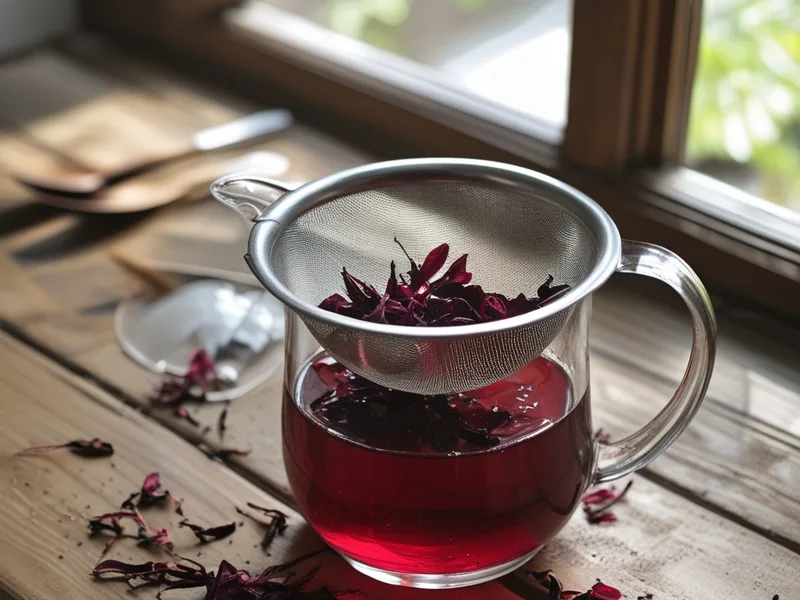
- Steep the hibiscus. Bring 4 cups (950 ml) of water to a boil and take it off the heat. Add the dried hibiscus flowers or the tea bags, cover, and steep for 10 minutes, until the water is a deep ruby red.
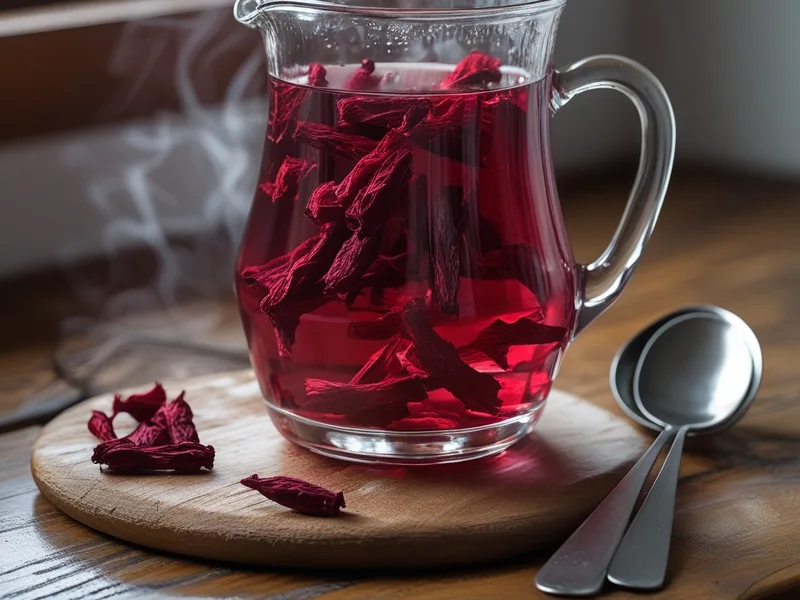
- Strain and sweeten. Pour the tea through a fine strainer into a pitcher, pressing the flowers lightly, then throw the flowers away. Stir in the honey, if you use it, while the tea is still warm so it dissolves.
- Add the lime, chill and serve. Let the tea cool for 30 minutes, stir in the lime juice, and chill it for at least 1 hour. Serve over ice.
Notes
Hibiscus is naturally tart. If it tastes too sharp, add a little more honey or use less of the flowers next time rather than steeping longer.
Do not steep for much longer than 10 minutes, because the tea turns more sour and a little bitter.
Keep the tea covered in the refrigerator and drink it within a few days.
Nutrition Facts
Per serving (estimated)
- Total Fat
- 0 g
- Sodium
- 10 mg
- Total Carbohydrate
- 5 g
- Protein
- 0 g
General information, not medical or dietary advice. Nutrition values are estimates. See our full disclaimer.
Frequently asked questions
Why is drinking hibiscus tea good for you?
It is a tart, low-calorie drink, and a glass of this recipe has about 18 calories. In trials, hibiscus has been studied for blood pressure, but a Cochrane review called the evidence insufficient, so we cannot promise a benefit. Enjoy it as a drink, not a treatment.
Can I make tea from my hibiscus plant?
The studies we read used Hibiscus sabdariffa, also called roselle, the plant whose dried flowers are sold for tea. Many garden hibiscus plants are other kinds, and we found no source we could read that says they make a safe tea. If you are not sure what your plant is, buy a tea labeled Hibiscus sabdariffa or roselle instead.
Is hot or cold hibiscus tea better for blood pressure?
No study we read compared hot and cold hibiscus, so we cannot say one is better. The trial we cite used brewed hibiscus tea in 240 ml servings; choose the temperature you enjoy.
What kind of hibiscus do you use for tea?
Hibiscus sabdariffa, also called roselle or sour tea, whose dried red flowers (calyces) give the tea its deep color and tart taste. Buy dried whole flowers or tea bags that list only hibiscus, with no added sugar.
Comments
Tried it? Tell us how it went: your comment helps other readers.