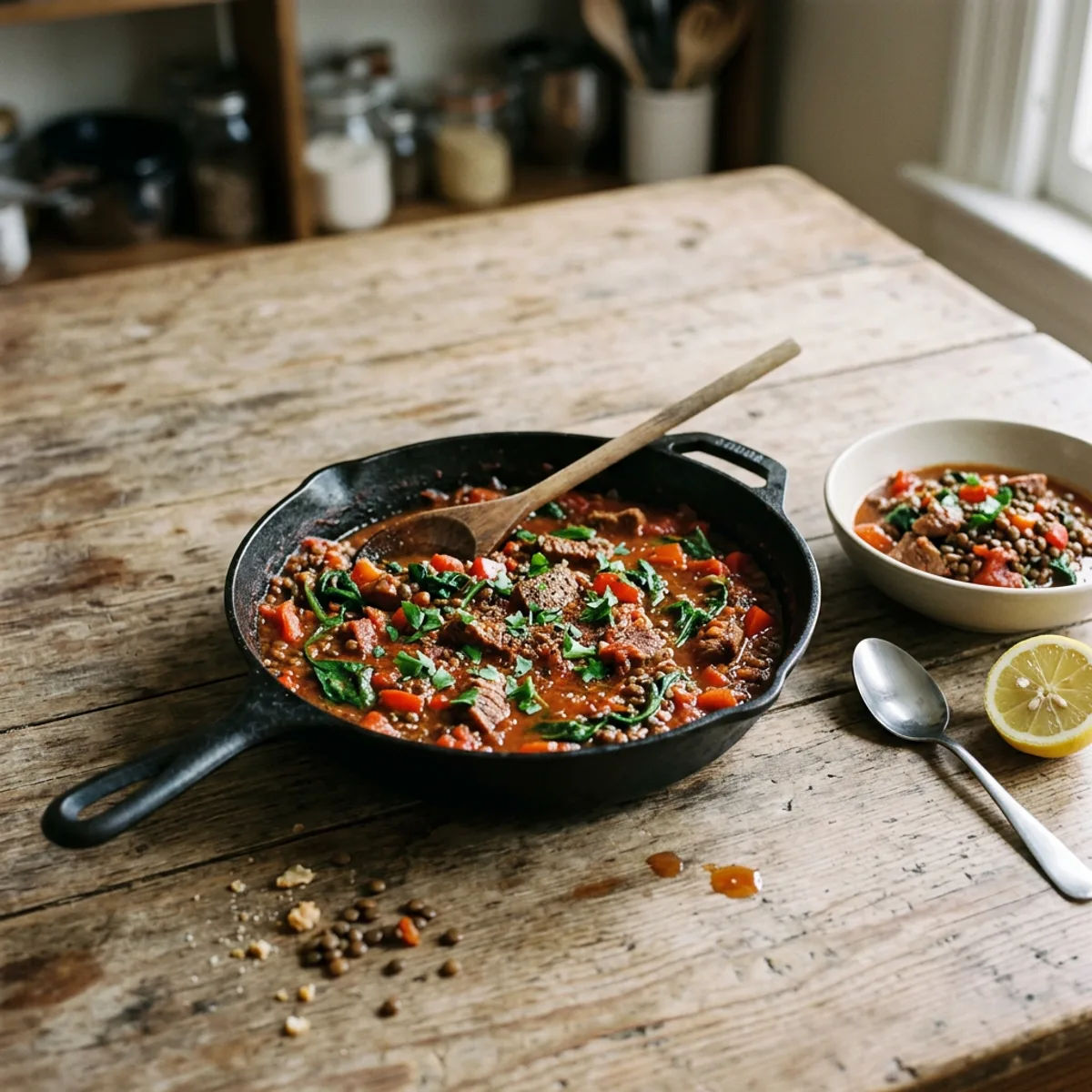
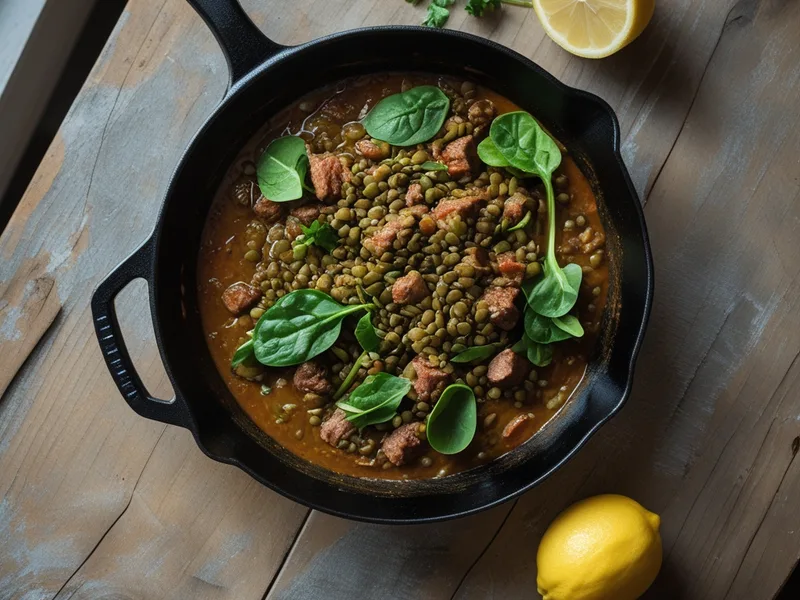
Short answer: No single food makes hair grow. Studies link low iron stores with some hair shedding, so iron rich foods for hair growth are beef, lentils, beans, spinach, tofu and pumpkin seeds, eaten with vitamin C. This cast-iron beef and lentil skillet gives about 7.4 mg of iron a bowl. Thinning hair deserves a ferritin check.
One detail decides how much iron a meal really gives you: what sits next to the lentils. Plant iron is harder for the body to take in, and vitamin C changes that. So this skillet is built in pairs. Lean beef with green lentils, spinach with red bell pepper, tomatoes with a last squeeze of lemon. All of it cooks in cast iron, in about 40 minutes, and the recipe card has every quantity.
What the research says about iron and hair loss
I read the abstracts of these papers on PubMed on November 6, 2026. They describe links, not cures.
- A 2010 review in the Journal of the American Academy of Dermatology (PMID 20888064) calls the link between iron deficiency and diffuse, nonscarring hair loss in women a subject of continuing debate. The studies were small and designed differently, and none was a randomized treatment trial. The authors ask for a well-designed trial of iron in iron-deficient women with this hair loss.
- A 2023 clinical guide in Cutis (PMID 37820340) describes low serum ferritin, the protein that stores iron, as a highly specific and sensitive marker of iron deficiency. In diffuse hair loss, the authors see the test as a way to rule iron deficiency in or out. They add that ferritin can rise for other reasons, such as inflammation.
- A 2021 meta-analysis in Obesity Surgery (PMID 33675022) pooled 18 studies with 2,538 people after weight-loss surgery. Hair loss affected 57% of them. Lower ferritin, zinc and folic acid were associated with hair loss; serum iron and vitamin B12 were not.
- A systematic review published in 2026 in Nutrition and Health (PMID 40836838) gathered 17 studies, nearly all in women, and found higher iron and vitamin D levels linked to less alopecia. The authors want more research before calling it confirmed.
Put together, the message is narrow. Running low on iron is associated with some kinds of hair loss, and ferritin is how a doctor checks. Nothing here shows that extra iron grows hair in someone whose levels are already fine. That is why this page offers a good meal, not a promise.
Ten iron rich foods for hair growth, measured by serving
Every figure below is from USDA FoodData Central. MedlinePlus explains that iron from vegetables, fruits, grains and supplements is harder for the body to absorb, so the last column matters as much as the number.
| Food | Serving | Iron (mg) | Source type |
|---|---|---|---|
| Lentils, cooked | 1 cup (198 g) | 6.59 | Plant, absorbed less easily |
| Spinach, cooked and drained | 1 cup (180 g) | 6.43 | Plant, absorbed less easily |
| Kidney beans, cooked | 1 cup (177 g) | 5.2 | Plant, absorbed less easily |
| Chickpeas, cooked | 1 cup (164 g) | 4.74 | Plant, absorbed less easily |
| Firm tofu | 126 g (4.4 oz) | 3.35 | Plant, absorbed less easily |
| Pumpkin seeds, dried | 1 oz (28 g) | 2.5 | Plant, absorbed less easily |
| Clams, cooked | 3 oz (85 g) | 2.39 | Animal |
| Top sirloin steak, cooked | 3 oz (85 g) | 1.67 | Animal |
| Dried apricots | 40 g (1.4 oz) | 1.06 | Plant, absorbed less easily |
| Egg, hard-boiled | 1 egg (50 g) | 0.59 | Animal |
For scale, MedlinePlus lists the daily recommendation at 18 mg for women aged 19 to 50, 8 mg for men and for women over 50, and 27 mg during pregnancy. One bowl of the skillet below, at about 7.4 mg, covers roughly 41% of the 18 mg target and most of the 8 mg one.
Iron-rich fruits, honestly
Fruit is not where most of your iron comes from. MedlinePlus counts dried fruits among iron foods, and among the ones I checked, dried apricots lead with 1.06 mg in 40 g. The same weight of dark raisins has 0.74 mg, prunes 0.37 mg. The real value of fruit at an iron-rich meal is vitamin C: 150 g of strawberries has 88 mg of it and a 140 g navel orange 83 mg, according to USDA.
Why vitamin C belongs in the same pan
Plant foods hold phytate, a compound that grabs iron. In a 1989 trial in The American Journal of Clinical Nutrition (PMID 2911999), adding phytate to wheat rolls cut iron absorption by 18% at the smallest dose and by 82% at the largest. Adding vitamin C significantly counteracted that loss. In the same trial, the effect of meat was less clear and appeared only at the highest phytate level.
MedlinePlus gives the practical version. A little lean meat, fish or poultry mixed with beans or dark leafy greens can improve absorption of the plant iron up to three times, and foods rich in vitamin C, such as citrus, strawberries, tomatoes and potatoes, also help. Cooking in a cast-iron skillet can add iron too.
So the method follows the science. The red bell pepper alone brings 192 mg of vitamin C to the pot in USDA records, the tomatoes and lemon add more, and the beef supplies the iron that is easiest to absorb.
The beef, lentil and spinach skillet, step by step
Mise en place first. Dice the onion and the pepper to the same size, about 1 cm, so they soften together. Mince the garlic. Rinse the lentils and pick out any small stones. Measure the spices into one small dish, because they go into the hot pan for only 30 seconds.
- The sear. Press the beef flat and leave it for 3 minutes. Moving it too soon releases its juices and it boils instead of browning.
- The lentils. Green or brown lentils keep their shape here. Red lentils would collapse into a purée; delicious, but a different dish.
- The spinach. It goes in off the heat. The stew wilts it in two minutes, and it stays bright green.
- The salt. Only a quarter teaspoon, because canned crushed tomatoes already bring sodium. Taste after the lemon goes in. Acid makes a dish taste more seasoned than it is.
- Straight from the card. Alin B changed nothing here, and the skillet still came together quickly and without fuss. It tasted delicious, with exactly the texture Alin was hoping for, and it is one Alin plans to cook again.
Nutrition per bowl
The skillet makes 4 servings. Each one has about 359 calories, 31 g of protein, 39 g of carbohydrate, 10 g of fat and 422 mg of sodium, plus about 7.4 mg of iron and 74 mg of vitamin C. These are estimates added up from the USDA record of each raw ingredient; they do not count the iron a cast-iron pan can add, and your brand of crushed tomatoes will shift the sodium.
Swaps that keep the iron
- Plant-based. Leave out the beef and add a drained can of kidney beans or chickpeas with the lentils. You lose the easy-to-absorb iron from the meat, so keep the pepper and the lemon.
- Sirloin instead of ground beef. Cut it into thin strips across the grain, sear them hard and set them aside, then return them for the last 5 minutes.
- Kale or chard. Both work in place of spinach. Add chopped kale 5 minutes before the end, since it needs longer to soften.
- Crunch on top. A spoonful of toasted pumpkin seeds adds texture and 2.5 mg of iron per ounce.
- Your drink. MedlinePlus notes that black tea contains substances that bind dietary iron. Pour it between meals, not with this one.
If you want more meals built on the same idea, foods for hair growth has a salmon, sweet potato and spinach sheet pan, and high fiber foods lists more beans and lentils by serving. For the skin side of the same question, the roasted vegetable and chickpea bowl in foods for clear skin is built on colorful vegetables, walnuts and chickpeas.
Safety: testing, supplements and when to see a doctor
- Hair loss has many causes. MedlinePlus lists stress, illness, surgery, crash diets low in protein, some medicines, thyroid disease, hormone changes and tight hairstyles, among others. Shedding after a stressful event, called telogen effluvium, usually eases over 6 to 8 months (MedlinePlus, Hair loss).
- See a provider if hair falls out in an unusual pattern, quickly or at a young age, with pain, itching or a red, scaly scalp, or with fatigue, weight gain, muscle weakness or feeling cold. The same page says a provider will likely recommend a supplement when a vitamin deficiency is found.
- Who runs low on iron. MedlinePlus names women with heavy periods, pregnant women and new mothers, long-distance runners, frequent blood donors, and people with bleeding in the digestive tract or conditions that limit nutrient absorption (MedlinePlus, Iron in diet).
- Do not add iron pills on your own. People with hemochromatosis absorb too much iron and need a low-iron diet with no iron supplements. Children can develop iron poisoning by swallowing too many iron supplement pills or liquid.
- Kitchen safety. Cook ground beef to 160°F (71°C) and reheat leftovers to 165°F (74°C) (USDA FSIS, Safe Minimum Internal Temperature Chart).
A plate of lentils cannot diagnose anything. If your hair is thinning, a doctor's visit and a blood test come before any change in what you eat or take.
What we read
- Nutrition: USDA FoodData Central records for 93% lean ground beef, dry green lentils, raw spinach, canned crushed tomatoes, red bell pepper, onion, garlic, cumin, paprika, olive oil, lemon juice and salt for the recipe, and for the cooked foods, dried fruits and fruits in the tables above.
- Studies: the five papers linked in this article, found through PubMed and read in abstract form on November 6, 2026.
- Official pages: MedlinePlus on iron in the diet and on hair loss, and the USDA Food Safety and Inspection Service temperature chart.
Iron Rich Foods for Hair Growth, Cooked Into One Beef and Lentil Skillet
Lean beef, green lentils and spinach simmered in a cast-iron pan with tomatoes, red pepper and lemon: about 7.4 mg of iron a bowl, the vitamin C to help the plant iron along, and what the research on iron and hair loss can and cannot promise.
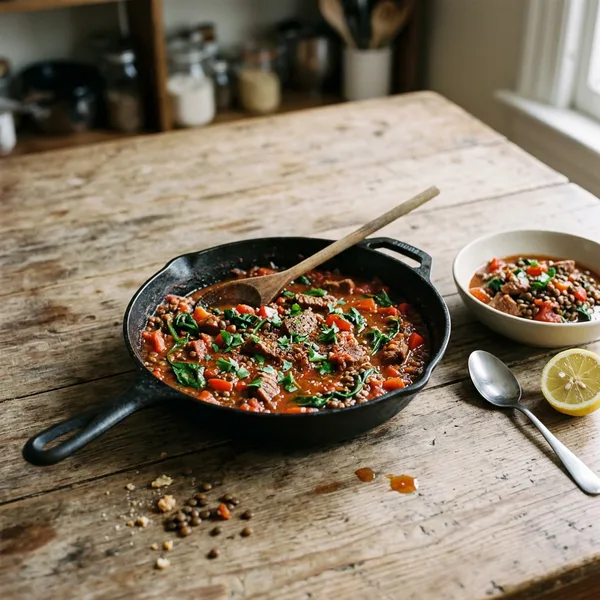
Ingredients
Instructions
- Brown the beef. Heat the olive oil in a 10 to 12 inch (25 to 30 cm) cast-iron skillet over medium-high heat. Add the beef, press it into one flat layer and leave it alone for 3 minutes so the underside browns, then break it up and cook until no pink remains, about 3 minutes more. Ground meat is safe at 160°F (71°C).
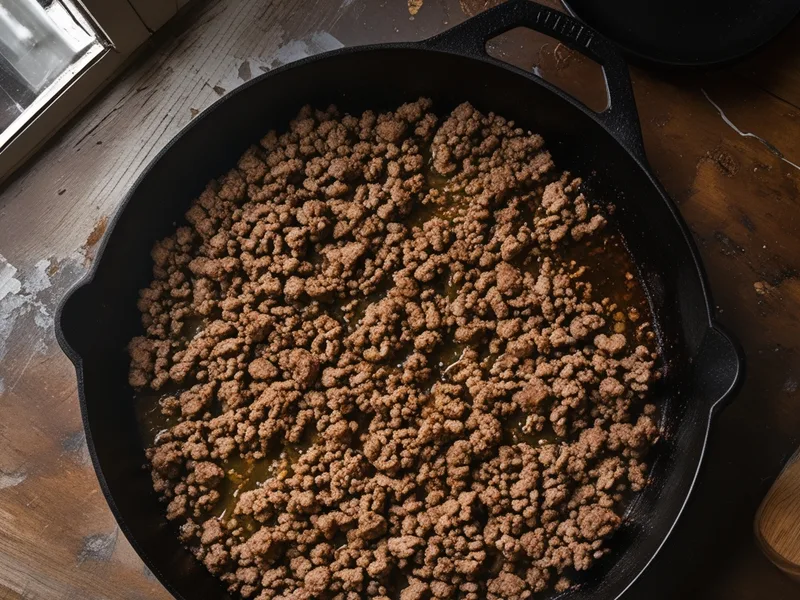
- Soften the vegetables. Lower the heat to medium. Add the onion and the red bell pepper and cook for 5 minutes, stirring now and then, until the onion turns translucent. Add the garlic, cumin and paprika and stir for 30 seconds, just until fragrant.
- Simmer the lentils. Stir in the lentils, crushed tomatoes, water and salt. Bring to a boil, then cover, lower the heat and simmer for 25 to 30 minutes, stirring every 10 minutes, until the lentils are tender but still hold their shape. If the pan looks dry before they are done, add a splash of water.
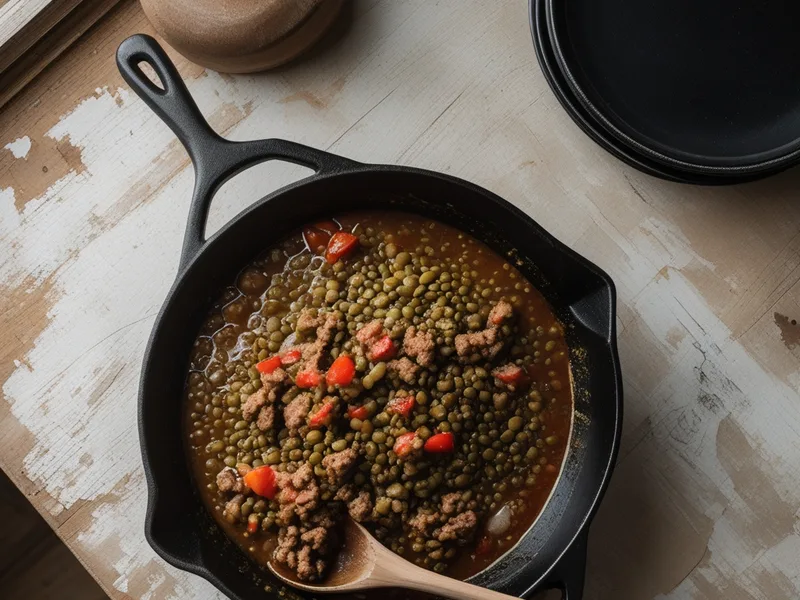
- Wilt the spinach and finish. Take the skillet off the heat. Fold in the spinach a handful at a time; the heat of the stew wilts it in about 2 minutes. Stir in the lemon juice and black pepper, taste, and scatter the parsley on top. Serve in warm bowls.
Notes
Brown the beef in one undisturbed layer before you break it up. Crumbles that steam turn gray; crumbles that sear give the whole stew its depth.
The lemon goes in at the very end, off the heat. It keeps its brightness and lifts the tomatoes.
Cool leftovers quickly and refrigerate them in a covered container. Reheat each portion until it is steaming hot, 165°F (74°C).
Nutrition Facts
Per serving (estimated)
- Total Fat
- 10 g
- Sodium
- 422 mg
- Total Carbohydrate
- 39 g
- Protein
- 31 g
General information, not medical or dietary advice. Nutrition values are estimates. See our full disclaimer.
Frequently asked questions
Will hair grow back with iron supplements?
Only a doctor can tell whether low iron is part of the cause, and a 2010 review notes that no randomized trial has yet tested iron in iron-deficient women with this kind of hair loss. MedlinePlus says a provider will likely recommend a supplement when a deficiency is found, so test first rather than guessing.
What fruits are high in iron?
Fruit is a small source of iron. MedlinePlus names dried fruits among iron foods, and in USDA records 40 g of dried apricots has 1.06 mg, more than raisins or prunes; fresh fruit such as strawberries helps more through its vitamin C.
Is there a food for hair growth and thickness?
No single food has been shown to make hair grow faster or thicker. Studies link low iron, zinc and vitamin D with some types of hair loss, so the useful goal is to avoid running low, which a varied diet with iron-rich meals supports.
What are the top 10 hair growth foods?
No trial ranks foods for hair. If iron is your concern, the ten sources in the table on this page are a practical list: lentils, cooked spinach, kidney beans, chickpeas, firm tofu, pumpkin seeds, clams, lean beef, dried apricots and eggs.
Comments
Tried it? Tell us how it went: your comment helps other readers.