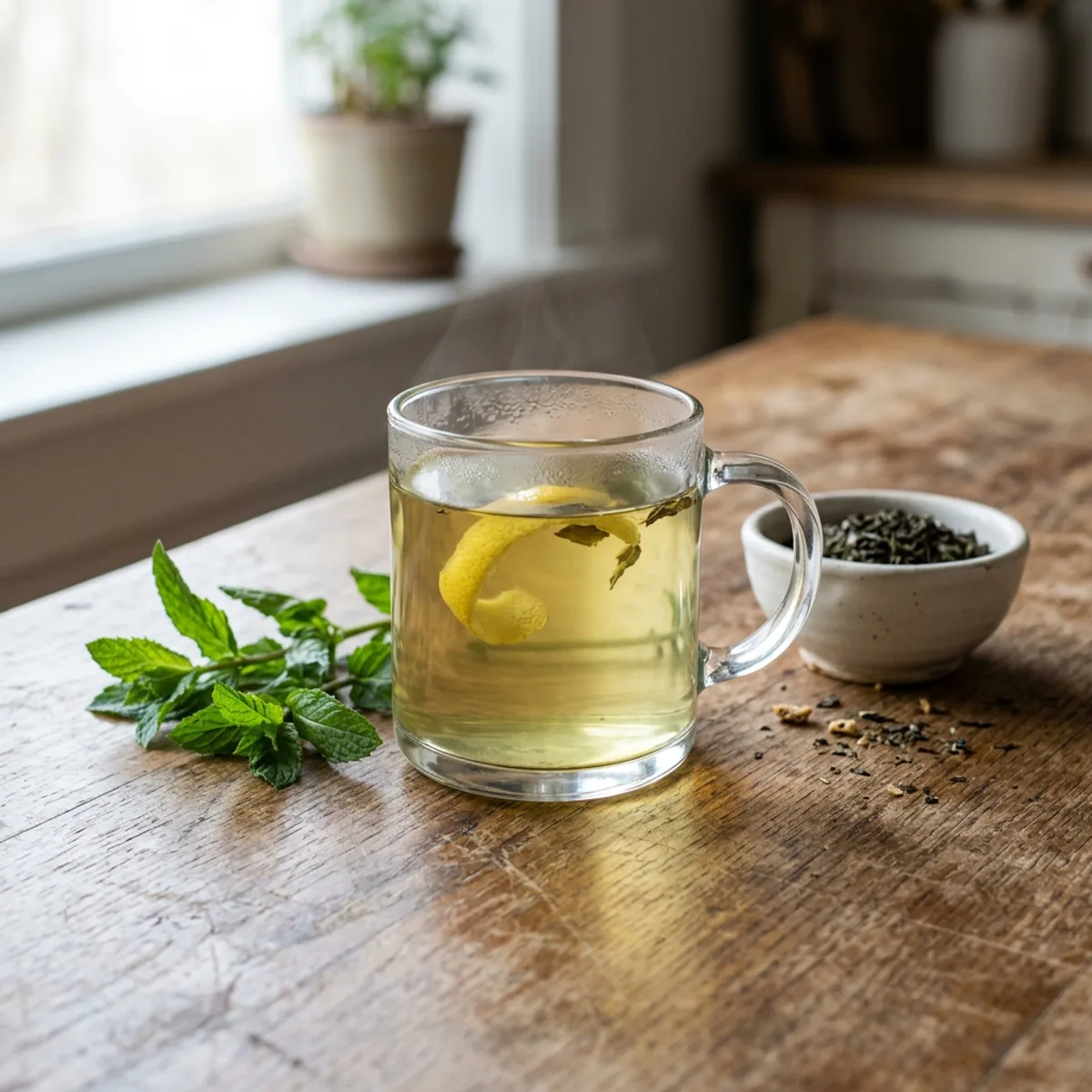
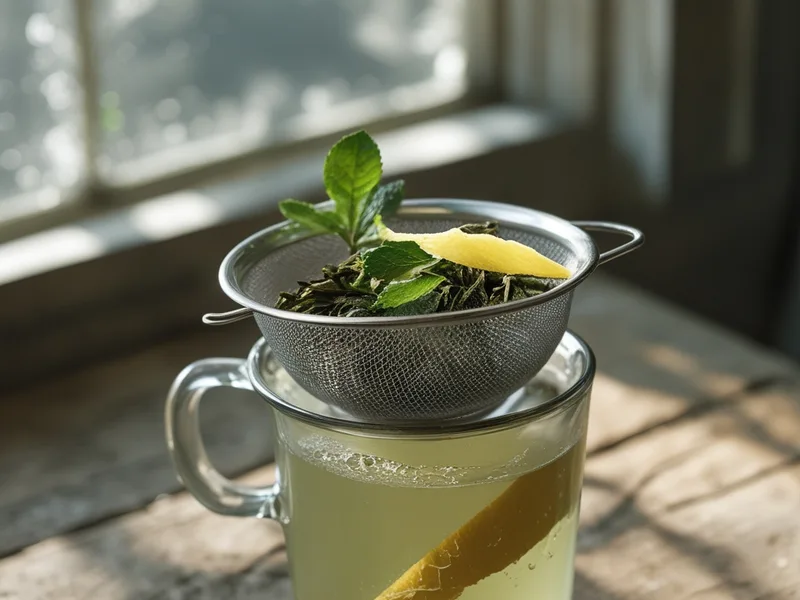
Peppermint tea is peppermint leaves steeped in water just off the boil, covered, for about 6 minutes. This version uses half fresh and half dried leaves with a strip of lemon peel, for about 3 calories and no caffeine a mug. The IBS trials you read about tested peppermint oil capsules, not the tea. Jump to the recipe card.
Three ingredients, so each one has to be good. I'd rather use both kinds of leaf than pick one. Fresh peppermint gives a sweet, green, almost cucumber smell but fades fast in the cup. Dried peppermint is where the deep, cooling menthol lives, and on its own it can taste a little flat and dusty. Together they taste like peppermint should: cold on the tongue, sweet at the back, clean at the finish. The lemon peel sits behind all that and rounds the edges.
Peppermint tea: fresh, dried, bag or iced
| Version | What is in a mug | What the evidence shows | Main caution |
|---|---|---|---|
| This mug (fresh and dried leaves, lemon peel, lemon juice) | About 3 calories, 0 mg caffeine (USDA) | One small trial of a cup of peppermint tea found short-term gains in test scores (PMID 40189738) | Long-term safety of large amounts of peppermint leaf is unknown (NIH) |
| Tea bag, nothing added | About 2 calories a cup (USDA) | Same as above; very little research on peppermint leaf (NIH) | A "mint" blend may contain black or green tea: read the label |
| Iced, over cucumber | Same as the hot mug; the ice and a few cucumber slices add almost nothing | No study compared iced and hot peppermint tea | Same as the hot mug |
| Peppermint oil capsules | A concentrated oil, not a drink | Better than placebo for IBS symptoms in pooled trials, with more side effects (PMID 35942669) | Heartburn, nausea, stomach pain, dry mouth (NIH) |
Calories and caffeine come from USDA FoodData Central and are estimates.
What to buy, and what to skip
Fresh peppermint. Look for perky bunches with dark green leaves and no black spots. Crush a leaf at the store: it should smell sharp and cold, not just "green". Spearmint is a different plant and a softer drink. According to the NIH, peppermint is a natural cross between water mint and spearmint, which is why it is the stronger of the two.
Dried peppermint. Whole or roughly crushed leaves keep their smell far better than fine dust. Buy a small bag, keep it sealed and away from light, and smell it before you brew: if there is no cooling hit, it is past its best.
Tea bags. Fine on a busy day. Choose ones that list only peppermint. A box called "mint tea" can include green or black tea, which brings caffeine back in.
Lemon. Use a vegetable peeler on a washed lemon and keep only the yellow part. The white pith underneath is what makes a cup bitter.
How to brew it so it tastes clean, not grassy
- Leaves only. The stems taste woody and a bit bitter. Strip them.
- Bruise, do not chop. A gentle press between your palms opens the leaves. Chopping them fine tends to make the cup taste grassy.
- Just off the boil, then a lid. Thirty seconds off the heat is enough. The lid keeps the menthol in the pot instead of in your kitchen.
- Six minutes, then taste. For a stronger cup, add more leaves next time instead of steeping much longer. Longer steeping pulls out more bitterness, not more mint.
The "tastes like it should" check: the first sip is cool and sweet, the swallow is clean, and nothing grips your tongue afterwards.
Iced peppermint tea with cucumber
Brew the recipe with double the leaves (a full cup of fresh plus 4 tsp of dried for 2 cups of water), because the ice will water it down. Let it cool on the counter, take out the peel, then pour it over a glass packed with ice and 3 or 4 thin cucumber slices. The cucumber picks up on the green note of the fresh leaves. Skip the lemon juice here or keep it light.
Store leftover tea covered in the fridge at 40°F (4°C) or below (USDA cold food storage chart) and drink it within a day or two, while it still smells fresh. That is a kitchen habit, not an official limit. For a tart, ruby-red pitcher on the same idea, try our iced hibiscus tea with lime.
Benefits of drinking peppermint tea, sorted honestly
A lot gets promised in the name of peppermint. Here is what holds up when you look at the sources.
- What holds up: no caffeine and almost no calories. USDA lists 0 mg of caffeine and about 2 calories in a cup of brewed herbal tea, so a plain mug is close to flavored water. That makes it a real swap for a soda, a sweet iced tea or a third coffee in the afternoon.
- What has one small study: short-term alertness. In a 2025 single-blind trial (PMID 40189738), 25 healthy adults drank either 200 ml of peppermint tea or a placebo drink. The peppermint group improved more on a computer test battery and showed more blood flow in the front of the brain, but the blood flow did not explain the better scores. Twenty-five people is a very small group, and the authors ask for larger studies.
- What is promoted but not shown for the tea: digestion, IBS, headaches, nausea. The NIH's National Center for Complementary and Integrative Health says very little research has been done on peppermint leaf, and there is not enough evidence to say whether it is useful for any health condition. Mint for an upset stomach goes back to ancient Greece, Rome and Egypt, according to the NIH, but long use is not the same as proof.
Peppermint oil vs tea: why the benefits do not transfer
When you read that peppermint "works for IBS", the studies behind it almost always tested enteric-coated peppermint oil capsules. Those are concentrated oil, coated (the NIH says the coating is there to make heartburn less likely) and taken at a set dose for at least two weeks in the 2014 review below. A mug of tea is a light infusion of leaves. So peppermint oil tea benefits are not one thing: what was found for the oil cannot simply be claimed for the tea.
Here is what the oil trials found, read abstract by abstract:
- A 2022 meta-analysis of 10 randomized trials with 1,030 patients (PMID 35942669) found peppermint oil better than placebo for overall IBS symptoms and for belly pain. Side effects were more common with the oil, and the authors rate the quality of the evidence as very low. This is the same review the NIH summarizes, and it notes that most side effects were mild, such as reflux and indigestion.
- A 2019 meta-analysis of 12 trials with 835 patients (PMID 30654773) also found better overall symptoms and less belly pain with the oil, and in that analysis side effects were not significantly more frequent than with placebo.
- A 2014 meta-analysis of 9 trials with 726 patients (PMID 24100754), all with capsules taken for at least 2 weeks, found the oil better than placebo as a short-term treatment. Side effects were more likely but mild and short-lived; heartburn was the most common.
None of these trials gave anyone a cup of tea. If you have IBS or belly pain that keeps coming back, the oil question is one for your health care provider, and the tea is simply a drink you may enjoy.
Peppermint tea for bloating: what is known
People reach for a mug after a heavy meal, and it is a pleasant habit. Our PubMed search found no trial that tested brewed peppermint tea for bloating or gas. The NIH adds a twist worth knowing: some products that combine peppermint oil with caraway oil, or several herbs including peppermint leaf, may help indigestion, but peppermint oil on its own may make indigestion worse in some people. If you feel bloated often, or it comes with pain or changes in your bowel habits, see a health care provider rather than drinking more tea.
When to drink peppermint tea
Any time you want a warm drink without caffeine. After dinner is the classic slot. In the evening it will not keep you up the way coffee or black tea can, though no sleep trial we found tested it. In the afternoon, it is a good stand-in for a sugary drink. If you do want a bit of caffeine with your mint, our iced lemon-mint green tea is built that way.
Make it your own
- Ginger: add 2 thin slices of fresh ginger to the pot for a warmer cup. If you like that flavor, our ginger water is all about it.
- Orange: swap the lemon peel for orange peel for a sweeter, rounder mug.
- Creamy: skip the lemon juice and add a splash of warm oat milk.
Downsides and safety
According to the NIH's National Center for Complementary and Integrative Health (peppermint oil fact sheet):
- The tea: peppermint tea, made from the leaves, appears to be safe. The long-term safety of consuming large amounts of peppermint leaf is unknown, so think of it as a drink, not something to take by the quart.
- Heartburn and the stomach: peppermint oil taken by mouth can cause heartburn, nausea, belly pain and dry mouth. If peppermint tea gives you heartburn, that is a good reason to switch to another herbal tea.
- Allergy: rarely, peppermint oil causes allergic reactions.
- Pregnancy and breastfeeding: peppermint in the amounts found in food is likely safe; little is known about medicinal amounts.
- Babies and small children: menthol, which is in peppermint oil, should not be inhaled by or applied to the face of an infant or small child, because it may affect their breathing. Keep peppermint oil away from them.
- Medicines: if you take any medicine, talk with your health care provider before using any herbal product, because some herbs and medicines interact.
Enjoy the tea for its flavor; for a health problem, your health care provider is the right person to ask.
How we researched this
- Nutrition: USDA FoodData Central for brewed herbal tea other than chamomile (USDA has no separate entry for brewed peppermint), lemon juice and honey, added up ingredient by ingredient. The leaves and the lemon peel are strained out and not counted, so the totals are estimates.
- Studies: a PubMed search on November 4, 2026 for trials and reviews of peppermint, peppermint tea and peppermint oil with digestion, IBS, bloating, nausea, sleep and alertness. We read the full abstracts of the four studies cited above and left out trials of inhaled aromatherapy, which test a smell, not a drink.
- Safety and background: the NCCIH peppermint oil fact sheet, read on November 4, 2026.
Peppermint Tea Made With Fresh and Dried Leaves, Hot or Iced
Half fresh leaves for a sweet, green smell, half dried for the deep menthol, and a strip of lemon peel to round it off. Plus what is known about peppermint tea itself, and why the IBS trials are about oil capsules.
Ingredients
Instructions
- Wake up the leaves. Rinse the fresh peppermint and pull the leaves off the stems. Bruise them lightly between your palms or tear them in half, then put them in a teapot or a heatproof jug with the dried peppermint and the strip of lemon peel.
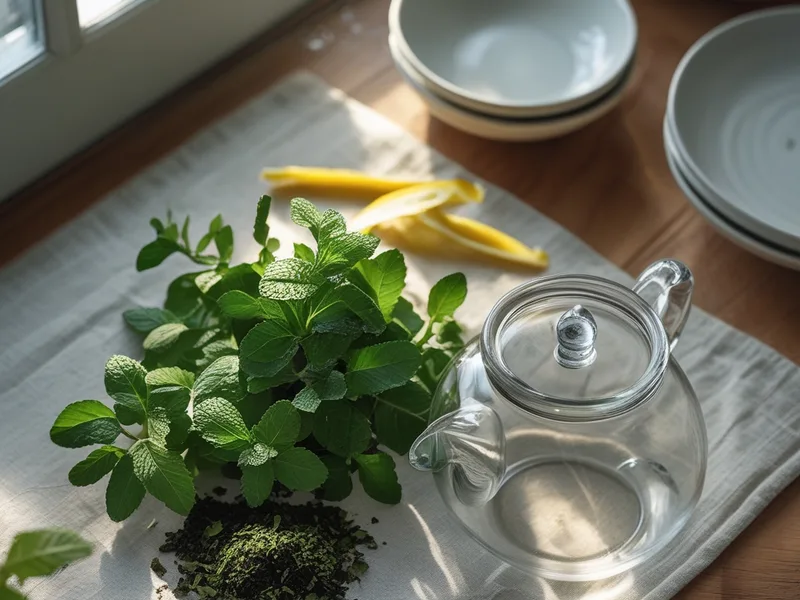
- Steep covered. Bring 2 cups (475 ml) of water to a boil and take it off the heat for about 30 seconds. Pour it over the leaves, cover right away, and steep for 6 minutes. Taste at 5 if you like a lighter cup.
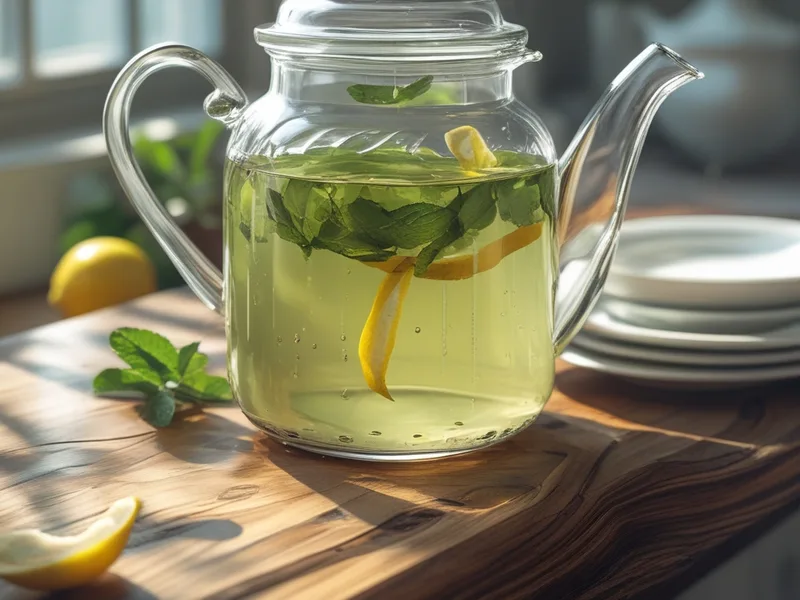
- Strain and finish. Pour the tea through a fine strainer into two mugs and throw away the leaves and the peel. Add 1 tsp of lemon juice to each mug if you want it brighter, and serve hot. Bogdan brewed this pot to the letter, found it quick and easy, and the cup was delicious enough to brew again.
Notes
Cover the pot the moment the water goes in. The menthol smell is what you are paying for, and it leaves with the steam.
If the cup tastes grassy, the fresh leaves were tired or there were too many stems. If it tastes sharp and almost medicinal, cut the dried peppermint to 1 tsp.
Want it sweeter? 1 tsp of honey per mug adds about 21 calories (USDA).
Nutrition Facts
Per serving (estimated)
- Total Fat
- 0 g
- Sodium
- 2 mg
- Total Carbohydrate
- 1 g
- Protein
- 0 g
General information, not medical or dietary advice. Nutrition values are estimates. See our full disclaimer.
Frequently asked questions
What are the benefits of peppermint tea?
The solid ones are simple: USDA lists no caffeine and about 2 calories in a cup of brewed herbal tea, so it is an easy swap for soda or a late coffee. One small 2025 trial found a short-term lift in test scores after a cup; the NIH says there is not enough evidence that peppermint leaf helps any health condition.
Is there a downside to peppermint tea?
The NIH says peppermint tea appears to be safe, but the long-term safety of drinking large amounts of peppermint leaf is unknown. Peppermint oil taken by mouth can cause heartburn, nausea, stomach pain and dry mouth, and rarely an allergy; if a mug of the tea gives you heartburn, skip it.
Will peppermint tea flatten your stomach?
No study we read tested peppermint tea on belly size, weight or bloating. A plain mug has about 3 calories, so it can replace a sweet drink, but it does not burn fat or shrink your waist.
Why drink peppermint tea before bed?
Because it has no caffeine: USDA lists 0 mg in brewed herbal tea, so it will not keep you awake the way coffee or black tea can. Our PubMed search found no trial of peppermint tea for sleep, so it is a calm evening drink, not a sleep aid.
Comments
Tried it? Tell us how it went: your comment helps other readers.