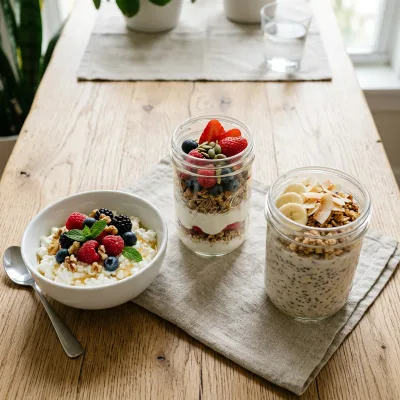
Quick answer: Three ways to have a high protein breakfast without eggs: overnight oats (about 20 g of protein), a cottage cheese bowl (about 26 g) and a Greek yogurt parfait (about 32 g). Dairy does most of the work: 1 cup of nonfat Greek yogurt has about 25 g.
Eggs are a common breakfast protein, but they are not the only one. If you want a high-protein start to the day without eggs because you are allergic, tired of them, or just want something that needs no pan, dairy and oats can do the same job. This guide has three recipes from this site, the protein in each from USDA data, and a short list of other protein sources.
The three recipes at a glance
| Recipe | Calories | Protein | Sodium | Prep |
|---|---|---|---|---|
| High-protein overnight oats | About 340 | About 20 g | 92 mg | 5 minutes, then overnight |
| Cottage cheese bowl (sweet) | About 342 | About 26 g | 697 mg | 5 minutes |
| Greek yogurt parfait | About 413 | About 32 g | 99 mg | 5 minutes |
Values come from the USDA-based calculations in each recipe and are estimates. Notice the sodium: cottage cheese is much saltier than yogurt, so the bowl has about 30% of the 2,300 mg daily value. See the recipe for details.
Protein sources other than eggs
| Food | Amount | Calories | Protein |
|---|---|---|---|
| Nonfat Greek yogurt, plain | 1 cup (245 g) | About 149 | About 25 g |
| Cottage cheese, 2% milkfat | 1 cup (226 g) | About 183 | About 24 g |
| Firm tofu | 1/2 cup (126 g) | About 181 | About 22 g |
| Soy milk, unsweetened | 1 cup (243 g) | About 80 | About 7 g |
| Rolled oats, dry | 1/2 cup (40.5 g) | About 154 | About 5 g |
| Smooth peanut butter | 1 tablespoon (16 g) | About 96 | About 4 g |
| Chia seeds | 1 tablespoon (12 g) | About 58 | About 2 g |
Values are from USDA FoodData Central. The chia tablespoon (12 g) is a common weight, not a USDA one. Brands differ, so check your labels.
What can I eat instead of eggs for protein?
The table shows it: Greek yogurt and cottage cheese give the most protein per cup, and firm tofu is the strongest plant option. MedlinePlus says you do not need to eat animal products to get all the protein you need, and it lists soy foods, beans and lentils, nut butters and some grains as plant sources. Oats, nut butter and chia add smaller amounts, so they work best as part of a bowl or jar rather than on their own.
How to choose a high protein breakfast without eggs
- Want the most protein? The Greek yogurt parfait, at about 32 g.
- Want something savory? The cottage cheese bowl can be topped with cucumber and tomato instead of fruit. Watch the sodium.
- Want to finish it the night before? The overnight oats, which need no cooking and no protein powder.
- Packing it for work? Layer the parfait in a jar and keep the granola separate. Keep any of them cold.
How much protein should I eat for breakfast?
There is no official number for one meal. MedlinePlus says the recommended protein intake for healthy adults is 10% to 35% of your total calories, and that one gram of protein supplies 4 calories. On a 2,000-calorie day, that is roughly 50 to 175 g in total (our arithmetic), so 20 to 30 g at breakfast is comfortably within it. Your own need depends on your age, size and health, so ask your doctor or dietitian if you are unsure.
How can I get 40 g of protein for breakfast?
Start with the parfait, which has about 32 g, and add about half a cup of nonfat Greek yogurt. That adds about 13 g and brings it to roughly 45 g. It is a lot of protein for one meal, so if you have a kidney condition, follow a special diet or take medicine, check with your doctor first. For most people, 20 to 30 g at breakfast and the rest across the day is plenty.
Tips for protein at breakfast
- Read the label. Protein differs by brand and fat level for yogurt and cottage cheese.
- Pair protein with fruit or whole grains for a more filling plate.
- Prep two or three jars at once so the week feels easier.
- Mind the sodium. Compare cottage cheese brands, and use plain yogurt as the base for the lowest sodium.
Safety: allergies and special diets
Cottage cheese, yogurt and milk are dairy, and the peanut butter and granola in our recipes can contain nuts. If you avoid dairy, plain unsweetened soy yogurt and soy milk can stand in, and firm tofu is a strong protein source, but we did not test dairy-free versions of these recipes. This is not dietary advice: if you have a food allergy or a health condition, check with your doctor or a registered dietitian.
How we researched this
- Competitors: we read two of the top egg-free breakfast pages on October 18, 2026 (a list of 28 recipes and a list of 97 ideas). Their lists are much longer than ours, so we focus on three recipes with real numbers rather than a long list.
- Nutrition: values come from USDA FoodData Central and from the calculations in our three recipe articles.
- Protein needs: we read the MedlinePlus page on protein in the diet.
- Not tested by us: we did not measure the protein of any recipe in a lab.
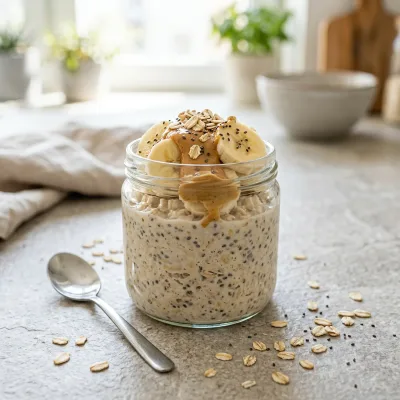
High-Protein Overnight Oats
Oats, milk, Greek yogurt and chia seeds mixed tonight, about 20 g of protein, no protein powder.
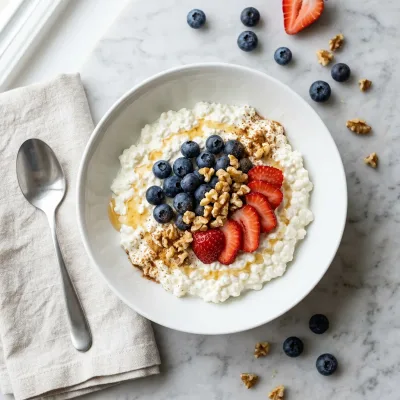
Cottage Cheese Bowl
A creamy no-cook bowl, sweet or savory, about 26 g of protein in the sweet version.

Greek Yogurt Parfait
Thick Greek yogurt layered with granola, fruit and chia, about 32 g of protein.
Frequently asked questions
What is a good protein source for breakfast other than eggs?
Greek yogurt and cottage cheese are the easiest: USDA data lists 1 cup of nonfat Greek yogurt at about 25 g of protein and 1 cup of 2% cottage cheese at about 24 g. Firm tofu, about 22 g in half a cup, is a plant option. Oats, nut butter and chia add smaller amounts.
What can I eat instead of eggs for protein?
Dairy (Greek yogurt, cottage cheese), soy foods (tofu, soy milk), oats, nuts and nut butter, seeds and cooked beans or lentils. MedlinePlus says you do not need to eat animal products to get all the protein you need, and lists soy, beans, legumes, nut butters and some grains as plant sources.
How much protein should I eat for breakfast?
There is no official number for breakfast alone. MedlinePlus says the recommended protein intake for healthy adults is 10% to 35% of daily calories, which is about 50 to 175 g on a 2,000-calorie day, so a breakfast with 20 to 30 g fits easily. Your own need depends on your age, size and health: ask your doctor or dietitian.
How can I get 40g of protein for breakfast?
Start with the Greek yogurt parfait, which has about 32 g, and add about half a cup more nonfat Greek yogurt, about 13 g more, to reach roughly 45 g. That is a lot of protein for one meal, so if you have a kidney condition or follow a special diet, check with your doctor first.
Can I make these breakfasts dairy-free?
Not as written: all three of our recipes use dairy. Plain unsweetened soy yogurt and soy milk can replace it in the oats and the parfait, but the protein is different, so check the label. We did not test dairy-free versions.

I’m Emma Bloom, founder and editorial voice behind Eat & Bloom. I share approachable recipes, practical nutrition tips and simple food ideas for everyday life, and I believe eating well should not be complicated or restrictive. Eat well. Find what works for you. Bloom.


Comments
Tried it? Tell us how it went: your comment helps other readers.