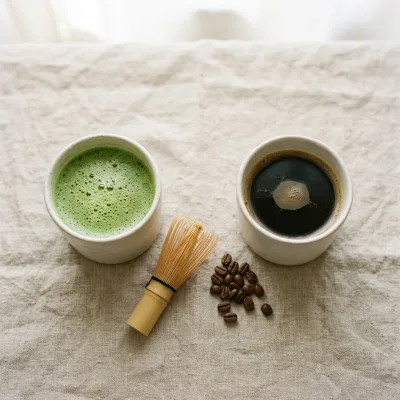
Quick answer: Gram for gram, yes: reported measurements put matcha powder at 19 to 44 mg of caffeine per gram. Cup for cup, usually no: a teaspoon of matcha has about 38 to 88 mg, while an 8-ounce cup of brewed coffee has about 95 mg according to USDA data, and up to 200 mg according to MedlinePlus.
Does matcha have more caffeine than coffee? You probably want one number, but the honest answer is a range, and what you do with the spoon decides where you land in it. Here is how matcha and coffee really compare, why the figures differ from site to site, and how to count your own cup.
Matcha vs coffee caffeine at a glance
| Drink | Typical serving | Caffeine | Source |
|---|---|---|---|
| Matcha, light | 1/2 tsp (about 1 g) | About 19 to 44 mg | Reported range per gram, multiplied by 1 g |
| Matcha, classic | 1 tsp (about 2 g) | About 38 to 88 mg | Reported range per gram, multiplied by 2 g |
| Matcha, strong latte | About 4 g | About 76 to 176 mg | Reported range per gram, multiplied by 4 g |
| Brewed coffee | 8 oz | About 95 mg (USDA); 95 to 200 mg (MedlinePlus) | USDA FoodData Central, MedlinePlus |
| Brewed green tea | 8 oz | About 28 mg (USDA); tea 14 to 60 mg (MedlinePlus) | USDA FoodData Central, MedlinePlus |
The matcha rows are our own multiplication of the range reported by the sites we read, not a lab measurement of one specific cup. Treat them as a guide.
Does matcha have more caffeine than coffee? The cup-for-cup answer
It depends on whether you compare the powder or the drink.
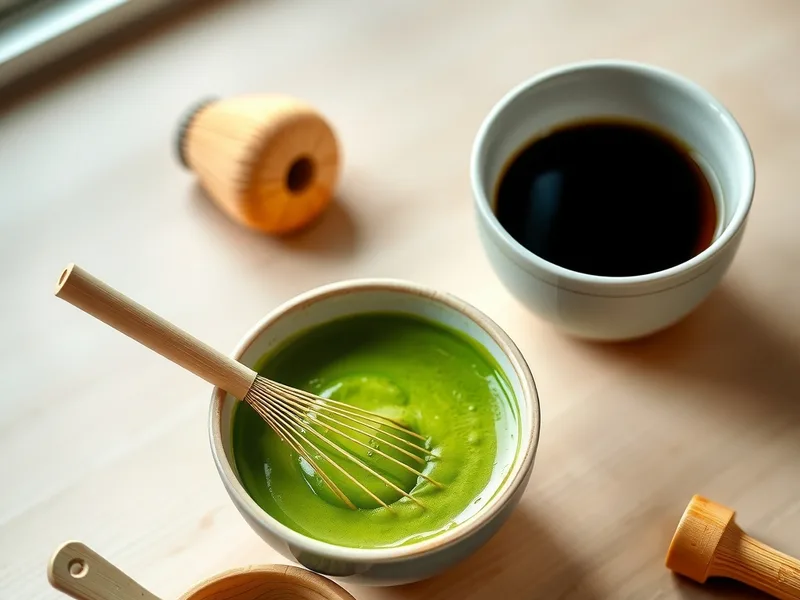
AI-generated illustration.
Gram for gram, matcha wins. The pages we read, from Breville, Medical News Today and Chalait, report about 19 to 44 mg of caffeine per gram of matcha powder (Chalait gives 20 to 35). Medical News Today puts coffee beans at about 10 to 12 mg per gram.
Cup for cup, coffee usually wins, because you drink a lot more coffee than matcha. You brew an 8-ounce cup from several grams of grounds, and you whisk only 1 to 2 grams of matcha. USDA data lists a cup of brewed coffee (237 g) at about 95 mg of caffeine. A teaspoon of matcha lands at about 38 to 88 mg.
Does matcha have more or less caffeine than coffee?
Both, depending on your spoon. A light half-teaspoon bowl has less than most cups of coffee. A generous latte can match or pass a mild cup. Chalait notes that some cafes use two teaspoons for a large latte, and at 4 g the same arithmetic gives roughly 76 to 176 mg, which overlaps with the 95 to 200 mg MedlinePlus gives for coffee.
Does matcha green tea have more caffeine than coffee?
"Matcha green tea" is just the same thing: green tea leaves ground into a powder. Because you drink the whole leaf, matcha has more caffeine than a regular green tea bag. USDA data lists brewed green tea at about 28 mg per 8-ounce cup, and MedlinePlus puts tea at 14 to 60 mg. Against coffee, the answer is the same as above.
Why the numbers vary so much
If you ask whether matcha has more caffeine than coffee on ten sites, you get ten slightly different figures, and they are not all wrong. A 2026 review in Molecules (PMID 42654013) says the amounts and ratios of caffeine, catechins and theanine in Japanese green tea vary significantly with harvest season, cultivar and growing practices, and that matcha on the market ranges widely in quality. A 2026 review in Nutrients (PMID 42197072) adds that shading the plants before harvest, the way matcha is grown, increases the buildup of caffeine and L-theanine.
Coffee is just as variable. A cup of brewed coffee is listed at about 95 mg by USDA, at 70 to 140 mg on Breville's page and at 95 to 200 mg by MedlinePlus. The bean, the roast, the brew method and the cup size all change it.
The practical lesson: a range is more honest than a single number when you ask whether matcha has more caffeine than coffee, and the label of your own product beats any table.
Why matcha can feel different
Matcha also contains L-theanine, an amino acid found in tea. Several small trials have looked at L-theanine together with caffeine. A 2025 meta-analysis of randomized trials (PMID 40314930) found that theanine plus caffeine, and theanine alone, could be beneficial for cognitive and mood outcomes, and its authors say more research is needed, using tea drinks or tea-equivalent doses in everyday life. A 2017 systematic review (PMID 28899506) found evidence that green tea influences symptoms like anxiety, cognition and brain function.
Be careful with that. Most of those studies use isolated L-theanine or set doses, not a cup of matcha. Sites that sell matcha often describe a smoother lift than coffee. We did not find a trial that compared how matcha and coffee feel in the same people, so treat "smoother" as a personal impression, not a finding.
Can matcha lower cortisol? And what about skin?
Two questions come up a lot. Here is what we found.
Cortisol. A 2026 systematic review (PMID 42775228) pooled 22 studies, with 700 human participants, on matcha and green tea compounds and the stress hormones cortisol and testosterone. The certainty of the evidence was low for cortisol outcomes, and no matcha-specific human trial measured cortisol and testosterone together. The authors present this as a gap to fill, not a verdict that matcha does nothing.
Skin. We searched PubMed for trials, reviews and meta-analyses on matcha or green tea and skin. The results were about creams and extracts, not about drinking matcha, so we cannot say the drink improves skin.
Safety: your daily total and who should be careful
Mayo Clinic says up to 400 mg of caffeine a day seems safe for most adults, about the amount in four cups of brewed coffee. MedlinePlus says the same for most people, and adds that the effects of caffeine can last four to six hours.
Caffeine adds up, whatever the source. A matcha at breakfast, a coffee at noon and an energy drink in the afternoon all count toward the same total.
MedlinePlus lists people who should be more careful with caffeine: those who are pregnant or breastfeeding, who have anxiety, an irregular heartbeat or a sleep disorder, who take certain medicines or supplements, and children and teens. Mayo Clinic also advises people who are pregnant, trying to become pregnant or breastfeeding to talk with their healthcare professional about limiting caffeine. We could not read the FDA and ACOG pages, so we do not quote their figures here.
Signs that you may have had too much include a fast heartbeat, trouble sleeping or feeling restless. If caffeine affects you, even small amounts may be too much. Ask your doctor or pharmacist, especially if you take medicine.
How to count your own cup
- Weigh the powder. A level teaspoon is about 2 g and half a teaspoon about 1 g. A small kitchen scale takes the guesswork out.
- Start small. If you are sensitive to caffeine, try a half teaspoon first and see how you feel.
- Check the label. Some brands print the caffeine per serving. If yours does, use that number, not ours.
- Ask the cafe. A latte can use one teaspoon or two. The difference is the caffeine of a whole extra cup.
- Mind the time of day. Because effects can last for hours, an afternoon cup can cost you sleep.
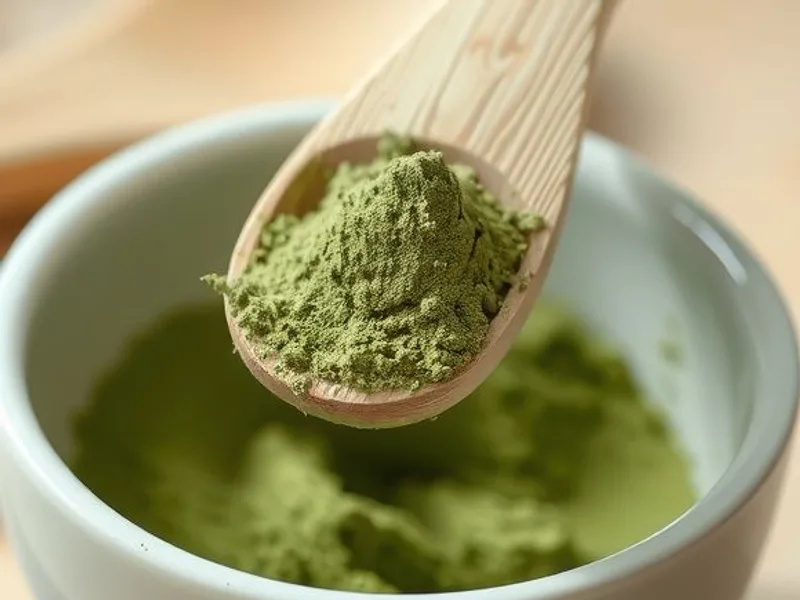
AI-generated illustration.
Want to make it at home? Our matcha latte recipe lets you choose the amount of powder. If you would rather skip caffeine, our ginger water recipe is a warm caffeine-free drink.
How we researched this
- Matcha figures: we read five pages (Chamberlain Coffee, Breville, Chalait, Ujimatcha and Medical News Today) on October 18, 2026. We report the range they give and show our own multiplication. We did not read the original laboratory studies behind those ranges.
- Coffee and green tea: USDA FoodData Central values for brewed coffee and brewed green tea, 237 g (a US cup of water-based drink is about that weight), plus the ranges on MedlinePlus.
- Safety: we read the Mayo Clinic and MedlinePlus pages on caffeine. The FDA and ACOG pages returned no content, so we did not use them.
- Studies: a PubMed search on October 18, 2026 for trials and reviews on matcha, green tea and L-theanine with caffeine, then a second search on matcha composition, cortisol and skin. We read the abstracts and cite only what they say.
- Not tested by us: we did not measure the caffeine in any cup ourselves.
Good to know
This article is general information. It is not medical advice, and it does not replace a conversation with your doctor or a registered dietitian. Caffeine amounts are estimates and change with the product and how you prepare it. If you have a health condition, take medicine, are pregnant or breastfeeding, ask your healthcare professional before changing your caffeine intake.
Frequently asked questions
Is matcha good for your skin?
We did not find a trial showing that drinking matcha improves skin. Our PubMed search for trials and reviews on matcha or green tea and skin turned up creams and extracts, not the drink. Matcha is a fine part of a varied diet, but we cannot promise a skin benefit.
Does matcha contain caffeine?
Yes. Matcha is powdered green tea, so it contains caffeine. Reported measurements range from about 19 to 44 mg per gram of powder, which is roughly 38 to 88 mg in a teaspoon (about 2 g).
Can matcha lower cortisol?
Not proven. A 2026 systematic review of 22 studies on matcha and green tea compounds and cortisol rated the certainty of the evidence as low, and found no matcha trial that measured cortisol and testosterone together. The authors call it a gap in the evidence, not proof that matcha does nothing.
Does uji matcha have caffeine?
Yes. Uji matcha is matcha from the Uji area of Japan, made from the same tea plant, so it contains caffeine. We did not find a figure specific to Uji matcha, so use the general range and check your product's label.
How much caffeine is in a teaspoon of matcha?
A level teaspoon is about 2 g of powder, so roughly 38 to 88 mg of caffeine if you use the reported range of 19 to 44 mg per gram. A half teaspoon (about 1 g) is roughly 19 to 44 mg.
How much caffeine is too much in one day?
Mayo Clinic and MedlinePlus say up to 400 mg a day seems safe for most adults. That is not true for everyone: people who are pregnant, who are breastfeeding or who take certain medicines should ask their healthcare professional.

I’m Emma Bloom, founder and editorial voice behind Eat & Bloom. I share approachable recipes, practical nutrition tips and simple food ideas for everyday life, and I believe eating well should not be complicated or restrictive. Eat well. Find what works for you. Bloom.
Comments
Tried it? Tell us how it went: your comment helps other readers.