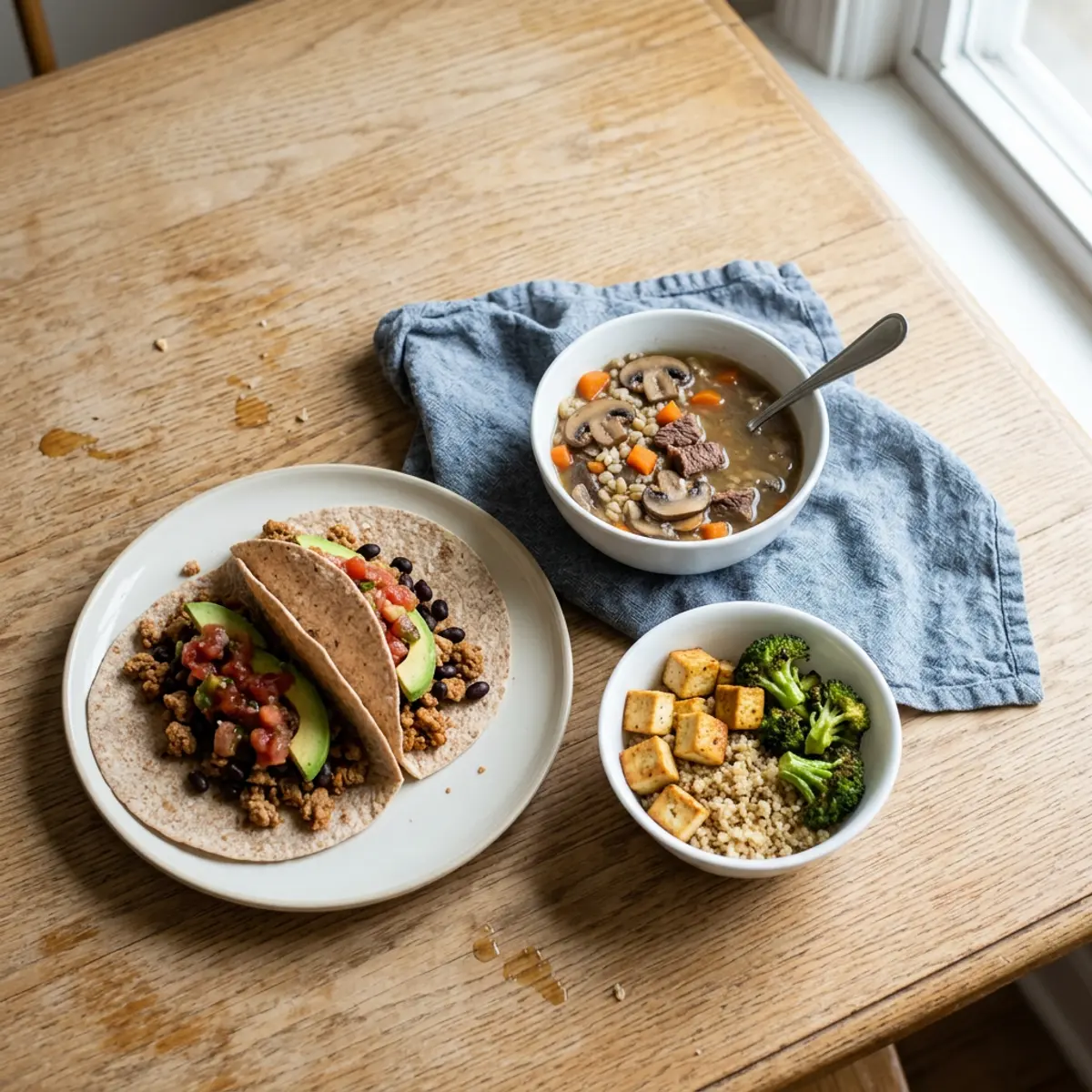
A flexitarian diet is mostly plant-based, with meat, dairy, eggs and fish still on the table now and then, in small amounts. That is how Mayo Clinic describes it, and it is the easiest version of plant-forward eating to keep up. Below are three flexitarian diet dinners built that way, then what the research says about this style of eating.
| Dinner | What it is built on | Per serving |
|---|---|---|
| Mushroom and barley soup | Mushrooms, barley, vegetables, a little beef | 213 calories, 15 g protein, 702 mg sodium |
| Turkey and black bean tacos | Black beans, a little turkey, whole wheat tortillas | 387 calories, 20 g protein, 916 mg sodium |
| Tofu and broccoli quinoa bowl | Tofu, broccoli, quinoa | 370 calories, 20 g protein, 287 mg sodium |
If it does not taste good, you will not make it twice, so start with better basics. Mushrooms browned properly, tortillas that taste of wheat, tofu you press and sear until it has an edge: these meals work because the plant half is cooked with care, not because the meat was taken away. When you shop, look for beans in a plain tin with no added flavorings and compare the sodium on the label; the rinse and drain step below takes care of the rest.
Flexitarian diet food list: what goes on the plate
Mayo Clinic's page on vegetarian eating names the plant foods that carry the most nutrition: dried beans and peas, lentils, whole-grain products, dark leafy green vegetables and dried fruit for iron, and peppers, strawberries, citrus fruit, tomatoes, cabbage and broccoli for vitamin C. Put together for a flexitarian cook, a simple food list looks like this:
- Legumes: black beans, chickpeas, lentils, tofu.
- Whole grains: pearled barley, quinoa, whole wheat tortillas, oats.
- Vegetables: mushrooms, carrots, broccoli, tomatoes, peppers, avocado.
- Small amounts of animal foods: beef, chicken, turkey, eggs, fish or dairy, used as an accent rather than the main event.
What the evidence says about plant-based eating
None of the studies below tested "the flexitarian diet" by name. They looked at plant-based patterns in general, which is the closest evidence we found, and most of it follows people over time rather than assigning diets by chance.
- A 2023 meta-analysis of 76 prospective studies, about 2.2 million people (PMID 37789346). Higher adherence to a plant-based pattern went with lower risks of type 2 diabetes (RR 0.82), cardiovascular disease (0.90), cancer (0.91) and all-cause death (0.84). The links were stronger when the pattern stressed vegetables, fruit, whole grains and legumes, and unhealthy plant-based patterns went the other way. Heterogeneity between studies was moderate to high.
- A 2025 dose-response meta-analysis of 25 prospective studies (PMID 40018753). A healthy plant-based index went with a lower risk of all-cause death (RR 0.86), while an unhealthy one went with a higher risk (RR 1.20). Plant-based is not automatically healthy: refined grains and sugary foods count as plants too.
- A 2023 meta-analysis of 37 publications on swapping foods (PMID 37968628). Replacing processed meat with legumes went with a lower risk of cardiovascular disease (SHR 0.77, moderate certainty of evidence). This is the closest match to what a flexitarian cook actually does: swap, not remove.
- A 2016 meta-analysis of 21 randomized trials, 940 people (PMID 27030531). Diets with about one serving a day of pulses (beans, lentils, chickpeas) led to a modest weight loss of 0.34 kg over a median of 6 weeks. It is small, and the authors say long-term effects still need study.
- A 2023 meta-analysis of 16 randomized trials, 1,092 people (PMID 37031751). Legume intake had no significant effect on blood pressure overall (systolic -1.06 mm Hg), with a larger drop in people with overweight or obesity (-2.79 mm Hg). The certainty of evidence was low.
In short, the pattern is consistently associated with better health outcomes, mostly in observational data. That is an association, not proof that eating this way causes them, and the benefit depends on which plant foods you choose.
Our anti-inflammatory diet page covers a similar food list built around vegetables, legumes and whole grains, with its own three recipes.
Flexitarian diet meal plans: a week that is not a rule
A simple way to arrange the week, using the three recipes as anchors. It is an example to adjust, not a medical plan:
- Monday: the tofu and broccoli quinoa bowl (meatless).
- Wednesday: the mushroom and barley soup; keep the leftovers for lunch.
- Friday: the turkey and black bean tacos.
- Other days: lentil soup, an omelet with greens, oats with fruit and nuts, or fish once a week if you eat it. Our sweet potato recipes and white chicken chili fill some of those slots, and the Mediterranean diet meal plan takes a similar plant-forward approach if you want a longer one.
Mushroom and barley soup with a little beef
Beef here is a seasoning, not the main event: 115 g (4 oz) of eye of round for four bowls, with a pound of mushrooms' worth of savory flavor and a cup of barley to make it a meal.
Serves 4. Prep 15 minutes. Cook 50 minutes.
Ingredients
- 115 g (4 oz) beef eye of round, cut in small cubes
- 300 g (about 4 cups) white mushrooms, sliced
- 100 g (1/2 cup) pearled barley, rinsed
- 150 g (about 2 medium) carrots, diced
- 2 stalks celery, diced
- 1 medium onion, chopped
- 2 cloves garlic, minced
- 1 tablespoon olive oil
- 960 ml (4 cups) low-sodium beef broth
- 480 ml (2 cups) water
- 3 sprigs fresh thyme
- 1/4 teaspoon salt
Steps
- Brown. Warm the oil in a large pot over medium-high heat and brown the beef for 4 minutes, turning, then lift it out.
- Soften. Add the mushrooms, onion, carrots and celery to the pot and cook for 8 minutes, until the mushrooms have given up their liquid and the pan looks dry again. Stir in the garlic for 30 seconds.
- Simmer. Return the beef, then add the barley, broth, water, thyme and salt. Bring to a boil, lower the heat and simmer, partly covered, for 35 to 40 minutes, until the barley is tender and the beef is soft.
- Finish. Remove the thyme stems and taste for salt.
Per serving: about 213 calories, 15 g protein, 30 g carbohydrate, 5 g fat, 702 mg sodium. The beef's weight is raw, and the totals are estimates.
Storage: keep in the fridge up to 3 days; the barley keeps drinking liquid, so add a splash of water when reheating, and bring it to a full simmer.
Tastes like it should when the mushrooms are browned, not boiled gray, and the broth has a deep savory edge.
Turkey and black bean tacos with avocado
The meat is stretched, not dropped: half the filling is lean turkey and half is black beans, and the beans take on the spices as well as the turkey does.
Serves 4 (one filled tortilla each). Prep 10 minutes. Cook 15 minutes.
Ingredients
- 225 g (8 oz) lean ground turkey
- 245 g (1 1/2 cups) canned black beans, drained and rinsed
- 1 tablespoon olive oil
- 1 teaspoon ground cumin
- 1 teaspoon paprika
- 1/4 teaspoon salt
- 180 g (4 whole wheat tortillas, about 8 inch)
- 150 g (1 medium) avocado, peeled, pitted and sliced
- 60 g (1 cup) shredded romaine lettuce
- 120 g (1/2 cup) salsa
Steps
- Brown. Warm the oil in a skillet over medium-high heat, crumble in the turkey and cook for 6 minutes, until browned.
- Season. Stir in the cumin, paprika and salt, then the black beans, and cook for 5 minutes, mashing a few beans so the filling holds together. Ground turkey is safe at 165°F (74°C), according to FoodSafety.gov.
- Warm. Warm the tortillas in a dry pan for 20 seconds a side.
- Fill. Spoon the filling into the tortillas and top with avocado, lettuce and salsa.
Per serving (one filled tortilla): about 387 calories, 20 g protein, 37 g carbohydrate, 19 g fat, 916 mg sodium. The totals are estimates.
Storage: keep the filling in the fridge up to 3 days; assemble just before eating.
What to buy: salsa varies a lot in sodium, so read the label and choose the lower one.
Tofu and broccoli quinoa bowl: the meatless night
Extra-firm tofu pressed dry and seared in a hot pan gets crisp edges, which is what makes a meatless dinner feel finished.
Serves 4. Prep 15 minutes. Cook 20 minutes.
Ingredients
- 400 g (14 oz) extra-firm tofu, pressed and cut in 1.5 cm (1/2 inch) cubes
- 185 g (1 cup) dry quinoa, rinsed
- 360 ml (1 1/2 cups) water
- 300 g (3 cups) broccoli florets
- 2 tablespoons olive oil
- 2 tablespoons low-sodium soy sauce
- 1 tablespoon grated fresh ginger
- 2 cloves garlic, minced
- 2 tablespoons sesame seeds
Steps
- Cook the quinoa. Simmer the quinoa in the water, covered, for 15 minutes, then rest it off the heat for 5 minutes and fluff.
- Sear. Heat 1 tablespoon of the oil in a large skillet over medium-high heat and cook the tofu for 8 minutes, turning, until golden on most sides. Move it to a plate.
- Cook the broccoli. Add the remaining oil, the broccoli, ginger and garlic, and cook for 5 minutes with 2 tablespoons of water, until bright and just tender.
- Finish. Return the tofu, pour in the soy sauce and toss for 1 minute. Spoon over the quinoa and scatter with the sesame seeds.
Per serving: about 370 calories, 20 g protein, 38 g carbohydrate, 17 g fat, 287 mg sodium. The quinoa's weight is dry, and the totals are estimates.
Storage: keep the bowl components in the fridge up to 3 days.
From Bogdan's stove
Dinner came together fast for Bogdan D, who followed the page to the letter. The texture was what Bogdan had hoped for and the taste was delicious, so these dinners are going back on the menu.
Safety: who should go carefully with a flexitarian diet
- Vitamin B-12. Mayo Clinic says B-12 is found almost exclusively in animal products, so it can be hard to get enough on a vegan diet. A flexitarian who still eats some animal foods is better placed, but if you eat very little of them, ask a doctor whether to check your level.
- Iron. Mayo Clinic says the body does not absorb iron from plants as easily as from animal sources, and that vitamin C foods eaten at the same time help. That is why the tacos have salsa and the bowl has broccoli.
- Zinc, calcium and omega-3s. Mayo Clinic lists these among the nutrients to plan for on a vegetarian diet, with fortified foods as one option.
- Plant does not mean healthy. The 2025 meta-analysis above found higher risk with an unhealthy plant-based pattern, so keep refined grains, sweets and fried foods in check.
- Food safety. Cook ground turkey to 165°F (74°C), as FoodSafety.gov advises, and keep leftovers in the fridge for up to 3 days.
- Allergens: soy (tofu, soy sauce), wheat (tortillas, soy sauce), sesame.
Food supports a way of eating; it does not replace the care of your doctor or dietitian. People who are pregnant, are managing a health condition or take medications should check with their doctor before changing their diet.
Where the numbers and facts come from
- Nutrition: each recipe was calculated ingredient by ingredient from USDA FoodData Central, and the totals are estimates. The sources are listed on the nutrition pages of each food in the USDA database.
- Studies: PubMed searches on November 17, 2026 for meta-analyses and trials of plant-based diets and legumes. We read the abstract of each study cited above.
- Official sources: Mayo Clinic, Vegetarian diet: How to get the best nutrition; FoodSafety.gov, Safe minimum cooking temperatures. Read on November 17, 2026.
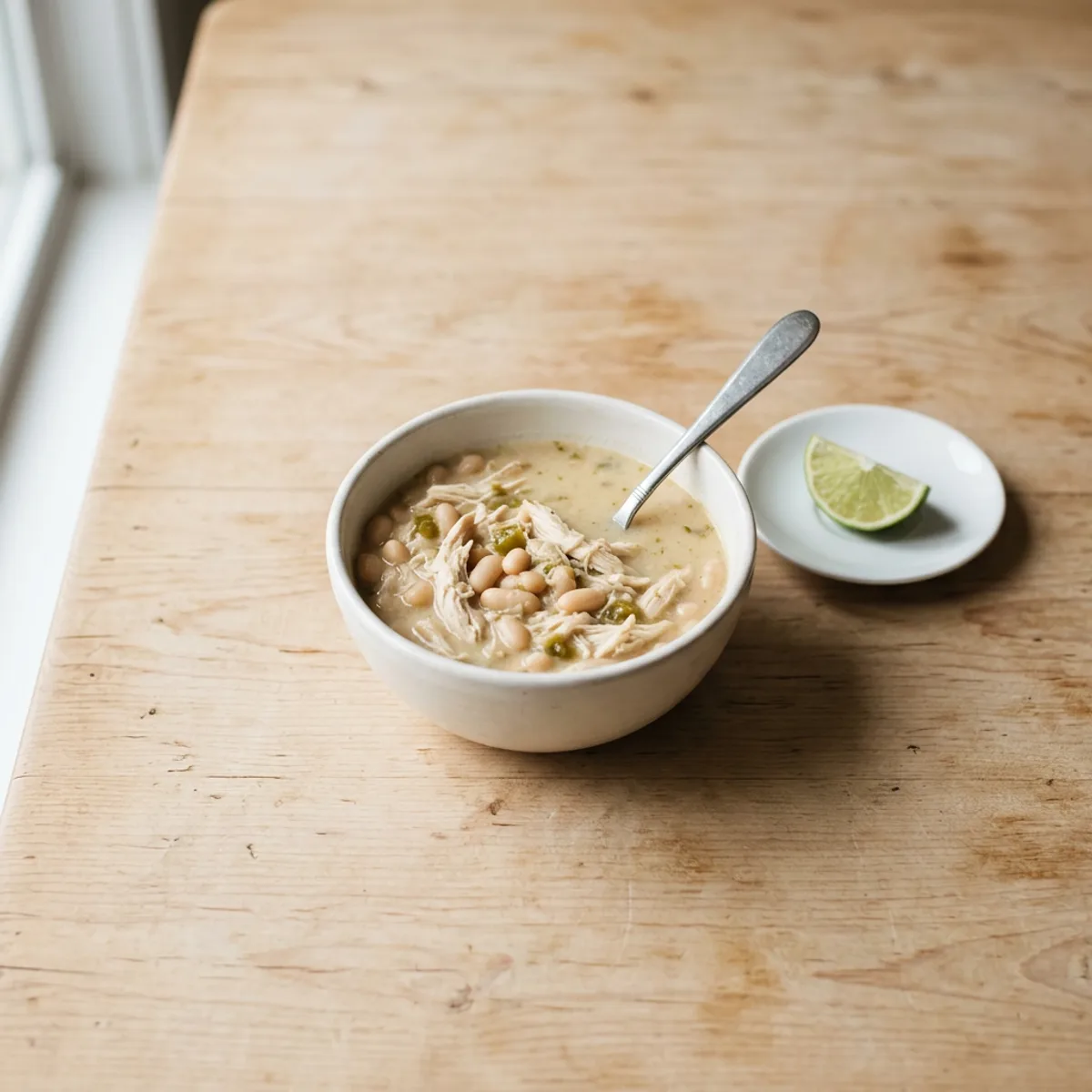
Healthy White Chicken Chili
A bean-heavy bowl with a little chicken, close in spirit to the tacos below.
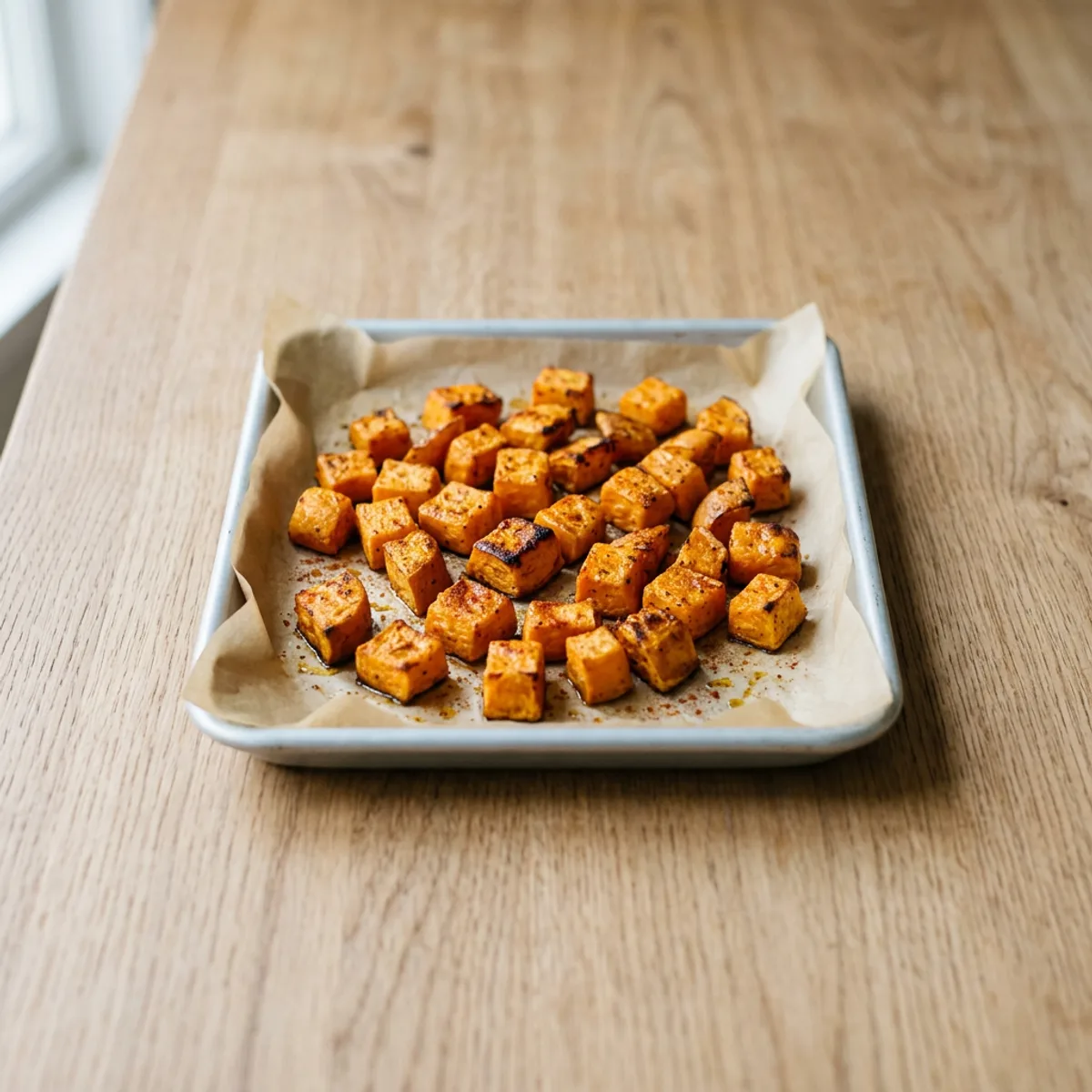
Sweet Potato Recipes
A plant-heavy side or base that works under any of the three dinners.
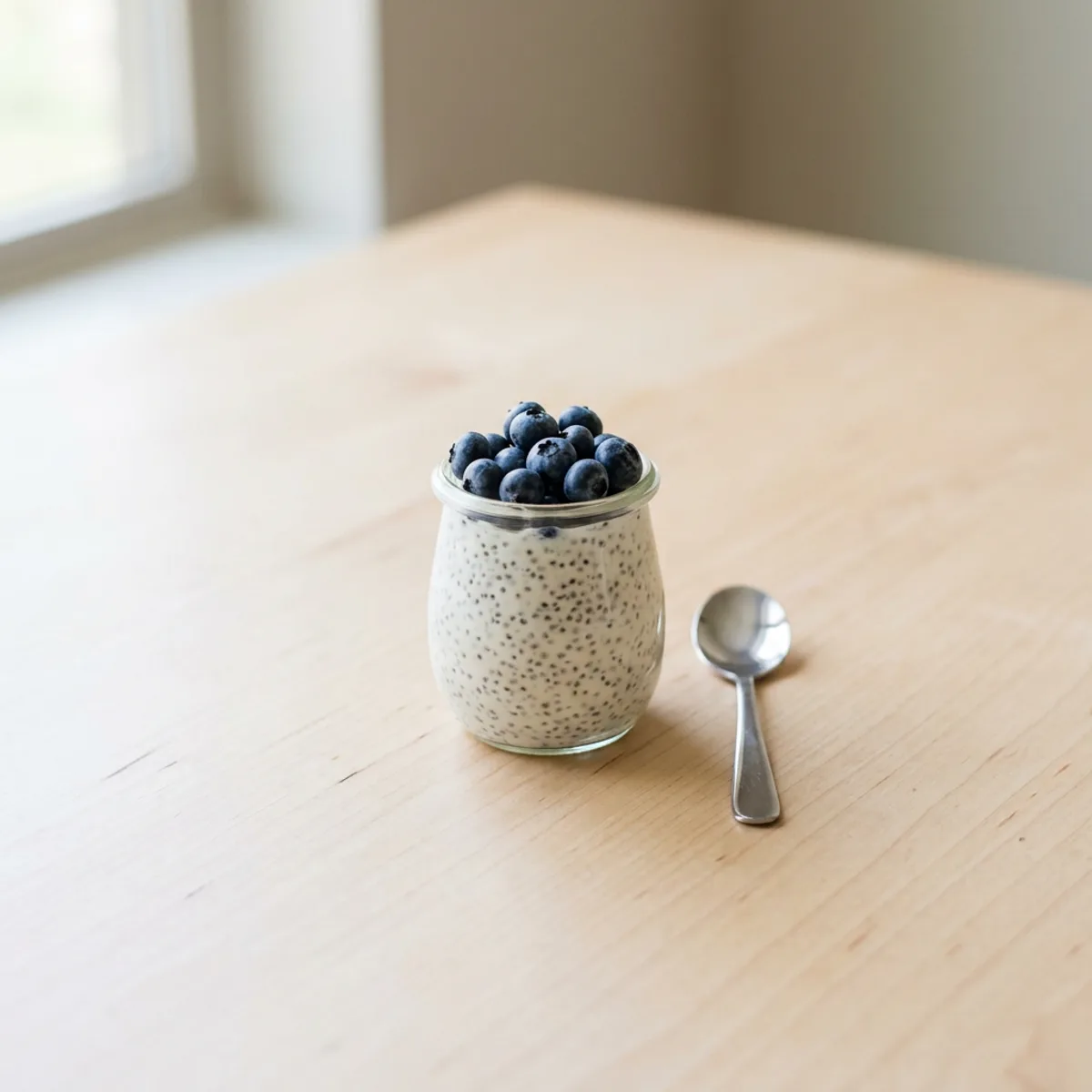
Healthy Chia Seed Pudding
A plant-based breakfast that fills the other end of the day.
General information, not medical or dietary advice. Nutrition values are estimates. See our full disclaimer.
Frequently asked questions
Can you give me an example of a flexitarian diet?
Mayo Clinic describes it as a diet that is mostly plant-based while still including meat, dairy, eggs, poultry and fish on occasion or in small quantities. The three recipes here are examples: a soup where 115 g of beef feeds four, half a portion of turkey stretched with black beans, and one fully meatless bowl.
What meat is best for the elderly?
Nothing we read ranks meats by age, so we do not name one. The Mayo Clinic page on plant-based eating says a well planned diet can suit people of all ages; for older adults, a doctor or dietitian can check protein, B-12 and iron against their own needs.
What is the 3-3-3 rule for meals?
We found no official or study source for a 3-3-3 meal rule, so we cannot confirm what it means or whether it works. The meal pattern on this page is only an example, not a rule.
What is one single food you can survive on?
We found no official source that names one food to live on, so we do not name one. Mayo Clinic's advice on plant-based eating is about planning a mix of foods to cover iron, B-12, zinc, calcium and protein, which no single food does.
Comments
Tried it? Tell us how it went: your comment helps other readers.