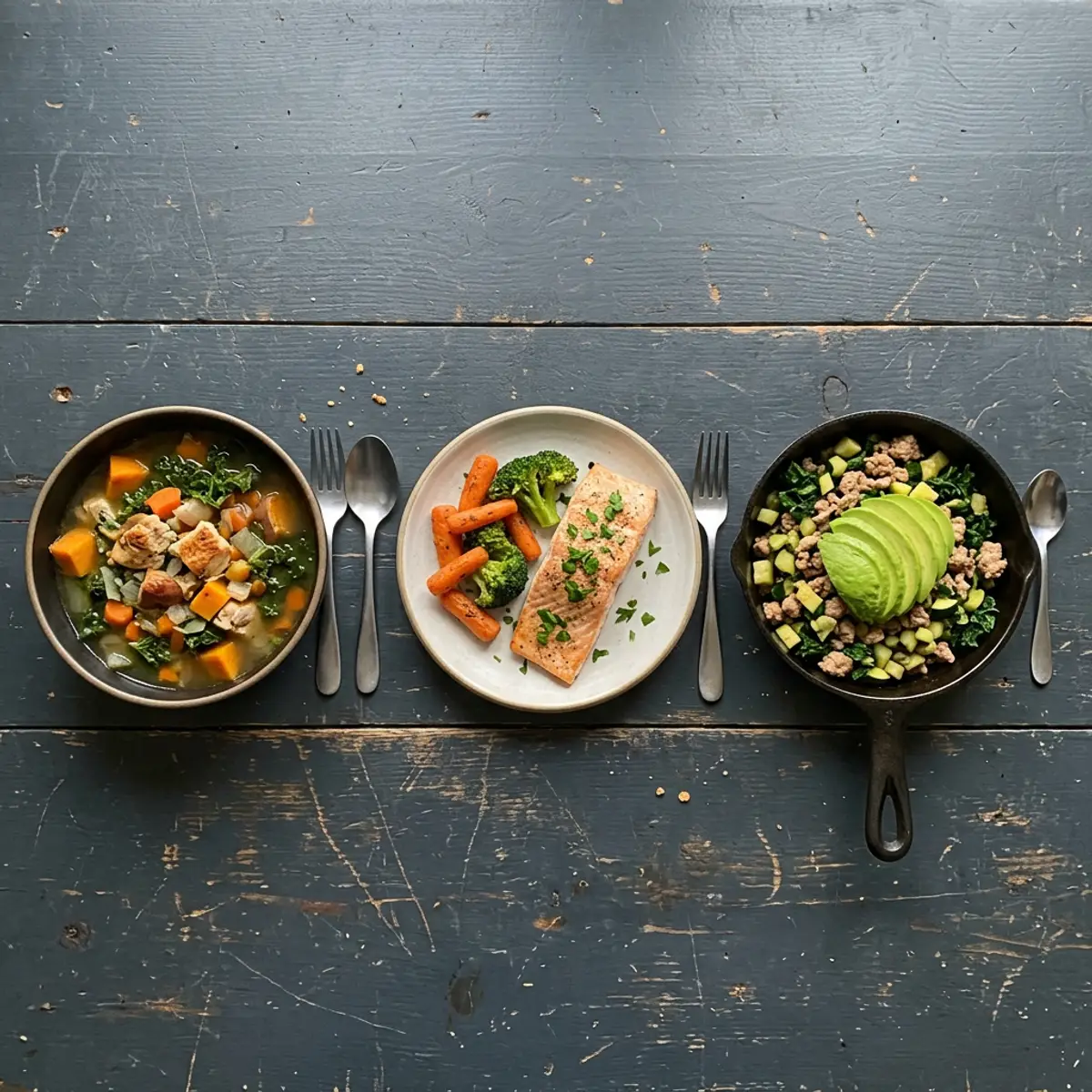
The AIP diet, short for autoimmune protocol, is an elimination diet: you set aside a list of foods for a few weeks, then bring some back one at a time. It is popular, but the research is small and early. Below are three AIP-friendly dinners, the food list the studies used and what they showed.
| Dinner | What it is built on | Per serving |
|---|---|---|
| Chicken, sweet potato and kale soup | Chicken breast, sweet potato, carrot, ginger, kale | 272 calories, 28 g protein, 435 mg sodium |
| Sheet-pan salmon with carrots and broccoli | Salmon, carrots, broccoli, lemon, parsley | 433 calories, 34 g protein, 456 mg sodium |
| Turkey, zucchini and kale skillet | Ground turkey, zucchini, kale, avocado | 301 calories, 24 g protein, 249 mg sodium |
Here is the twist that makes these work: with so many foods off the list, flavor has to come from technique and from fresh things. Ginger, garlic, lemon, herbs and a properly browned onion do the job that a spice rack, cheese or a splash of tomato would do elsewhere. If you cook all three, you will notice they share a short shopping list and nothing in them needs a specialty product.
AIP diet food list: what the studies set aside
The best description we found comes from the Scripps pilot trial in inflammatory bowel disease (PMID 28858071). It used a 6-week staged elimination of grains, legumes, nightshades, dairy, eggs, coffee, alcohol, nuts and seeds, refined and processed sugars, oils and food additives, followed by a 5-week maintenance phase, delivered through the "SAD to AIP in 6" transition program. The authors describe the AIP as an extension of the Paleolithic diet that emphasizes fresh, nutrient-dense food.
Nightshades are tomatoes, potatoes, peppers and eggplant, and chili-based spices come from peppers. That is why the recipes below use sweet potato (a different plant from the common potato), no paprika and no tomato paste. If you wonder how the two potatoes differ for inflammation more broadly, our pages on potatoes and sweet potatoes go through the evidence. The trial summary lists "oils" without saying which ones, and the recipes use olive oil, so check your program's list. Published AIP guides may differ from this one in the details; follow the one your clinician or program gives you.
AIP diet list of foods that fit these recipes
This is the short list the three dinners draw from:
- Proteins: chicken, turkey, salmon and other fish.
- Vegetables: sweet potato, carrots, broccoli, kale, zucchini, celery, onion, garlic.
- Fats: avocado and olive oil.
- Flavor: fresh ginger, lemon juice, parsley, salt.
What the autoimmune protocol AIP diet studies found
Every study below is small and most had no comparison group, so treat them as a reason to run better trials, not as proof the diet works.
- IBD, 15 adults, 11 weeks (PMID 28858071). Mean partial Mayo score in ulcerative colitis fell from 5.8 to 1.0 and the Harvey-Bradshaw index in Crohn's disease from 7 to 3.4. C-reactive protein did not change significantly, and fecal calprotectin fell from 471 to 112 without reaching significance (P = 0.12). Seven participants had a follow-up endoscopy. The authors call for randomized trials.
- Same IBD group, quality of life (PMID 31832627). The short IBD questionnaire score rose from 46.5 at baseline to 60.5 at week 11. It was an uncontrolled trial.
- Hashimoto's thyroiditis, 17 women, 10 weeks (PMID 31275780). Quality of life and symptom scores improved, but there was no significant change in thyroid function tests or antibodies. The program was online coaching with the diet, so the diet alone cannot be separated from the support, and one author is a co-founder of a company that sells the coaching program used.
- Hashimoto's, 28 people, 12 weeks (PMID 37772528). Fewer people reported symptoms, thyroid volume on ultrasound decreased, and body weight fell, which the authors read as a calorie deficit. Anti-TPO antibodies rose significantly.
- Rheumatoid arthritis, 9 adults, 8 weeks on AIP (PMID 41934283). Patient-reported disease scores improved in seven of nine participants; the authors describe it as a feasibility pilot and call for controlled trials.
In short: people on the protocol felt better in several small studies, the lab results were mixed, and nothing here shows the AIP treats an autoimmune disease. A review of the protocol (PMID 39850611) describes it as a personalized elimination diet and appraises the clinical trials; it does not claim a cure either.
The wider food pattern behind these recipes, mostly vegetables, fish and lean meat, overlaps with our anti-inflammatory diet page, which has its own recipes and a less restrictive list.
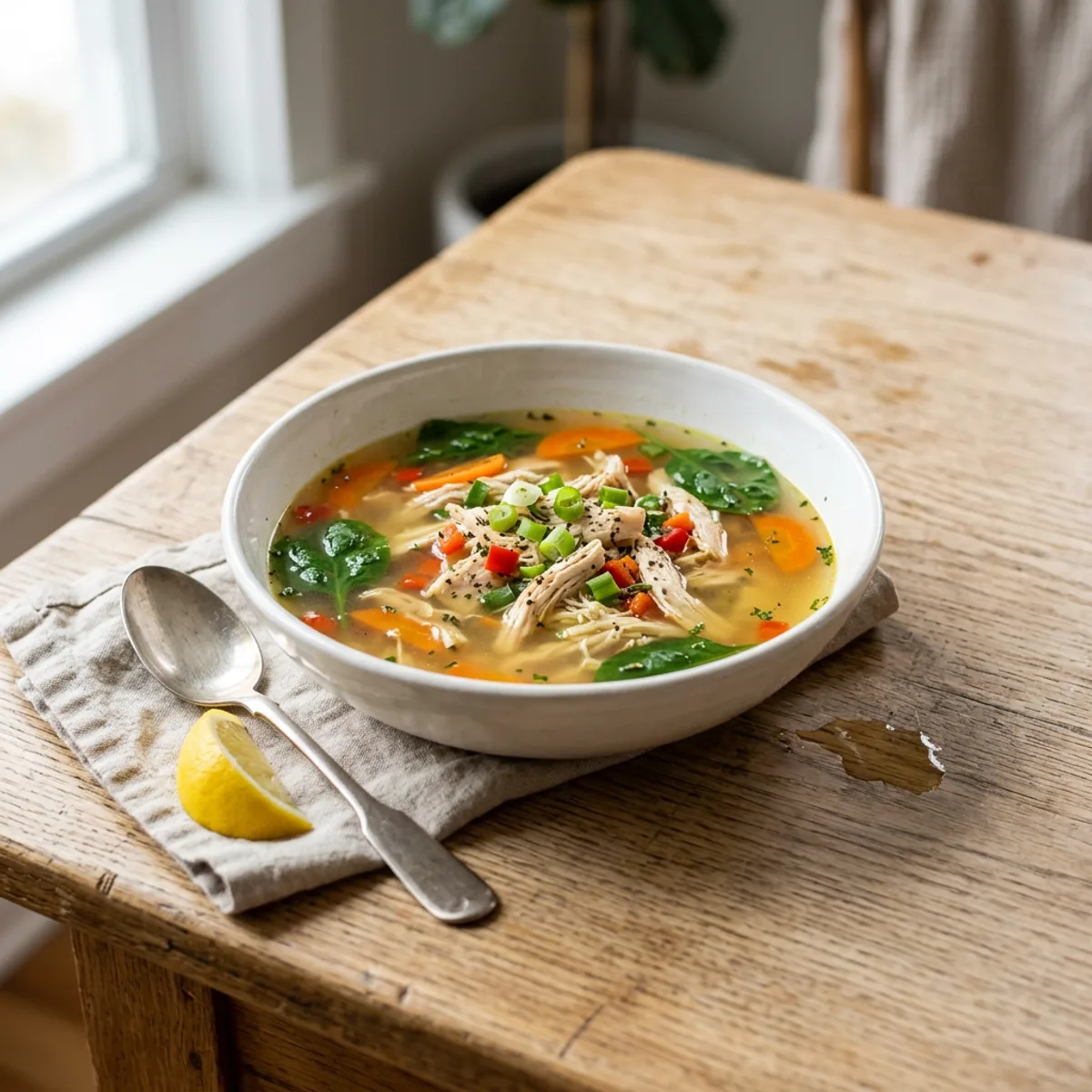
Chicken, sweet potato and kale soup
Fresh ginger and a spoon of turmeric make the broth taste like it simmered all day, which it did not: chicken breast cooks through in 20 minutes. Water is enough; the vegetables make the stock.
Serves 4. Prep 15 minutes. Cook 35 minutes.
Ingredients
- 450 g (1 lb) boneless skinless chicken breast
- 300 g (about 1 medium) sweet potato, peeled and cut in 1.5 cm (1/2 inch) cubes
- 150 g (about 2 medium) carrots, sliced
- 2 stalks celery, sliced
- 1 medium onion, chopped
- 3 cloves garlic, minced
- 20 g (2 inch piece) fresh ginger, grated
- 1 tablespoon olive oil
- 60 g (about 2 cups) kale, stems removed, leaves torn
- 1 tablespoon lemon juice
- 1/2 teaspoon salt
- 1/2 teaspoon ground turmeric
- 1.2 liters (5 cups) water
Steps
- Soften. Warm the oil in a large pot over medium heat and cook the onion, celery and carrots for 6 minutes, until the onion is translucent. Stir in the garlic and ginger for 30 seconds.
- Simmer. Add the sweet potato, chicken, turmeric, salt and water. Bring to a boil, lower the heat and simmer, partly covered, for 20 minutes, until the sweet potato is tender and the chicken reaches 165°F (74°C), the temperature FoodSafety.gov lists for poultry.
- Shred. Lift the chicken onto a board, shred it with two forks and return it to the pot.
- Finish. Add the kale and cook for 4 minutes, until wilted. Stir in the lemon juice and taste for salt.
Per serving: about 272 calories, 28 g protein, 24 g carbohydrate, 7 g fat, 435 mg sodium. The chicken's weight is raw, and the totals are estimates.
Storage: keep in the fridge up to 3 days; the sweet potato softens a little more on reheating.
Make it your own: swap the carrots for parsnips, or the kale for spinach added at the last minute.
Sheet-pan salmon with carrots and broccoli
One pan, two heats: the carrots go in first because they need longer than the fish.
Serves 4. Prep 10 minutes. Cook 25 minutes.
Ingredients
- 600 g (four 150 g fillets) skinless salmon fillets
- 300 g (about 4 medium) carrots, cut in sticks
- 300 g (3 cups) broccoli florets
- 2 tablespoons olive oil
- 3 cloves garlic, minced
- 2 tablespoons lemon juice
- 1/2 teaspoon salt
- 2 tablespoons chopped fresh parsley
Steps
- Heat. Set the oven to 400°F (200°C).
- Start the carrots. Toss the carrots with half the oil and a pinch of the salt on a large sheet pan and roast for 10 minutes.
- Add the rest. Toss the broccoli with the remaining oil and the garlic and add it to the pan, pushing everything to the sides. Lay the salmon in the middle, brush with the lemon juice and sprinkle with the remaining salt.
- Roast. Roast for 12 to 15 minutes, until the salmon reaches 145°F (63°C) or the flesh is no longer translucent and flakes easily with a fork, as FoodSafety.gov describes for fish.
- Finish. Scatter the parsley over everything.
Per serving: about 433 calories, 34 g protein, 13 g carbohydrate, 27 g fat, 456 mg sodium. The salmon's weight is raw, and the totals are estimates.
Storage: keep in the fridge up to 3 days; reheat gently so the salmon does not dry out.
What to change if your fillets are thin: add them 5 minutes later than the broccoli.
Turkey, zucchini and kale skillet with avocado
Cold, creamy avocado over a hot, savory skillet does the job of a sauce, and it needs no dairy or nuts to get there.
Serves 4. Prep 10 minutes. Cook 15 minutes.
Ingredients
- 450 g (1 lb) lean ground turkey
- 400 g (about 2 medium) zucchini, diced
- 100 g (about 3 cups) kale, stems removed, leaves chopped
- 1 medium onion, chopped
- 2 cloves garlic, minced
- 1 tablespoon olive oil
- 1 tablespoon lemon juice
- 1/4 teaspoon salt
- 150 g (1 medium) avocado, sliced
Steps
- Brown. Warm the oil in a large skillet over medium-high heat and cook the onion for 3 minutes. Crumble in the turkey and cook for 6 minutes, until browned.
- Add the vegetables. Stir in the garlic, zucchini and salt and cook for 4 minutes. Ground turkey is safe at 165°F (74°C), according to FoodSafety.gov.
- Wilt. Add the kale and cook for 2 minutes, until bright and soft.
- Finish. Off the heat, stir in the lemon juice and top with the avocado.
Per serving: about 301 calories, 24 g protein, 11 g carbohydrate, 19 g fat, 249 mg sodium. The turkey's weight is raw, and the totals are estimates.
Storage: keep the skillet in the fridge up to 3 days and slice the avocado fresh.
Cooked from this page
Made exactly as written, it was quick for Karim, who found it delicious with the texture hoped for, and it will be back on the table.
Safety: who should be careful with an AIP diet
- Restriction is the point and the risk. The protocol removes whole food groups, so it can be hard to get enough of some nutrients. NIDDK says that, with Crohn's disease, inflammation and some medicines can mean the body absorbs fewer nutrients, and that a doctor may recommend supplements; talk with your doctor before using any dietary supplement.
- Do not stop or change treatment. None of the studies above tested the diet instead of medicine: in the IBD trial, 7 of 15 participants were using biologics. Ask your doctor before changing a diet that sits next to treatment.
- Keep a food diary and bring it along. NIDDK says a doctor may suggest one to spot foods that seem to make symptoms worse, and it makes the reintroduction phase easier to read.
- Food safety. Cook chicken and ground turkey to 165°F (74°C) and salmon to 145°F (63°C), as FoodSafety.gov advises, and keep leftovers in the fridge for up to 3 days.
- Allergens: fish (salmon).
Food supports a way of eating; it does not replace the care of your doctor or dietitian. People who are pregnant, are managing a health condition or take medications should check with their doctor before changing their diet.
Where the numbers and facts come from
- Nutrition: each recipe was calculated ingredient by ingredient from USDA FoodData Central, and the totals are estimates.
- Studies: PubMed searches on November 17, 2026 for trials and reviews of the autoimmune protocol. We read the abstract of each study cited above, and the full text of the first IBD trial for its food list.
- Official sources: NIDDK, Eating, Diet, & Nutrition for Crohn's Disease; FoodSafety.gov, Safe minimum cooking temperatures. Read on November 17, 2026.
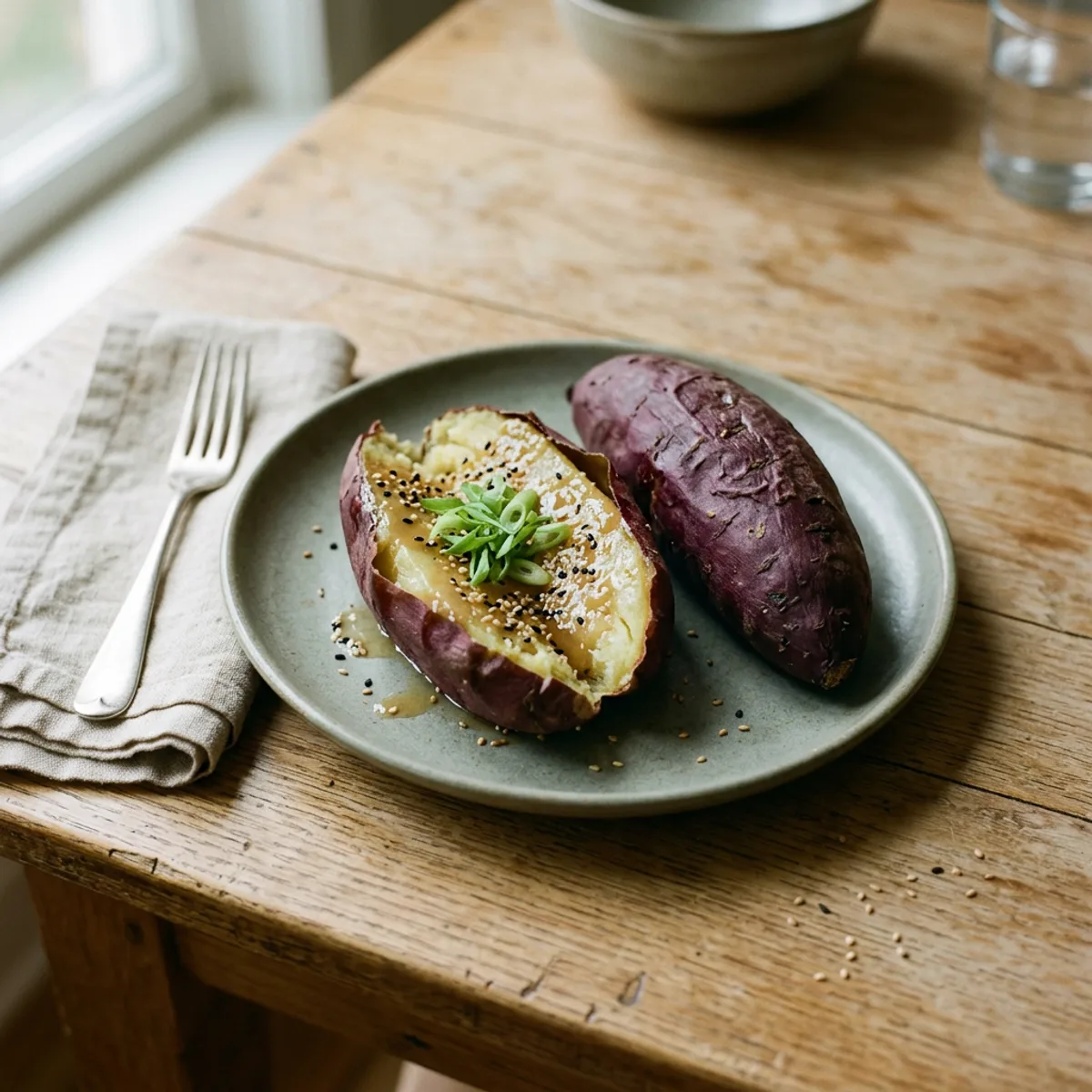
Are Sweet Potatoes Anti-Inflammatory?
The starchy vegetable that carries two of the three recipes below, with what the evidence says about it.

Ginger Water With Lemon
A warm drink made of ginger, lemon and water; leave out the optional teaspoon of honey to keep it to those three.
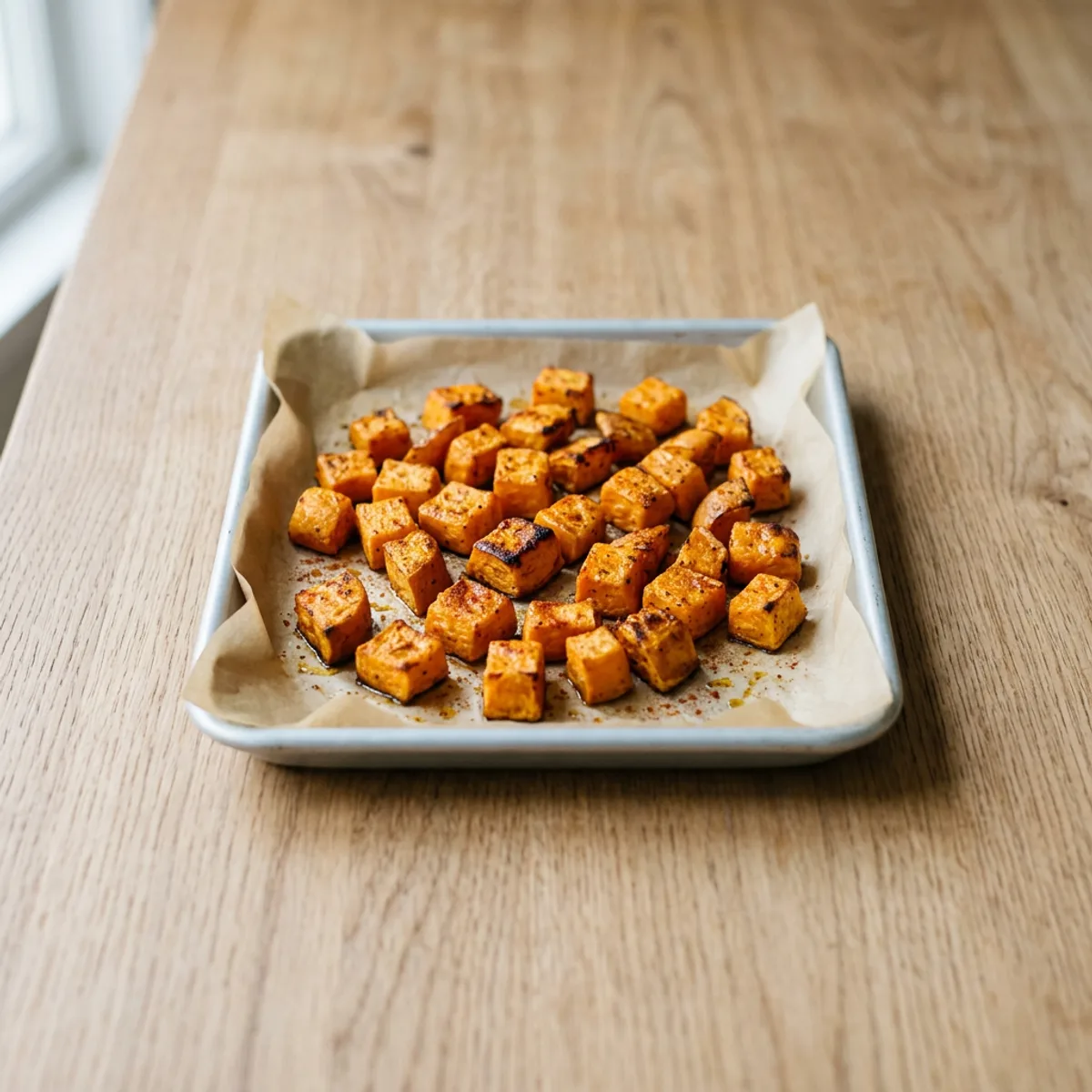
Sweet Potato Recipes
More ways to cook the starchy vegetable at the center of this page; check each recipe's ingredients against your own list.
General information, not medical or dietary advice. Nutrition values are estimates. See our full disclaimer.
Frequently asked questions
What is the recommended diet for people with autoimmune disease?
We found no official source that names one diet for all autoimmune diseases, so we do not name one. NIDDK, for example, says a doctor may suggest a food diary to spot foods that seem to make Crohn's symptoms worse, and that a doctor can recommend supplements if you do not absorb enough nutrients. The AIP is one elimination approach that small studies have looked at; it is not a standard treatment.
What are the top 5 worst autoimmune diseases?
We found no official or study source that ranks autoimmune diseases from worst to best, so we do not rank them. The studies on this page looked at inflammatory bowel disease, Hashimoto's thyroiditis and rheumatoid arthritis.
Can I eat peanut butter on an AIP diet?
Not during the elimination phase. The trial protocol cited below set aside nuts and seeds in that phase, and peanut butter is made from peanuts, which are a legume, a group the same protocol also set aside. Ask your clinician before reintroducing anything.
What carbs to eat on AIP?
The recipes here use starchy vegetables: [sweet potatoes](/are-sweet-potatoes-anti-inflammatory) and carrots. The trial protocol set aside grains and legumes in the elimination phase, so those vegetables do the work that rice or beans would do elsewhere.
Comments
Tried it? Tell us how it went: your comment helps other readers.