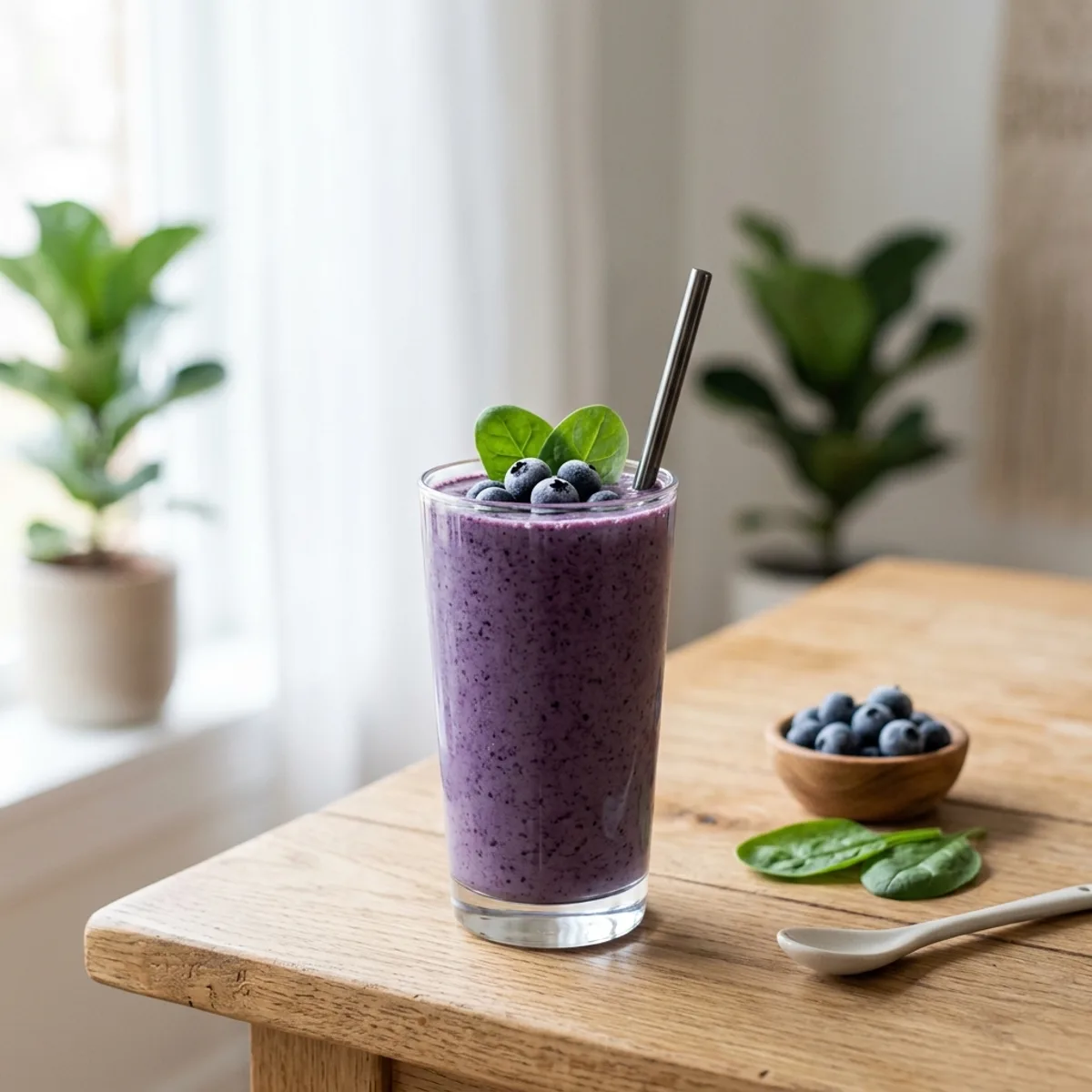
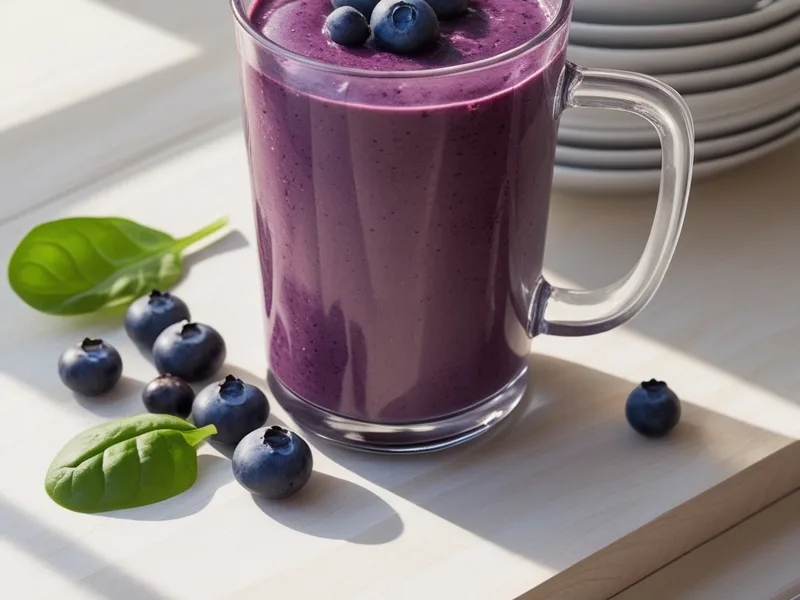
For an antioxidant smoothie, blend 1 cup of frozen blueberries, 1 cup of baby spinach, half a banana, half a cup of plain Greek yogurt, three quarters of a cup of almond milk and 1 tablespoon of chia seeds for about a minute. It makes one glass, with about 306 calories and 18 g of protein (USDA estimate).
The difference is in one detail: the order. Spinach goes in before the fruit, and frozen blueberries go in last, so the blades pull the greens down and the color comes out an even purple instead of a muddy green. This antioxidant smoothie takes five minutes, needs one blender and no added sugar.
Antioxidant smoothie at a glance
| Version | What goes in | Where to find it |
|---|---|---|
| Blueberry spinach antioxidant smoothie | Blueberries, spinach, banana, Greek yogurt, almond milk and chia | The recipe card below |
| Antioxidant berry smoothie | The same base with any frozen berry, for example cherries or a berry mix | The swaps section, below |
| Dairy-free version | The same recipe with a soy or coconut yogurt in place of the Greek yogurt | The swaps section, below |
What goes into this antioxidant smoothie
Mise en place first. Measure everything before the blender runs.
- Frozen blueberries. One cup, unsweetened. They are the center of the recipe, and they make the smoothie cold and thick without ice.
- Baby spinach. One cup, loosely packed. It blends into the fruit and adds color and bulk, with little taste.
- Banana. Half of a medium one, ripe. It sweetens the glass, so no honey or syrup is needed.
- Plain Greek yogurt. Half a cup of the nonfat kind, for body and protein. With the rest of the tub, our Greek yogurt protein parfait is an easy next breakfast.
- Unsweetened almond milk. Three quarters of a cup. Any milk works, but the numbers use almond.
- Chia seeds. One tablespoon, for texture and a little fat. If you keep a jar of them open, our chia seed pudding recipe is another way to use the rest.
Nutrition of this antioxidant smoothie
Per smoothie, with the amounts above: about 306 calories, 18 g of protein, 44 g of carbohydrate and 8 g of fat. These are estimates from USDA FoodData Central. A cup of frozen blueberries is weighed at about 155 g (USDA, unthawed), so your bag may differ a little.
What the evidence says about antioxidants, berries and your glass
"Antioxidant" is a word that sells smoothies, so it is fair to ask what studies found. We searched PubMed and read the abstracts. The short version is that the research on antioxidant pills and the research on blueberries are different stories.
Antioxidant supplements.
- A 2012 Cochrane review (PMID 22419320) pooled 78 randomized trials with 296,707 participants of beta-carotene, vitamin A, vitamin C, vitamin E and selenium supplements. Overall, there was no significant effect on mortality (RR 1.02, 95% CI 0.98 to 1.05). In the 56 trials with a low risk of bias, mortality was slightly higher with the supplements (RR 1.04, 95% CI 1.01 to 1.07).
- A 2017 systematic review and meta-analysis in Advances in Nutrition (PMID 28096125) covered 49 prevention trials with 287,304 participants. Its results were mixed: vitamin E supplements were followed by lower cardiovascular mortality, while beta-carotene given alone was linked to higher all-cause mortality. The authors concluded that the evidence was insufficient to support supplements for preventing death, cardiovascular disease or cancer.
The National Center for Complementary and Integrative Health says antioxidants taken as purified chemicals might act differently than those in foods, and that the high doses in supplements may have different effects than the amounts in foods: NCCIH on antioxidants. So the supplement trials are a reason to be careful with pills. They do not tell us what a blueberry does.
Blueberries and anthocyanins in food form.
- A 2013 randomized cross-over trial in the European Journal of Nutrition (PMID 22733001) gave 18 men with cardiovascular risk factors a wild blueberry drink (25 g of freeze-dried powder) or a placebo drink for 6 weeks each. The blueberry drink was followed by lower levels of oxidized DNA bases. It found no significant differences in endothelial function or the other variables. It is small, and DNA damage in blood cells is a lab marker, not an illness.
- A 2023 randomized trial in The American Journal of Clinical Nutrition (PMID 36972800) gave 61 healthy adults aged 65 to 80 either 26 g of freeze-dried wild blueberry powder a day (the authors call it equivalent to 178 g of fresh blueberries) or a placebo for 12 weeks. Blood vessel function (flow-mediated dilation) and 24-hour systolic blood pressure improved compared with placebo, with a difference of about 3.6 mmHg in blood pressure, and some memory scores were better. The gut microbiota did not change. The journal later published a correction to this paper.
- A 2024 systematic review in Molecular Nutrition & Food Research (PMID 38961529) selected 20 randomized trials of anthocyanins and found positive effects on verbal and working memory. Its effects on blood pressure and endothelial function were inconsistent.
The limits matter as much as the findings. The trials used a powder in set daily amounts, not a smoothie, and they were run in specific groups (older adults, men with risk factors). Some outcomes moved and others did not, and a result across a group is not a result for you. This recipe has about 155 g of blueberries, which is less than the 178 g used in the larger trial. We found no study of this smoothie, so we make no promise about your skin, your gut or any disease. In this recipe, blueberries are a fruit you may enjoy and a source of fiber and color, not a treatment. For what studies found on food and skin, see our guide to foods for clear skin. The Greek yogurt in the glass has its own page, is Greek yogurt anti-inflammatory?.
Swaps and variations
- Other berries. Use frozen cherries, raspberries or a mixed berry bag in place of the blueberries. The taste changes and so do the numbers, which are for the blueberry version.
- Dairy-free. Use an unsweetened soy or coconut yogurt in place of the Greek yogurt. You lose some protein, and the numbers change.
- Thinner or thicker. Add almond milk a splash at a time to thin it, or an extra spoon of yogurt to thicken it.
- A different green. Baby kale works, with a stronger taste. Spinach is the mildest.
- A protein version. For a pink, fruitier glass with collagen peptides, see our strawberry banana collagen smoothie, or try our shake with high protein for a thicker banana peanut butter glass.
- A fiber version. Our psyllium husk smoothie keeps the blueberry and banana base and adds a teaspoon of the husk, with the safety points MedlinePlus gives.
Alin followed the recipe to the letter: the glass was delicious, the texture great, and it will be made again.
Tips for a smoothie that blends smooth
- Spinach first, frozen fruit last. The one detail that matters. Soft leaves at the bottom meet the blades first.
- Start low. Fifteen seconds on low breaks up the frozen fruit before the high speed begins.
- Drink it fresh. Chia thickens the glass as it sits.
- Pre-pack the fruit. Measure the berries and spinach into freezer bags for the week. If you want a spoonable breakfast on other days, our high protein overnight oats can be made ahead too.
Safety: who should check first
If you take warfarin, leafy greens matter. MedlinePlus says some foods that contain vitamin K can affect how warfarin works, and advises eating consistent amounts of vitamin K foods from week to week and talking to your doctor before changing your diet: MedlinePlus on warfarin. Spinach is a leafy green, so a daily spinach smoothie is a change to discuss with your doctor or pharmacist.
On supplements, NCCIH reports that high doses of beta-carotene, an antioxidant, may increase the risk of lung cancer, and that the U.S. Preventive Services Task Force recommended against beta-carotene or vitamin E supplements for preventing cancer and cardiovascular disease: NCCIH on antioxidants. That is about pills, not about fruit. If you are pregnant or breastfeeding, have a health condition or take medicine, ask your healthcare professional before adding a supplement.
This smoothie contains milk (Greek yogurt) and tree nuts (almond milk). Check the labels if you have an allergy.
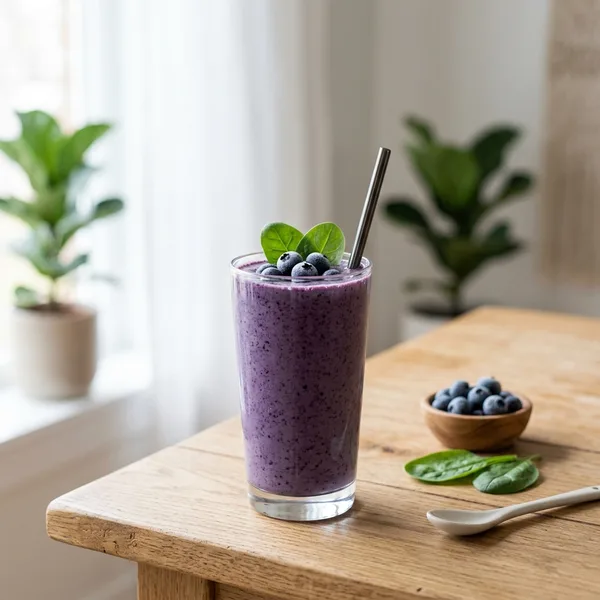
Antioxidant Smoothie Recipe With Blueberries, Spinach and Greek Yogurt
A deep purple blueberry smoothie with spinach, Greek yogurt and chia seeds, and what studies on blueberries and antioxidant supplements found.
Ingredients
Instructions
- Liquid and chia first. Pour the almond milk into the blender jar and add the chia seeds. Starting with the liquid lets the seeds start to soften while you measure the rest.
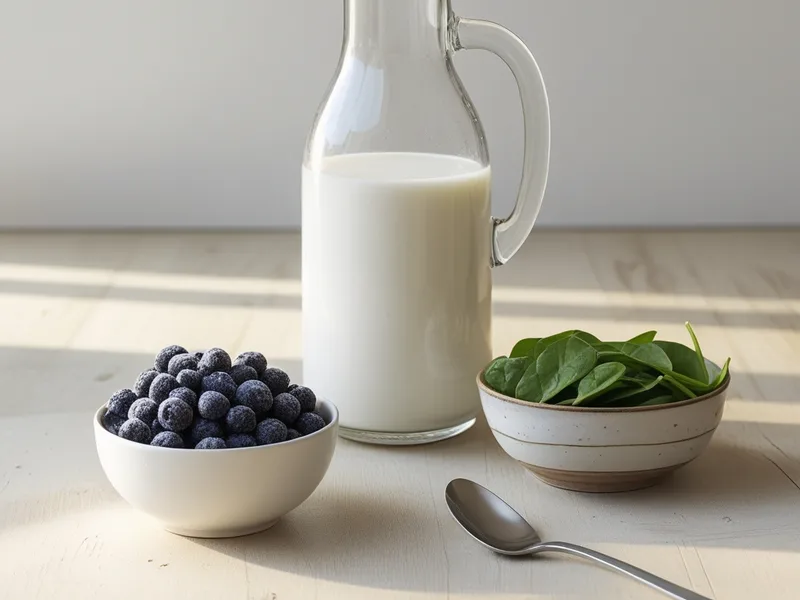
- Add the greens, yogurt and fruit. Add the spinach first, then the Greek yogurt and banana in chunks, and the frozen blueberries last, on top.
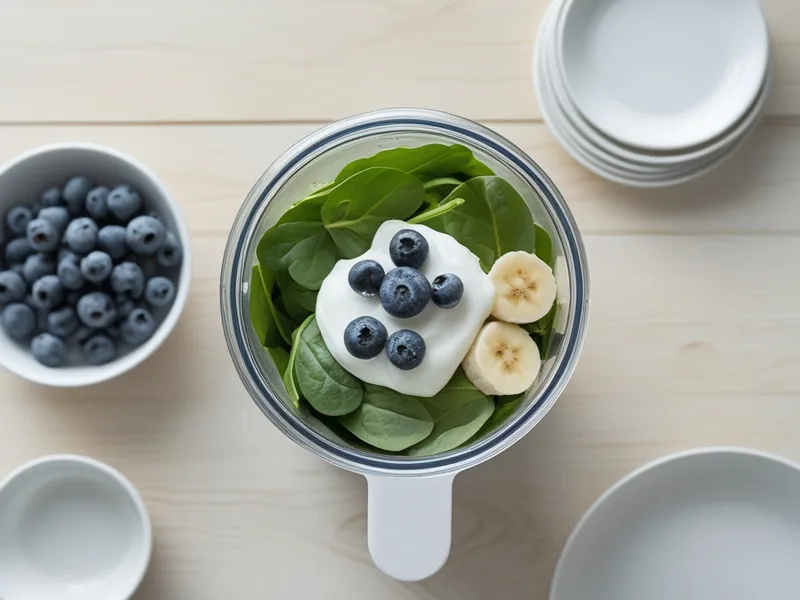
- Blend and serve. Blend on low for 15 seconds so the spinach breaks down, then on high for 40 to 60 seconds, until the color is an even deep purple with no green flecks. Pour into a tall glass and drink right away.
Notes
Use a ripe banana for sweetness. If the smoothie is too thick, add almond milk a tablespoon at a time.
Frozen wild blueberries are smaller and darker than cultivated ones. Either works here, and the numbers use USDA data for frozen unsweetened blueberries.
The chia seeds thicken the smoothie if it waits, so drink it within a few minutes.
Nutrition Facts
Per serving (estimated)
- Total Fat
- 8 g
- Sodium
- 178 mg
- Total Carbohydrate
- 44 g
- Protein
- 18 g
General information, not medical or dietary advice. Nutrition values are estimates. See our full disclaimer.
Frequently asked questions
Is it healthy to drink a fruit smoothie every day?
We found no study that answers this for a smoothie like this one, so we make no claim. What we can say is what is in the glass: about 306 calories and 18 g of protein, from whole fruit, spinach, yogurt and chia, with no added sugar.
What are the most powerful antioxidants?
There is no ranking we can stand behind. The studies below looked at blueberry anthocyanins in food and at vitamin and mineral supplements, and they reached different answers. Foods contain mixtures of compounds, so one name does not stand for the whole food.
What is in the Jamba Juice Acai Super Antioxidant Smoothie?
We did not read the chain's official ingredient list, so we do not describe it. The company's own menu and nutrition page is the place to check, especially if you avoid an allergen.
Are fresh blend smoothies healthy?
It depends on the blend. A smoothie made from whole fruit, greens, yogurt and seeds is a different drink from one made with juice, syrup or sweetened bases. Read the ingredient list and make your own when you can, so you know what goes in.
Comments
Tried it? Tell us how it went: your comment helps other readers.