Short answer: High fiber foods are mostly beans, lentils, whole grains, fruit and vegetables: 1/2 cup of cooked split peas has about 8 g and 1 cup of raspberries about 8 g, against about 28 g a day on a 2,000-calorie diet. Three recipes below give 8 to 11 g a serving. Add fiber slowly and drink water.
Start with a pot of lentils. They cost little, they cook in twenty minutes and they hold more fiber than almost anything else in the pantry. This guide lists the high fiber foods worth knowing, with USDA numbers, then gives you three recipes written in full so you can put them on the table tonight. After them come four more fiber-rich recipes from this site, and a plain look at what studies found.
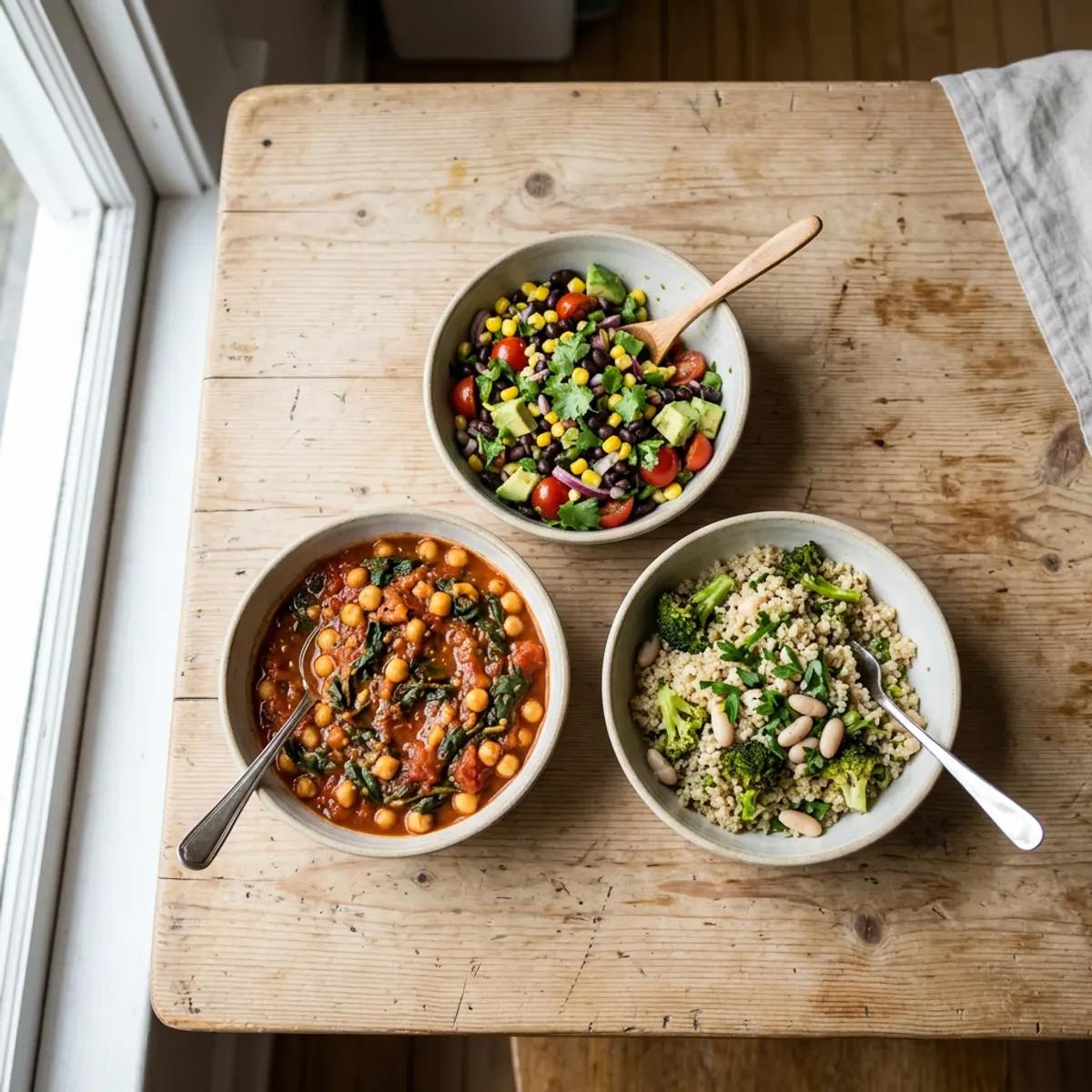
The three recipes at a glance
| Recipe | Fiber | Calories | Sodium | Time |
|---|---|---|---|---|
| Chickpea and spinach stew | About 11 g | About 288 | About 810 mg | 30 minutes |
| Black bean and avocado salad | About 9 g | About 189 | About 393 mg | 15 minutes |
| Quinoa bowl with broccoli and white beans | About 8 g | About 317 | About 531 mg | 35 minutes |
Values are USDA-based estimates for one serving. The full recipes are further down.
High fiber foods at a glance: a USDA list
Here are the high fiber foods worth keeping in the kitchen, with the amount of fiber in a real portion. The values come from USDA FoodData Central and they are for the foods as listed. Brands, varieties and cooking change them a little.
| Food | Portion | Fiber (USDA) | Calories (USDA) |
|---|---|---|---|
| Split peas, cooked | 1/2 cup (98 g) | About 8 g | About 116 |
| Raspberries, raw | 1 cup (123 g) | About 8 g | About 64 |
| Lentils, cooked | 1/2 cup (99 g) | About 8 g | About 115 |
| Black beans, cooked | 1/2 cup (86 g) | About 7 g | About 114 |
| Chickpeas, cooked | 1/2 cup (82 g) | About 6 g | About 134 |
| Pear, raw | 1 medium (178 g) | About 5.5 g | About 101 |
| Broccoli, cooked | 156 g | About 5 g | About 55 |
| Apple, raw, with skin | 1 medium (182 g) | About 4 g | About 95 |
| Rolled oats, dry | 1/2 cup (40.5 g) | About 4 g | About 154 |
| Avocado, raw | 100 g | About 7 g | About 167 |
| Chia seeds, dried | 28 g | About 10 g | About 136 |
| Almonds | 28 g | About 3.5 g | About 162 |
| Quinoa, cooked | 1/2 cup (92.5 g) | About 2.6 g | About 111 |
Foods that are very high in fiber: what the list tells you
Beans, peas and lentils lead the list, and a single half cup of any of them gives about a quarter of a 28 g day. Seeds such as chia are strong for their size: 28 g, about an ounce, has about 10 g. Fruit comes next, and raspberries are the standout, with the skin and seeds doing the work. Whole grains like oats and quinoa add a smaller but steady amount, which is why they pair well with beans.
The pattern for high fiber foods is easy to cook around: put a legume, a vegetable and a whole grain or fruit in one meal, and the fiber adds up without any special product. For dinners that pair beans with plenty of protein, see these high protein weight loss ideas.
How much fiber do you need a day?
Nutrition.gov says to eat 14 g of fiber for every 1,000 calories, which is 28 g a day at 2,000 calories. Harvard Health adds that most Americans need more, but that going well beyond the recommended amounts has no proven added benefit and can cause uncomfortable side effects. So the aim is a steady, reachable amount, not the biggest number you can hit.
What the evidence says about high fiber foods
Fiber is one of the better-studied topics in nutrition, and we read the reviews below on PubMed. Most of them follow large groups of people over time, so they show associations, not proof that fiber alone causes the result. Here is what each found, and where each stops.
- Death and disease risk. A 2024 meta-analysis of prospective cohort studies in Clinical Nutrition (PMID 38011755) concluded that the evidence supports a protective association between fiber intake and all-cause and cause-specific mortality. It describes an association in observational studies. It does not show that adding fiber will make any one person live longer.
- Many conditions at once. A 2025 umbrella review in Clinical Nutrition (PMID 40651334) gathered the evidence from more than 17 million people. It found that higher fiber intake was associated with a lower risk of several chronic diseases, in particular cardiovascular mortality, pancreatic cancer and diverticular disease. The authors also noted that intake stays below recommended levels around the world. Again, these are associations.
- Diabetes. A 2020 systematic review and meta-analysis in PLoS Medicine (PMID 32142510) concluded that higher-fiber diets are an important part of diabetes management, with improvements in blood sugar control, blood lipids, body weight and inflammation, and a lower risk of premature death. The benefits were not tied to one type of fiber or one type of diabetes. This is about people with diabetes, under medical care.
- Plant-based eating patterns. A 2023 systematic review and meta-analysis in Nutrition Journal (PMID 37789346) concluded that following healthy plant-based dietary patterns, which are rich in fiber foods, is beneficial for lowering the risk of type 2 diabetes, cardiovascular disease, cancer and early death. It looks at whole eating patterns, not fiber alone.
None of these studies tested the recipes on this page, and none shows that one meal does anything on its own. They support a simple habit: more beans, lentils, whole grains, fruit and vegetables over time.
Foods that are high fiber in a real meal: three recipes
The three recipes below are written in full, with the fiber, calories and sodium of one serving calculated from the ingredients listed. Times are ranges, so judge by the fork and the look of the pot.
Chickpea and spinach stew
Canned chickpeas simmer with tomatoes, cumin and paprika into a thick, savory stew in about twenty-five minutes, and the spinach wilts in at the end. It makes 4 servings. Serve it on its own or with a slice of whole wheat bread.
Ingredients
- 2 tablespoons (27 g) olive oil
- 1 medium onion (110 g), diced
- 2 garlic cloves (6 g), minced
- 1 teaspoon ground cumin
- 1 teaspoon paprika
- 2 cans (15 oz / 425 g each) chickpeas, drained and rinsed (about 3 cups)
- 1 can (14.5 oz / 411 g) crushed tomatoes
- 1 cup (240 ml) water
- 1/2 teaspoon salt
- 4 cups (120 g) baby spinach
- 2 tablespoons (30 ml) lemon juice
Steps
- Warm the olive oil in a large pot over medium heat. Add the onion and cook for about 5 minutes, stirring, until soft.
- Stir in the garlic, cumin and paprika for 30 seconds, then add the chickpeas, tomatoes, water and salt. Bring to a boil.
- Lower the heat and simmer for 15 to 20 minutes, until the sauce is thick. Mash a few chickpeas against the side of the pot if you like a thicker stew.
- Stir in the spinach until it wilts, about 2 minutes, then the lemon juice. Serve hot.
Per serving (a quarter of the recipe): about 288 calories, 40 g of carbohydrate, 12 g of protein, 11 g of fat, 11 g of fiber and 810 mg of sodium (USDA estimate). Canned chickpeas and tomatoes carry most of the sodium: choose no-salt-added cans and the number drops a lot.
Storage: cool it quickly and keep it in a covered container in the refrigerator, then reheat until steaming hot. We found no official shelf life for this stew, so use your judgment and eat it within a few days. It thickens as it sits, so loosen it with a splash of water.
Black bean and avocado salad
No cooking at all, and the most fiber of the three. It makes 4 servings as a side or 2 as a light lunch.
Ingredients
- 250 g canned black beans (about one 15-oz can), drained and rinsed
- 200 g ripe avocado (about 1 large), diced
- 150 g grape tomatoes (about 1 cup), halved
- 1/2 medium onion (55 g), finely chopped
- 2 tablespoons (30 ml) lime juice
- 1 tablespoon (13.5 g) olive oil
- 1/2 teaspoon ground cumin
- 1/4 teaspoon salt
Steps
- Rinse the black beans well in a colander and let them drain. Rinsing lowers the sodium from the can.
- Put the beans, tomatoes and onion in a large bowl.
- Whisk the lime juice, olive oil, cumin and salt in a small bowl and pour it over the beans. Stir gently.
- Fold in the diced avocado just before serving, so it stays green and does not turn to mush.
Per serving (a quarter of the recipe): about 189 calories, 19 g of carbohydrate, 5 g of protein, 12 g of fat, 9 g of fiber and 393 mg of sodium (USDA estimate).
Storage: the beans and tomatoes keep well in the refrigerator, but the avocado browns. Add it fresh, and eat the salad the same day once the avocado is in.
Quinoa bowl with broccoli and white beans
A bowl of grains, green and beans is a real dinner. Roast the broccoli and beans on one pan while the quinoa cooks. It makes 4 servings.
Ingredients
- 1 cup (170 g) dry quinoa, rinsed
- 2 cups (480 ml) water
- 300 g broccoli florets (about 3 cups), cut bite-size
- 250 g canned white beans (about one 15-oz can), drained and rinsed
- 2 tablespoons (27 g) olive oil
- 2 garlic cloves (6 g), minced
- 2 tablespoons (30 ml) lemon juice
- 1/2 teaspoon salt
Steps
- Heat the oven to 425°F (220°C). Bring the quinoa, the water and a pinch of the salt to a boil in a saucepan, cover, lower the heat and cook for about 15 minutes, until the water is absorbed. Rest it for 5 minutes, then fluff with a fork.
- Toss the broccoli, white beans, garlic and olive oil on a large baking sheet with the rest of the salt. Spread them in one layer.
- Roast for 15 to 20 minutes, turning once, until the broccoli edges are browned and the beans are lightly crisp.
- Spoon the quinoa into bowls, top with the broccoli and beans, and finish with the lemon juice.
Per serving (a quarter of the recipe): about 317 calories, 47 g of carbohydrate, 13 g of protein, 10 g of fat, 8 g of fiber and 531 mg of sodium (USDA estimate).
Storage: keep the quinoa and the roasted vegetables in separate covered containers in the refrigerator and reheat until hot. We found no official shelf life for cooked quinoa, so use your judgment and eat it within a few days.
Both the black bean and avocado salad and the quinoa bowl came out exactly as written for Kerth, with a great texture and very little effort. Delicious, and worth making again.
More recipes with fiber, from this site
If you want more, these recipes already live on this site, and the fiber comes from different foods.
- Seeds. Our chia seed pudding has about 9 g of fiber a serving, from chia seeds, by USDA data.
- Root vegetables. Roasted sweet potato cubes keep the skin on and have about 6 g of fiber a serving.
- Whole grains. High-protein overnight oats use rolled oats and chia seeds, and need no cooking.
- Beans. Our white chicken chili uses white beans, which add fiber and protein to the chicken.
Foods which are high in fiber: how to add them without discomfort
Fiber is kind to most kitchens and sometimes rough on the stomach if it arrives all at once. A few habits help:
- Go slowly. Harvard Health advises boosting fiber slowly and spreading it over the day.
- Choose whole foods first. Harvard Health favors whole foods over supplements.
- Drink fluids. Fiber absorbs water, so drink plenty through the day.
- Rinse canned beans. It removes some of the sodium from the can.
- Mix it up. Beans, fruit, vegetables, seeds and whole grains each bring a different mix of fiber.
Safety: who should be careful with extra fiber
Raising your fiber is a food change, not a treatment. If a doctor or dietitian has told you to limit fiber, or you have a digestive condition, follow their advice and ask before changing what you eat. If you are having a diverticulitis flare, your doctor may give different food advice for the attack. If you take medicine or are pregnant, ask your healthcare professional before adding fiber supplements. Constipation that lasts, or any sudden change in your bowel habits, deserves a doctor's visit. Raise fiber gradually and drink water as you do.
How we researched this
- Nutrition: values come from USDA FoodData Central, and recipe numbers are estimates calculated from the ingredients.
- Studies: the four reviews above were found on PubMed and their conclusions are summarized from the authors' abstracts.
- Daily goal: the 14 g per 1,000 calories figure comes from Nutrition.gov.
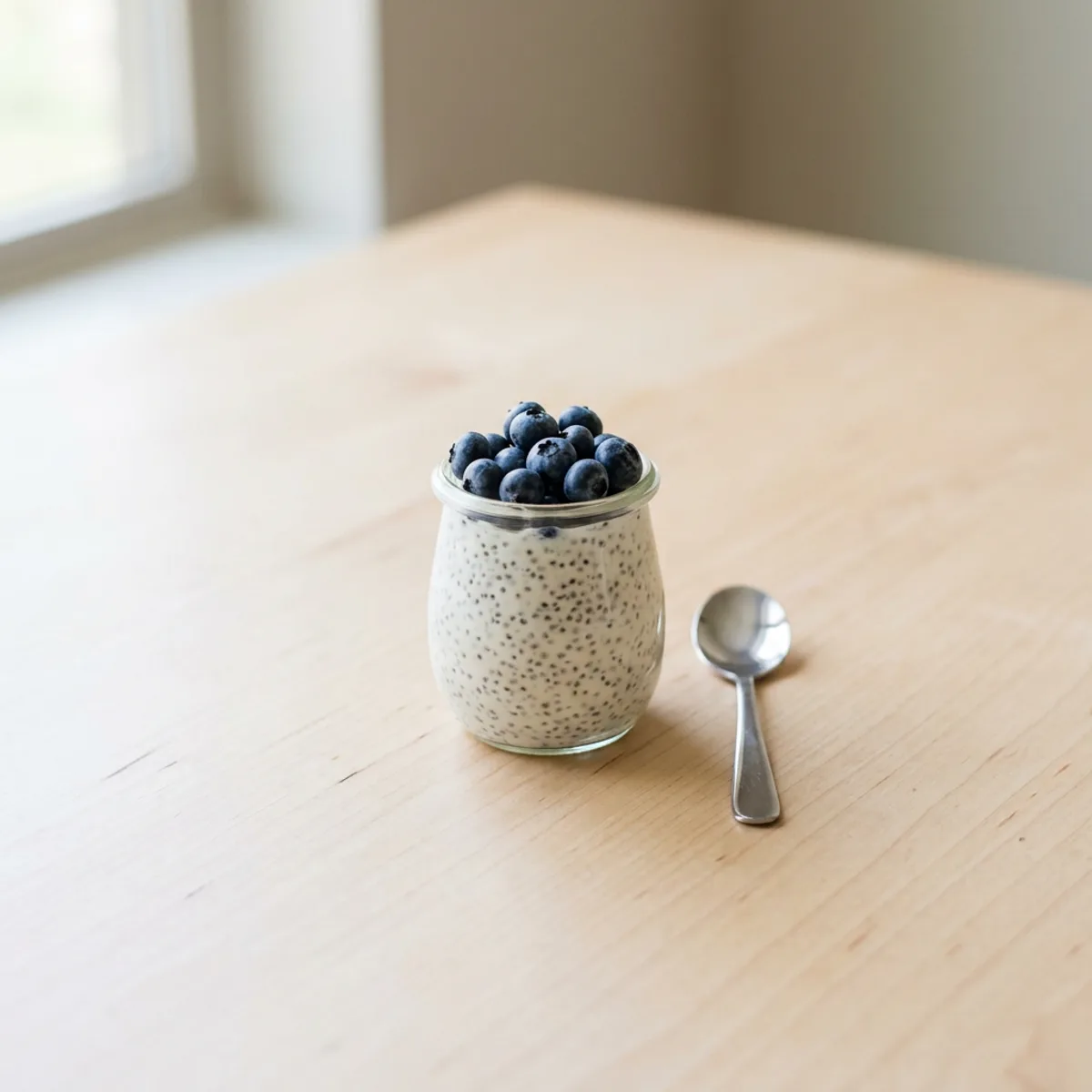
Chia Seed Pudding
Chia seeds soaked in milk with Greek yogurt, about 9 g of fiber a serving by USDA data.
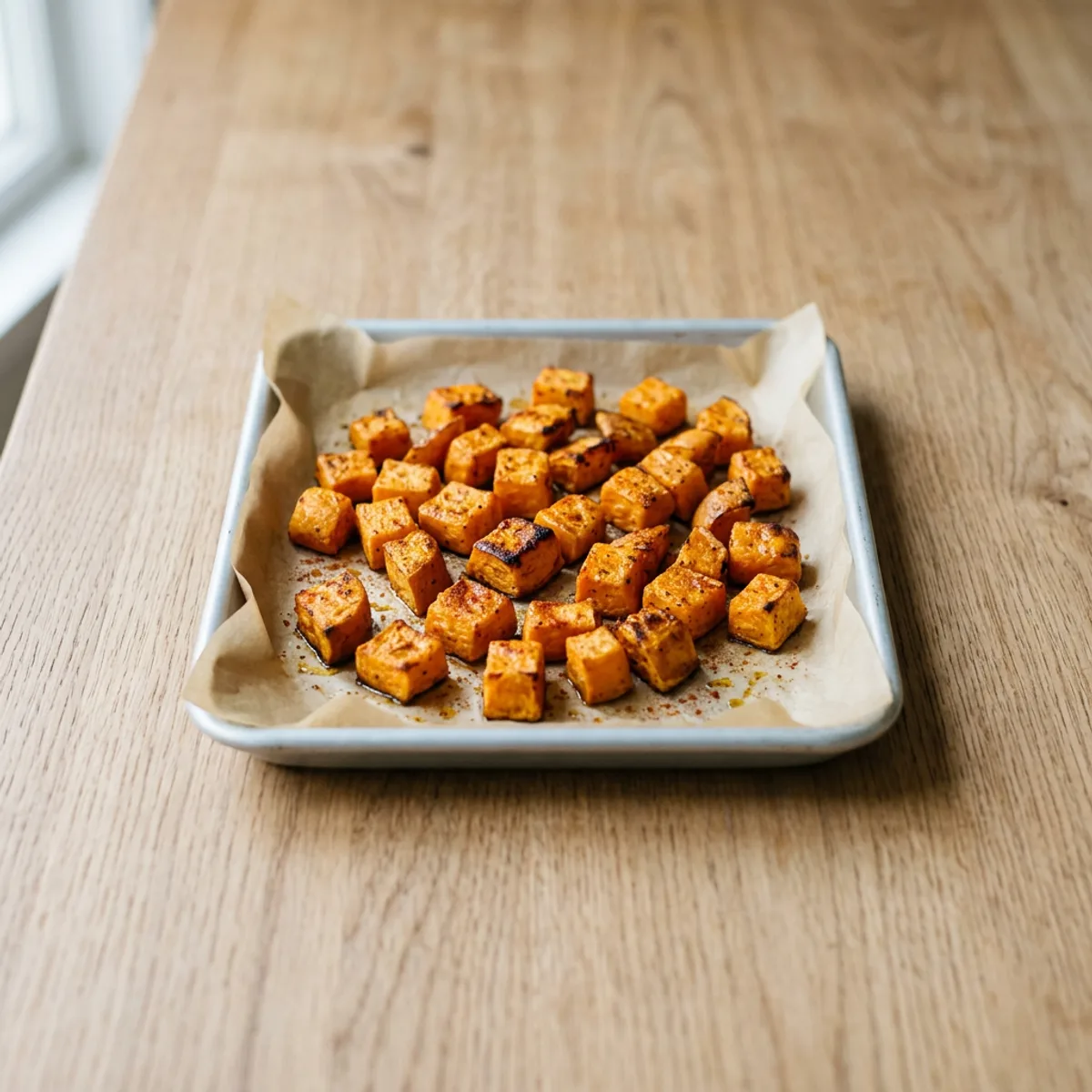
Roasted Sweet Potato Cubes
Sweet potatoes roasted with the skin on, about 6 g of fiber a serving, plus six simple ways to cook them.
High-Protein Overnight Oats
Rolled oats and chia seeds soaked overnight, a no-cook jar for busy mornings.
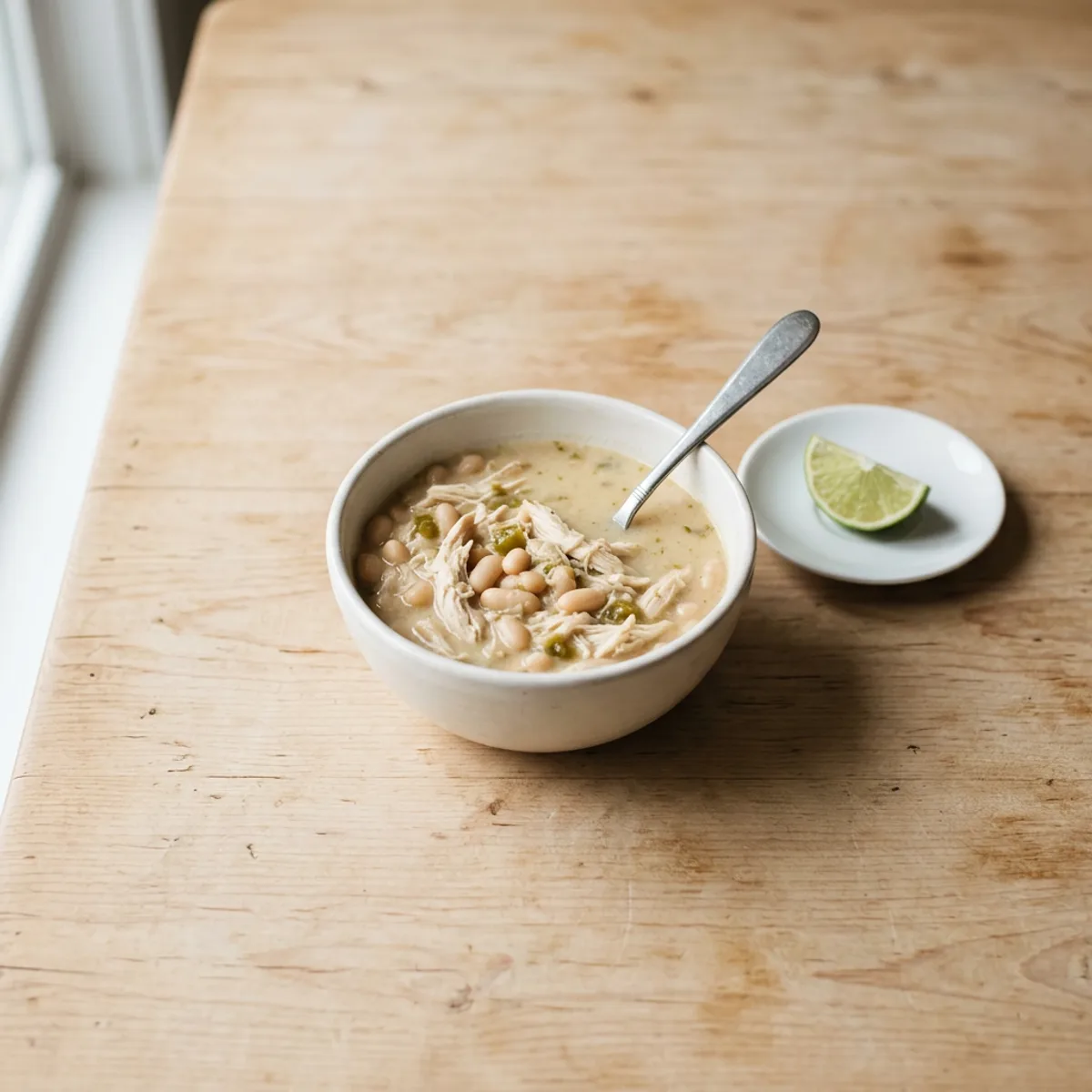
White Chicken Chili
A bean-based chili where white beans add fiber and protein to the chicken.
General information, not medical or dietary advice. Nutrition values are estimates. See our full disclaimer.
Frequently asked questions
What are some good high-fiber snacks to eat?
Fruit and nuts are the easiest. By USDA data, 1 cup of raspberries (123 g) has about 8 g of fiber, a medium apple (182 g) about 4 g and an ounce of almonds (28 g) about 3.5 g. Air-popped popcorn is light: 1 cup (8 g) has about 1 g of fiber for about 31 calories.
Why high fiber for diverticulitis?
A 2025 umbrella review of studies found that a higher fiber intake was associated with a lower risk of diverticular disease, in people who did not necessarily have it yet. That is about prevention, not about treating a flare. If you have diverticulitis, follow your doctor's advice on what to eat, which can differ during an attack.
What are the signs of fiber deficiency?
We found no official list of signs of fiber deficiency, so we do not offer one. A clearer check is your intake: about 14 g of fiber for every 1,000 calories, which is 28 g at 2,000 calories a day, according to Nutrition.gov. If you have hard stools or long gaps between bowel movements that last, talk to your doctor, because many things can cause them.
What fiber reduces belly fat?
No study we read shows that a type of fiber reduces belly fat, so we make no claim. A 2020 meta-analysis in people with diabetes found that higher-fiber diets went with improvements in body weight, among other measures, but that is not specific to belly fat and does not show that one food does it.
How much fiber do I need a day?
Nutrition.gov gives 14 g of fiber for every 1,000 calories you eat, which is 28 g a day at 2,000 calories. Your own number depends on how much you eat, so ask your doctor or dietitian if you are unsure.
Comments
Tried it? Tell us how it went: your comment helps other readers.