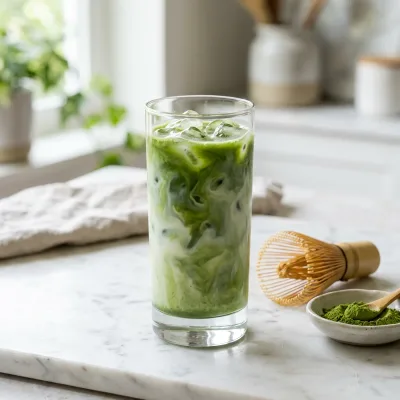
Quick answer: To make a matcha latte, sift 1 teaspoon of matcha, whisk it with 2 tablespoons of hot water at about 175°F, then add 1 cup of milk, warm or over ice. With 2% milk and a teaspoon of maple syrup it has about 139 calories, and the matcha adds roughly 38 to 88 mg of caffeine.
A good matcha latte is three things: matcha, a little hot water and milk. This matcha latte recipe takes five minutes, needs no machine, and works hot or iced. Below you will find the steps, a quick comparison of five milks with real USDA numbers, and what the caffeine and the "benefits" really amount to.
Matcha latte milks at a glance
| Milk (1 cup) | Calories | Protein | Good to know |
|---|---|---|---|
| 2% dairy milk | About 122 | About 8 g | What our recipe numbers use |
| Whole dairy milk | About 149 | About 8 g | Richer, more calories |
| Soy milk, unsweetened | About 80 | About 7 g | Closest plant milk in protein |
| Oat milk, unsweetened | About 118 | About 2 g | Similar calories to 2% milk, much less protein |
| Almond milk, unsweetened | About 47 | About 2 g | Lowest in calories |
Values are from USDA FoodData Central for one cup (244 g, or 243 g for soy) and are estimates. Brands differ, so check your label.
Matcha latte recipe: how to make it
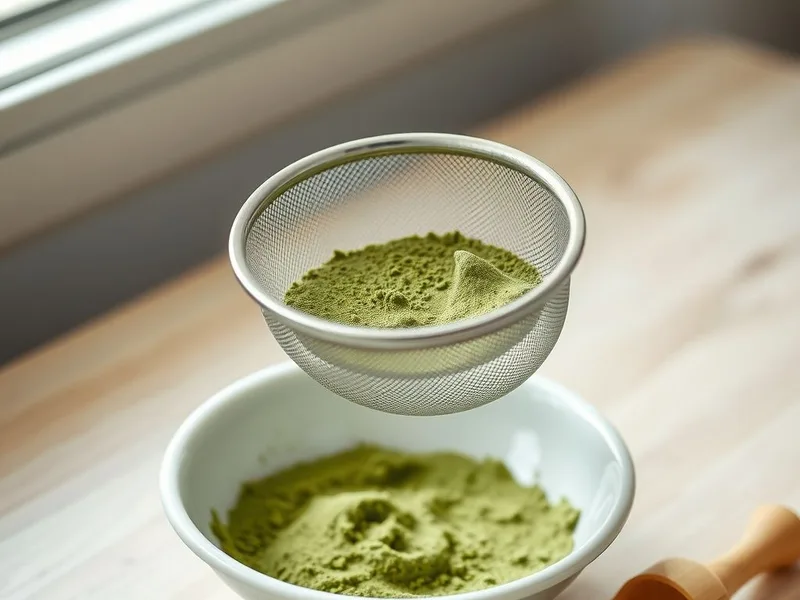
- Sift 1 teaspoon of matcha into a wide mug or bowl. Matcha clumps easily, and sifting means smoother results.
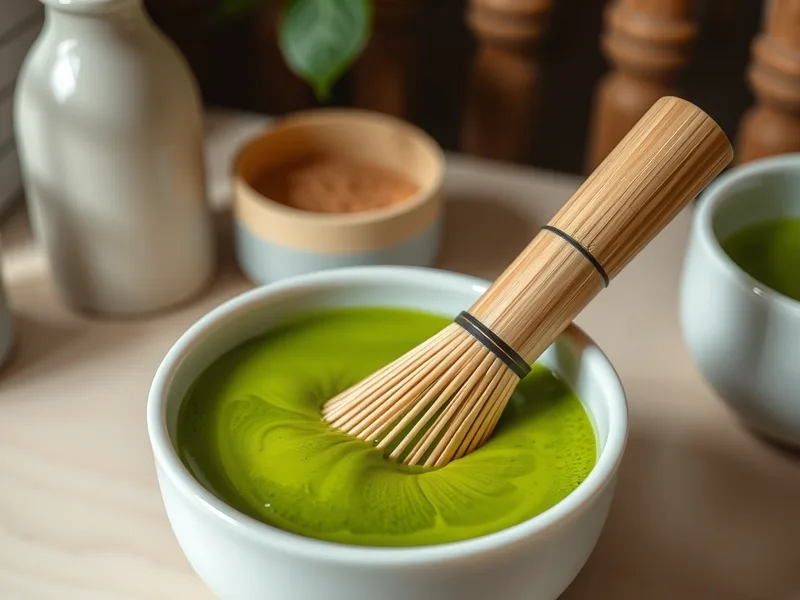
- Whisk with 2 tablespoons of hot water, about 175°F, until smooth and foamy. Use a bamboo whisk or a small milk frother.
- Add the milk. Warm for a hot latte, or pour over ice for an iced one.
- Sweeten to taste with a teaspoon of maple syrup, or skip it.
The step photos are on the recipe card below.
What is the golden ratio for a matcha latte?
There is no single ratio for a matcha latte recipe. Love & Lemons uses half to one teaspoon of matcha, Naoki Matcha suggests 1.5 teaspoons with about an ounce of water as a starting point, and A Cozy Kitchen and Amy's Nutrition Kitchen use about 2 teaspoons per serving or two servings. Ours sits in the middle: 1 teaspoon (about 2 g) of matcha, 2 tablespoons of hot water and 1 cup of milk.
Use that as a start and adjust. More powder makes it stronger and greener, more milk makes it milder, and more powder also means more caffeine.
Is there a difference between matcha and a matcha latte?
Matcha is the powder, and also the drink made by whisking it with hot water. A matcha latte is matcha whisked with water and then mixed with milk, usually with a little sweetener.
How to make matcha tea (the base of every latte)
Sift the powder, add a small amount of hot water and whisk until smooth. Breville's guide says to keep the water no hotter than 175°F, because hotter water extracts more astringent flavors. Whisking with only a little water first, as A Cozy Kitchen does, keeps the matcha from being watered down before the milk goes in.
Iced matcha tea latte recipe and the hot version
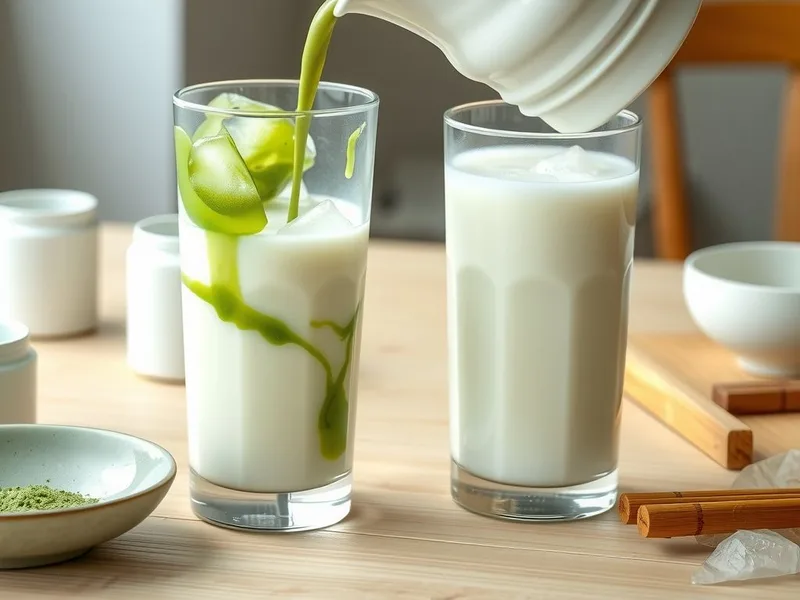
For the iced version, fill a glass about three quarters full of ice and cold milk, then pour the whisked matcha on top. A Cozy Kitchen and Amy's Nutrition Kitchen chill the whisked matcha for a few minutes first, so it does not melt the ice too fast. For the hot version, warm the milk until steaming but not boiling and add it to the matcha.
Sweetener tastes different in cold and warm drinks, so taste before you add more. We use maple syrup, but you can use any sweetener you like.
Tips for a smooth matcha latte recipe
- Sift first. It is the easiest way to avoid green clumps.
- Use only a little water to whisk. Dilute it after you add the milk.
- Do not use boiling water. Let it sit for a minute or two.
- Match the whisk to the glass. A bamboo whisk works well in a wide bowl. A small milk frother works in a tall glass.
- Add the milk last. It keeps the foam on top.
How many calories are in a matcha latte?
For this matcha latte recipe, with 1 cup of 2% milk and 1 teaspoon of maple syrup, about 139 calories, 8 g of protein, 16 g of carbohydrate and 5 g of fat per latte. Of that, the milk is about 122 calories and the maple syrup about 17 calories (USDA data). We did not count the matcha powder, because USDA has no matcha entry and the amount is small, so the total is an estimate.
Without the maple syrup, it is about 122 calories with 2% milk. With almond milk it is about 47 calories before the sweetener.
What are the benefits of drinking a matcha latte?
We looked for studies on matcha lattes and found none. What we did find are reviews of matcha itself. A 2026 review in the Journal of the Science of Food and Agriculture (PMID 41645939) says matcha contains caffeine, polyphenols and amino acids, and also says that studies on matcha remain limited. A 2026 review in Molecules (PMID 42654013) says the amounts of these compounds vary significantly with harvest season, cultivar and growing practices, and that matcha on the market ranges widely in quality.
So we cannot promise a health effect from a matcha latte. What you can count on is the milk: with 2% milk you get about 8 g of protein per cup (USDA). The rest is taste and a nice five-minute break.
Safety: caffeine in your matcha latte
A latte made with the matcha latte recipe above, 1 teaspoon (about 2 g) of matcha, has roughly 38 to 88 mg of caffeine, using the range of 19 to 44 mg per gram reported for matcha powder. That is our multiplication, not a lab measurement. A cafe latte can use two teaspoons or more, which doubles it. Our article explains the numbers on matcha vs coffee caffeine.
Mayo Clinic and MedlinePlus say up to 400 mg of caffeine a day seems safe for most adults. People who are pregnant, trying to become pregnant or breastfeeding, who have anxiety, an irregular heartbeat or a sleep disorder, who take certain medicines, and children and teens should check with their healthcare professional about caffeine.
If you want a warm drink without caffeine, try our ginger water recipe.
How we researched this
- Recipe pages: we read four matcha latte pages on October 18, 2026 (A Cozy Kitchen, Love & Lemons, Naoki Matcha and Amy's Nutrition Kitchen) for ratios and technique, and we write our own steps. A fifth page could not be read.
- Nutrition: values come from USDA FoodData Central for the milks and maple syrup. The matcha powder is not counted.
- Matcha research: we cite the PubMed reviews linked above, after reading their abstracts.
- Caffeine: see our matcha vs coffee article for the sources (Mayo Clinic and MedlinePlus).
- Not tested by us: we did not measure the caffeine or the taste of any cup in a lab.
Good to know
This article is general information. It is not medical advice, and it does not replace a conversation with your doctor or a registered dietitian. Nutrition values are estimates. If you have a health condition, take medicine, are pregnant or breastfeeding, ask your healthcare professional before changing your caffeine intake.
Matcha Latte Recipe: Easy, Hot or Iced, in 5 Minutes
A smooth, café-style matcha latte with one teaspoon of matcha, a little hot water and your milk of choice, served hot or over ice. With the calories for five milks and the caffeine you can expect.
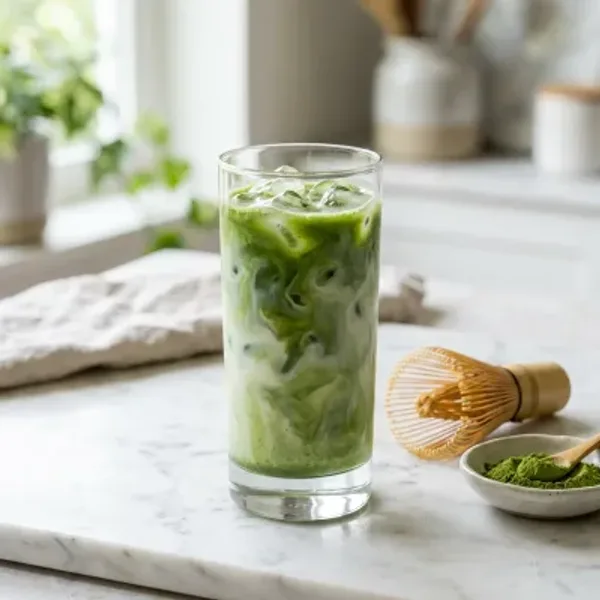
Ingredients
Instructions
- Sift the matcha. Sift the matcha powder through a small fine strainer into a wide mug or bowl so it does not clump.
- Whisk it smooth. Add the hot water and whisk in a quick zigzag motion with a bamboo whisk or a small milk frother until the matcha is smooth and foamy.
- Warm or chill the milk. For a hot latte, warm the milk in a small pot or the microwave until steaming but not boiling. For an iced latte, fill a glass with ice and pour in cold milk.
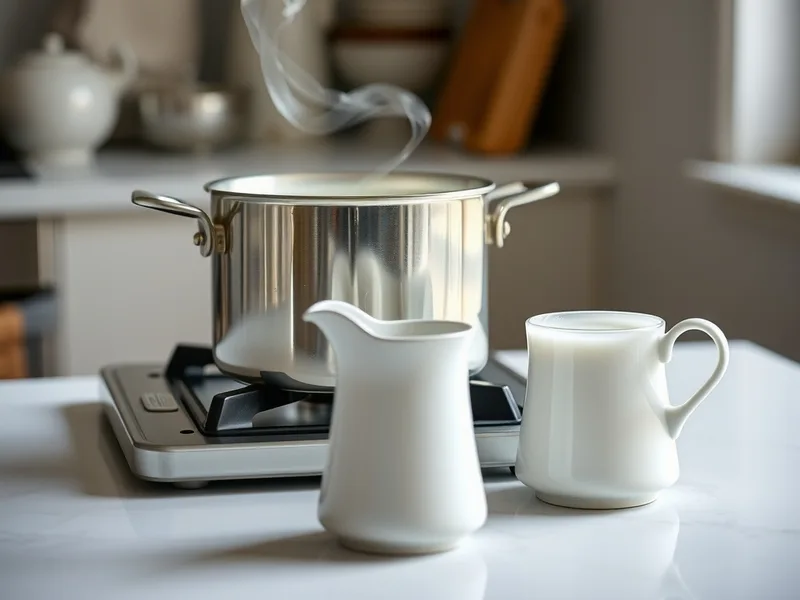
- Combine. Stir in the maple syrup if you like, then pour the matcha over the iced milk or add the warm milk to the matcha. Stir gently and serve.
Notes
Water that is too hot can make matcha taste bitter. Let boiled water sit for a minute or two before you use it.
Use a little less milk for a stronger matcha flavor, or add a splash more for a milder drink.
Nutrition Facts
Per serving (estimated)
- Total Fat
- 5 g
- Total Carbohydrate
- 16 g
- Protein
- 8 g
Frequently asked questions
How to make matcha tea?
Sift the powder into a bowl, add a small amount of hot water (not boiling) and whisk until smooth and foamy. Breville's guide advises water no hotter than 175°F, because hotter water extracts more astringent flavors. For a latte, you then add milk.
What are the benefits of drinking matcha latte?
We found no study of matcha lattes. Reviews say matcha contains caffeine, catechins and L-theanine, and a 2026 review notes that studies on matcha remain limited. What a latte clearly gives you is what is in the milk: with 2% milk, about 8 g of protein per cup (USDA). It is a drink to enjoy, not a treatment.
What is the golden ratio for matcha lattes?
There is no standard. The pages we read range from half a teaspoon of matcha to about two teaspoons per latte. We use 1 teaspoon (about 2 g) with 2 tablespoons of hot water and 1 cup of milk, and you can adjust to taste. More powder means more caffeine.
Is there a difference between a matcha and a matcha latte?
Yes. Matcha is the green tea powder whisked with hot water. A matcha latte is that whisked matcha mixed with milk, often with a sweetener, served hot or iced.
How much caffeine is in a matcha latte?
Roughly 38 to 88 mg for a latte made with 1 teaspoon (about 2 g) of matcha, if you use the 19 to 44 mg per gram reported for matcha powder. It depends on the powder and on how many teaspoons you use. A cafe latte may use two.
Can I use any milk in a matcha latte?
Yes. Dairy and plant milks all work. They differ in calories and protein: per cup, USDA data lists 2% milk at about 122 calories and 8 g of protein, almond milk at about 47 calories and 1.6 g, soy milk at about 80 calories and 7 g.

I’m Emma Bloom, founder and editorial voice behind Eat & Bloom. I share approachable recipes, practical nutrition tips and simple food ideas for everyday life, and I believe eating well should not be complicated or restrictive. Eat well. Find what works for you. Bloom.
Comments
Tried it? Tell us how it went: your comment helps other readers.