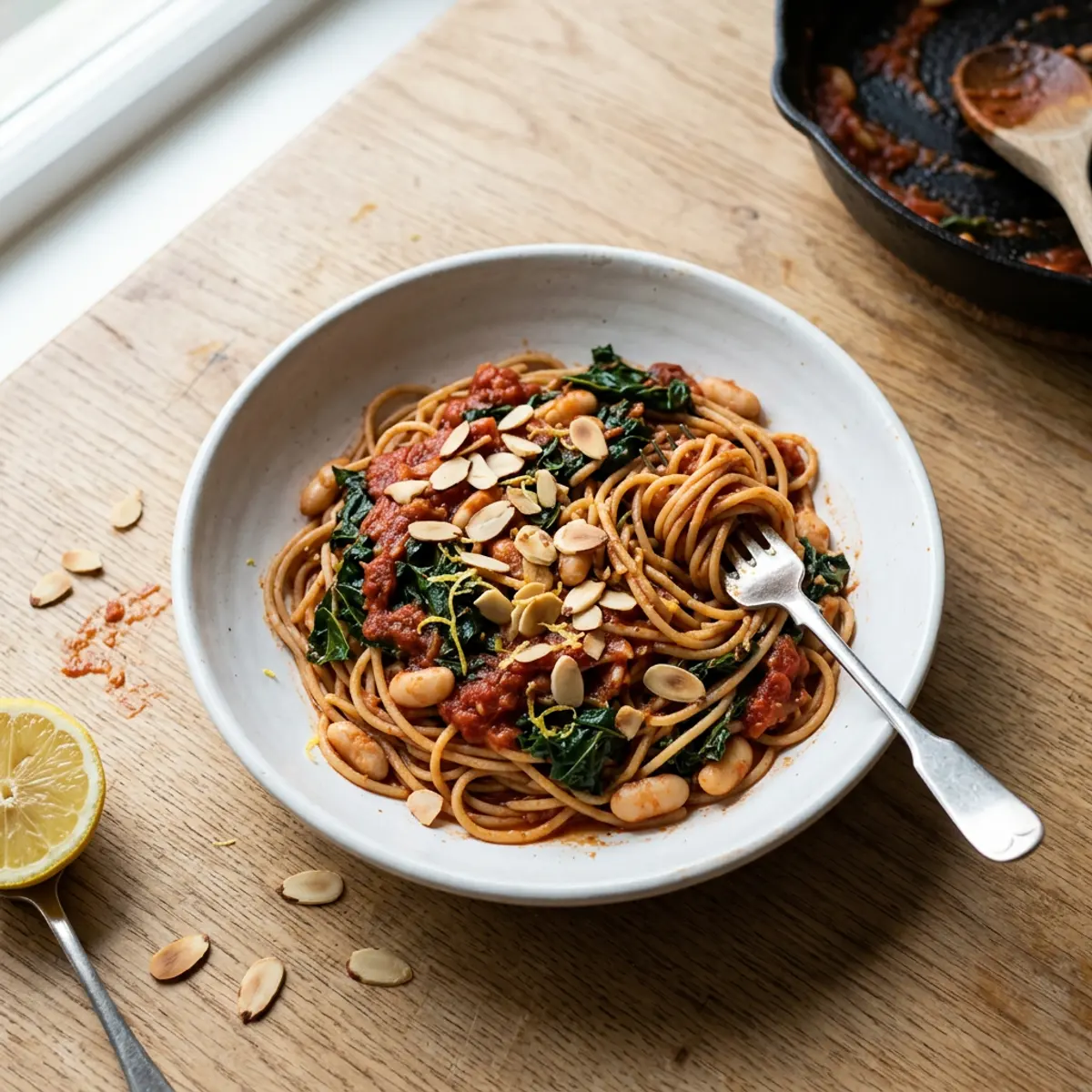
The short version: Antioxidant rich foods for skin are mostly colorful plants: tomatoes, red peppers, leafy greens, berries, citrus, nuts and olive oil. In one small trial, 40 g of tomato paste a day with olive oil lowered sunburn redness by 40% after 10 weeks. No food replaces sunscreen. This spaghetti puts a can of tomato paste on the table.
Start with a can of tomato paste and the rest is easy. Fried slowly in olive oil with garlic, it turns from sharp to deep and sweet, and it carries everything else in this pan: ribbons of lacinato kale, creamy white beans, whole wheat spaghetti, a squeeze of lemon and a handful of toasted almonds. Dinner in 35 minutes, and the recipe card holds every quantity.
There is a reason for the whole can. Split between four plates, it comes to about 42 g of paste each, close to the 40 g a day that volunteers ate with olive oil in the best-known tomato and skin trial. That is not a dose to chase, just a nice coincidence of the kitchen and the research.
Antioxidant rich foods for glowing skin, compared by vitamin C
Among antioxidant rich foods for skin, vitamin C is the nutrient with the clearest job. MedlinePlus explains that the body needs it to form collagen, the protein used to make skin, and that it cannot make or store it, so it has to come from food every day. Every figure below is per 100 g of the raw food, from USDA FoodData Central.
| Food (raw) | Vitamin C per 100 g | Group MedlinePlus names among the top vitamin C sources |
|---|---|---|
| Red bell pepper | 127.7 mg | Green and red peppers |
| Kale | 93.4 mg | Leafy greens |
| Green kiwi | 92.7 mg | Kiwi fruit |
| Broccoli | 89.2 mg | Broccoli, Brussels sprouts and cauliflower |
| Strawberries | 58.8 mg | Berries |
| Oranges | 53.2 mg | Citrus fruits |
| Grape tomatoes | 27.2 mg | Tomatoes and tomato juice |
| Tomato paste, no salt added | 18.4 mg | Tomatoes, here cooked down |
Two things this table leaves out. Lycopene, the red pigment of tomatoes that the trials below followed, is not part of the USDA figures we use, so we give no number for it. And vitamin E, which MedlinePlus names as another antioxidant, comes mostly from other foods: vegetable oils, nuts such as almonds, seeds, and greens such as spinach and broccoli.
MedlinePlus also notes that raw fruits and vegetables are the best sources of vitamin C, and that cooking or long storage reduces it. That is a good argument for a plate of strawberries or kiwi after this pasta.
What the trials on tomato, cocoa and skin found
We read the abstracts of these papers on PubMed on November 6, 2026. Most of them measure one thing: how red the skin turns 24 hours after a controlled dose of UV light. That is a lab marker of sunburn, not a measure of wrinkles or glow.
- Tomato paste, 2001. In the Journal of Nutrition (PMID 11340098), 9 volunteers ate 40 g of tomato paste, about 16 mg of lycopene, with 10 g of olive oil every day for 10 weeks, while 10 controls had the olive oil only. At week 10, redness after UV exposure was 40% lower in the tomato group. At week 4, there was no difference yet.
- A 2015 trial that saw nothing. In Archives of Dermatological Research (PMID 26024575), 20 people took lycopene either as capsules or as tomato paste for 10 weeks. Blood lycopene rose more with the paste, but the authors found no protective effect against UVB.
- The pooled picture, 2024. A meta-analysis in Critical Reviews in Food Science and Nutrition (PMID 36606553) combined 21 intervention studies in healthy people. Tomato and lycopene were associated with less UV redness and pigmentation and with thicker, denser skin. The authors see lycopene-rich foods as a possible help from the inside, not a sunscreen.
- High-flavanol cocoa, 2006. In the Journal of Nutrition (PMID 16702322), women drank a cocoa with 326 mg of flavanols a day or one with 27 mg for 12 weeks. UV redness fell by 25% in the high-flavanol group, and their skin became better hydrated and less rough. The low-flavanol group did not change.
- Chocolate, 2014. A larger trial in Nutrition Journal (PMID 24970388) gave 74 women 30 g a day of high- or low-flavanol chocolate for 12 weeks. Sensitivity to UV did not differ between the groups; elasticity at the temple rose slightly in the high-flavanol group.
- Diet and skin aging, 2025. A meta-analysis of 61 studies in the Journal of Physiological Anthropology (PMID 41174715) found that carotenoids mostly reduced redness, healthy fats improved elasticity and polyphenols helped the skin barrier. The authors note that evidence for carotenoids and vitamins still has gaps.
Small trials, sunburn redness and nothing more
Read together, the trials are small, often a few dozen people, and they do not all agree. They measure redness after UV light in a clinic, not acne, glow or wrinkles you could see in a mirror. And the effect of tomato paste took 10 weeks to show up. What they support is modest: antioxidant rich foods for skin belong in a diet full of colorful plants and olive oil, a good habit for many other reasons too, and the tomato is the food with the most research behind it.
Why tomato paste goes in with olive oil
The 2001 trial did not hand out tomato paste on its own: the volunteers ate it with 10 g of olive oil, and the control group had the same oil without the paste. This recipe keeps that pairing. Three tablespoons of olive oil across four plates is about 10 g each, and the paste fries in it before anything else goes into the pan. In the 2015 trial, blood lycopene also rose more with tomato paste than with capsules.
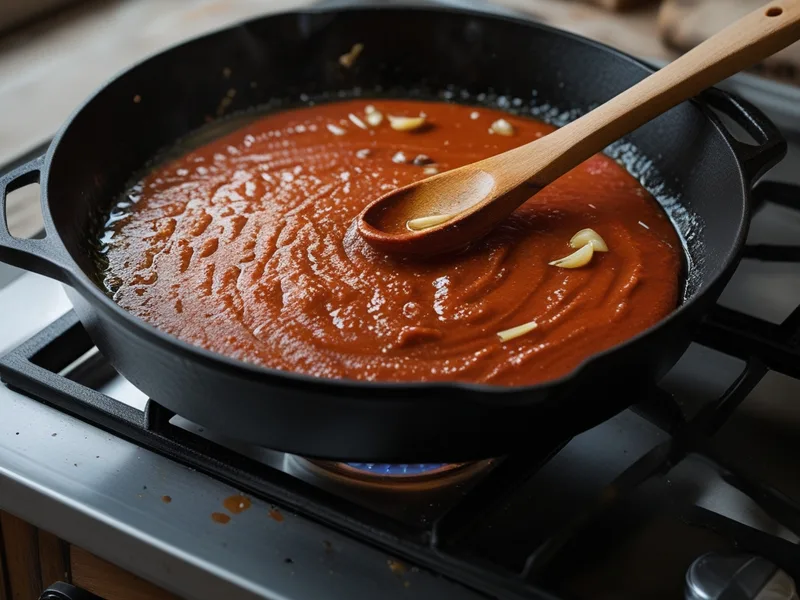
Frying does something for the cook, too. As the paste cooks in the oil, it dries out, darkens from bright red to brick and loses its raw, tinny edge. Scrape the bottom of the pan as it starts to stick: that browned layer is flavor, and the pasta water lifts it into the sauce.
Cooking antioxidant rich foods for skin into one pan
Mise en place takes ten minutes. Strip the kale leaves from their stems, stack them and slice them into ribbons about 1 cm wide. Slice the garlic thinly so it softens instead of burning. Rinse the beans in a colander until the foam is gone; rinsing also washes off some of the salty canning liquid.
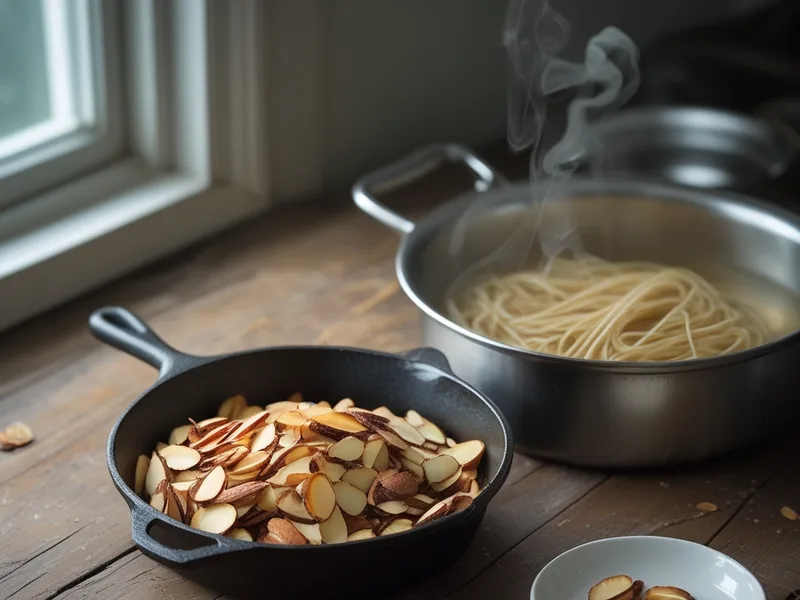
- The almonds go first. Toast them in the dry skillet while the pasta water heats, then use the same pan for the sauce.
- Low heat for the paste. Medium-low and 5 to 6 minutes. High heat burns it before it sweetens.
- Pasta water, a little at a time. Its starch is what makes the sauce cling. You will probably use 1 1/2 cups (360 ml) in total.
- Finish with lemon and a last spoon of olive oil off the heat. It wakes up the tomato and keeps the kale bright.
Serve it straight from the pan, family style, with a green salad on the side.
Nutrition per plate
The recipe makes 4 servings. Each one has about 466 calories, 17 g of protein, 68 g of carbohydrate, 17 g of fat and 408 mg of sodium, with about 13 g of fiber and 47 mg of vitamin C. Every figure is an estimate added up from the USDA record of each raw ingredient; the vitamin C is counted before cooking, which lowers it. Your brand of canned beans will change the sodium, and rinsing them lowers it.
Swaps for the same pan
- Spinach instead of kale. Add it in the last minute; it wilts almost at once.
- Chickpeas instead of white beans. Same weight, drained and rinsed.
- A red bell pepper. Slice one and soften it in the oil before the garlic, for more color and vitamin C.
- Walnuts or sunflower seeds in place of the almonds. Sunflower seeds are among the vitamin E sources MedlinePlus lists.
- Gluten-free. Use a chickpea or lentil pasta, and cook it to its package time.
More colorful plates live on this site: the roasted vegetable and chickpea bowl in foods for clear skin is built on carrots, red pepper and walnuts, and the antioxidant smoothie blends blueberries and spinach. If the cocoa trials made you curious, our anti-inflammatory desserts include one made with dark chocolate.
Safety: food is not sunscreen
- Sun protection comes first. The CDC explains that most skin cancers are caused by too much exposure to UV rays, and recommends shade, protective clothing, a hat, sunglasses and a broad-spectrum sunscreen of SPF 15 or higher, put on again after 2 hours in the sun and after swimming or sweating (CDC, Sun Safety). None of the trials above replaces any of that.
- Antioxidant supplements are not the same as food. MedlinePlus warns that high-dose antioxidant supplements may carry risks: high doses of beta-carotene may raise lung cancer risk in smokers, high doses of vitamin E may raise the risk of prostate cancer and one type of stroke, and these supplements can interact with some medicines (MedlinePlus, Antioxidants).
- Vitamin C pills. MedlinePlus advises against more than 2,000 mg a day, which can cause stomach upset, diarrhea and, rarely, kidney stones (MedlinePlus, Vitamin C).
- Kale and warfarin. Kale is rich in vitamin K. If you take warfarin, MedlinePlus says sudden changes in how much vitamin K you eat can change how the medicine works, so ask your provider how much is right for you (MedlinePlus, Vitamin K).
- Allergies. This recipe contains tree nuts (almonds) and wheat; the swaps above cover both.
A skin change that worries you, a mole that grows or a rash that will not settle belongs with a doctor, not in the kitchen.
Where the numbers come from
- Nutrition: USDA FoodData Central records for whole wheat pasta, no-salt-added tomato paste, canned white beans, raw kale, almonds, olive oil, garlic, lemon juice and salt for the recipe, and the raw foods in the vitamin C table.
- Studies: the six papers linked above, found through PubMed and read in abstract form on November 6, 2026.
- Official pages: MedlinePlus on antioxidants, vitamin C, vitamin E and vitamin K, and the CDC page on sun safety, read on November 6, 2026.
Antioxidant Rich Foods for Skin, Twirled Into a Tomato Paste Spaghetti With Kale and Almonds
A whole can of tomato paste fried slowly in olive oil, lacinato kale, white beans and toasted almonds over whole wheat spaghetti, and what the trials on tomatoes, cocoa and skin really measured.
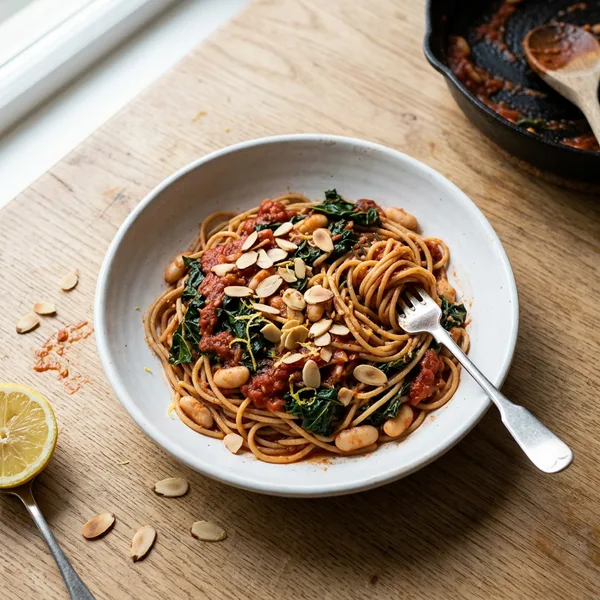
Ingredients
Instructions
- Toast the almonds and boil the pasta. Toast the almonds in a dry 12 inch (30 cm) skillet over medium heat for 3 to 4 minutes, shaking the pan, until golden at the edges, then tip them onto a plate. Meanwhile bring a large pot of water to a boil and cook the spaghetti for 1 minute less than the package says. Before draining, scoop out 2 cups (480 ml) of the cooking water.
- Fry the tomato paste. Wipe the skillet, set it over medium-low heat and add 2 tablespoons of the olive oil, the garlic and the red pepper flakes. Cook for 1 minute, until the garlic smells sweet but has not browned. Add the whole can of tomato paste and spread it across the pan. Cook for 5 to 6 minutes, stirring and scraping often, until it turns from bright red to a deep brick color and starts to stick.
- Make the sauce and wilt the kale. Pour in 1 cup (240 ml) of the pasta water and stir until the paste loosens into a smooth, glossy sauce. Add the beans, the kale and the salt, cover and simmer for 4 to 5 minutes, until the kale is tender and dark green.
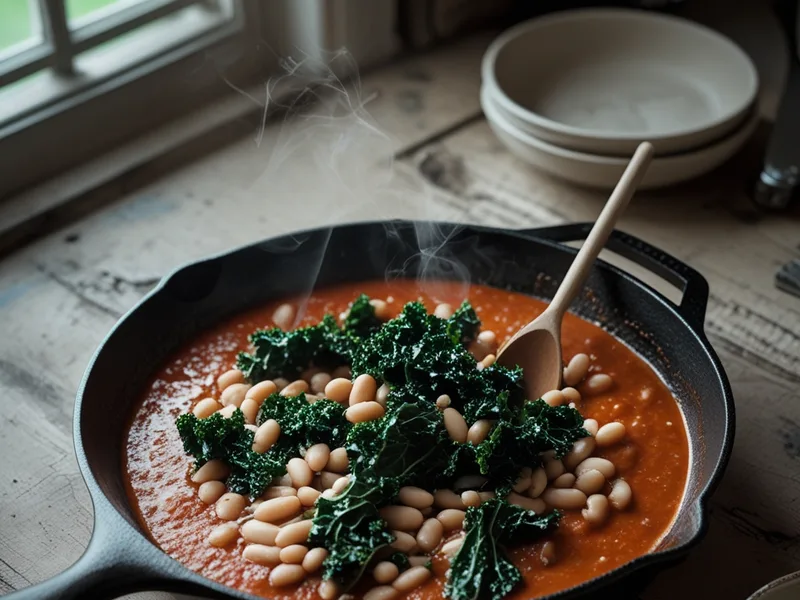
- Toss and finish. Add the drained spaghetti and toss with tongs for 1 to 2 minutes, adding more pasta water a splash at a time until the sauce coats every strand. Take the pan off the heat, add the lemon juice, lemon zest, black pepper and the last tablespoon of olive oil, and toss again. Serve with the toasted almonds scattered on top.
Notes
Do not rush the tomato paste. The minutes it spends frying in olive oil are what turn a sharp, tinny paste into a sauce that tastes slow-cooked.
Cook the pasta in unsalted water. The beans and the salt in the sauce season the dish; salted water would add sodium the nutrition figures do not count.
Leftovers keep, covered, for up to 3 days in the refrigerator. Loosen them with a splash of water when you reheat, and add the almonds just before eating so they stay crisp.
Kerth G cooked this card as written on November 6 and got a delicious pan of pasta, easy and quick, with the texture Kerth wanted: a dinner Kerth will repeat.
Nutrition Facts
Per serving (estimated)
- Total Fat
- 17 g
- Sodium
- 408 mg
- Total Carbohydrate
- 68 g
- Protein
- 17 g
General information, not medical or dietary advice. Nutrition values are estimates. See our full disclaimer.
Frequently asked questions
What are the best antioxidant-rich foods for skin?
No single food has been shown to be the best one. The most studied food is tomato paste eaten with olive oil, which lowered sunburn redness in a 2001 trial, and a 2025 meta-analysis found the clearest effects for carotenoids, polyphenols and healthy fats, so colorful vegetables, fruit, nuts and olive oil are a sound base.
What vitamins are good for skin?
MedlinePlus explains that vitamin C is needed to form collagen, the protein used to make skin, and to heal wounds, and that a shortage can cause rough, dry, scaly skin. Vitamin E is another antioxidant, found in nuts such as almonds, seeds and vegetable oils; food is the way MedlinePlus suggests getting both.
What to drink for clear skin?
No drink has been shown to clear skin. In a 2006 trial, women who drank a high-flavanol cocoa daily for 12 weeks had less UV redness and smoother skin than a low-flavanol group, but a 2014 trial of high-flavanol chocolate found no protective effect, so water and unsweetened drinks remain the simple choice.
What foods contain the highest amount of antioxidants?
Antioxidant content depends on which compound you measure, so there is no single ranking. MedlinePlus names fruits and vegetables as rich sources; in USDA records, raw red bell pepper has 127.7 mg of vitamin C per 100 g, more than kale, kiwi or oranges.
What are the best foods for skin repair?
Skin repair depends on many things food cannot replace, from sun protection to medical care. MedlinePlus lists vitamin C among the nutrients needed to heal wounds and form scar tissue, and names citrus, kiwi, berries, peppers, leafy greens and tomatoes among its best sources.

Comments
Tried it? Tell us how it went: your comment helps other readers.