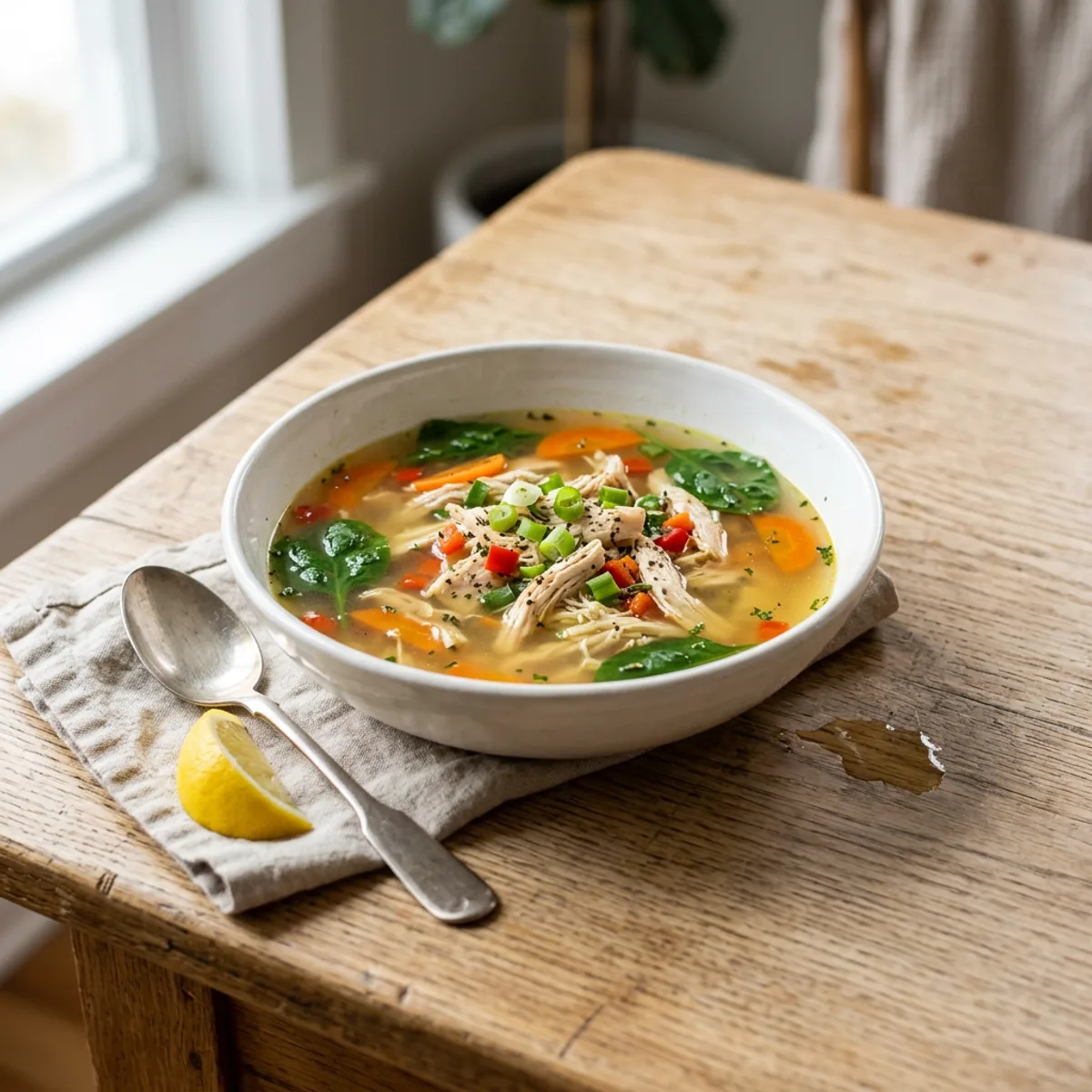
Bone broth for skin is a popular idea: bones simmered for hours, usually chicken. Whether it helps skin has not been tested. The trials we found study collagen supplements, not broth, and the best-controlled ones found no skin benefit. This bowl is a savory meal with chicken protein and vitamin C on top.
The difference between a thin broth and a good one is in one detail: how gently it simmers. A hard boil clouds it and flattens the flavor. Keep it to a bare tremble for five hours and you get a clear, golden liquid with real body. Then the bowl does the rest. Poached chicken for protein, carrots for sweetness, spinach and a raw red pepper with lemon for vitamin C, which Harvard names as one of the nutrients your body needs to make its own collagen. Everything is in the recipe card.
Does bone broth work for skin? What the trials found
The studies we read look at collagen, taken as powders or peptides, and none of them tested broth. They disagree with each other, and the reason is worth knowing.
- A 2025 meta-analysis of 23 randomized trials with 1,474 people (Myung and Park, PMID 40324552) found that, taken together, collagen supplements improved skin hydration, elasticity and wrinkles. But the trials not funded by pharmaceutical companies showed no effect, and neither did the high-quality trials. The authors conclude there is currently no clinical evidence to support collagen supplements to prevent or treat skin aging.
- Another 2025 meta-analysis of 10 trials with 646 participants (PMID 40826844) found a statistical improvement in hydration and elasticity, with doses of 1 to 10 g a day. It also warns that the risk of bias was generally unclear and that the results apply more to women.
- A 2025 meta-analysis of 61 dietary studies (PMID 41174715) reported that collagen reduced wrinkles and improved hydration, and that lipids and fatty acids, polyphenols, carotenoids and probiotics acted on other signs of skin aging. It notes that gaps remain.
Read together: the signal is mixed, it comes from supplements, and the more rigorous the trial, the weaker it gets. A bowl of broth is a different thing from a measured daily dose of collagen peptides. Nothing here lets us say it improves skin.
Is chicken bone broth good for skin? What is actually in the pot
Harvard's Nutrition Source is plain: bone broth contains only small amounts of the minerals found in bone, such as calcium, magnesium, potassium and iron, and its protein, which comes from gelatin, varies from 5 to 10 grams per cup. The amount depends on the bones, the cooking time and how much the broth is processed, so no two batches match.
That is why this recipe does not count the bones in its nutrition. The numbers below come from the chicken breast and vegetables, and the broth adds an unmeasured amount on top. It is also why we add the part we can control: protein from chicken, and vitamin C from the raw red pepper and lemon.
How much bone broth per day for skin?
There is no recommended amount. No trial tested broth for skin, and no health body we use sets a dose. The 1 to 10 g a day in the collagen meta-analysis refers to supplement powders, which cannot be converted into cups of broth, because Harvard shows how much the protein in broth varies.
If you enjoy it, one bowl of this size is an ordinary serving of soup. Treat it as food, with the chicken and vegetables doing most of the work.
Bone broth for skin before and after: what to expect
We found no before and after study of bone broth on skin, and we will not show you one. What you can expect from this recipe is a good meal. Skin changes slowly, and what shows on it is shaped by sun exposure, smoking, sleep and age. Harvard lists too much sun, smoking, and a lack of sleep and exercise among the things that lower collagen production, and says chronically high cortisol can lower it too.
Bone broth for skin recipe: the ingredient choices
- Chicken backs and necks. Cheap, full of connective tissue and bone. A roasted chicken carcass works as well.
- A small amount of vinegar. It is the same step Harvard describes, and no taste of it remains in the finished broth.
- Ginger, thyme, peppercorns. They stay in the pot and out of the bowl.
- Raw red pepper and lemon at the end. Heat reduces vitamin C, so these go in at the last moment.
Alin's bowl
Followed to the letter, the pot was easy for Alin, the broth tasted delicious with exactly the body hoped for, and it will be simmering again.
Safety and who should be careful
- Lead and cadmium. Harvard reports that one small study found bone broth made from chicken bones contained three times the lead of broth made with the meat only, although the amount per serving was still less than half of what the EPA allows in drinking water. A different study found lead and cadmium in homemade and store-bought broths. Variety in what you eat is the sensible response, not a daily large quantity.
- Cooling and storage. Divide hot broth into shallow containers so it cools fast, as the USDA's Food Safety and Inspection Service advises for a large pot of soup. The foodsafety.gov chart gives 3 to 4 days in the refrigerator and 2 to 3 months in the freezer for soups and stews.
- Poultry. Cook the chicken to 165°F (74°C) as measured with a food thermometer.
- Salt. Low in salt as written; taste before adding more if you have been told to limit sodium.
If you have a medical condition, take medication or are pregnant, ask your doctor before changing what you eat.
If you want more than a bowl of broth
To see which foods hold collagen and which ones help you make it, read collagen rich foods. For the other habits that show on skin, our guide to foods for clear skin is the next stop. And if you would rather drink your collagen, the collagen smoothie is a different route with its own evidence to read.
How we checked the numbers
- Nutrition is estimated from USDA FoodData Central values for the chicken breast, carrots, spinach, red pepper, scallions, lemon juice, vinegar and salt; the bones are not counted.
- Studies come from PubMed (PMIDs 40324552, 40826844 and 41174715) and were read in their PubMed abstracts.
- Collagen, bone broth and lead statements come from Harvard's Nutrition Source page on collagen. Storage times come from foodsafety.gov's cold food storage chart, cooling advice and the 165°F rule from the USDA's FSIS leftovers page.
Bone Broth for Skin: A Slow-Simmered Chicken Broth Bowl With Carrots and Spinach
Chicken bones, a splash of vinegar and five hours of the gentlest simmer, then a bowl with poached chicken, carrots, spinach and a raw red pepper. What the trials say about eating collagen for your skin, and what they cannot say about broth.
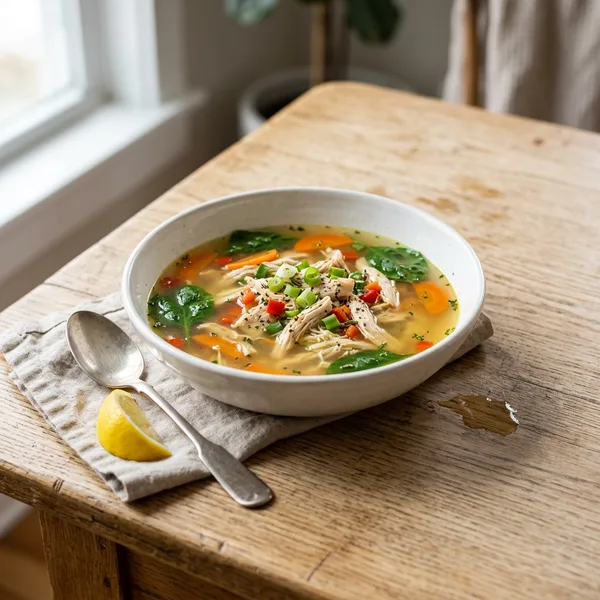
Ingredients
Instructions
- Soak the bones, bring to a bare tremble and skim. Put the bones in a 6 quart (6 L) stockpot, add the cold water and the vinegar, and leave them for 30 minutes. The vinegar's acidity helps draw the minerals and connective tissue out of the bone. Set the pot on medium heat until small bubbles rise at the edge and a grey foam gathers on top, about 25 minutes. Do not let it boil hard; a hard boil clouds the broth. Skim the foam off with a ladle, then add the onion, garlic, ginger, thyme, peppercorns and salt.
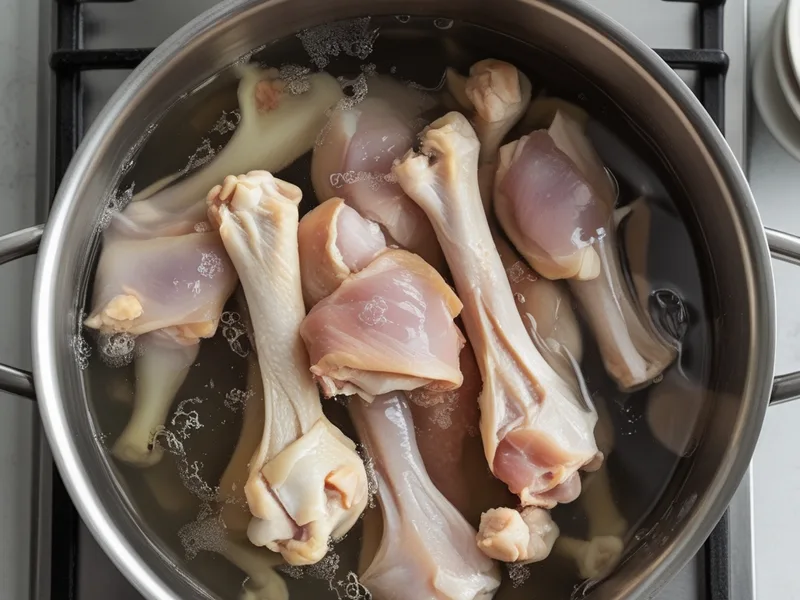
- Simmer for 5 hours, barely moving. Turn the heat to its lowest setting and set the lid ajar. You want one bubble breaking the surface every second or two. Simmer for 5 hours, topping up with hot water if the bones are no longer covered. Harvard's Nutrition Source gives 4 to 24 hours as the range for bone broth.

- Poach the chicken, strain and build the bowls. In the last 25 minutes, lay the chicken breasts in the pot and cook them until they read 165°F (74°C) in the thickest part. Lift them out and shred them with two forks. Strain the broth through a fine sieve into a clean pot, then bring it back to a simmer and cook the carrots in it for 12 minutes, until tender. Divide the shredded chicken, spinach, raw red pepper and scallions among six bowls, ladle the hot broth and carrots over, and finish each with a little lemon juice and parsley.

Notes
Add the spinach and raw pepper to the bowl, not the pot: the hot broth wilts the spinach in seconds and leaves the pepper crisp.
The 165°F (74°C) reading applies to the chicken breasts; always check poultry with a thermometer.
Cool leftover broth fast by dividing it into shallow containers, then refrigerate for 3 to 4 days or freeze for 2 to 3 months.
Nutrition Facts
Per serving (estimated)
- Total Fat
- 2 g
- Sodium
- 470 mg
- Total Carbohydrate
- 8 g
- Protein
- 18 g
General information, not medical or dietary advice. Nutrition values are estimates. See our full disclaimer.
Frequently asked questions
How is bone broth made?
Harvard's Nutrition Source describes it as simmering animal bones in water with a small amount of vinegar, which helps dissolve the bone and release collagen and minerals, for anywhere from 4 to 24 hours. This recipe uses 5 hours on the lowest heat.
Does boiling bone broth destroy collagen?
No. Boiling is how broth is made: Harvard explains that gelatin, a form of collagen, comes from boiling bones, cartilage and skin for several hours, and that breaking down these tissues is what produces it. A hard boil only clouds the liquid, so keep it at a gentle simmer.
What does bone broth taste like?
Clean, savory and lightly sweet from the carrots and onion, closer to a good chicken soup than to a stock cube. Ginger and thyme add a little warmth; the salt and the lemon at the end are what make it taste finished.
What are some super foods that are rich in collagen?
Harvard says collagen is found only in animal flesh with connective tissue: tough cuts of meat, fish skin and bones, and bone broth. Nothing from a plant contains it, but bell peppers, citrus and leafy greens give the vitamin C your body needs to build its own.

Comments
Tried it? Tell us how it went: your comment helps other readers.