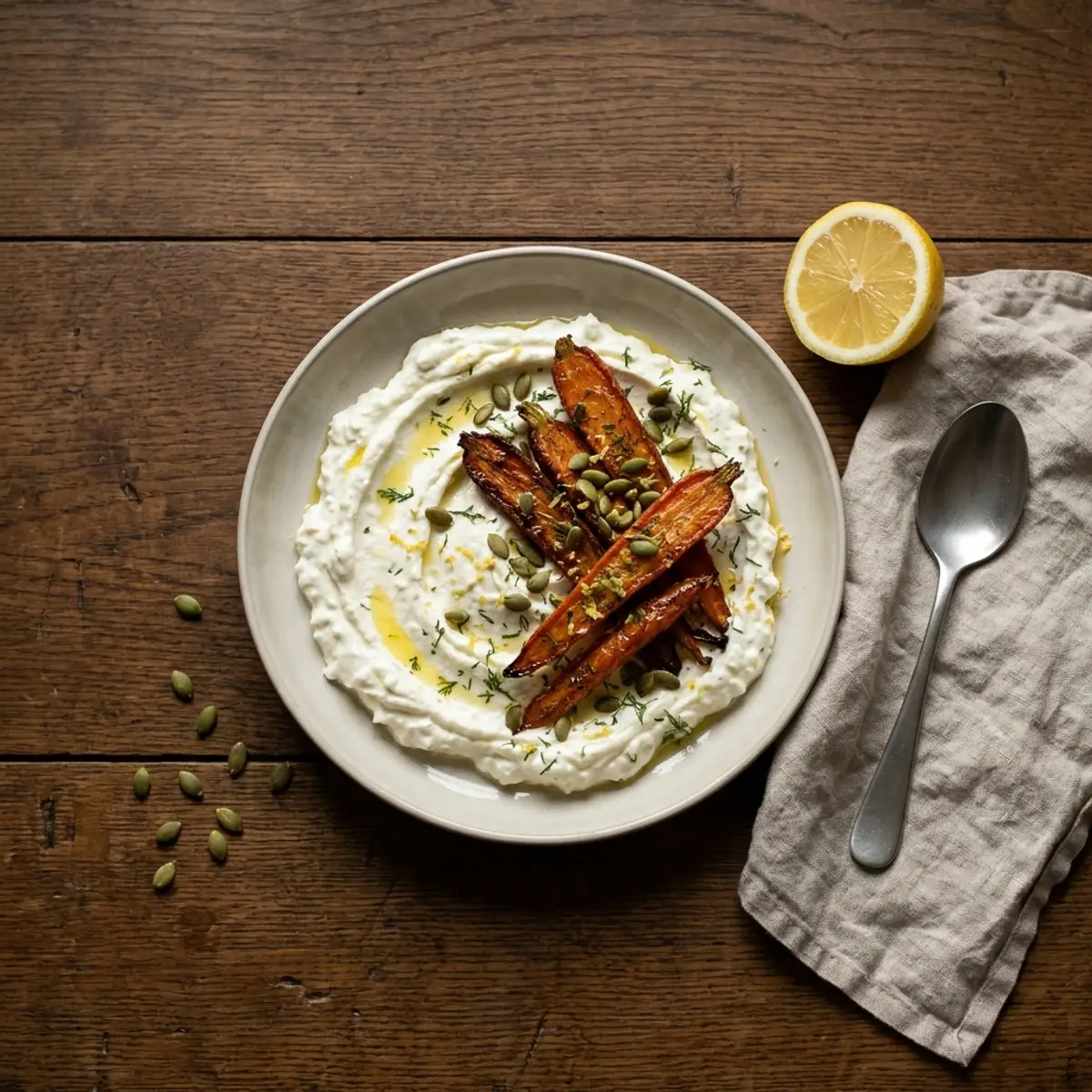
The short version: Is cottage cheese anti inflammatory? No trial has tested cottage cheese on its own. Reviews of dairy trials found neutral to modestly lower blood markers of inflammation, with no harm in most adults. Sodium is the real catch. One serving of this whipped cottage cheese with roasted carrots has about 224 calories.
Here is my favorite way to answer that question at the table. You blend cottage cheese with lemon and garlic until it turns silky, then pile cumin-roasted carrots on top. It looks like a restaurant starter and takes ten minutes of hands-on work. Below the recipe card, you will find what the studies on dairy and inflammation really show, and the one number on the label I would check first.
Cottage cheese, three ways, side by side
| Cottage cheese | What 4 oz (113 g) has (USDA) | What the evidence shows | Main caution |
|---|---|---|---|
| Whipped cottage cheese with roasted carrots (this recipe) | 2% cottage cheese with carrots, pumpkin seeds and olive oil; about 224 calories and 14 g protein per serving | No trial has tested this dish | Sodium: cheese, including cottage cheese, is a top source (CDC) |
| Low-fat cottage cheese, 1% milkfat | 81 calories, 14 g protein, 1 g fat, 459 mg sodium | Low-fat dairy was linked to lower markers in a review of 52 trials; cottage cheese was not reported apart | Sodium (CDC) |
| Lowfat cottage cheese, 2% milkfat | 92 calories, 11.8 g protein, 2.6 g fat, 348 mg sodium | Same reviews; no separate result for cottage cheese | Sodium (CDC) |
| Creamed (regular) cottage cheese | 111 calories, 12.6 g protein, 4.9 g fat, 356 mg sodium | High-fat dairy was also linked to lower markers in the same review | Sodium (CDC) |
| Cottage cheese on an anti-inflammatory diet | Depends on the rest of the plate | Neutral to beneficial effects on markers in adults; no disease outcome tested | Milk allergy: avoid it (MedlinePlus) |
Is cottage cheese anti inflammatory? What four reviews found
Short answer: the trials point toward neutral or slightly helpful, not toward a treatment. I read the abstracts of these reviews on PubMed on November 5, 2026. None of them reports a result for cottage cheese by itself.
- A 2017 review of 52 clinical trials in Critical Reviews in Food Science and Nutrition (PMID 26287637) built an inflammation score across all the trials. Overall, the score pointed to an anti-inflammatory effect of dairy products. It was strongest in people with metabolic disorders, and it pointed the other way in people allergic to cow's milk. Low-fat, high-fat and fermented products were all linked to the anti-inflammatory side.
- A 2019 systematic review in Advances in Nutrition (PMID 31089732) looked at 16 randomized trials published between 2012 and 2018. Milk and dairy products showed no pro-inflammatory effect in healthy people or in people with metabolic problems, and most studies reported an anti-inflammatory effect. The authors add that not all of the articles were of high quality.
- A 2021 systematic review in the Journal of the American College of Nutrition (PMID 32870744) covered 27 randomized trials in adults without severe inflammatory disease. Of the 19 trials on dairy foods, 10 found no effect and 8 found a drop in at least one marker. The 8 trials on dairy protein found no effect. One of the three authors is listed with the National Dairy Council.
- A 2023 meta-analysis in Nutrition, Metabolism and Cardiovascular Diseases (PMID 36710113) pooled 14 trials of yogurt, fermented milk and kefir. C-reactive protein, a common blood marker of inflammation, came down slightly. Other markers such as interleukin-6 and TNF-alpha did not change. The authors ask readers to interpret the result with caution because the studies are few.
So the honest summary is modest. Dairy as a group looks neutral to slightly favorable for blood markers in adults. That is not the same as cottage cheese calming an inflamed joint, and none of these reviews tested that.
Is low fat cottage cheese anti inflammatory, or is full fat better?
The 52-trial review linked low-fat and high-fat dairy alike with lower inflammation scores, so the evidence does not pick a winner. What does change is on the label. In USDA records, 4 ounces of 1% cottage cheese has more protein than the 2% kind, and more sodium too: 459 mg against 348 mg. Creamed cottage cheese has the most fat and calories of the three. Choose the one you like eating, then compare sodium.
Is cottage cheese good for an anti inflammatory diet?
It can sit there comfortably. Nothing in the reviews above suggests that dairy pushes inflammation markers up in adults without a milk allergy. What matters more is the plate around it. Here it goes with roasted carrots, olive oil, pumpkin seeds and herbs instead of crackers and cured meat, and that is the part I would copy on any day.
The same question comes up with other everyday foods, and the studies look different each time: see is Greek yogurt anti-inflammatory and are sweet potatoes anti-inflammatory for two more plates built the same way.
Is Good Culture cottage cheese anti-inflammatory, or any other brand?
No trial we read tested a single brand, so no brand can claim the answer. Brands differ in fat, in protein and above all in sodium. Turn the tub around and read the Nutrition Facts panel. The CDC suggests looking for no- to low-sodium options, and that is the most useful filter in the dairy aisle.
Why whipping changes everything
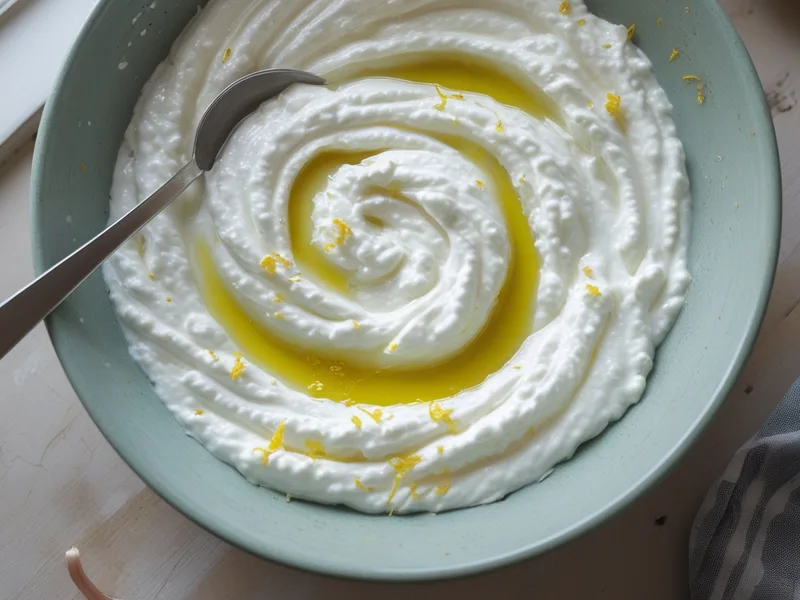
Lumpy curds put many people off cottage cheese. A food processor solves it. Once blended for a minute or two, the curds turn into something close to whipped ricotta, thick enough to hold a pile of roasted carrots. Lemon juice and zest wake it up, a small clove of garlic adds depth, and a spoon of olive oil makes it glossy.
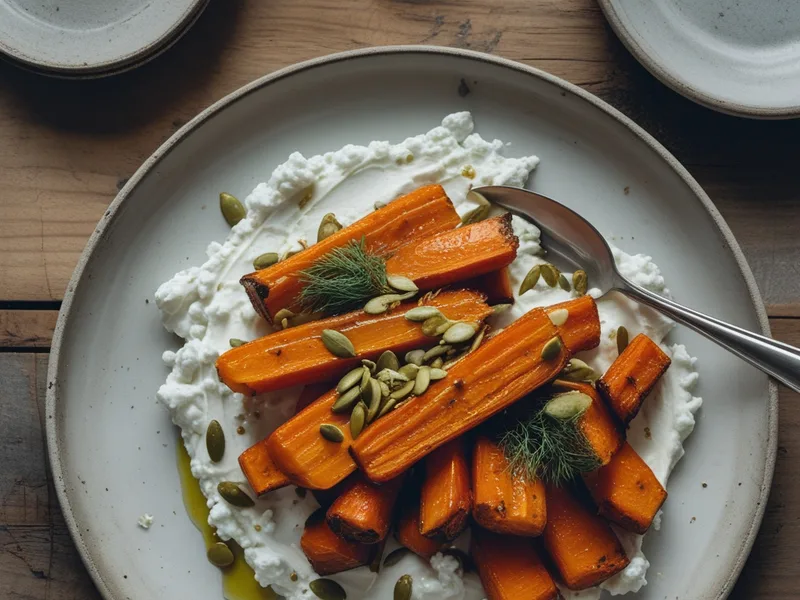
The carrots bring the contrast. Roasting them cut side down on parchment browns the flat face and concentrates their sweetness, and the cumin makes them taste warm and a little smoky. Pumpkin seeds add crunch, dill adds freshness.
What goes in
- Cottage cheese, 2 cups. I use 2% milkfat. Small or large curd both blend smooth.
- Carrots, about 1 lb (450 g). Medium carrots, halved lengthwise. Thick ones get quartered so they cook at the same pace.
- Lemon, garlic and olive oil for the whip.
- Cumin and black pepper for the carrots.
- Pumpkin seeds and fresh dill to finish.
Calories, protein and sodium
The numbers come from USDA FoodData Central, food by food, divided by four. One serving has about 224 calories, 14 g of protein, 18 g of carbohydrate and 11 g of fat, with about 427 mg of sodium. Treat it as an estimate: brands of cottage cheese vary, and the garlic clove and the spices are counted with USDA portion weights.
Tips and swaps that work
- No food processor? A stick blender in a tall jar works. Whisking by hand leaves it chunky but still good.
- Make it a meal. Add a can of drained chickpeas to the carrot pan, or serve it with warm whole-wheat pita.
- Other vegetables. Wedges of beet, sweet potato or cauliflower roast on the same pan in about the same time.
- Dairy-free. Blended silken tofu with the same lemon and garlic makes a similar spread, with different numbers.
- Make ahead. Whip the cottage cheese the day before; it holds its texture in the fridge.
- Rather have it at breakfast? The cottage cheese bowl goes sweet or savory in five minutes, and scrambled eggs with cottage cheese uses the same tub.
What works for you matters more than any rule here. Use the fat level you enjoy, swap the vegetable you have, and adjust the lemon to your taste.
Safety: sodium, lactose and milk allergy
- Sodium. The CDC lists cheese, including cottage cheese, among the top sources of sodium for US adults. The federal recommendation is less than 2,300 mg of sodium a day for teens and adults, and most Americans eat well over that (CDC, About Sodium and Health). That is why this recipe adds no salt. If you have been told to limit sodium, compare labels, and ask about a low-sodium cottage cheese.
- Lactose intolerance. The NIDDK says many people with lactose intolerance can have about 12 grams of lactose, the amount in about 1 cup of milk, without symptoms or with mild ones, and that lactose-free and lactose-reduced milk products are an option (NIDDK, Eating, Diet, & Nutrition for Lactose Intolerance).
- Milk allergy. Cow's milk is one of the common food allergens, and the only way to prevent a reaction is to avoid the food you are allergic to (MedlinePlus, Food Allergy). In the 52-trial review above, dairy scored as pro-inflammatory in people with a cow's milk allergy.
Food supports your health; it does not replace medical care. If you live with an inflammatory condition, your doctor or a registered dietitian is the right person to plan your meals with you.
Where the numbers and studies come from
- Nutrition: USDA FoodData Central records for 1% and 2% lowfat cottage cheese, creamed cottage cheese, carrots, olive oil, pumpkin seeds, lemon juice, garlic and cumin.
- Studies: the four reviews linked above, found on PubMed and read in abstract form on November 5, 2026.
- Official pages: the CDC on sodium, the NIDDK on lactose intolerance, MedlinePlus on food allergy, and the NIEHS page on inflammation for the definition in the questions below.
Is Cottage Cheese Anti Inflammatory? Whipped Cottage Cheese With Roasted Carrots
Lemony whipped cottage cheese under cumin-roasted carrots, pumpkin seeds and dill, plus what four reviews of dairy trials say about inflammation markers, and why sodium is the part to watch.
Ingredients
Instructions
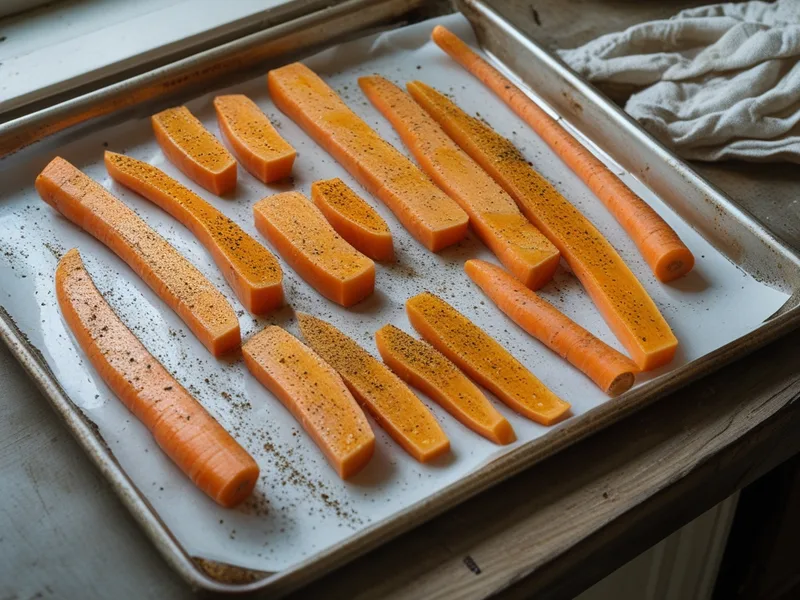
- Roast the carrots. Set the oven to 400°F (200°C) and line a sheet pan with parchment. Toss the carrots with 1 tablespoon of olive oil, the cumin and the pepper, lay them cut side down in a single layer and roast for 25 to 30 minutes, until tender when pierced with a knife and browned at the edges.
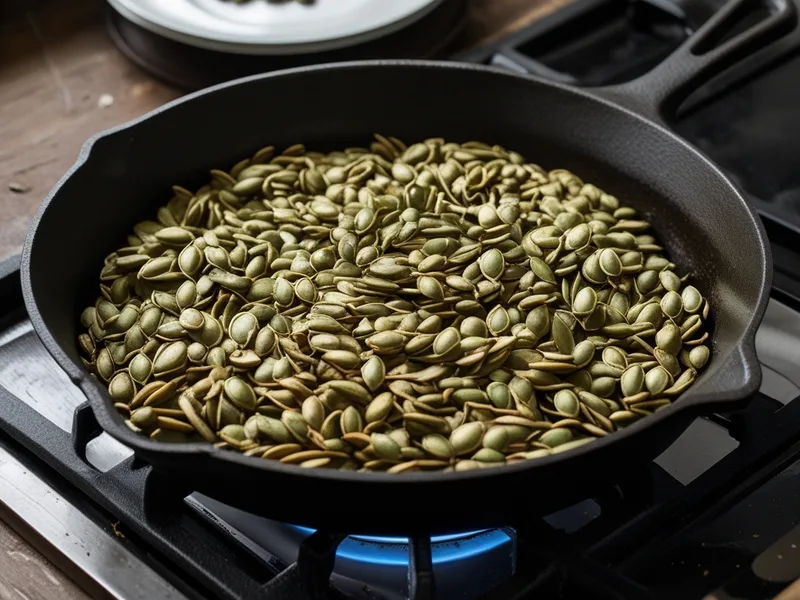
- Toast the seeds. For the last 4 to 5 minutes, scatter the pumpkin seeds on a free corner of the pan, or toast them in a dry skillet over medium heat until they puff and start to pop. Tip them onto a plate so they stop cooking.
- Whip the cottage cheese. While the carrots roast, put the cottage cheese, lemon juice, lemon zest, garlic and the second tablespoon of olive oil in a food processor or a tall jar for a stick blender. Blend for 1 to 2 minutes, scraping down once, until smooth and glossy. Taste before adding any salt.
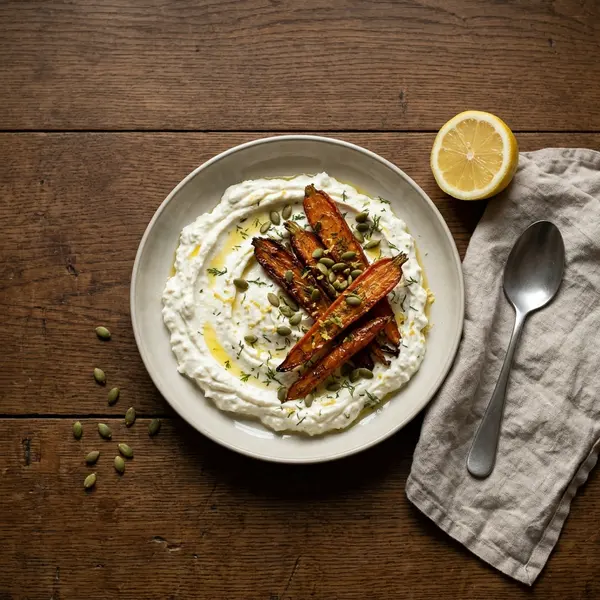
- Plate and finish. Spread the whipped cottage cheese on a wide plate or four shallow bowls with the back of a spoon. Pile the warm carrots on top, then add the pumpkin seeds, the dill and a few drops of olive oil. Serve right away. Emma plated it this way on November 5 without changing a single step, and it came out delicious, quick and easy to pull together, with exactly the texture Emma hoped for. It is one Emma would make again.
Notes
Blend the cottage cheese longer than you think. Thirty seconds leaves it grainy; a full minute or two turns it silky.
No salt is added on purpose: the cottage cheese already brings most of the sodium. Taste first, then decide.
The whip keeps in a covered container in the fridge for up to 3 days. Roast the carrots fresh, or rewarm them in the oven.
Nutrition Facts
Per serving (estimated)
- Total Fat
- 11 g
- Sodium
- 427 mg
- Total Carbohydrate
- 18 g
- Protein
- 14 g
General information, not medical or dietary advice. Nutrition values are estimates. See our full disclaimer.
Frequently asked questions
Is low-fat cottage cheese good for inflammation?
A large review of dairy trials linked both low-fat and full-fat dairy products to slightly lower inflammation markers overall, but none of the reviews we read reports results for cottage cheese alone. Pick the fat level you enjoy and compare sodium on the label.
What is inflammation?
The National Institute of Environmental Health Sciences describes inflammation as a normal part of the body's defense against injury or infection. It becomes harmful when it occurs in healthy tissues or lasts too long.
What is the best time to eat cottage cheese?
Nothing we read sets a best time of day to eat cottage cheese. Eat it when it fits your meals, at breakfast, as a snack, or as the base of a plate like this one.
What health benefits does cottage cheese have?
It is a protein-rich dairy food: 4 ounces of 2% cottage cheese has about 12 g of protein and 92 calories, according to USDA FoodData Central. It also carries sodium, about 348 mg in that same serving, so the label matters.

I’m Emma Bloom, founder and editorial voice behind Eat & Bloom. I share approachable recipes, practical nutrition tips and simple food ideas for everyday life, and I believe eating well should not be complicated or restrictive. Eat well. Find what works for you. Bloom.

Comments
Tried it? Tell us how it went: your comment helps other readers.