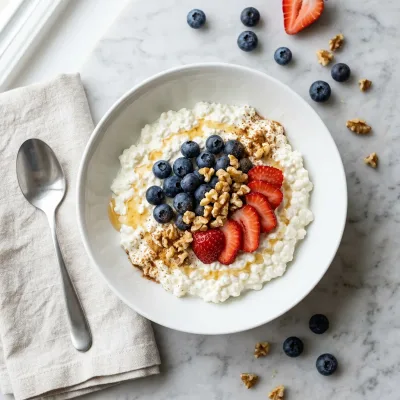
Quick answer: Spoon 1 cup of plain cottage cheese into a bowl and top it with berries, walnuts and honey for a sweet bowl, or with cucumber and tomato for a savory one. With 2% cottage cheese it has about 24 g of protein, and about 696 mg of sodium, which is 30% of the daily value.
A cottage cheese bowl is one of the quickest high-protein breakfasts: a creamy base, a few toppings and five minutes. This recipe has a sweet version and a savory one, plus the numbers that matter, including the sodium that most recipes skip.
Cottage cheese at a glance
| Cottage cheese (1 cup) | Calories | Protein | Sodium |
|---|---|---|---|
| Creamed (4% milkfat) | About 221 | About 25 g | 709 mg (31% of the daily value) |
| Lowfat, 2% milkfat | About 183 | About 24 g | 696 mg (30% of the daily value) |
| Lowfat, 1% milkfat | About 163 | About 28 g | 918 mg (40% of the daily value) |
Values are from USDA FoodData Central for one cup (225 to 226 g). The daily value for sodium is 2,300 mg. Brands differ a lot, so check your label: the 1% entry here has more sodium than the 2% one.
What toppings add
| Topping | Amount | Calories | Protein |
|---|---|---|---|
| Blueberries | 1/2 cup | About 42 | About 0.6 g |
| Sliced strawberries | 1/2 cup | About 27 | About 0.6 g |
| Chopped walnuts | 1/4 cup | About 191 | About 4 g |
| Honey | 1 teaspoon | About 21 | Almost none |
| Diced cucumber | 1/2 cup | About 8 | About 0.3 g |
| Chopped tomato | 1/2 cup | About 16 | About 0.8 g |
Walnuts are the calorie-dense one: 2 tablespoons, as in our recipe, are about 96 calories.
Cottage cheese bowl recipe: how to make it
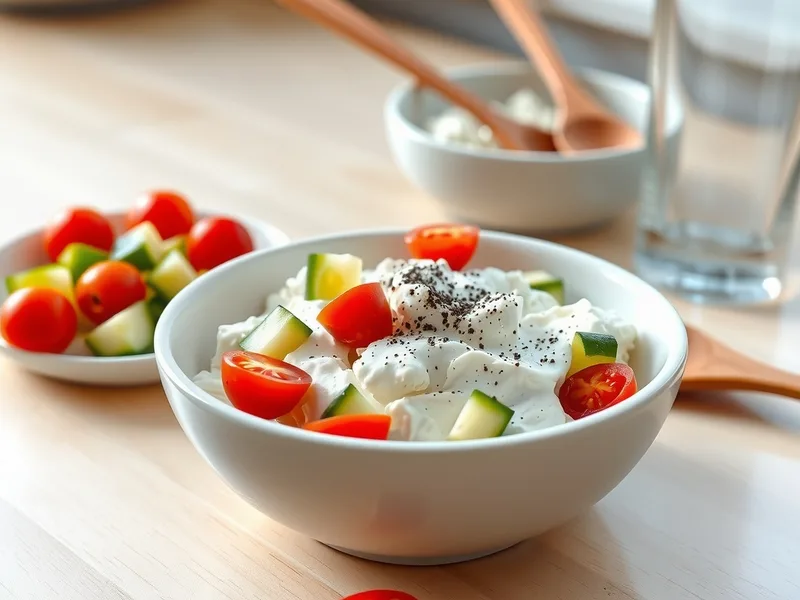
Spoon 1 cup of plain cottage cheese into a bowl. For the sweet bowl, add blueberries, walnuts and a little honey. For the savory bowl, add diced cucumber, halved cherry tomatoes and black pepper. The steps and photos are on the recipe card.
How many calories and how much protein?
The sweet bowl in the recipe, with 2% cottage cheese, has about 342 calories, 26 g of protein, 29 g of carbohydrate and 15 g of fat. The savory version, with 2% cottage cheese, cucumber and tomato, is about 207 calories and 25 g of protein. These are estimates from USDA data, and they change with the brand.
Is it healthy? The sodium to watch
They are a good way to get protein, and fruit or vegetables add fiber and freshness. What to watch is the sodium. One cup of 2% cottage cheese has about 696 mg, which is 30% of the 2,300 mg daily value. MedlinePlus says the Dietary Guidelines recommend that most adults eat less than 2.3 grams of sodium per day, and that too much sodium can lead to high blood pressure. It is not a problem on its own, but it uses a good part of the day's sodium budget.
Practical ways to keep the sodium down: read the label and compare brands, choose a plain tub, add fruit or vegetables instead of salty toppings, and have a smaller portion if the rest of your day is salty. If you have high blood pressure or follow a low-sodium diet, ask your doctor or dietitian.
Cottage cheese breakfast bowl ideas
- Sweet: blueberries, strawberries or other fruit, walnuts or other nuts, chia seeds and a little honey.
- Savory: diced cucumber, cherry tomatoes, avocado and black pepper.
- Crunch: nuts or seeds, added just before eating.
Taste before you add salt: the cottage cheese already brings plenty.
More cottage cheese breakfasts: our scrambled eggs with cottage cheese are ready in about 10 minutes. If you prefer yogurt, try the Greek yogurt parfait recipe, or see our guide to a high protein breakfast without eggs.
If you do not like the curds: blend it
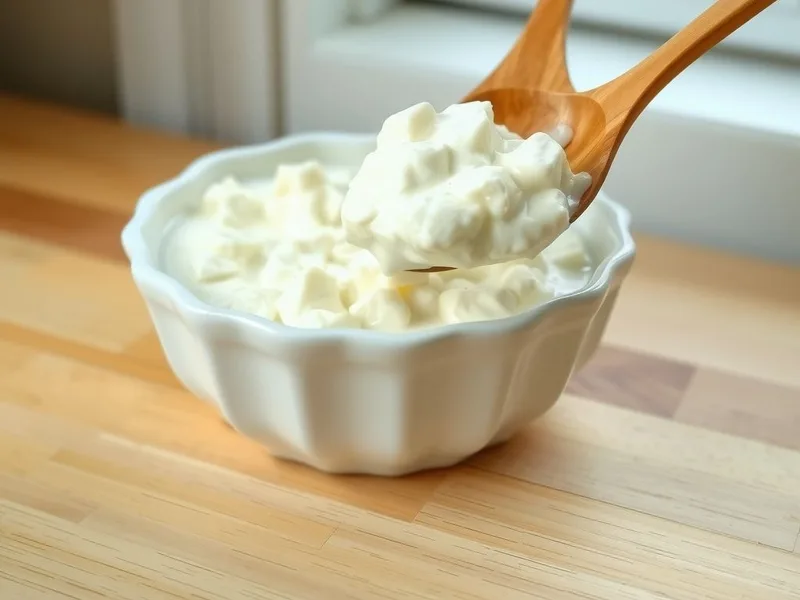
Put the cottage cheese in a blender or food processor and run it until it looks thick and smooth like yogurt. A small splash of milk helps if the blades stall. Spoon the smooth base into a bowl and add the same toppings.
Make it ahead
Keep the cottage cheese in its tub, covered and in the fridge at 40°F (4°C) or below (USDA cold food storage chart), and add the toppings when you serve, so the fruit stays fresh. The USDA says not to leave perishable food out for more than 2 hours, or 1 hour when it is above 90°F. We found no official number of days for an opened tub, so follow the date on the label and use your judgment.
Tips and mistakes
- Measure the walnuts. They are the biggest source of calories in the sweet bowl.
- Do not add salt. The cottage cheese is already salty.
- Pat fruit dry. Wet fruit makes the bowl watery.
- Add toppings last. They stay fresh and crisp.
- Compare labels. Sodium differs a lot between brands, and even between fat levels.
Safety and good to know
Cottage cheese is dairy and walnuts are tree nuts, so check the labels if you or your family have a milk or nut allergy, or if you are lactose intolerant. This is a breakfast idea, not dietary advice. If you follow a special eating plan or have a health condition, check with your doctor or a registered dietitian.
How we researched this
- Recipes: we read four cottage cheese bowl pages on October 18, 2026 (Budget Bytes, Wholesomelicious, Peanut Butter and Fitness and Crunch Time Kitchen) and write our own recipe and steps. Two other results, a forum thread and a video, could not be read.
- Nutrition: values come from USDA FoodData Central for creamed, 2% and 1% cottage cheese, blueberries, strawberries, walnuts, honey, cucumber and tomato. The estimates change with your brands.
- Sodium: we read the MedlinePlus page on sodium.
- Food safety: we read the USDA charts linked above.
- Not tested by us: we did not measure the nutrition of any bowl in a lab.
Cottage Cheese Bowl Recipe: Sweet or Savory, High-Protein, in 5 Minutes
A creamy cottage cheese bowl you can finish sweet with berries and walnuts or savory with cucumber and tomato. With real USDA numbers for protein, calories and the sodium you should watch.
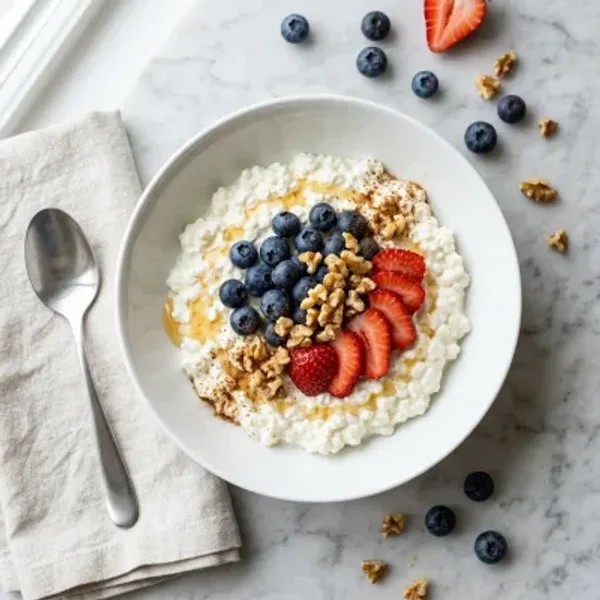
Ingredients
Instructions
- Fill the bowl. Spoon the cottage cheese into a bowl. Stir it once if you like it creamier.
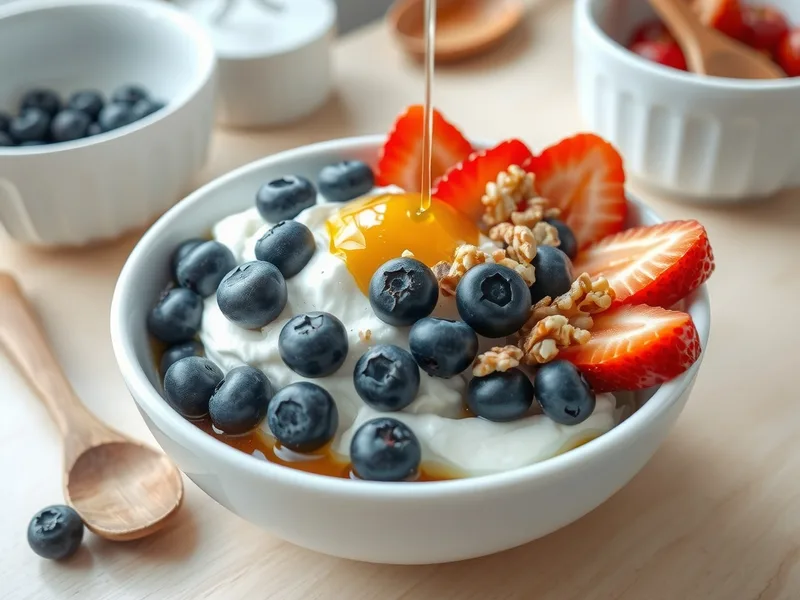
- Add the toppings. Top with the blueberries and walnuts, then drizzle with the honey.
- Or go savory. For a savory bowl, skip the berries, walnuts and honey. Top the cottage cheese with diced cucumber, halved cherry tomatoes and a little black pepper.
Notes
The nutrition numbers are for the sweet bowl with 2% cottage cheese. Check the label of your cottage cheese, because sodium varies a lot between brands.
Keep the cottage cheese in its tub, covered and cold, and add toppings when you serve.
Nutrition Facts
Per serving (estimated)
- Total Fat
- 15 g
- Sodium
- 697 mg
- Total Carbohydrate
- 29 g
- Protein
- 26 g
Frequently asked questions
Are cottage cheese bowls healthy?
They can be a good source of protein: USDA data lists 1 cup of 2% cottage cheese at about 24 g. The thing to watch is sodium, about 696 mg per cup, or 30% of the 2,300 mg daily value. Choose plain, add fruit or vegetables, and check the label. If you have high blood pressure or follow a low-sodium diet, ask your doctor.
Is it a good idea to eat cottage cheese for breakfast?
For most people it can fit well, especially plain cottage cheese with fruit or vegetables. It gives protein early in the day. Because of the sodium, look at your total for the day, and ask your doctor or dietitian if you have high blood pressure or a kidney, heart or other condition.
What to put in a cottage cheese bowl?
Sweet: berries, sliced fruit, walnuts or other nuts, chia seeds and a little honey. Savory: diced cucumber, cherry tomatoes, avocado and black pepper. Fruit and vegetables add fiber, and nuts add calories as well as protein, so measure them.
What is the viral cottage cheese bowl?
Several recipe pages use the word viral for savory taco-style bowls with seasoned toppings. We did not test one, and we cover the simple base here, which you can top the way you like.
How do I make baked cottage cheese bowls?
This article covers no-cook bowls. Baked cottage cheese breakfast bowls are a different recipe that we did not test here.
Can you blend cottage cheese to make it smooth?
Yes. Blend it in a blender or food processor until it looks thick and smooth like yogurt. A small splash of milk helps if the blades stall. It will taste the same, with a creamier texture.

I’m Emma Bloom, founder and editorial voice behind Eat & Bloom. I share approachable recipes, practical nutrition tips and simple food ideas for everyday life, and I believe eating well should not be complicated or restrictive. Eat well. Find what works for you. Bloom.


Comments
Tried it? Tell us how it went: your comment helps other readers.