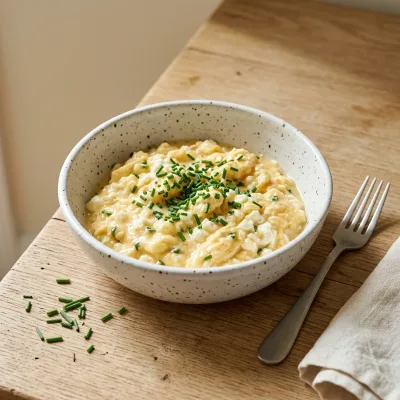
Quick answer: Whisk 4 eggs with 1/2 cup of cottage cheese, cook them in butter over medium-low heat and keep folding until set with no liquid egg left. Two servings have about 19 g of protein each and about 240 calories. The USDA says scrambled eggs should not be runny.
Scrambled eggs with cottage cheese are an easy way to add protein to a quick breakfast. Many recipe sites say the cottage cheese makes the eggs creamier, and it does add protein. This recipe is ready in about 10 minutes, and below you will find the numbers, including sodium, and what research and food safety guidance say about eggs.
What is in the pan
| Ingredient (whole recipe, 2 servings) | Calories | Protein | Sodium |
|---|---|---|---|
| 4 large eggs (200 g) | 286 | About 25 g | 284 mg |
| 1/2 cup 2% cottage cheese (113 g) | About 92 | About 12 g | 348 mg |
| 1 tablespoon unsalted butter | About 102 | Almost none | 2 mg |
| 1/4 teaspoon table salt | 0 | None | 581 mg |
Values are from USDA FoodData Central. The whole recipe makes 2 servings, so each serving has about 240 calories, 19 g of protein and about 607 mg of sodium, which is 26% of the 2,300 mg daily value. Notice that the salt is the biggest source of sodium: you can use less, and the cottage cheese already brings plenty.
How to make scrambled eggs with cottage cheese
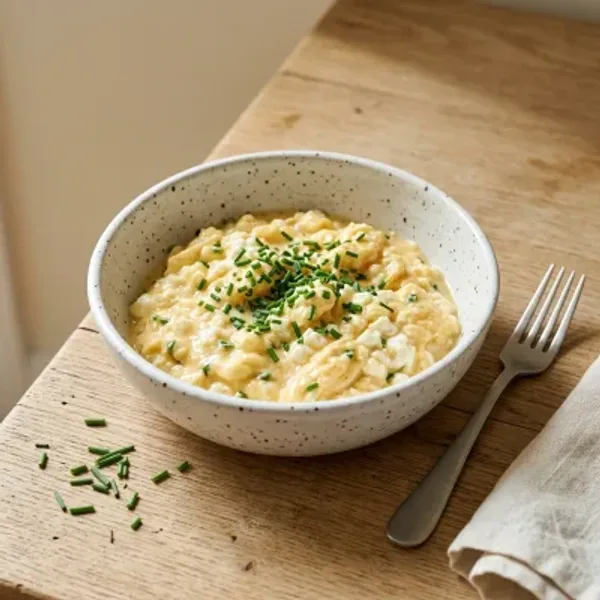
Whisk 4 eggs with salt and pepper, stir in 1/2 cup of cottage cheese, and cook in 1 tablespoon of butter over medium-low heat. Fold slowly with a rubber spatula until the eggs are set, about 3 to 4 minutes. For a smoother texture, blend the eggs and cottage cheese first, as Little Sunny Kitchen suggests. The steps and photos are on the recipe card.
High protein scrambled eggs with cottage cheese recipe
With about 19 g of protein per serving, this is a solid protein start. Of that, about 12 g in the whole recipe comes from the cottage cheese, so about 6 g per serving. If you want more, serve the eggs with whole grain toast or a side of Greek yogurt. Eating the whole batch alone is about 37 g of protein, but it is four eggs, so see the next section before you do that daily.
Eggs, cholesterol and heart health: what the studies say
Eggs are one of the most studied foods, and the studies do not agree. Here is what we found:
- A 2020 analysis in the BMJ (PMID 32132002) of three large US cohorts and a meta-analysis found that moderate egg consumption, up to one egg per day, was not associated with cardiovascular disease risk overall.
- A 2022 analysis in Circulation (PMID 35360933) found that greater dietary cholesterol and egg consumption were associated with a higher risk of overall and cardiovascular mortality, and its authors support restricted consumption of dietary cholesterol.
- A 2020 meta-analysis of 17 randomized trials (PMID 32635569) found higher LDL cholesterol in people eating more eggs, with a larger effect in longer trials, and calls for long-term trials.
- A 2025 randomized crossover trial of 61 adults (PMID 40339906) found that saturated fat, not dietary cholesterol, raised LDL cholesterol, and that 2 eggs a day in a low-saturated-fat diet lowered LDL compared with a high-saturated-fat control, although the effect on LDL particle size is mixed.
So the honest summary is that the evidence is mixed. Most of the large studies are observational, and the trials are short. This recipe has 2 eggs per serving, which is more than the one egg a day in the BMJ analysis. If you have high cholesterol, heart disease or diabetes, or follow a special eating plan, ask your doctor or dietitian how many eggs are right for you.
Cook the eggs until set: what food safety says
The USDA says to cook eggs until the yolks are firm, and that scrambled eggs should not be runny, so we do not recommend taking them off the heat while they are still wet. Dishes made with eggs should reach 160°F, and the USDA advises using a food thermometer for casseroles and similar dishes. Keep raw eggs refrigerated and do not leave them out for more than 2 hours.
Serve the eggs right away. If you have leftovers, the USDA says to cool them quickly in shallow containers, refrigerate at once and use within 3 to 4 days, and to reheat egg dishes to 165°F before serving. Little Sunny Kitchen says up to 3 days, so use the shorter time if you want to be cautious.
Does cottage cheese improve scrambled eggs?
Many recipe pages say it makes the eggs creamier and more tender, and that it is an easy way to add protein. We did not run a taste test, so we cannot say how much difference it makes for you. It is easy to try: make one batch with and one without, and decide.
Tips and mistakes
- Use medium-low heat. Hot pans make eggs dry and can give them a greenish look; the USDA says the green color is safe to eat, but the texture suffers.
- Keep folding. Slow folds make large soft curds.
- Cook until set. No liquid egg should be left.
- Go easy on the salt. The cottage cheese is already salty, and the salt in the recipe is the biggest source of sodium.
- Do not overcook. Take the pan off the heat when the eggs are set, and serve right away.
- Use a nonstick pan and a rubber spatula for the softest curds.
Variations
- Spinach: wilt a couple of handfuls of baby spinach in a little olive oil first, move it to a plate and fold it back in at the end. We did not calculate the nutrition for this version.
- Herbs: chives, parsley or dill, added at the end.
- Olive oil: use it instead of butter if you prefer.
- Breakfast wrap: spoon the eggs into a tortilla, as Skinnytaste suggests.
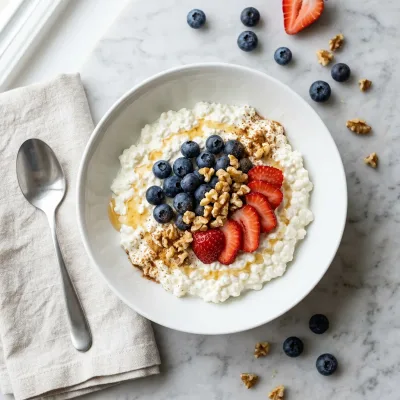
- Cottage cheese bowl on the side: see our cottage cheese bowl recipe.
- No eggs today? See our high protein breakfast without eggs ideas.
Safety and good to know
Eggs and cottage cheese are common allergens, so check the labels if you or your family have an egg or milk allergy, or if you are lactose intolerant. This is a breakfast idea, not dietary advice. If you are pregnant, have a weakened immune system or a health condition, check with your doctor or a registered dietitian.
How we researched this
- Recipes: we read three recipe pages on October 18, 2026 (Skinnytaste, Little Sunny Kitchen and The Doctor's Kitchen) and write our own recipe and steps. Two other results could not be read.
- Studies: a PubMed search on October 18, 2026 for trials and reviews on eggs with cholesterol, cardiovascular disease and satiety. We read the abstracts, cite only four relevant studies and left out results that were not about eggs and health.
- Nutrition: values come from USDA FoodData Central for eggs, 2% cottage cheese, unsalted butter and table salt. Pepper and chives are not counted.
- Food safety: we read the USDA page on shell eggs from farm to table.
- Not tested by us: we did not taste-test the recipe against plain scrambled eggs.
Scrambled Eggs With Cottage Cheese: Creamy, High-Protein, in 10 Minutes
Scrambled eggs with cottage cheese in about 10 minutes: soft curds, about 19 g of protein per serving, and an honest look at the sodium, the eggs and what food safety says about runny eggs.
Ingredients
Equipment
- Nonstick skillet (10-inch)
- Rubber spatula
Instructions
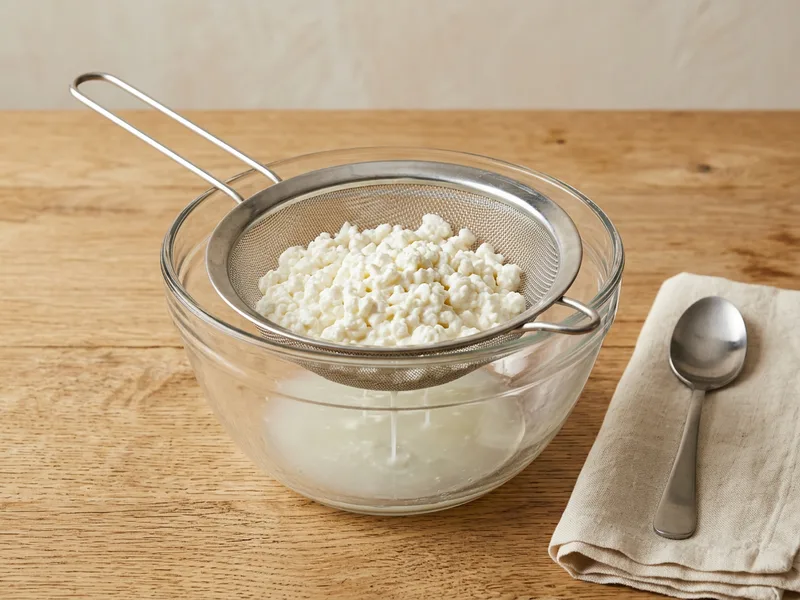
- Drain the cottage cheese (optional). If your cottage cheese looks very wet, spoon it into a fine mesh strainer over a bowl for a few minutes. This is optional.
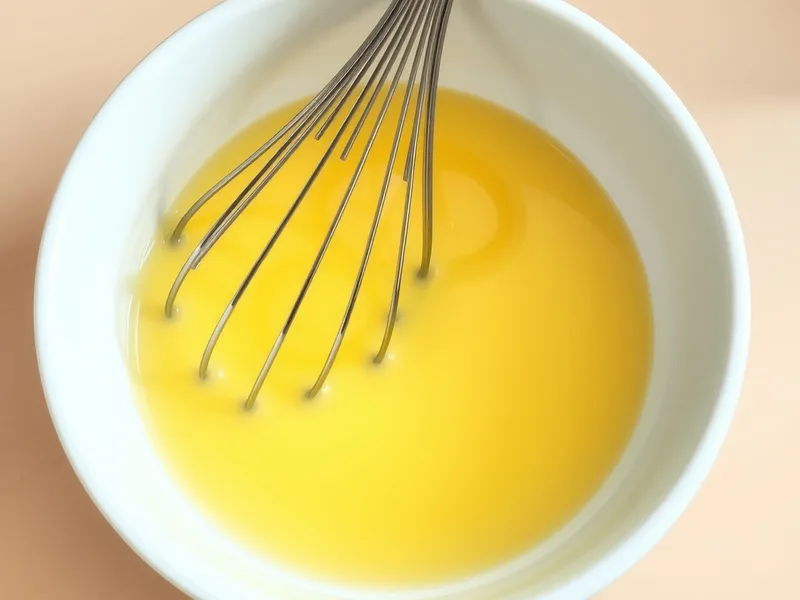
- Whisk. Crack the eggs into a bowl, add the salt and pepper and whisk until blended. Stir in the cottage cheese. For a smoother result, blend the eggs and cottage cheese in a blender.
- Melt the butter. Set a nonstick skillet over medium-low heat and melt the butter until foamy.
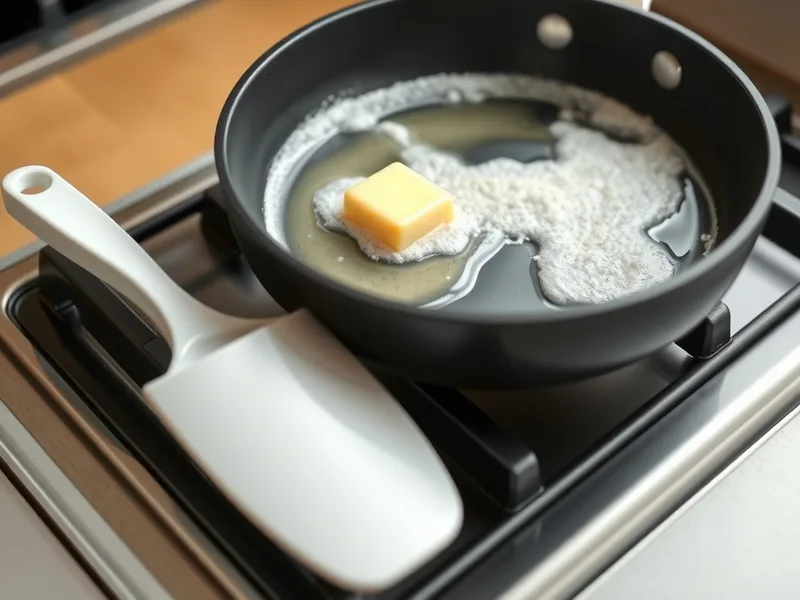
- Cook and fold. Pour in the eggs. As the edges set, drag a rubber spatula from the edges toward the center in slow folds. Keep folding until the eggs are set and no liquid egg is left, about 3 to 4 minutes.
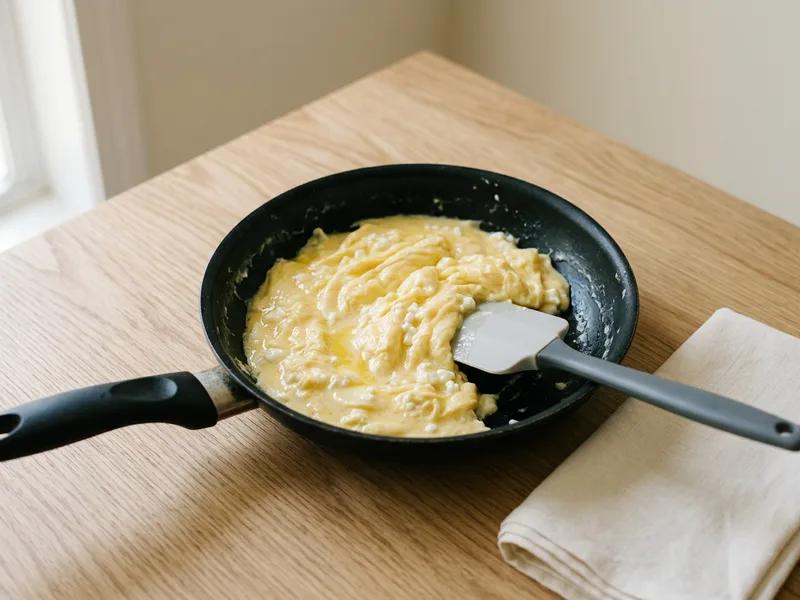
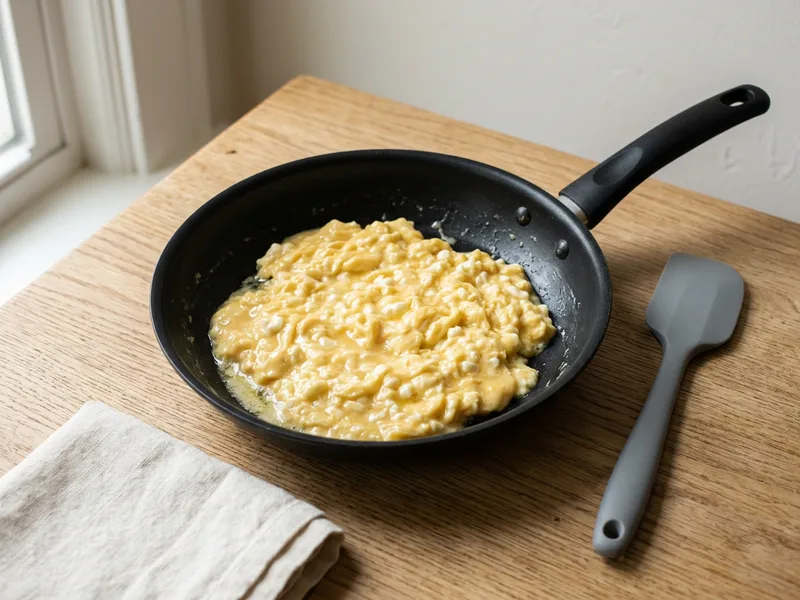
- Finish and serve. Take the skillet off the heat, fold in the chives and serve right away.
Notes
The USDA says scrambled eggs should not be runny: cook them until no liquid egg is left.
Serve right away. If you have leftovers, cool them quickly in a shallow container and refrigerate.
Nutrition Facts
Per serving (estimated)
- Total Fat
- 17 g
- Total Carbohydrate
- 3 g
- Protein
- 19 g
Frequently asked questions
Does cottage cheese improve scrambled eggs?
Many recipe pages say it makes the eggs creamier and adds protein. We did not run a taste test. The protein is easy to count: with USDA data, 1/2 cup of 2% cottage cheese adds about 12 g of protein to the recipe, or about 6 g per serving.
How can I get 40g of protein for breakfast?
This recipe has about 19 g per serving, so eating the whole batch, 4 eggs and the cottage cheese, gives about 37 g. That is four eggs in one sitting, which is more than the one egg a day many studies looked at. Add toast or Greek yogurt instead, and ask your doctor or dietitian if you want a very high-protein breakfast.
What is the healthiest way to eat cottage cheese?
Plain is the base, with fruit or vegetables on the side. The thing to watch is sodium: USDA data lists 1 cup of 2% cottage cheese at about 696 mg, or 30% of the 2,300 mg daily value. Compare labels and ask your doctor if you have high blood pressure.
What are some recipes for breakfast that use cottage cheese?
Besides scrambled eggs, try a sweet or savory cottage cheese bowl: see our cottage cheese bowl recipe. You can also blend cottage cheese into a smooth base for toppings.
How long do scrambled eggs with cottage cheese keep in the fridge?
The USDA says to serve cooked egg dishes right away, or cool them quickly in shallow containers, refrigerate at once and use within 3 to 4 days. Reheat them to 165°F before eating. One recipe site says up to 3 days.
Can you make scrambled eggs with cottage cheese without it getting watery?
Cook the eggs over medium-low heat and keep folding until no liquid egg is left. Draining very wet cottage cheese first is optional. We did not test how much it helps.

I’m Emma Bloom, founder and editorial voice behind Eat & Bloom. I share approachable recipes, practical nutrition tips and simple food ideas for everyday life, and I believe eating well should not be complicated or restrictive. Eat well. Find what works for you. Bloom.

Comments
Tried it? Tell us how it went: your comment helps other readers.