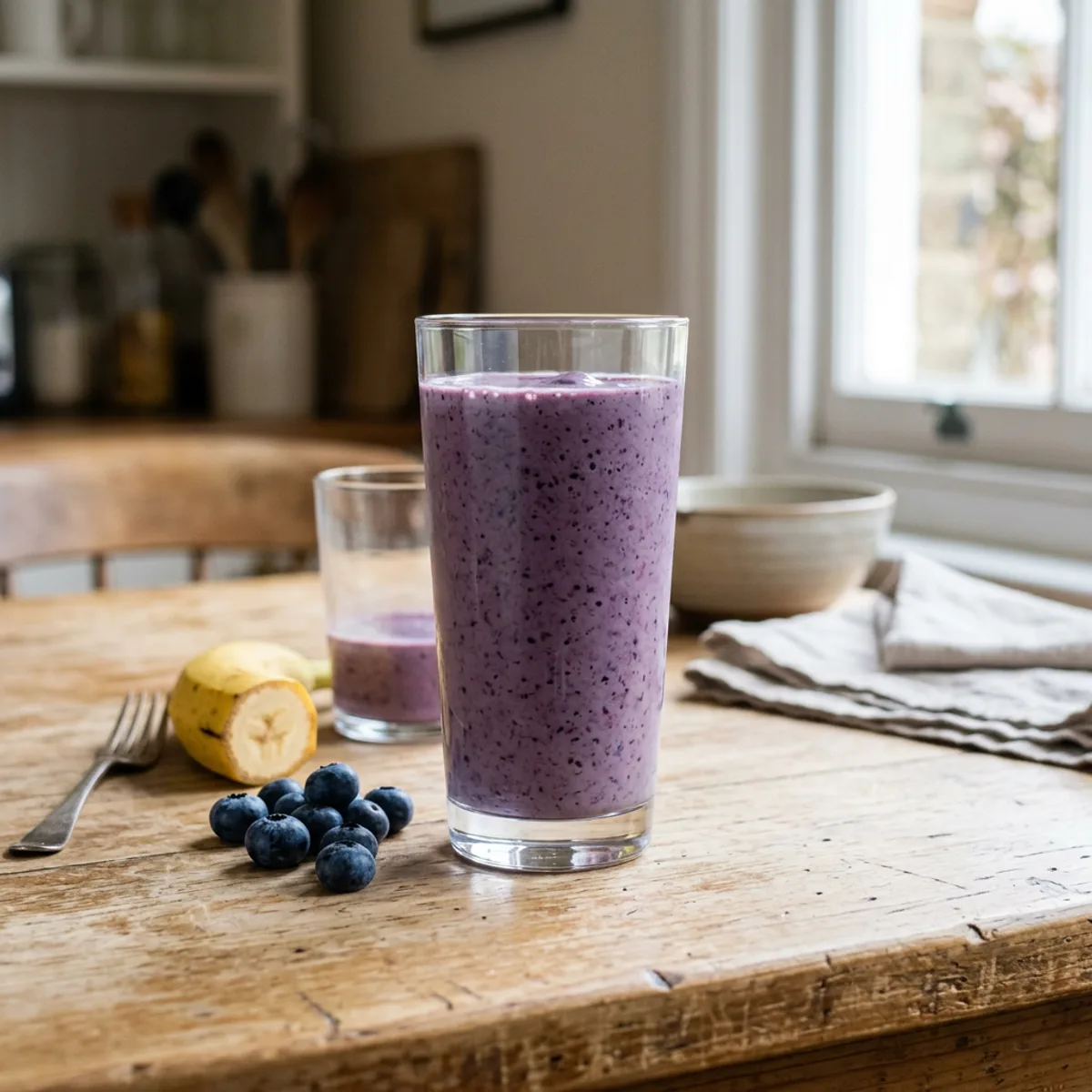
The short version: Psyllium husk is a bulk-forming fiber that absorbs liquid and swells in the intestines. A 1998 trial in people with chronic constipation found it softened stools more than docusate sodium. Take it with at least 8 ounces of liquid, as MedlinePlus says. This smoothie has about 117 calories a glass.
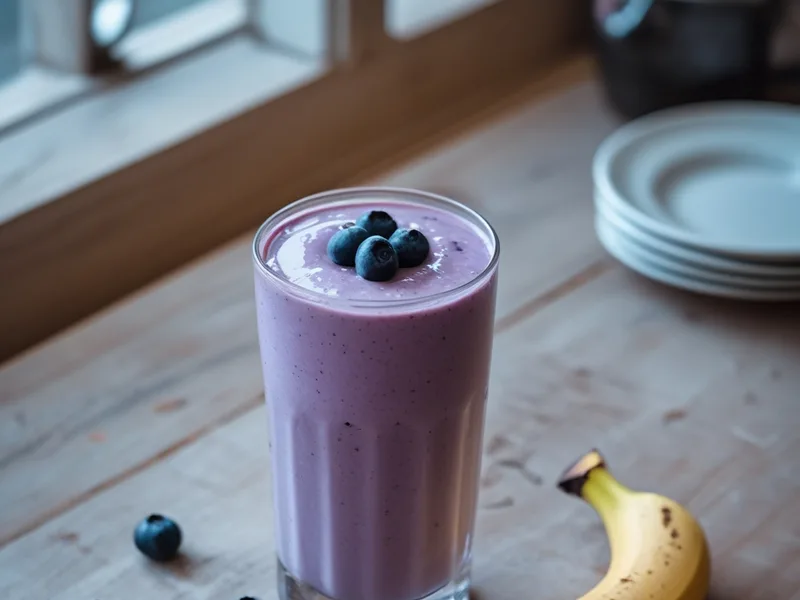
Start with the fruit. A ripe banana and a cup of frozen blueberries give a smoothie body and sweetness without anything added, and that is the base I trust here, because psyllium has no flavor of its own to rescue a bad one. The husk goes in last, a level teaspoon between two glasses, and the whole thing is drunk right away. Below you will find the recipe card, then what the studies say and the safety points that matter most for this ingredient.
Psyllium husk smoothie at a glance
| What | Where | What a glass has (USDA, estimate) |
|---|---|---|
| Blueberry, banana, almond milk and psyllium husk | The recipe card below | About 117 calories and 2 g of protein |
| More fiber in the kitchen | High-fiber foods | A list of foods, with the numbers |
| A simple morning drink | Green tea for weight loss | Its own page, with the numbers |
Psyllium husk fiber supplements: what do trials say?
Short answer: it is a fiber supplement studied mostly for constipation, with smaller bodies of work on irritable bowel syndrome and cholesterol. Here is what we read on PubMed on October 24, 2026, with the limits.
- A 1998 trial in Alimentary Pharmacology & Therapeutics (PMID 9663731) enrolled 170 people with chronic idiopathic constipation in a double-blind, two-week comparison of psyllium (5.1 g twice a day) and docusate sodium. Psyllium increased stool water content and total stool output more than docusate, and bowel movements were more frequent in the second week (3.5 versus 2.9 a week). It is an old trial of two weeks of treatment.
- A 2020 network meta-analysis in The Lancet Gastroenterology & Hepatology (PMID 31859183) compared soluble fibre such as ispaghula husk, antispasmodics, peppermint oil and gut-brain drugs in irritable bowel syndrome (51 trials, 4,644 people). For global symptoms, peppermint oil ranked first and there were no significant differences between active treatments in direct or indirect comparisons. Few trials were at low risk of bias, so the authors call the uncertainty considerable.
- A 2018 meta-analysis in The American Journal of Cardiology (PMID 30078477) pooled three randomized trials of 4 to 12 weeks in people already taking statins. Adding psyllium gave a further reduction in LDL cholesterol, which the authors compare to doubling the statin dose. It involved a small number of trials and people on statins, so it does not describe someone not on a statin.
So the honest summary: there is evidence for stool softening in constipation, no clear edge over other treatments for IBS symptoms, and a cholesterol effect in a small set of trials in people on statins. A smoothie with a teaspoon of psyllium is a way to take it, not a treatment, and none of this replaces a doctor's advice.
Why the husk goes in last
Psyllium swells as soon as it touches liquid. If you blend it for a long time or let the glass stand, it turns the smoothie into a thick gel that is hard to drink and hard to swallow. A few seconds of blending and a drink straight away keep it a smoothie. MedlinePlus says the powder must be mixed with 8 ounces (240 ml) of liquid right before use and that you must drink at least 8 ounces of liquid when you take it.
What goes in
- One ripe banana and one cup of frozen blueberries. They sweeten and thicken the smoothie, so no sweetener is needed.
- Almond milk and water. Together with the fruit they make two glasses of about 8 ounces each.
- Psyllium husk, 1 teaspoon. Level, as the label directs. Start small.
- Cinnamon and a little lemon juice to brighten it. The lemon is the "finish with" of this recipe.
Calories and protein
The numbers come from USDA FoodData Central values, ingredient by ingredient. One glass, half of the recipe, has about 117 calories, 2 g of protein, 24 g of carbohydrate and 3 g of fat, with about 72 mg of sodium. It is an estimate: psyllium husk is not in the USDA data, so its calories are not counted, and bananas and berries vary in size.
Tips and common mistakes
- Measure level. A heaped spoon is more than the recipe means.
- Blend briefly. Ten seconds is enough once the husk is in.
- Drink water too. The point of the glass of water is to help the fiber do its work.
- Do not prepare ahead. This smoothie is for now, not for the fridge. For a breakfast that is meant to set overnight, our chia seed pudding recipe waits in the fridge.
- Do not breathe the powder in. MedlinePlus warns it can cause allergic reactions when inhaled.
Kerth G stuck to the recipe to the letter and had no trouble with it: the flavor needed nothing, the texture was what Kerth hoped for, and it was quick to put together. Kerth plans to make it again.
Variations
- Spinach. A handful of baby spinach disappears into the blueberries, as it does in our antioxidant smoothie.
- Citrus. Swap the lemon for a little orange juice.
- No almond milk. Use another plain, unsweetened milk you tolerate.
- More protein. This glass has about 2 g. Our protein smoothies for weight loss are built around whey, tofu or kefir, and the collagen smoothie uses collagen peptides.
Safety: what MedlinePlus says to know first
MedlinePlus says psyllium must be taken with at least 8 ounces of liquid, and that you should not take it for longer than 1 week unless your doctor tells you to. Tell your doctor and pharmacist what medicines and supplements you take, because psyllium can change how they are used: MedlinePlus says not to take digoxin, aspirin or nitrofurantoin within 3 hours of psyllium. Tell your doctor if you have diabetes, heart disease, high blood pressure, kidney disease, rectal bleeding, an intestinal blockage or difficulty swallowing, and if you are pregnant or breastfeeding. Get medical help if you have difficulty breathing, difficulty swallowing, stomach pain or a skin rash after taking it.
Storage
Keep psyllium husk in its container, closed tightly, at room temperature and away from heat and moisture, as MedlinePlus advises. The smoothie itself is not for storing: drink it at once.
What we read
- Nutrition: values come from USDA FoodData Central for each ingredient (for example bananas); psyllium husk is not in the USDA data and is not counted, so the total stays an estimate.
- Studies: a targeted PubMed search on October 24, 2026 for psyllium with constipation, IBS and cholesterol; the three studies above were read in their abstracts.
- Safety: the MedlinePlus page on psyllium, read on October 24, 2026.
Psyllium Husk: What It Does, and a Blueberry Banana Smoothie to Use It In
A thick blueberry banana smoothie with a teaspoon of psyllium husk, the safety points from MedlinePlus and the trial evidence for constipation, IBS and cholesterol.
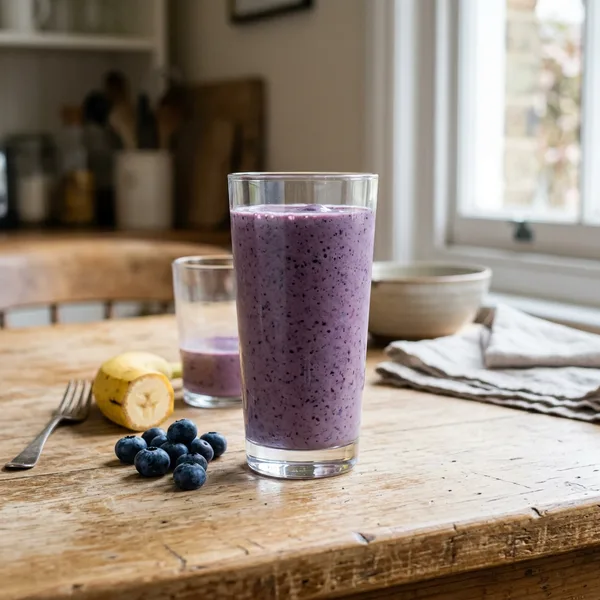
Ingredients
Instructions
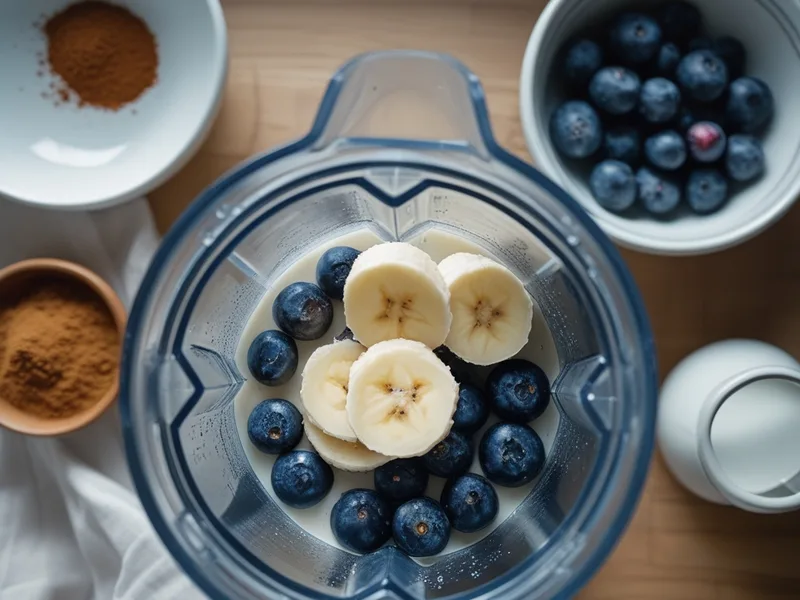
- Blend the fruit and milk. Put the banana, blueberries, almond milk, water and cinnamon in a blender and blend for 30 to 45 seconds, until smooth.
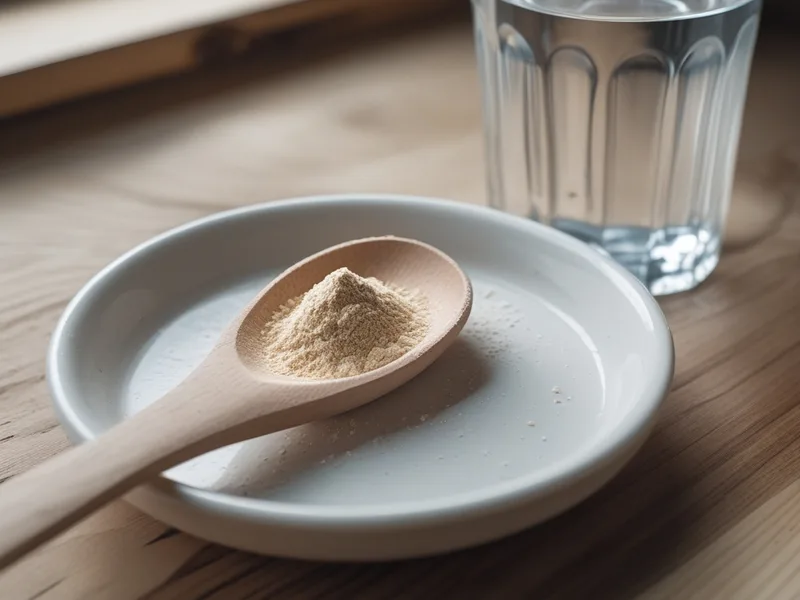
- Measure the psyllium. Measure a level teaspoon of psyllium husk and keep a full glass of water within reach. Do not breathe in the powder as you measure it, and do not let it sit in the liquid.
- Blend briefly and drink at once. Add the psyllium and the lemon juice, blend for 5 to 10 seconds only, pour into two glasses and drink right away. Psyllium thickens quickly, so do not leave the smoothie to stand. Drink a glass of water with it.
Notes
Add the psyllium last and blend only briefly. It starts to swell as soon as it meets liquid.
Drink the smoothie at once. If it sits, it turns into a thick gel that is hard to swallow.
Start with the smallest amount and increase slowly, as the package directs.
Nutrition Facts
Per serving (estimated)
- Total Fat
- 3 g
- Sodium
- 72 mg
- Total Carbohydrate
- 24 g
- Protein
- 2 g
General information, not medical or dietary advice. Nutrition values are estimates. See our full disclaimer.
Frequently asked questions
What exactly is psyllium husk?
Psyllium is a bulk-forming fiber. MedlinePlus says it absorbs liquid in the intestines, swells and forms a bulky stool that is easy to pass, and that it is used to treat constipation. It comes as a powder, granules, capsules, liquid and wafers.
Does Trader Joe's sell psyllium husk powder?
We could not check what a particular store has in stock, so we cannot say. Look for a product that lists psyllium husk as the only ingredient, and read the label for the amount per serving.
Is NOW psyllium husk gluten-free?
We do not rate or review brands, so we cannot speak for one product. Psyllium husk is a plant fiber and not a grain, but we found no official statement that every product is gluten-free. If you avoid gluten, choose a product whose label says it is gluten-free.
Is psyllium husk good for GERD?
Nothing we read tests psyllium husk for GERD, so we cannot say. If you have reflux, difficulty swallowing or a bowel condition, ask your doctor before you use it.
Comments
Tried it? Tell us how it went: your comment helps other readers.