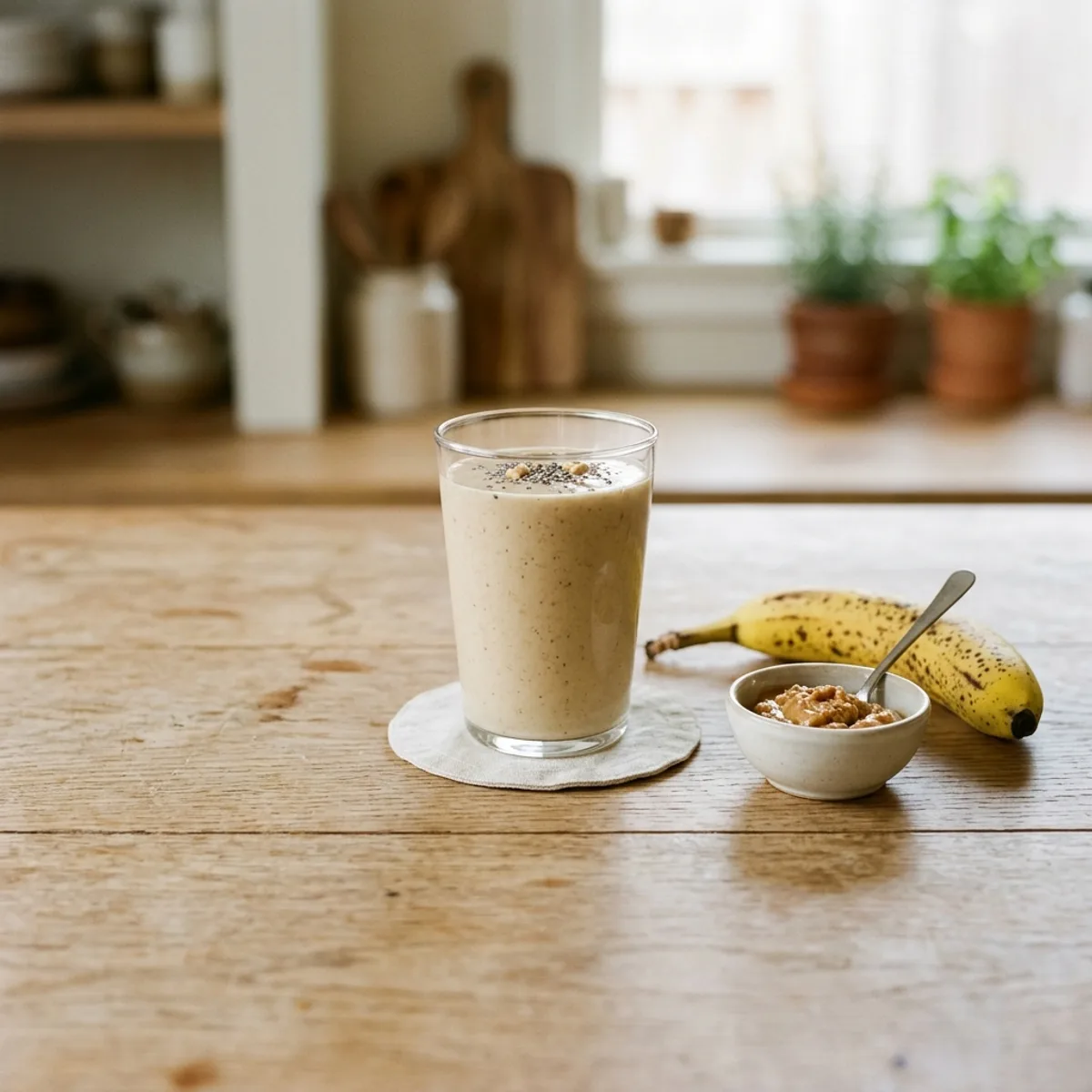
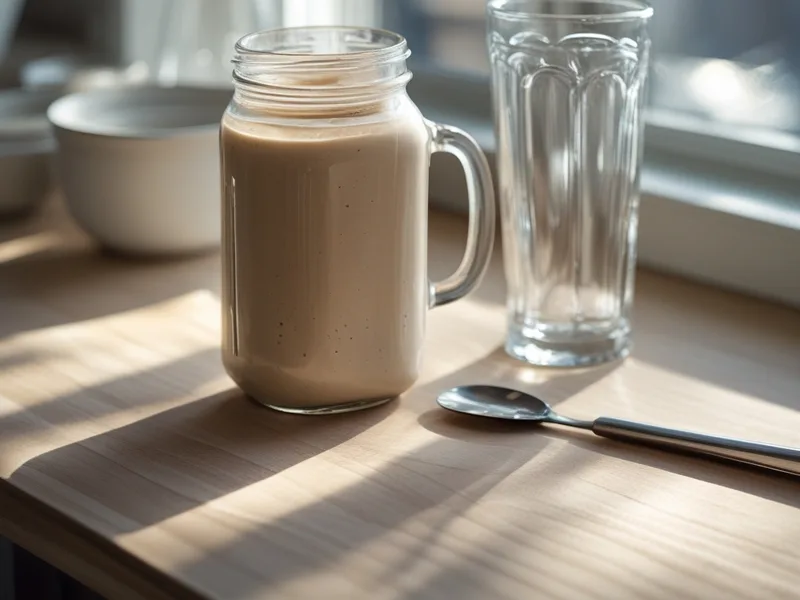
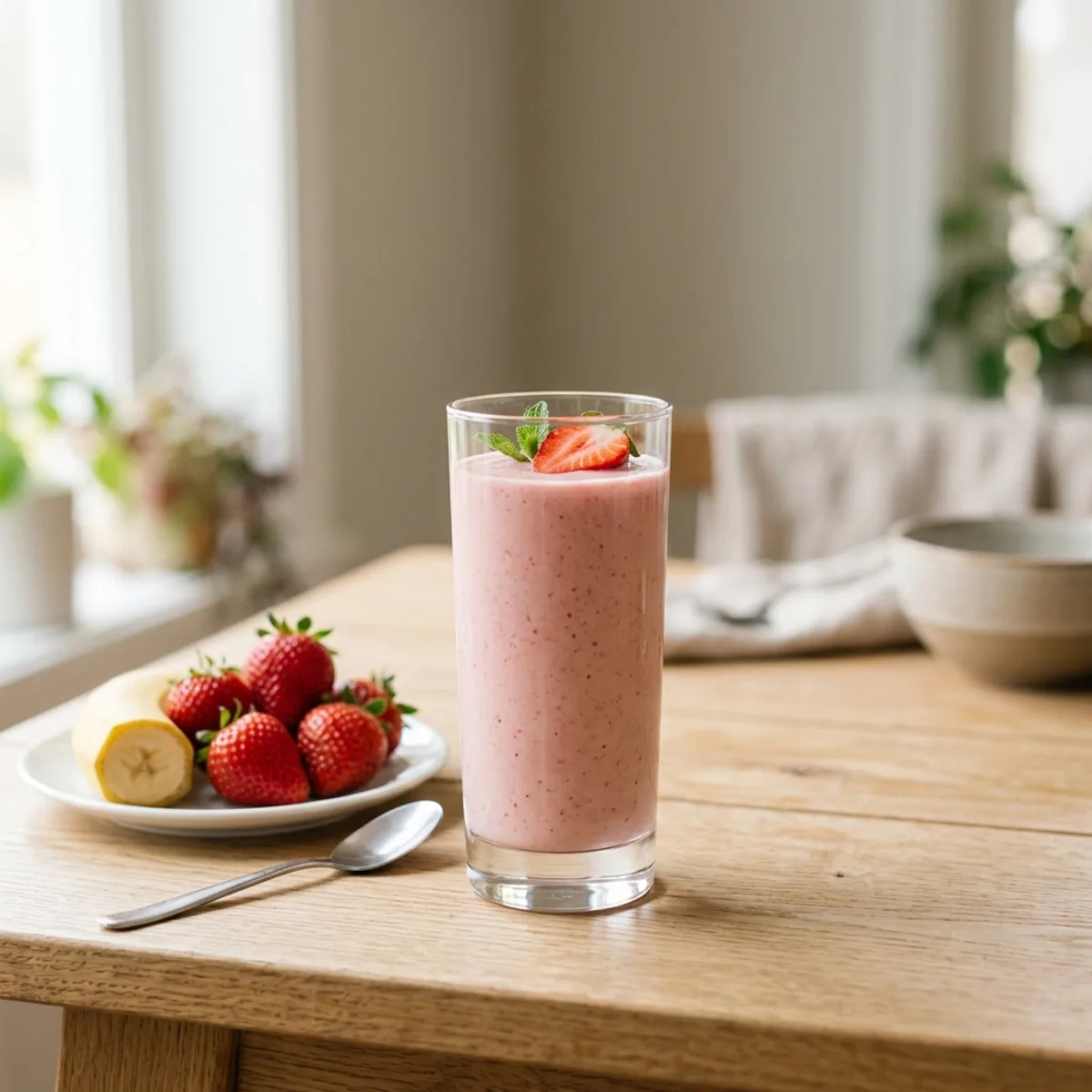
For a high-protein shake without powder, blend 3/4 cup of nonfat Greek yogurt, 1/2 cup of cottage cheese, 1 cup of milk, a banana, 1 tablespoon of peanut butter and 1 tablespoon of chia seeds for about a minute. It makes one large glass with about 583 calories and 46 g of protein (USDA estimate).
Most people who want a shake with high protein reach for a scoop of powder. This one starts in the fridge. Greek yogurt and cottage cheese do the heavy lifting, milk makes it drinkable, and the banana means you do not need any sugar. Five minutes, one blender, one glass.
Quick comparison of the shakes in this guide
| Shake | What goes in | Where to find it |
|---|---|---|
| Banana peanut butter shake (the recipe) | Greek yogurt, cottage cheese, milk, banana, peanut butter, chia | The recipe card below |
| Breakfast shake with high protein | The same shake with 1/4 cup of rolled oats | The swaps section |
| Higher-calorie shake | A second tablespoon of peanut butter, or whole milk | The swaps section |
| Lower-calorie shake | Water or unsweetened almond milk instead of milk | The swaps section |
What goes into this shake with high protein
Everything is a normal grocery item. Measure it before the blender runs.
- Nonfat Greek yogurt. Three quarters of a cup. It brings the most protein and the thick, creamy texture. Our Greek yogurt protein parfait uses the same tub.
- Cottage cheese. Half a cup of 2%. It is mild once blended and adds protein and body. If you like it on its own, try our cottage cheese breakfast bowl.
- Milk. One cup of 2% dairy milk, or unsweetened soy milk if you avoid dairy.
- Banana. One medium, ripe. Freeze the chunks the night before for a thicker, colder shake.
- Peanut butter. One tablespoon of smooth, for flavor and a little fat that keeps you full.
- Chia seeds. One tablespoon, for fiber and thickness.
Nutrition of this high-protein shake
Per large shake: about 583 calories, 46 g of protein, 60 g of carbohydrate, 20 g of fat and 608 mg of sodium. These are estimates calculated from USDA FoodData Central values for each ingredient and the weights above.
Where does the protein come from? About 19 g from the Greek yogurt, 12 g from the cottage cheese, 8 g from the milk, and the rest from the peanut butter, chia and banana.
The sodium comes mostly from the cottage cheese, so if you watch sodium, look for a lower-sodium brand or use all Greek yogurt in its place.
What the evidence says about protein, fullness and weight
Shakes are often sold on one idea: more protein keeps you full and helps with weight. Here is what the research we found does and does not say.
- A 2004 systematic review in the Journal of the American College of Nutrition (PMID 15466943) looked at randomized studies of higher-protein diets. The authors reported convincing evidence that higher protein increases thermogenesis (the energy the body uses to digest food) and fullness compared with lower-protein diets, and that high-protein meals seem to lower the energy eaten afterward. They also wrote that the evidence for extra weight and fat loss was not consistent, and that longer, rigorous studies were needed.
- A 2025 systematic review and meta-analysis in Nutrients (PMID 40871607) pooled studies of whey protein, a milk protein, combined with exercise in healthy adults. It found higher muscle protein synthesis after the whey, with the effect rising with doses from 10 to 60 g. It measured muscle biopsies after single sessions, not long-term muscle growth.
These studies leave important gaps. These studies did not test this shake, and the second one used whey supplements with exercise, not a yogurt and cottage cheese shake. Neither promises weight loss or muscle for any one person. What we can say: this shake has a good amount of protein from ordinary foods, and protein is one reason a meal can feel more filling.
Swaps: breakfast shake, best protein shake with high calories, lighter version
- Breakfast shake with high protein. Add 1/4 cup of dry rolled oats before blending. For a shake that sits overnight and you spoon in the morning, see our high-protein overnight oats.
- Higher-calorie shake. Use whole milk, or add a second tablespoon of peanut butter. USDA data lists about 94 calories in a tablespoon of smooth peanut butter.
- Lower-calorie shake. Replace the milk with water or unsweetened almond milk.
- Dairy-free shake. Use unsweetened soy milk and a plain unsweetened soy yogurt. The protein will differ, so check the labels.
- Berry shake. Swap the banana for 1 cup of frozen berries. If you want a fruit-forward drink, our antioxidant smoothie is built around blueberries and spinach, and our collagen smoothie uses strawberries.
Milk or yogurt? What to mix a protein shake with
Both, and here is why. Milk keeps the shake pourable and adds about 8 g of protein per cup. Greek yogurt is the thick, high-protein part: nonfat Greek yogurt has about 10 g of protein per 100 g, against about 3 g in milk. Cottage cheese adds more protein and a mild taste once blended. Water or unsweetened almond milk are fine if you want fewer calories, but you give up some protein and creaminess.
Tips for a thick, smooth shake
- Liquid first. It keeps the blades turning.
- Blend a full minute. It is the only way to lose the cottage cheese texture.
- Freeze the banana. It replaces ice without watering the shake down.
- Drink it fresh. Chia keeps thickening as it sits.
- Make it a meal on purpose. A shake is easy to drink fast, so sit down with it and add fruit or toast if you are hungry.
Emma called the shake delicious and made it exactly as written, with the texture Emma hoped for and almost no effort. It will be made again.
Safety: who should check first
Greek yogurt, cottage cheese and milk are dairy, and peanut butter and chia are common allergens or can be cross-contaminated, so read the labels. If you have a kidney condition, follow a special diet or take medicine, ask your doctor or a registered dietitian how much protein is right for you before making shakes a daily habit.
Shake With High Protein: A Banana Peanut Butter Recipe With 46 g and No Powder
A thick banana peanut butter shake built on Greek yogurt, cottage cheese and milk, with the USDA numbers, three easy swaps and what research says about protein, fullness and weight.
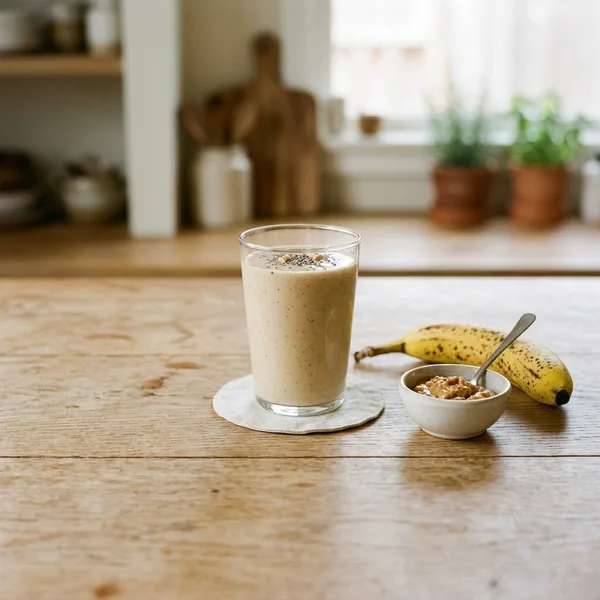
Ingredients
Instructions
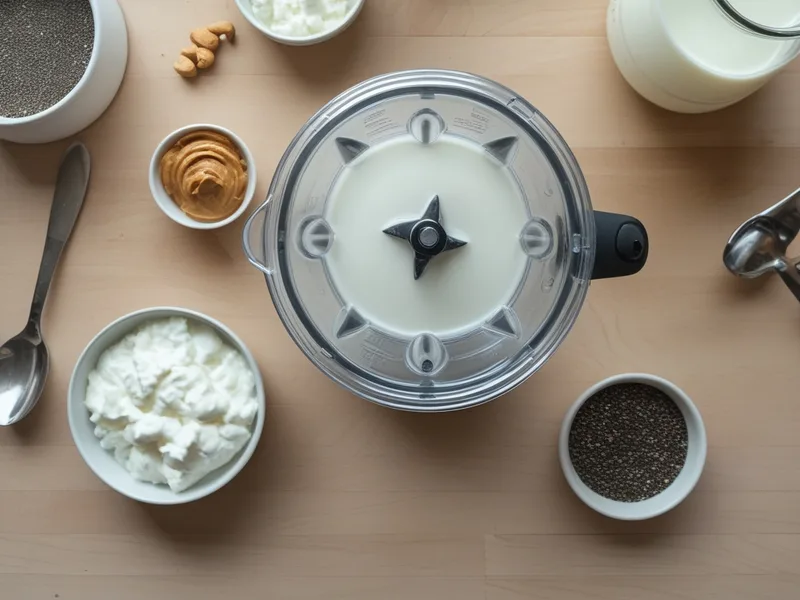
- Liquid and soft foods first. Pour the milk into the blender jar, then add the Greek yogurt, the cottage cheese and the peanut butter. Starting with the liquid helps the blades pull the thick ingredients down.
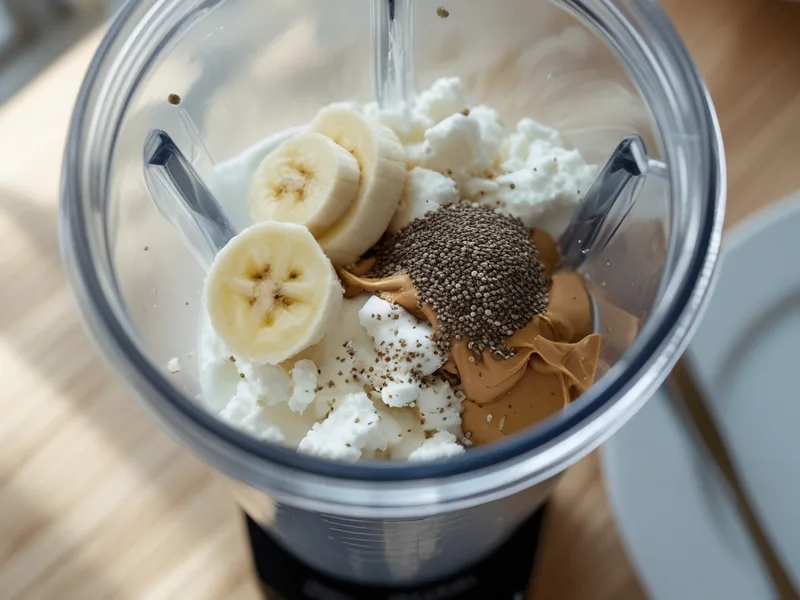
- Add the banana and chia. Add the banana in chunks and sprinkle the chia seeds on top.
- Blend until smooth. Blend on low for 10 seconds, then on high for 45 to 60 seconds, until no cottage cheese curds are left. If the shake is too thick, add milk a splash at a time. Pour into a tall glass and drink right away.
Notes
Blend longer than you think for cottage cheese: a full minute on high makes it disappear into the shake.
The chia seeds thicken the shake as it sits, so add a splash of milk if you leave it for ten minutes.
A few chopped peanuts on top are optional and add a little to the numbers.
Brands of yogurt, cottage cheese and peanut butter differ. Read your labels if you want to match the numbers closely.
Nutrition Facts
Per serving (estimated)
- Total Fat
- 20 g
- Sodium
- 608 mg
- Total Carbohydrate
- 60 g
- Protein
- 46 g
General information, not medical or dietary advice. Nutrition values are estimates. See our full disclaimer.
Frequently asked questions
What is the best thing to mix a protein shake with?
Milk is the easiest base: 1 cup of 2% milk adds about 8 g of protein by USDA data. Water keeps calories lowest, and unsweetened soy milk is a dairy-free option. Thick bases like Greek yogurt add more protein and make the shake creamier.
Should I use yogurt or milk in my smoothie?
Use both. Milk keeps the shake drinkable, and Greek yogurt adds body and much more protein: nonfat Greek yogurt has about 10 g per 100 g, against about 3 g in milk.
Is a protein shake good for daily use?
A shake made of ordinary foods like yogurt, milk and fruit can fit into a normal day. Count it as one meal or snack, not as an extra on top of everything else. If you have a kidney condition or follow a special diet, ask your doctor or dietitian how much protein suits you.
How do I make a high-calorie protein shake?
Add calories with whole foods: a second tablespoon of peanut butter (about 94 calories) or whole milk instead of 2%. Check the new total in the nutrition section.
Can I make a breakfast shake with high protein without protein powder?
Yes, this recipe does. Greek yogurt, cottage cheese and milk bring the protein, the banana brings sweetness, and the chia seeds add fiber and thickness.

I’m Emma Bloom, founder and editorial voice behind Eat & Bloom. I share approachable recipes, practical nutrition tips and simple food ideas for everyday life, and I believe eating well should not be complicated or restrictive. Eat well. Find what works for you. Bloom.
Comments
Tried it? Tell us how it went: your comment helps other readers.