
Quick answer: Baking soda is pure sodium bicarbonate and needs an acid, such as yogurt, to make bubbles. Baking powder already contains baking soda plus a dry acid, so it only needs liquid. Soda is 3 to 4 times stronger: swap 1 teaspoon of soda for 3 of powder. The whole wheat yogurt biscuits below use both.
Two white powders, one shelf, two different jobs. Let's sort out baking powder vs baking soda once and for all, then use both in a batch of fluffy whole wheat yogurt biscuits, so you see exactly what each one does.
Baking powder vs baking soda at a glance
| Baking soda | Baking powder | |
|---|---|---|
| What it is | Pure sodium bicarbonate | Baking soda plus a dry acid and a starch |
| Needs an acid in the recipe? | Yes | No, it brings its own |
| When it reacts | Right away, once wet and mixed with an acid | In stages: when wet, then again with heat (double acting) |
| Strength | About 3 to 4 times stronger | Milder |
| Typical amount | About 1/4 tsp per 1 cup of flour | About 1 tsp per 1 cup of flour |
| Sodium in 1 teaspoon | 1259 mg | 488 mg |
| Often found in | Cookies, muffins, soda bread | Cakes, pancakes, biscuits, scones |
The amounts are rules of thumb: your recipe's numbers always win. The sodium figures are USDA FoodData Central values for 1 level teaspoon (4.6 g) of each; brands of baking powder differ, so read your label.
What is the difference between baking soda and baking powder?
Both are chemical leaveners. They release carbon dioxide, and those bubbles, trapped in the batter, make baked goods rise and turn light and soft. The difference is the acid.
Baking soda is one ingredient, sodium bicarbonate, a base. It makes bubbles only when it meets moisture and an acid. Common acids are buttermilk, yogurt, sour cream, vinegar, lemon juice, honey, molasses, brown sugar and natural cocoa. The reaction starts immediately, so a batter with baking soda should go in the oven without waiting around.
Baking powder is a ready-made mix: baking soda, one or more dry acids and usually a starch such as cornstarch that keeps it dry. The acid is already inside, so it needs only liquid. Most baking powder sold today is double acting. It releases some gas when it gets wet in the bowl and more when it heats up in the oven, which extends the rise. NC State University explains that one of its acids stays quiet until the batter is both wet and hot.
When to use baking powder vs baking soda
The rule that makes it simple: look at what else is in the recipe.
- There is an acid (buttermilk, yogurt, sour cream, honey, molasses, brown sugar, applesauce, natural cocoa): baking soda has something to react with, and it also helps baked goods brown.
- There is no acid (a plain sugar cookie, scones, a vanilla cake): baking powder, because it carries its own acid.
- Cakes: many use baking powder, since the batter often has no acid. Some use both.
- Both are listed: this is normal. The soda neutralizes the acid and gives the first lift, and the powder adds more lift so the recipe does not rely on the acid alone. Using both also lets the yogurt or buttermilk keep some of its tang, instead of having all the acid neutralized.
That last case is the biscuit recipe below. The same logic runs our Greek yogurt pancakes, which also explain how to test whether your baking soda has gone bad.
Baking soda vs baking powder in cookies
Cookies are the classic place for baking soda, because many cookie doughs have brown sugar, honey or molasses, which are mildly acidic. Soda also gives a deeper golden color. Sugar cookies, which have no extra acid in the dough, are a typical case for baking powder. Whichever your recipe lists, measure it level: too much baking soda with too little acid leaves a metallic, soapy aftertaste.
Can you substitute baking powder for baking soda, or the reverse?
You can swap them, but never one for one. Baking soda is much more powerful than baking powder.
| If the recipe calls for | Use instead | Notes |
|---|---|---|
| 1 tsp baking soda | 3 tsp baking powder | No extra acid needed. Expect a milder, slightly different result |
| 1 tsp baking powder | 1/4 tsp baking soda + 1/2 tsp cream of tartar | The most direct substitute |
| 1 tsp baking powder | 1/4 tsp baking soda + 1 tsp lemon juice or vinegar | May slightly change the taste |
Swapping powder in for soda is the easier direction. Swapping soda in for powder only works if you add an acid: with no acid, soda leaves the bake flat and bitter. Both substitutions are approximate, so expect a small change in rise and flavor.
In the biscuits below, if you have no baking soda, leave it out and use 2 3/4 teaspoons of baking powder in total. The yogurt then stays tangier and the biscuits brown a little less.
What happens if you use the wrong one?
- Baking soda instead of baking powder, without an acid: the bake may not rise properly and can taste bitter or soapy.
- Too much baking soda for the acid: the same metallic, soapy taste, and sometimes too much browning.
- Baking powder instead of baking soda: it usually still rises, but less, with a denser crumb and sometimes a slightly metallic taste.
- Old leavener: a flat, dense bake, even with the right ingredient.
How to check that yours still works
Both lose power over time, and some bakers replace them about 3 months after opening. A quick check takes a minute:
- Baking powder: stir 1/2 teaspoon into 3 tablespoons of warm water. It should fizz moderately.
- Baking soda: stir 1/2 teaspoon into 3 tablespoons of white vinegar. It should bubble quickly.
If nothing happens, replace it. Keep both in a cool, dry place with the lid closed.
Whole wheat yogurt biscuits: both leaveners at work
A biscuit is a good place to see the difference, because the dough has few ingredients and the rise is the whole point. This recipe uses 2 teaspoons of baking powder and a small 1/4 teaspoon of baking soda for 2 cups of flour.
- The baking powder does the main lifting. It works with liquid alone and keeps releasing gas in the oven heat, so the biscuits keep rising as they bake.
- The baking soda has a job of its own: the Greek yogurt. Yogurt is an acid, so the soda neutralizes part of it, adds a first burst of lift and helps the tops turn golden.
- Why a small amount of soda: more than the yogurt can neutralize would leave a bitter, soapy taste. A quarter teaspoon is enough for this much acid.
It is also the healthy angle of the recipe: half whole wheat flour for fiber, Greek yogurt and milk in place of a lot of butter, and just 4 tablespoons of butter for 8 biscuits.
Per biscuit: calories, protein and sodium
USDA FoodData Central values give the numbers below. One biscuit has about 177 calories, 6 g of protein, 24 g of carbohydrate and 7 g of fat, with about 320 mg of sodium. Of that sodium, the baking powder and baking soda together bring about 161 mg; the salt and the other ingredients bring the rest. The values are estimates: the cup weights are documented assumptions, and your brand of yogurt and baking powder will move the numbers a little. This is not a promise of any health effect.
What the evidence says
Nothing in the research compares baking powder and baking soda as leaveners: that is kitchen chemistry, and we found no trial on it. What medicine has studied is sodium, which both powders contain, so here is what PubMed holds on total dietary sodium.
- A 2021 dose-response meta-analysis in Circulation (PMID 33586450) pooled clinical trials of sodium reduction. The authors found an approximately linear relationship between sodium intake and blood pressure, across the whole range of intakes, and a larger effect in people who started with higher blood pressure.
- The DASH-Sodium trial in the New England Journal of Medicine (PMID 11136953, 2001) reported that cutting sodium below the recommendation of that time, and the DASH eating pattern, each lowered blood pressure substantially, with a greater effect when combined.
These studies are about the sodium of a whole diet, not about leaveners, and a result in a group is not a result for you. We make no promise about blood pressure. What we can do is give you the numbers: a teaspoon of baking soda has more than twice the sodium of a teaspoon of baking powder by USDA data, and a recipe uses less of the first. If you follow a low-sodium plan, ask your doctor or a registered dietitian how baked goods fit into it.
Tips and common mistakes
- Measure level. A heaping spoon is much more than you think, especially with baking soda.
- Do not guess by color. Both are white powders: label the jars.
- Mix the dry ingredients first so the leavener is spread evenly, then add the wet.
- Bake quickly after mixing when the recipe uses baking soda and an acid.
- Weigh it if you scale up. One level teaspoon of either is about 4.6 g by USDA data.
- Keep the butter cold in the biscuits: small pieces melt in the oven and leave little pockets that help the rise.
- Read the label if you avoid aluminum. Some baking powders contain an aluminum-based acid and some do not; the ingredients list tells you.
If you came here from the viral drink, that is a different question: our guide on whether you can drink baking soda gives the safe limits, and our article on the baking soda recipe for weight loss covers what it does and who should skip it. For another loaf that uses both powders, try our pumpkin bread recipe.
Variations and substitutions
- Flour: use all all-purpose flour for a paler, softer biscuit, or all whole wheat for a denser, nuttier one (add a tablespoon of milk if the dough is dry).
- Dairy: buttermilk is a classic acid for biscuits. If you use 1 cup of it in place of the yogurt and milk, the baking soda still has an acid to react with.
- Savory: fold in a handful of chopped chives or a spoonful of grated hard cheese before adding the liquid.
- Gluten-free: a 1 to 1 gluten-free baking flour is the usual swap. Check the label.
- Wrong leavener on hand: see the substitution table above.
These biscuits asked for a bit more work than a quick bake, Emma says, but stayed manageable. Made exactly as written, they were delicious with a great texture, and Emma would make them again.
Serving suggestions
Split them warm with a thin spread of butter or a spoonful of jam, or serve them next to scrambled eggs. They also make a small, sturdy base for a savory breakfast sandwich. With the rest of the tub of yogurt, a Greek yogurt parfait is an easy next breakfast.
Storage and freezing
Cool the biscuits completely and keep them in a covered container at room temperature for a day, or in the refrigerator for a few days. To freeze, lay them on a baking sheet until hard, then move them to an airtight bag. We found no official shelf life for homemade biscuits, so use your judgment. Reheat in a 350°F (175°C) oven for about 8 minutes, until warm.
Safety first: allergies and baking soda
This recipe contains wheat (gluten), dairy (butter, milk and yogurt). Check the labels if you or your family have an allergy or an intolerance. Watching your blood pressure? This recipe is not dietary advice, so ask your doctor or a registered dietitian first. Baking soda and baking powder are used here in small amounts for baking only.
If you have a health condition or take medication, check with your healthcare professional before using baking soda for anything other than baking.
Nutrition values are estimates.
Sources and numbers
- Baking powder, baking soda and freshness: ratios, substitutions and freshness tests are rules of thumb from manufacturer and university sources (Arm & Hammer, Bob's Red Mill and NC State University News). They are rules of thumb: your recipe's measurements come first.
- Studies: the two sodium studies above were found on PubMed.
- Nutrition and sodium: values come from USDA FoodData Central for each ingredient; the cup weights are documented assumptions, so the totals stay estimates.
Baking Powder vs Baking Soda: Which to Use, With a Fluffy Whole Wheat Yogurt Biscuit Recipe
Baking soda needs an acid to work. Baking powder brings its own. See when to use each, how to swap them, then put both to work in a fluffy whole wheat yogurt biscuit with USDA numbers per biscuit.

Ingredients
Instructions
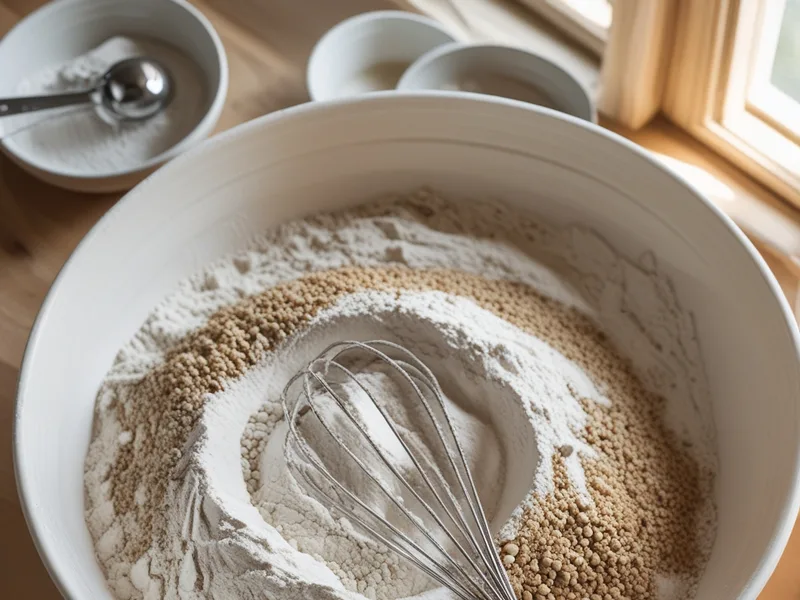
- Whisk the leaveners into the flour. Heat the oven to 425°F (220°C) and line a baking sheet with parchment. In a large bowl, whisk both flours, the baking powder, the baking soda and the salt for a full 30 seconds. This spreads the two leaveners evenly, so no biscuit gets a bitter pocket of baking soda.
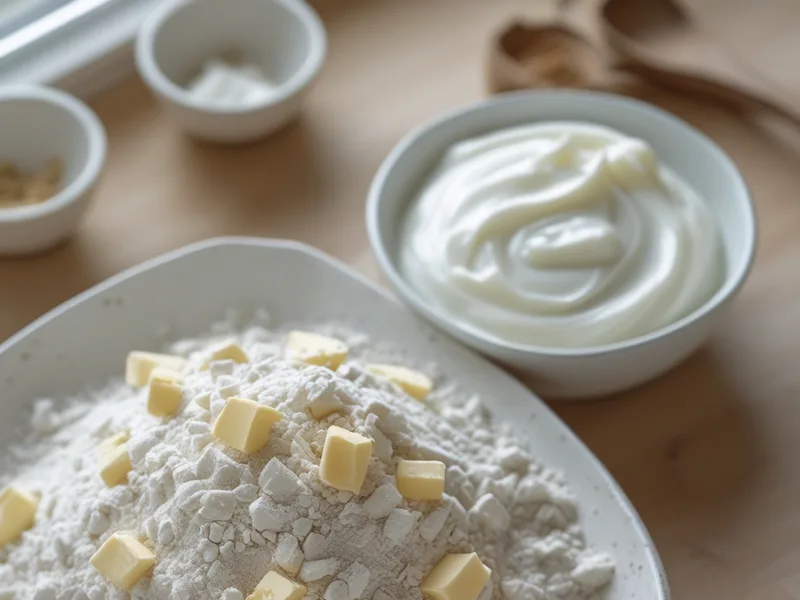
- Rub in the butter and add the yogurt. Add the cold butter cubes and rub them into the flour with your fingertips, pressing and crumbling, until the mixture looks like coarse crumbs with a few pea-sized pieces left. Work fast so the butter stays cold. Stir the Greek yogurt and milk together, pour them over the crumbs and fold with a spatula just until a shaggy dough forms. The yogurt is the acid that wakes up the baking soda, so go straight to the next step; do not let the dough sit.
- Fold, cut and bake. Turn the dough onto a floured surface and pat it into a rectangle about 3/4 inch (2 cm) thick. Fold it in thirds like a letter, turn it and pat it out once more. Cut 8 rounds with a floured 2 1/2 inch (6 cm) cutter, pressing straight down without twisting, and place them just touching on the tray. Bake 12 to 15 minutes, until risen and golden on top and bottom.

Notes
Baking times are a range: ovens differ, so judge by the golden color and a risen, set center.
Pressing the cutter straight down, without twisting, keeps the edges open so the biscuits rise higher.
Biscuit dough is lumpy and a little sticky. Resist adding more flour: a wetter dough makes a softer biscuit.
Nutrition Facts
Per serving (estimated)
- Total Fat
- 7 g
- Sodium
- 320 mg
- Total Carbohydrate
- 24 g
- Protein
- 6 g
General information, not medical or dietary advice. Nutrition values are estimates. See our full disclaimer.
Frequently asked questions
Can I substitute baking powder for baking soda?
Yes, but use more of it. Baking soda is about 3 to 4 times stronger than baking powder, so replace 1 teaspoon of baking soda with about 3 teaspoons of baking powder. No extra acid is needed. The batter may taste a little different, so follow the recipe when you can.
Do cakes use baking soda or baking powder?
Many cakes use baking powder, because it works without an acid in the batter. Some cakes use both, for example when the batter contains buttermilk or sour cream. The recipe tells you which one balances its ingredients, so use what it lists.
Does it matter if I use baking soda or powder?
Yes. With baking soda and no acid in the recipe, the bake may not rise properly and can taste bitter or soapy. With baking powder in place of soda, it usually still rises, but less, with a denser texture and sometimes a slightly metallic taste.
Does baking powder or baking soda make it fluffy?
Both create the gas that makes baked goods light. Baking powder is double acting, so it releases gas in two stages, when it gets wet and again in the oven heat, which gives a longer rise. Baking soda reacts at once, so the batter should go into the oven quickly.
What's the shelf life of baking powder?
It loses strength over time, and some bakers replace both baking powder and baking soda about 3 months after opening. Check the date on the container, then run the quick fizz test in this article if you are unsure.
How do you use bicarbonate of soda?
Bicarbonate of soda is the name many countries use for baking soda. Use it the same way: whisk it into the dry ingredients, pair it with an acid such as yogurt, buttermilk, honey or brown sugar, and measure it level.
What is the French equivalent of baking powder?
Baking powder is called levure chimique in French, and baking soda is bicarbonate de soude. The names are not interchangeable: levure chimique is the ready-made mix with its own acid, bicarbonate de soude is the pure base.
Are meetha soda and baking powder the same?
No. Meetha soda is the common name in India for baking soda, so it is pure sodium bicarbonate and needs an acid. Baking powder is the mix that already contains one.

I’m Emma Bloom, founder and editorial voice behind Eat & Bloom. I share approachable recipes, practical nutrition tips and simple food ideas for everyday life, and I believe eating well should not be complicated or restrictive. Eat well. Find what works for you. Bloom.
Comments
Tried it? Tell us how it went: your comment helps other readers.