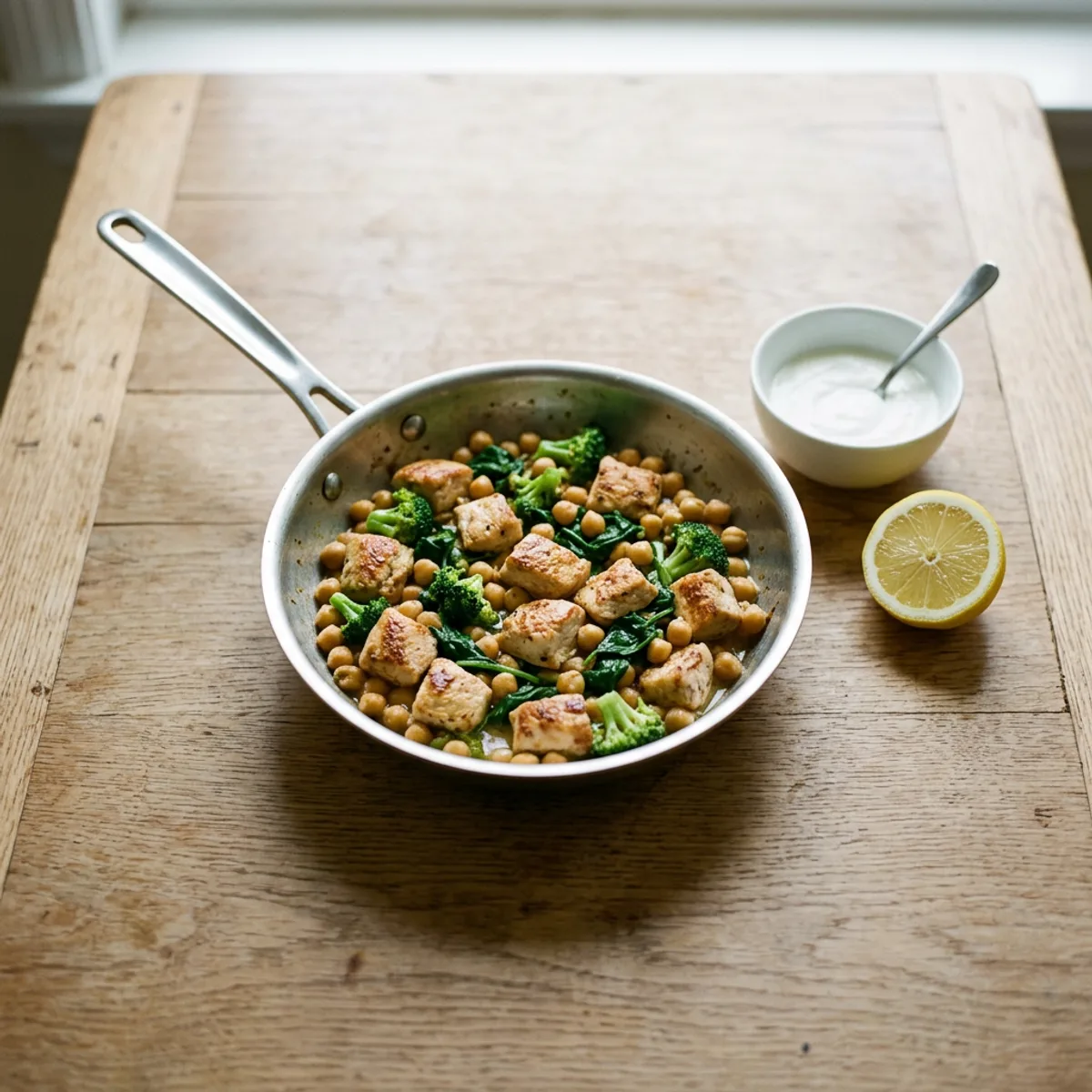
If a dinner is going to keep you full, it needs to taste like something you want to eat again. This skillet does it with a few good basics: chicken breast browned properly, chickpeas that soak up the paprika and cumin, broccoli that stays bright, and a lemon-yogurt sauce that makes the whole pan taste fresh. It takes about 30 minutes in one pan and feeds four, so it is an easy high protein weight loss dinner to repeat during the week.
Sear 1 1/2 lb of chicken breast, then cook it in one pan with chickpeas, broccoli and spinach and finish with lemon juice and a Greek yogurt sauce. A serving has about 395 calories, 50 g of protein and 7 g of fiber, which makes it a filling high protein weight loss dinner.
High protein weight loss dinner at a glance
| Choice | What it brings | Where to find it |
|---|---|---|
| Chicken breast | Most of the protein, little fat | The recipe card below |
| Chickpeas | Protein and fiber from a pantry can | What goes in the pan |
| Broccoli and spinach | Fiber, volume and color for few calories | What goes in the pan |
| Greek yogurt and lemon | A creamy, tangy sauce without cream | Step 4 |
What the evidence says
Here is what research says about protein and fiber on a plate like this, in plain words.
- Protein while losing weight. A 2024 systematic review and meta-analysis (PMID 39002131) concluded that adults with overweight or obesity who are trying to lose weight can keep more muscle mass with a higher protein intake than with no increase in protein. It looked at muscle, not at how much weight people lost, and it did not study this dish.
- Protein is not a guarantee. A 2017 randomized trial in older adults with overweight or obesity (PMID 28166780) found that a high protein diet alone did not significantly change fat-free mass during modest weight loss. Only the group that combined a high protein diet with resistance exercise gained fat-free mass. The protein intake reached was lower than planned, and the trial was in older adults.
- Chickpeas and fullness. A 2009 trial in young men (PMID 20439550) compared servings of pulses and found that their short-term effect on appetite and on what the men ate later was determined mainly by their energy content, and little by the type, processing or recipe. Pulses are not a special fullness trick; they are a good source of protein and fiber at a reasonable number of calories.
None of this proves that this dinner will change your weight. It is a reason the ingredients are a sensible choice: a lean protein and a bean, with vegetables to fill the plate.
What goes in the pan
If I could only tell you one thing about this recipe, it would be to buy the best chicken you can and not to crowd the pan. The rest is simple.
- Chicken breast, 1 1/2 lb (about 680 g). Lean and mild. Cut into 1-inch pieces it browns fast and stays juicy if you do not overcook it. Look for pieces that are pink and firm, not wet.
- Canned chickpeas, 1 1/2 cups. Drained and rinsed. They bring protein and fiber and take on the spices. Choose cans with no added sugar and, if you can, no added salt.
- Broccoli, 300 g. Cut into small florets so it cooks in the same 5 minutes as everything else.
- Baby spinach, 4 cups. It wilts down to almost nothing and adds fiber and a fresh green flavor.
- Paprika and cumin. Two teaspoons of paprika and one of cumin give warmth and a little smokiness without heat.
- Lemon and Greek yogurt. The juice goes in off the heat so it stays bright, and the zest goes into a yogurt sauce for the top.
High-protein meal recipes for weight loss: how to build the plate
A plate that works for weight loss is not about one magic ingredient. It is about a few habits you can repeat, and this skillet is a template for them:
- A lean protein as the center. Chicken breast here, but the same method works with turkey breast or firm fish.
- A bean for protein and fiber. Chickpeas here, or white beans, black beans or lentils.
- Vegetables that fill the pan. Broccoli and spinach add volume and fiber for few calories.
- A sauce with flavor, not heavy cream. Lemon and Greek yogurt do the work.
MedlinePlus says that one ounce (30 g) of most protein-rich foods has about 7 g of protein, and that a half cup of cooked beans or lentils counts as one of those portions (MedlinePlus on protein in the diet). That is a useful rule of thumb when you build your own version.
How to make this high protein weight loss dinner: the four steps
Brown the chicken, soften the onion, finish everything together and add the sauce. The detail that matters most is the first: dry the chicken well and give it room, so it browns instead of steaming.
For the chicken, go by temperature. The USDA safe temperature chart lists 165°F (73.9°C) for poultry breasts (USDA FSIS safe temperature chart). A thermometer in the thickest piece tells you when it is done.
How many calories, protein and fiber?
Calories and nutrients are calculated from the USDA FoodData Central entry for each ingredient. One serving, a quarter of the pan, has about 395 calories, 50 g of protein, 26 g of carbohydrate and 11 g of fat, with about 7 g of fiber and about 587 mg of sodium. It is an estimate: the fiber is the sum of the USDA values for the chickpeas, broccoli, spinach, onion and garlic, and the real numbers move with the size of your chicken pieces, your canned chickpeas and your broth.
Most of the protein comes from the chicken, and the chickpeas add protein and most of the fiber. If you want other ways to get fiber onto the plate, our list of high fiber foods has USDA numbers for each. Sodium is the number to watch: rinsing the chickpeas, using low-sodium broth and salting at the end all help.
High protein diet foods for weight loss: what else works at dinner
This skillet is one dinner. If you like to rotate, the same logic applies to other foods that bring protein with few extras: skinless chicken or turkey, eggs, plain Greek yogurt, cottage cheese, beans and lentils, and firm tofu. MedlinePlus lists skinless turkey or chicken, fish, eggs, beans and lentils, among other healthy sources (MedlinePlus on protein in the diet). For a bowl built on the same ideas, see our white chicken chili, and for a soup version with ground turkey, our lasagna soup. For breakfast, see high protein breakfast without eggs. To plan the whole week around dinners like this, our meal prep ideas for weight loss show how to batch them.
Little effort and a great texture, Bogdan reports of the skillet: delicious, made exactly as written, and likely to come back.
Serving ideas
Serve the skillet straight from the pan with the sauce on top and an extra squeeze of lemon. A spoonful of cooked brown rice or quinoa, or a warm whole wheat pita, turns it into a bigger meal; the numbers above are for the skillet on its own. A few sliced cucumbers or tomatoes on the side add freshness.
Tips and common mistakes
- Dry the chicken. Wet chicken steams and turns grey. Pat it dry before it goes in.
- Do not crowd the pan. If your skillet is small, brown the chicken in two batches.
- Cut evenly. Pieces of the same size finish at the same time.
- Add the lemon at the end. Heat dulls its flavor; it tastes like it should when it is still sharp.
- Go by the thermometer. 165°F (73.9°C) in the thickest piece, then stop.
- Salt last. Chickpeas and broth both carry salt, so taste before you add more.
Variations and substitutions
- Turkey breast: cut it the same way and cook it to 165°F (73.9°C). The numbers above are for chicken.
- Other beans: white beans or black beans work in place of chickpeas.
- More heat: add a pinch of cayenne with the paprika, or serve with hot sauce.
- Dairy-free: leave out the yogurt sauce and add extra lemon and a drizzle of olive oil.
- Different greens: kale needs a few more minutes in the pan than spinach.
Storage and reheating
Let the skillet cool, then refrigerate it in shallow containers soon after cooking. The USDA lists 165°F (73.9°C) for leftovers, so reheat it until it is steaming hot (USDA FSIS safe temperature chart). We found no official shelf life for this exact dish. Keep the yogurt sauce separate and add it after reheating.
Safety: allergens and cooking the chicken
This recipe contains chicken and dairy (yogurt). Check labels if you or your family have an allergy or intolerance, and cook the chicken until it reaches 165°F (73.9°C). If you have chronic kidney disease, the NIDDK says some people need to eat moderate amounts of protein so waste does not build up in the blood, and advises working with a dietitian or health care professional to find the right balance of protein (NIDDK on eating and nutrition for chronic kidney disease). If you take medication, are pregnant, or have another health condition, check with your doctor or a registered dietitian before changing how much protein you eat.
What we read
- Studies: the three studies above come from PubMed, and we read their titles and the authors' conclusions.
- Nutrition: values come from USDA FoodData Central for each ingredient; the weights of some spices and the yogurt use documented assumptions, so the total stays an estimate.
- Food safety and protein guidance: we read the USDA FSIS safe temperature chart, the MedlinePlus protein page and the NIDDK kidney nutrition page linked above on October 21, 2026.
High Protein Weight Loss Dinner With Lemon Chicken and Chickpea Skillet
A one-pan dinner of chicken breast, chickpeas, broccoli and spinach with a lemon-yogurt sauce: high in protein, high in fiber and ready in about 30 minutes, with USDA numbers per serving.
Ingredients
Instructions
- Sear the chicken. Pat the chicken dry and season it with the salt, pepper, paprika and cumin. Heat the olive oil in a large deep skillet over medium-high heat and cook the chicken for 5 to 6 minutes, turning once or twice, until golden on the outside. Lift it onto a plate. It does not need to be cooked through yet.
- Soften the onion and cook the vegetables. Turn the heat to medium. Add the onion to the same pan and cook for 3 to 4 minutes, scraping up the browned bits, then add the garlic for 30 seconds. Stir in the chickpeas, broccoli and broth, cover and cook for 5 minutes, until the broccoli is bright green and just tender.
- Finish the chicken and wilt the spinach. Return the chicken and its juices to the pan, stir in the spinach and cook for 3 to 4 minutes, until the spinach wilts and the thickest piece of chicken reaches 165°F (73.9°C) on a thermometer. Take the pan off the heat and stir in the lemon juice.
- Make the lemon-yogurt sauce and serve. Stir the lemon zest into the Greek yogurt with a spoonful of the hot pan juices to loosen it. Divide the skillet between four plates and spoon the sauce over the top.
Notes
Cut the chicken into pieces of the same size so they finish together, and trust the thermometer rather than the clock.
Rinse the canned chickpeas well and use low-sodium broth to keep the salt in check; add more salt at the end only if you need it.
Nutrition Facts
Per serving (estimated)
- Total Fat
- 11 g
- Sodium
- 587 mg
- Total Carbohydrate
- 26 g
- Protein
- 50 g
General information, not medical or dietary advice. Nutrition values are estimates. See our full disclaimer.
Frequently asked questions
Can you lose weight from eating high-protein?
Protein can help you feel full and helps you keep muscle while you eat less, but no single food or macro makes you lose weight on its own. Weight change still depends on your overall calories, your habits and your health. A high-protein dinner like this one is one practical part of an eating pattern, not a shortcut.
Can you give me some examples of high-protein recipes?
This skillet has about 50 g of protein a serving. For other ideas on this site, try the [white chicken chili](/white-chicken-chili-recipe) or the [lasagna soup](/lasagna-soup-recipe), both built on lean protein.
How much protein should a weight loss dinner have?
There is no official number for one meal. MedlinePlus gives the recommended protein intake for healthy adults as 10% to 35% of total calories, so a dinner with about 50 g of protein fits comfortably in a day. Your own need depends on your age, size and health, so ask your doctor or dietitian if you are unsure.
What makes a dinner both high in protein and high in fiber?
A lean protein, such as chicken breast, paired with a food that brings both protein and fiber, such as chickpeas, plus vegetables. Here the chicken supplies most of the protein, and the chickpeas, broccoli and spinach supply most of the fiber.
How do I store and reheat the leftovers?
The USDA lists 165°F (73.9°C) for reheating leftovers. Cool the skillet quickly in shallow containers, refrigerate it, and reheat it until steaming hot. We found no official shelf life for this exact dish, so check the USDA guidance on leftovers before keeping it more than a few days.
Comments
Tried it? Tell us how it went: your comment helps other readers.