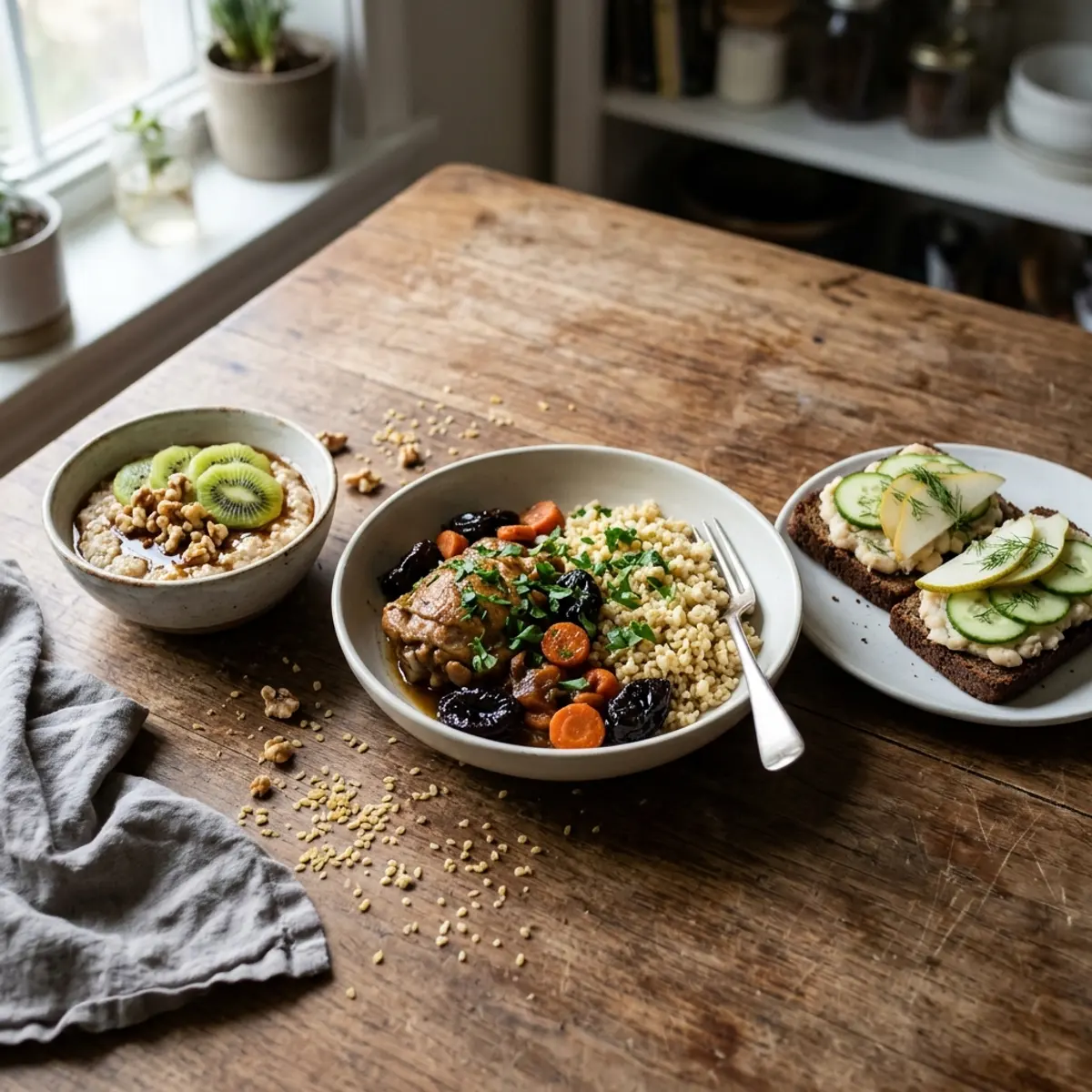
High fiber recipes for constipation work best when they are built on the foods trials have tested: green kiwifruit, prunes and rye bread. Here are three, each written in full, with 8 to 13 g of fiber a serving. Eat them with plenty of water, raise your fiber gradually and give it a few weeks:
| Recipe | Built on | Fiber per serving | Per serving |
|---|---|---|---|
| Kiwi oatmeal with flaxseed and walnuts | 2 green kiwis, rolled oats | About 11 g | 363 calories, 33 mg sodium |
| Chicken with prunes and carrots over bulgur | Prunes, bulgur, carrots | About 8 g | 450 calories, 37 g protein, 500 mg sodium |
| Rye toast with white beans, cucumber and pear | Rye bread, white beans, pear | About 13 g | 430 calories, 813 mg sodium |
Why weeks? Because the two kiwi and prune trials below lasted four of them, at a fixed amount each day; nothing here is a one-meal fix. Good food also cannot reach every cause of constipation, and the safety section at the end says when to stop cooking and call a doctor.
High fiber recipes for constipation: what the kiwi, prune and rye trials measured
Most fiber advice is general. These three foods are different: each has been compared, in people with constipation, against psyllium, the standard fiber supplement, or against white bread. We read the abstract of each study below on PubMed.
- Two green kiwis a day. In an international randomized trial of 184 people, 63 of them without constipation, participants ate 2 green kiwifruits a day or took 7.5 g of psyllium for 4 weeks, then switched (PMID 36537785). With kiwi, people with functional constipation had about 1.5 more complete bowel movements a week, and those with constipation-type irritable bowel syndrome about 1.7 more; abdominal comfort improved too. Two of the authors work for Zespri, a kiwifruit company, so read it with that in mind.
- Kiwi, prunes and psyllium side by side. A smaller US trial gave 79 adults with chronic constipation 2 green kiwis a day, 100 g of prunes a day or 12 g of psyllium a day, for 4 weeks (PMID 34074830). All three increased complete bowel movements. Kiwi caused the fewest side effects and the fewest dissatisfied patients. The randomization was only partial, which weakens the comparison.
- The pooled picture. A 2022 meta-analysis of 7 randomized trials and 399 people (PMID 36247043) rated the overall certainty that kiwifruit helps as low. Against psyllium, kiwi may add about one bowel movement a week, with moderate certainty, and it reduced abdominal pain compared with placebo. The authors ask for larger, more rigorous trials.
- Foods, drinks and whole diets. A 2024 meta-analysis gathered 23 studies with 1,714 adults (PMID 37905980). Fruit, kiwi in particular, gave slightly more bowel movements than psyllium; prunes did as well as psyllium. Rye bread gave about 0.4 more bowel movements a week than white bread, but in only 48 people. The authors' own conclusion is careful: fruits and rye bread may improve some outcomes, and the evidence is scarce.
Two limits matter in the kitchen. The trials used fixed daily amounts for four weeks, not one meal. And our prune dish holds 3 prunes a serving, well under the 100 g a day of that trial. Treat these recipes as a way to put the studied foods on the table regularly, not as a dose.
How much fiber you need, and why water comes with it
NIDDK, part of the National Institutes of Health, says adults need 22 to 34 g of fiber a day, depending on age and sex (Eating, Diet, & Nutrition for Constipation). One serving of these recipes covers between about a third and a little over half of the low end of that range.
Its list of good sources reads like a shopping list for this page: whole grains such as oatmeal, legumes such as beans and chickpeas, fruits such as pears and apples with the skin on, vegetables such as carrots and broccoli, and nuts. Two instructions come with it:
- Add fiber a little at a time, so your body gets used to the change. If you eat little fiber today, start with one of these recipes a day, not all three.
- Drink water and other liquids, clear soups included, to help the fiber work. NIDDK says this should make stools softer and easier to pass. How much to drink depends on your size, health, activity and climate, so ask a health care professional for your own number.
If you want the wider list of fiber foods with their numbers, our guide to high fiber foods has a USDA table and three more recipes.
Breakfast: kiwi oatmeal with ground flaxseed and walnuts
The difference is in one detail: the kiwi goes on cold, after the oats are cooked. Heat dulls its color and turns its acidity flat. On top of hot oatmeal, raw kiwi stays bright and sharp, and that contrast is the whole dish.
Serves 2. Prep 5 minutes. Cook 8 to 10 minutes.
Ingredients
- 1 cup (81 g) rolled oats
- 1 1/2 cups (360 ml) water
- 1/2 cup (120 ml) unsweetened soy milk
- 2 tablespoons (14 g) ground flaxseed
- 1/2 teaspoon ground cinnamon
- 4 green kiwifruits (about 276 g peeled), 2 per bowl
- 2 tablespoons (15 g) chopped walnuts
- 2 teaspoons maple syrup
Steps
- Toast lightly. Warm the oats in a dry saucepan over medium heat for 2 minutes, stirring, until they smell nutty. It gives plain oats more depth.
- Simmer. Pour in the water and soy milk, add the cinnamon and bring to a gentle boil. Lower the heat and cook for 5 to 6 minutes, stirring now and then, until creamy.
- Flax at the end. Take the pan off the heat and stir in the ground flaxseed. It thickens the oatmeal in a minute; add a splash of water if it gets too stiff.
- Cut the kiwi. Peel the kiwis with a small knife or a spoon and cut them in half-moons about 1/4 inch (6 mm) thick. Thin slices sit flat; thick ones roll off.
- Serve. Spoon the oatmeal into two bowls, fan 2 sliced kiwis over each, scatter the walnuts and finish with a teaspoon of maple syrup per bowl.
Per bowl: about 363 calories, 11 g fiber, 11 g protein, 57 g carbohydrate, 12 g fat and 33 mg sodium.
Mise en place for busy mornings: grind flaxseed in small batches and keep it in a closed jar in the refrigerator. Kiwis that are still hard will ripen on the counter in a few days.
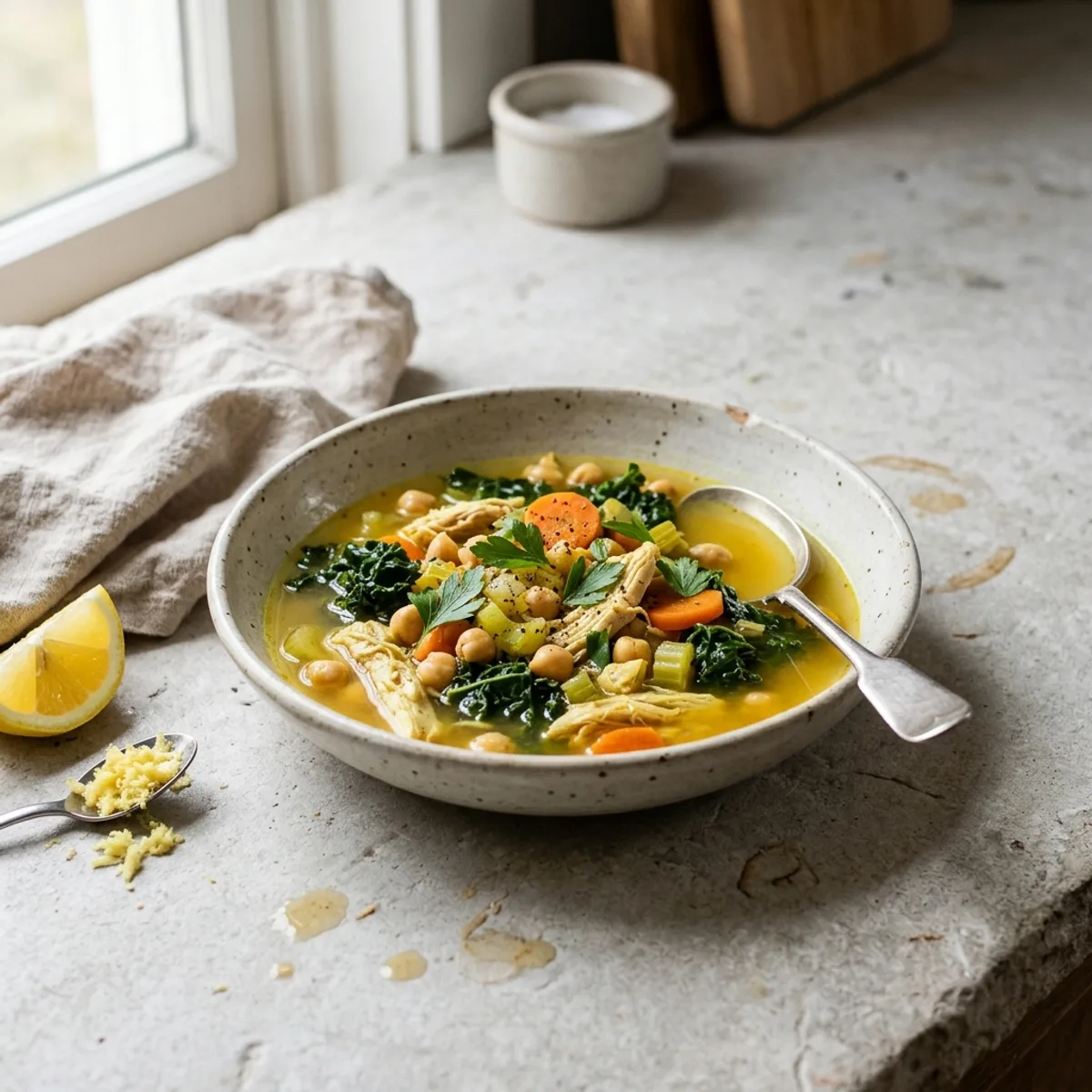
Dinner: chicken thighs braised with prunes and carrots, over bulgur
Prunes and chicken is an old pairing for a reason. As the prunes braise they soften into the sauce and bring a deep, almost savory sweetness, so the dish needs only half a teaspoon of salt for four plates. Thighs stay juicy through a braise where breast would dry out. Bulgur, a cracked whole wheat, cooks in the time the chicken takes and brings most of the fiber.
Serves 4. Prep 15 minutes. Cook about 35 minutes.
Ingredients
- 1 tablespoon olive oil
- 600 g (1 1/3 lb) boneless skinless chicken thighs
- 1 medium onion (110 g), sliced
- 2 garlic cloves (6 g), minced
- 1 tablespoon (6 g) grated fresh ginger
- 1 teaspoon ground cumin
- 1/2 teaspoon ground cinnamon
- 3 medium carrots (180 g), in thick coins
- 12 pitted prunes (about 114 g)
- 1 1/2 cups (360 ml) low-sodium chicken broth
- 1/2 teaspoon salt
- 1 cup (140 g) dry bulgur
- 2 cups (480 ml) water
- 1 tablespoon (15 ml) lemon juice
- 2 tablespoons chopped fresh parsley
Steps
- Sear. Pat the chicken dry. Warm the olive oil in a wide, deep pan over medium-high heat and brown the thighs for about 4 minutes on each side. Move them to a plate; they finish in the sauce.
- Build the base. Lower the heat to medium, add the onion and cook for 5 minutes, scraping up the brown bits. Stir in the garlic, ginger, cumin and cinnamon for 30 seconds, until fragrant.
- Braise. Add the carrots, prunes, broth and salt, return the chicken with its juices and bring to a simmer. Cover and cook gently for 20 to 25 minutes, until the carrots are tender and the thickest thigh reads 165°F (73.9°C), the USDA safe temperature for poultry.
- Bulgur meanwhile. Bring the water to a boil in a saucepan, stir in the bulgur, cover and simmer over low heat for 12 to 15 minutes, until the water is absorbed. Rest it off the heat for 5 minutes and fluff with a fork.
- Finish. Lift the lid for the last 5 minutes so the sauce reduces a little. Off the heat, add the lemon juice and parsley. Taste before any more salt: the prunes round out the sauce.
Per plate: about 450 calories, 8 g fiber, 37 g protein, 54 g carbohydrate, 11 g fat and 500 mg sodium.
Plating: a bed of bulgur, one thigh, then spoon the carrots, prunes and sauce over. The sauce is where the flavor lives; give the bulgur enough of it. For a second vegetable with skin and fiber, our roasted sweet potato cubes can roast in the oven while the chicken braises.
A high fiber lunch for constipation: rye toast with white beans and pear
No cooking, ten minutes, and the most fiber of the three. The white beans are mashed with lemon, olive oil and garlic into a coarse spread, then topped with cool cucumber and sweet pear. Pears are on NIDDK's list of fiber sources, and keeping the skin on keeps its fiber; the pear also balances the acidity of the beans.
Serves 2. Prep 10 minutes.
Ingredients
- 4 slices (128 g) rye bread, whole-grain if you can find it
- 250 g canned white beans (about one 15-oz can), drained and rinsed
- 1 tablespoon olive oil
- 1 tablespoon (15 ml) lemon juice
- 1 small garlic clove (3 g), grated
- 100 g cucumber (about 1/3 of a medium cucumber), thinly sliced
- 1 medium pear (178 g), unpeeled, cored and thinly sliced
- 1 tablespoon chopped fresh dill
- A pinch of black pepper
Steps
- Mash the beans. In a bowl, mash the beans with a fork, the olive oil, lemon juice and garlic. Leave some texture: a coarse spread holds the toppings better than a smooth one.
- Toast. Toast the rye until the edges are crisp. Dense rye needs a little longer than white bread.
- Slice last. Cut the pear just before serving so it does not brown, as thin as your knife allows.
- Assemble. Spread the beans thickly on the toast, overlap the cucumber and pear slices, then add the dill and black pepper.
Per plate (2 slices): about 430 calories, 13 g fiber, 15 g protein, 74 g carbohydrate, 9 g fat and 813 mg sodium.
One detail that matters: that sodium figure is the highest of the three, and it comes from the bread and the canned beans as USDA lists them. Rinsing the beans may lower it, and no-salt-added beans lower it more; our numbers do not count either. Our values use USDA's standard rye bread, which is not always whole grain; a dense whole-grain rye, closer to what the rye trial compared with white bread, usually carries more fiber.
The texture came out just as Alin hoped when cooking from this page on November 5, and the result tasted delicious. Alin kept to the quantities and steps as written, found it easy and fast, and plans to cook it again.
More fiber recipes from this site
- A psyllium smoothie. Psyllium is the supplement the kiwi and prune trials compared against. Our psyllium husk page explains how it works, with a blueberry banana smoothie and the MedlinePlus safety points.
- Roasted sweet potato cubes, with the skin on, about 6 g of fiber a serving.
- Soft oatmeal cookies made with rolled oats and whole wheat flour, for something sweet. No cookie has been tested for constipation, so treat them as a snack that carries whole grains, nothing more.
When food is not enough: safety and when to see a doctor
These recipes are ordinary food. Constipation has many causes, and some of them need a doctor rather than a recipe. NIDDK (Symptoms & Causes of Constipation) says to see a doctor if symptoms do not go away with self-care, or if you have a family history of colon or rectal cancer. See a doctor right away if constipation comes with any of these:
- bleeding from your rectum or blood in your stool
- constant pain in your abdomen
- being unable to pass gas
- lower back pain
- losing weight without trying
Medicines and supplements. NIDDK lists several that can make constipation worse, among them iron supplements, antacids that contain aluminum and calcium, narcotic pain medicines and some medicines for depression or Parkinson's disease. Do not change or stop any medicine on your own; talk with your doctor first (Treatment for Constipation).
Laxatives are for a short time, with the type chosen by a health care professional, according to the same page.
Allergens in these recipes: soy (soy milk), tree nuts (walnuts) and wheat (bulgur, and most rye breads contain wheat flour too). If you live with a digestive condition such as irritable bowel syndrome, ask your doctor or a registered dietitian before you raise your fiber; NIDDK suggests planning your fiber with one. A change in diet supports your gut; it does not replace medical care.
Sources and how the numbers were calculated
- Nutrition: each recipe was calculated ingredient by ingredient from USDA FoodData Central, among them green kiwifruit, prunes, bulgur, rye bread, canned white beans, pears, rolled oats and chicken thighs. Weights per kiwi, per prune and per slice of bread come from USDA portions; parsley, dill and pepper are too small to count. Every total is an estimate.
- Studies: PubMed searches on November 5, 2026 for trials and meta-analyses of kiwifruit, prunes, rye bread and dietary fiber in constipation. We read the abstract of each study cited, and the authors' affiliations where they matter.
- Official sources: NIDDK, Eating, Diet, & Nutrition for Constipation, Symptoms & Causes of Constipation and Treatment for Constipation, all read on November 5, 2026; the poultry temperature comes from the USDA Safe Minimum Internal Temperature Chart.
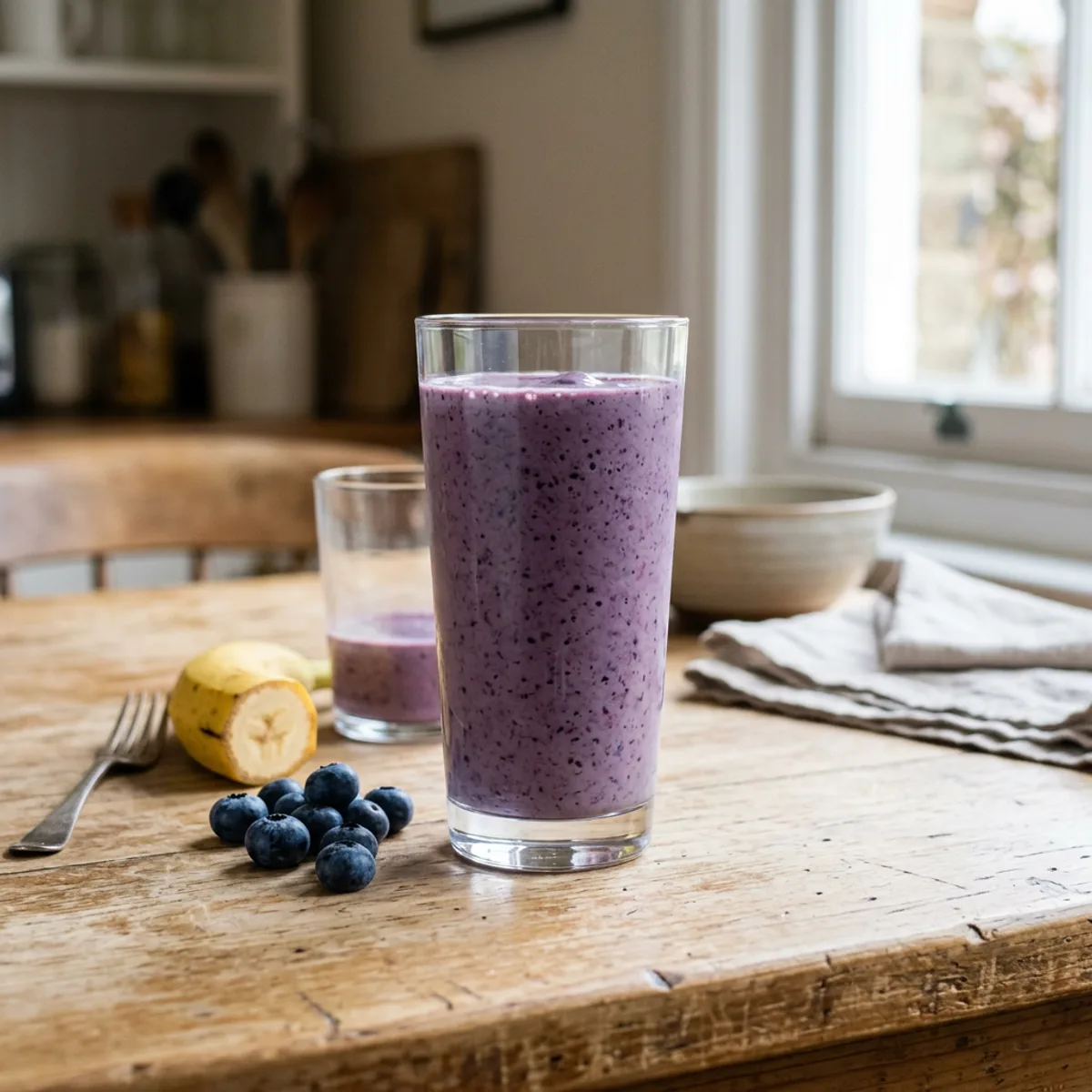
Blueberry Banana Smoothie With Psyllium Husk
A thick smoothie with a teaspoon of psyllium, the fiber supplement the kiwi and prune trials used as their comparison.
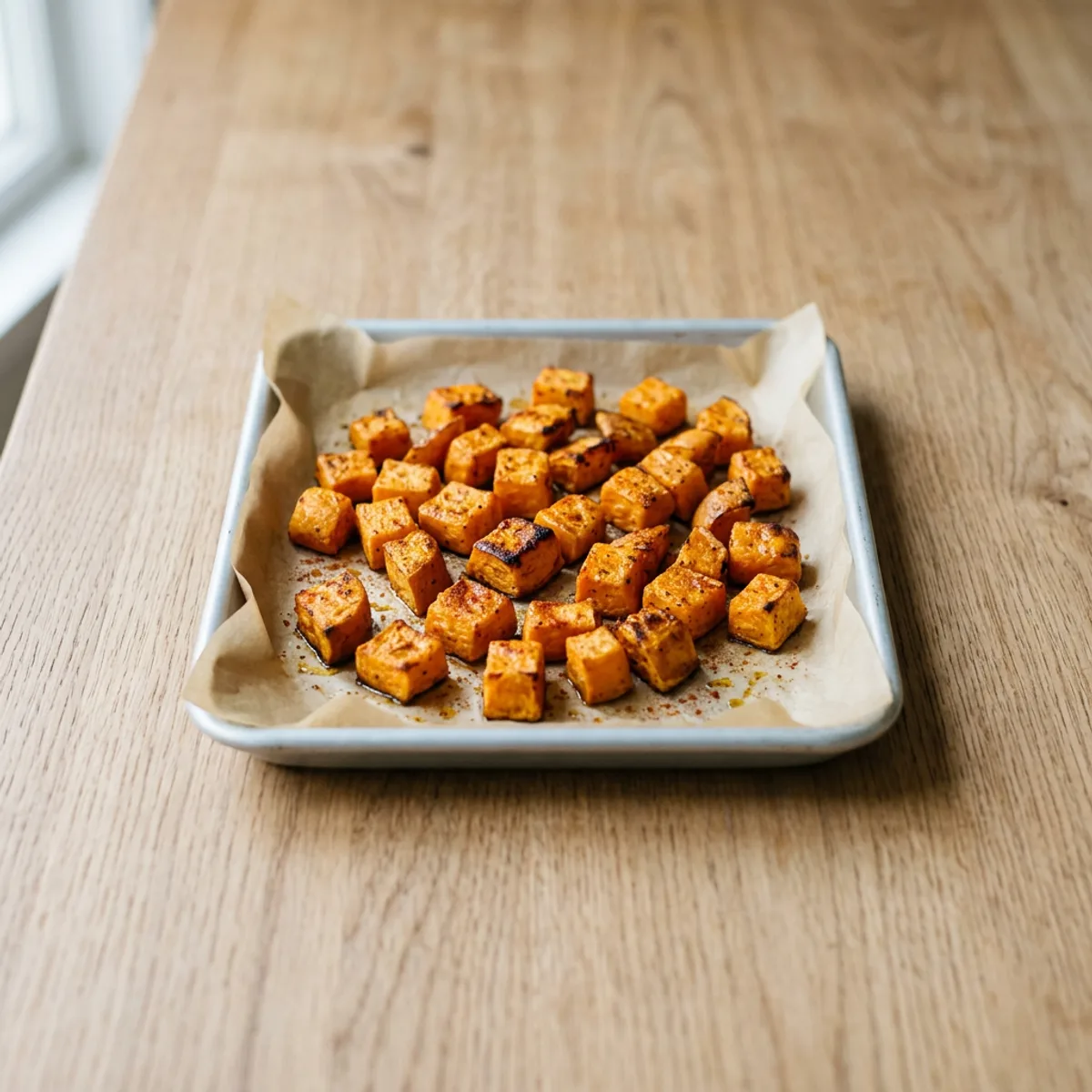
Roasted Sweet Potato Cubes
Roasted with the skin on, about 6 g of fiber a serving, an easy side for the chicken and prunes.
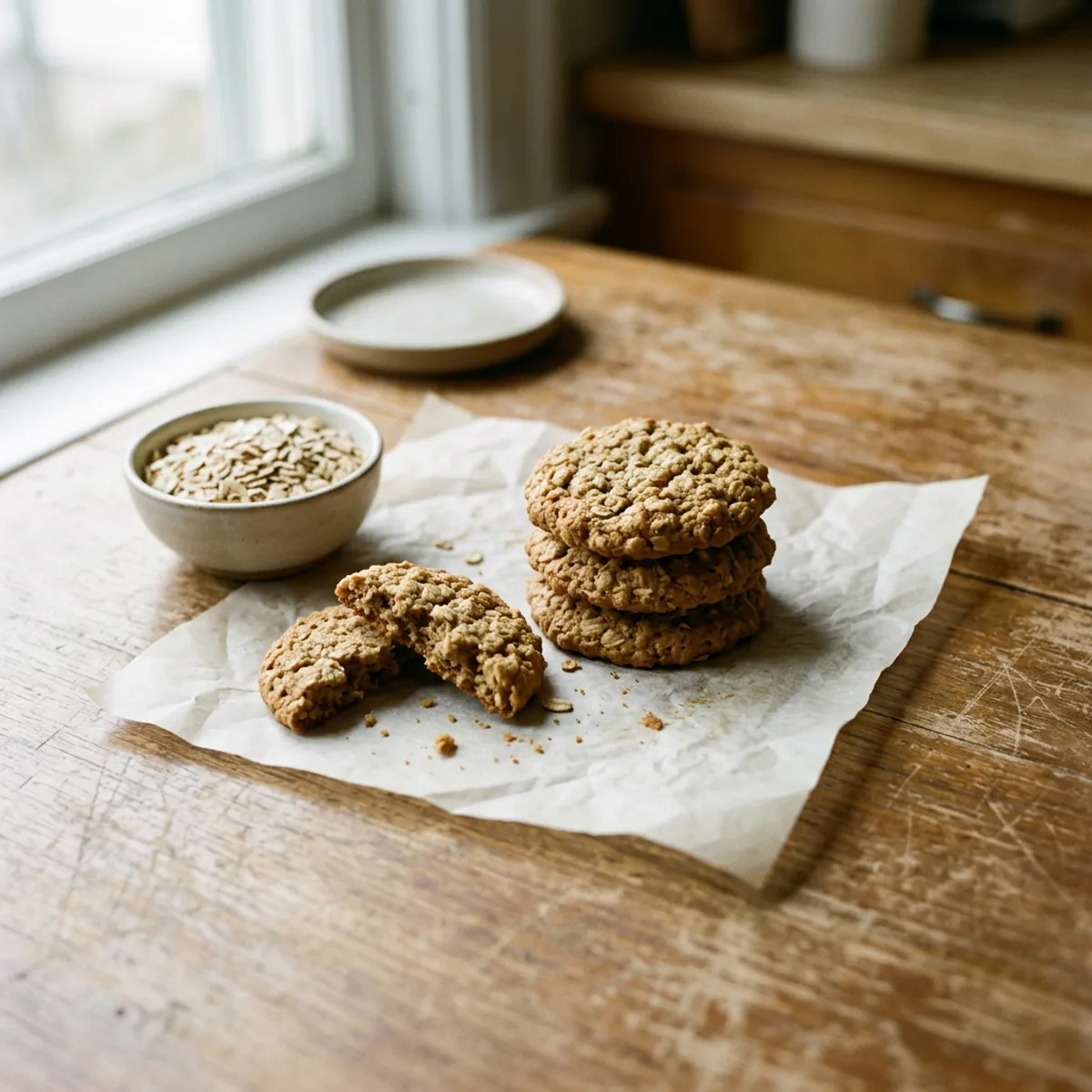
Soft Oatmeal Cookies
Rolled oats and whole wheat flour in a cookie of around 100 calories, for when you want something sweet.
General information, not medical or dietary advice. Nutrition values are estimates. See our full disclaimer.
Frequently asked questions
What are easy high-fibre meals for constipation?
The kiwi oatmeal is the easiest: ten minutes, one pot, two kiwis and about 11 g of fiber a bowl. The rye toast with white beans needs no cooking at all. NIDDK lists oatmeal, legumes, pears and carrots among good sources of fiber, and all four are in these recipes.
Are there high fiber cookies for constipation?
No trial has tested a cookie for constipation, so we cannot point to one. Cookies made with rolled oats and whole wheat flour, like our soft oatmeal cookies, carry whole grains, but the foods with trials behind them are kiwifruit, prunes and rye bread.
What foods should you avoid when you are constipated?
NIDDK advises avoiding foods with little to no fiber, such as fast food, prepared foods like some frozen meals and snack foods, and processed foods like hot dogs or some microwavable dinners. Replace them with whole grains, legumes, fruit, vegetables and nuts.
How many kiwis a day for constipation?
The trials we read gave 2 green kiwifruits a day, for 4 weeks. One bowl of our oatmeal holds those 2 kiwis. That is the amount studied, not a prescription: if constipation lasts, ask your doctor.
How much water should you drink with more fiber?
NIDDK does not give one number for everyone. It says to drink water and other liquids, such as clear soups, to help fiber work, and to ask a health care professional how much is right for your size, health, activity and climate.
Comments
Tried it? Tell us how it went: your comment helps other readers.